
Captain Cook Snorkeling vs Kahalu’u Beach Park for Beginners
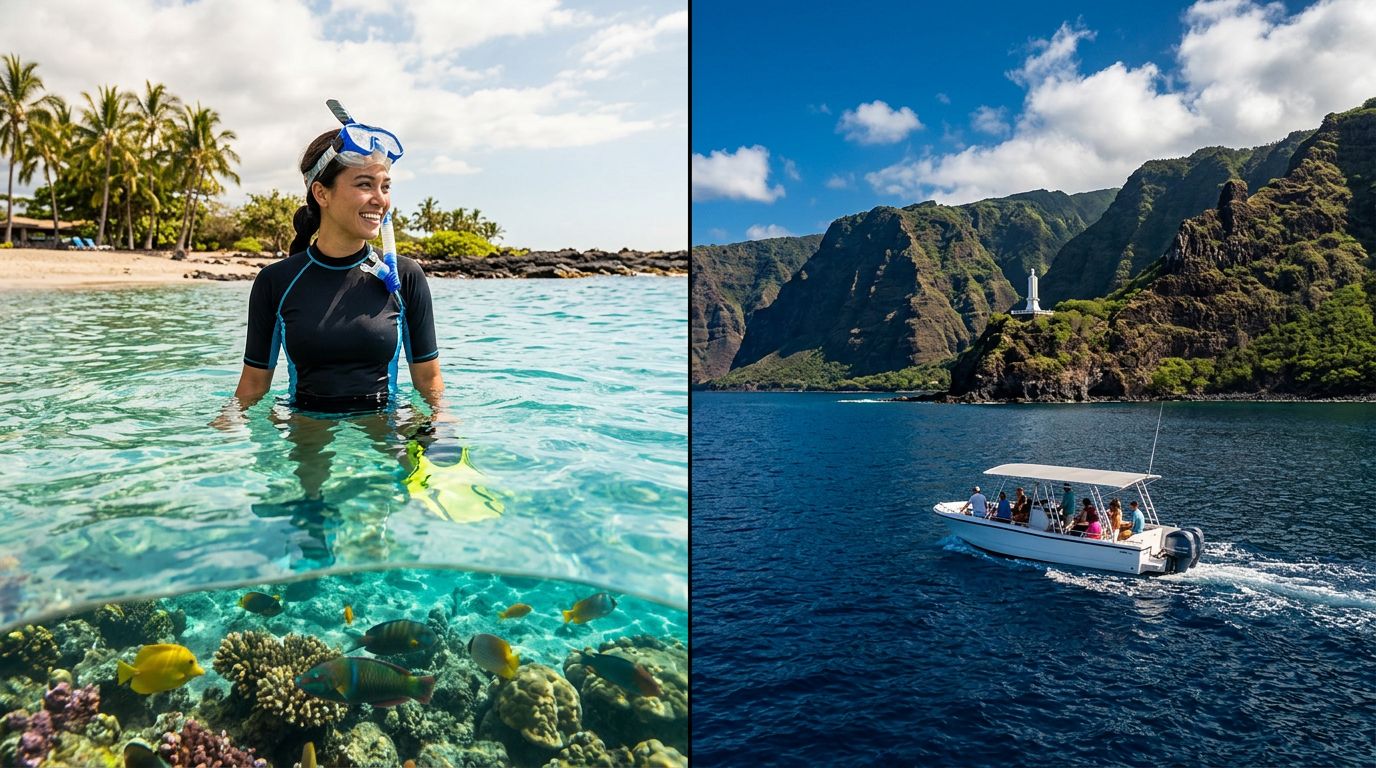
Your first snorkel on the Big Island can be calm and simple, or it can feel like a full ocean excursion. The right choice between Captain Cook snorkeling and Kahalu’u Beach Park depends less on which reef sounds famous and more on how you want to enter the water.
Kahalu’u usually suits first-time snorkelers, families, and anyone who wants shore access. Kealakekua Bay offers clearer destination-style scenery and a richer boat-day experience, but reaching the best reef takes more planning. Here is how to choose with confidence.
Captain Cook snorkeling vs Kahalu’u: the quick answer
Kahalu’u Beach Park is the easier starting point for most beginners. You can walk from the shore into a protected bay, find shallow water, use nearby facilities, and adjust your time in the ocean as you go.
Kealakekua Bay is the stronger choice if you want dramatic coastal scenery, a boat ride, and access to the reef near the Captain Cook Monument. The water can be calm and clear, but the logistics are less simple for a first snorkel.
For a guided option, Kona Snorkel Trips offers small-group ocean tours with lifeguard-certified guides. If you compare companies for the Kealakekua area, you can also review Captain Cook Snorkeling Tours, which focuses on Captain Cook and Kealakekua Bay trips.
Choose Kahalu’u if you want easy shore access
Kahalu’u works well when you want to rent or bring your own gear, enter the water without a boat, and leave whenever you feel tired. It also gives you a practical place to build confidence with your mask, snorkel, and fins.
The beach park has a lifeguard tower, restrooms, outdoor showers, and picnic areas. Those details matter when you’re traveling with children or planning several beach stops in one day.
Choose Captain Cook if you want a full ocean outing
Captain Cook snorkeling feels more like a planned excursion than a quick beach activity. You usually meet at a harbor, board a boat, travel along the Kona coast, and spend time at a reef that sits across Kealakekua Bay from the road-accessible side.
That extra effort brings better scenery and a memorable sense of place. You can also learn about the bay’s history and marine environment from a local guide.
Why Kahalu’u Beach Park suits beginners
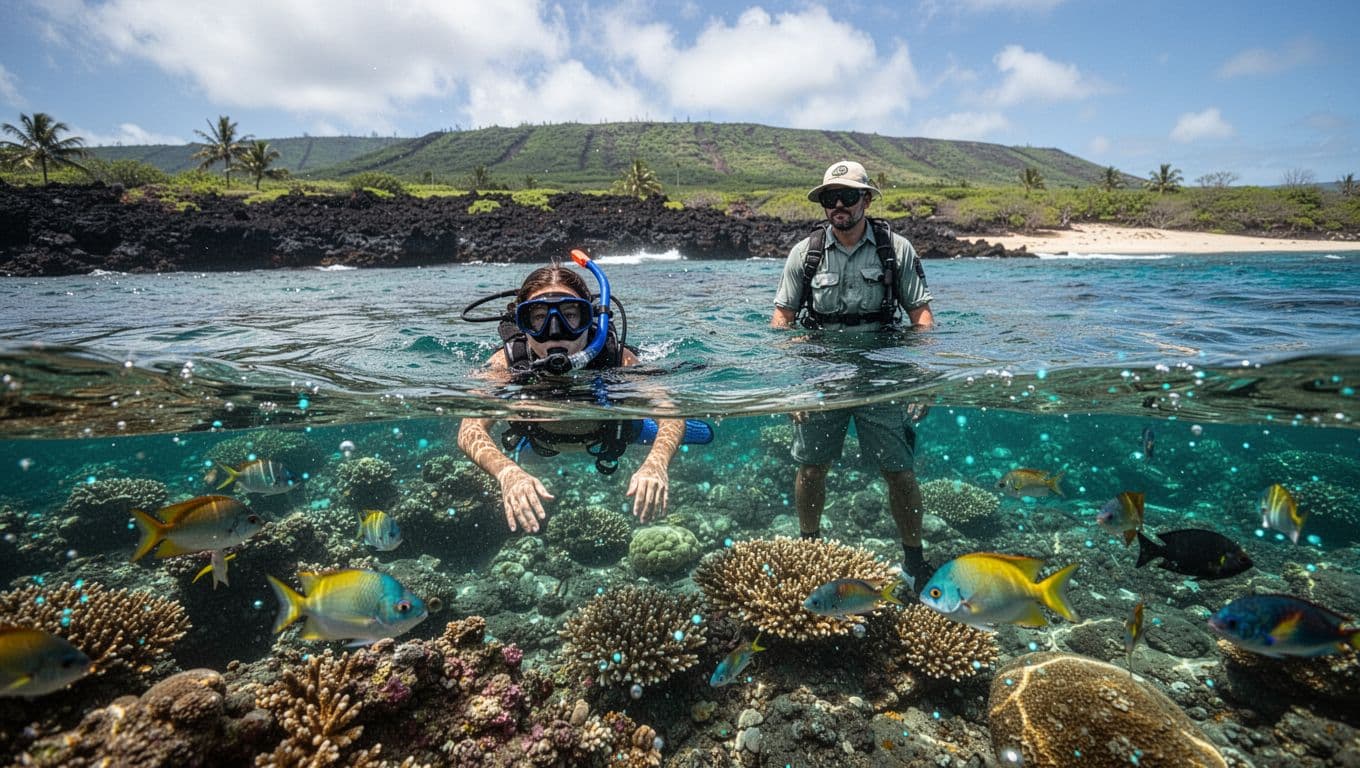
Kahalu’u is one of the most practical places for your first snorkeling experience near Kailua-Kona. It is a shore-access beach park with a protected bay, although daily conditions can still change with wind, swell, tide, and visibility.
A Kahalu’u Beach Park guide provides current local details about facilities, parking, and the area’s frequent turtle sightings.
Entry is simple, but you still need to take care
You can enter the water from the beach without swimming across open ocean. That makes it easier to pause, return to shore, or stay in the shallow area while you learn how your equipment feels.
The reef begins close to shore, so you may see colorful fish without traveling far. However, shallow coral can scratch your knees, hands, or feet. Wear fins, keep your body horizontal, and never stand on the reef.
Water conditions can become less comfortable later in the day. If the surface looks rough, the water appears cloudy, or you notice a strong push toward the rocks, wait or choose another activity.
Facilities make the day easier
Kahalu’u has features that help you spend more time comfortably at the beach. You can rinse off after snorkeling, use the restrooms, and take a break at a picnic table before deciding whether to return to the water.
Parking fills quickly on busy mornings. Local listings report nonresident parking at about $12 for four hours, with operating details subject to change. Check current signs and local information when you arrive.
The beach park is generally treated as a daytime destination. A Kahalu’u travel guide can help you review the latest practical details before leaving your hotel.
What makes Captain Cook snorkeling different?
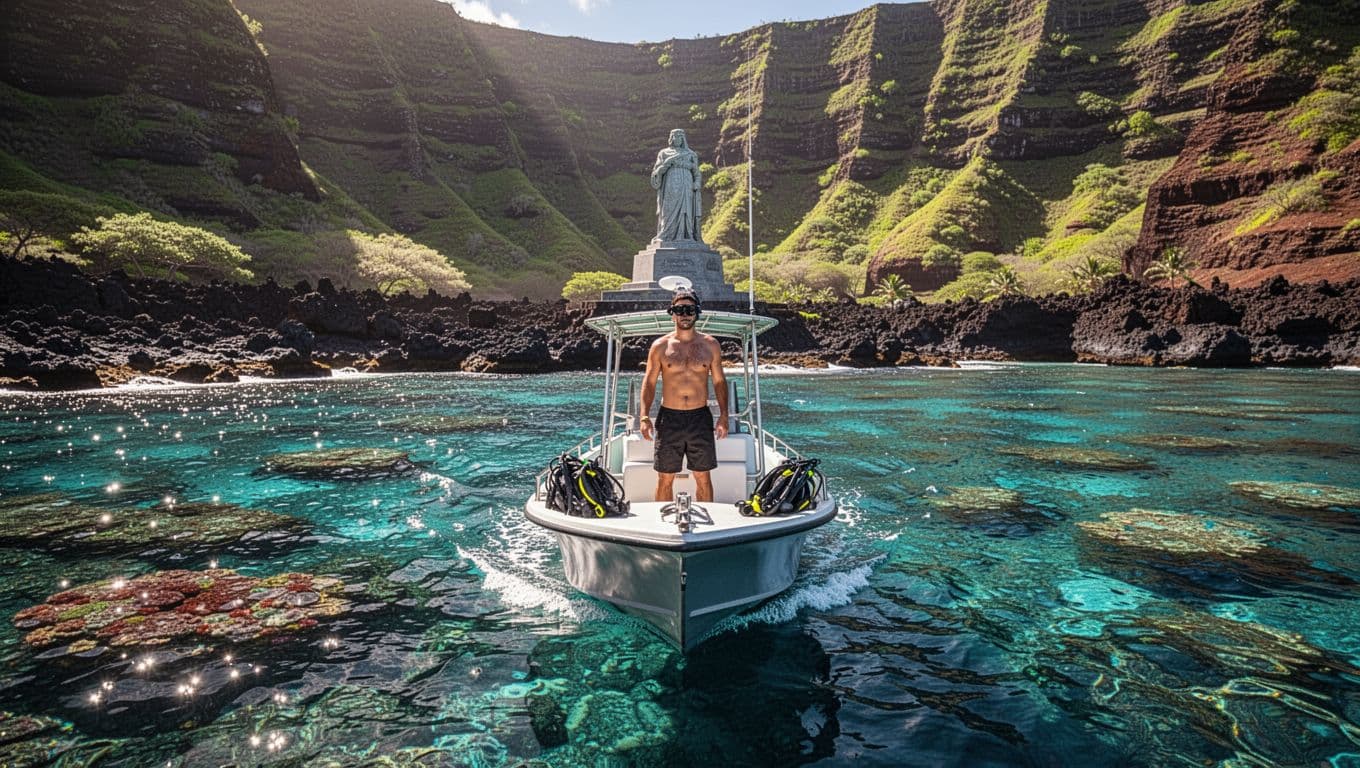
The best snorkeling at Kealakekua Bay is near the Captain Cook Monument on the Ka’awaloa side of the bay. The monument sits across the water from Napo’opo’o, so you cannot drive directly to the prime reef.
That geography explains why most visitors choose a boat tour. Kayaking and hiking are possible in the broader area, but neither option offers the same straightforward access as a guided boat departure.
The boat solves the access problem
Most commercial tours leave from harbors such as Keauhou Bay or Honokohau Harbor. You park at the departure point, check in with the crew, and travel by boat to the monument-side reef.
There is no parking directly at the Captain Cook Monument. Napo’opo’o has a small parking area and park facilities, but arriving there does not place you beside the prime snorkeling area.
Boat access also lets you avoid a long hike with snorkeling equipment. Your guide can select a suitable entry point and explain where to swim, how to use flotation, and how to stay clear of coral and other boats.
The reef creates a stronger destination experience
Kealakekua Bay is known for clear water, steep volcanic cliffs, coral habitat, and dense tropical fish activity. You may see sea turtles or spinner dolphins, but wildlife sightings are never guaranteed.
The scenery continues above the water. As you travel along the coast, you can see lava formations, sea caves, and green cliffs that are difficult to appreciate from a beach parking lot.
A guided Captain Cook snorkeling tour can be a good fit if you want the reef, the coastline, and local history in one outing.
Kahalu’u and Captain Cook compared
Use this table to match each option to your comfort level, schedule, and expectations.
| Factor | Kahalu’u Beach Park | Captain Cook at Kealakekua Bay |
|---|---|---|
| Water access | Walk-in shore entry | Usually reached by boat |
| Best for | First-timers and families | Confident beginners and guided-tour guests |
| Planning | Simple beach visit | Reservation, harbor check-in, and boat timing |
| Facilities | Restrooms, showers, lifeguard tower, picnic areas | Facilities depend on your departure point |
| Scenery | Calm bay and volcanic shoreline | Cliffs, open coast, monument, and bay views |
| Marine life | Reef fish and frequent turtle sightings | Reef fish, coral, and possible turtles or dolphins |
| Gear | Bring or rent gear | Tour operators commonly provide equipment |
| Flexibility | Stay for a short or long visit | Follow the scheduled tour itinerary |
Kahalu’u gives you more control over the length and pace of your session. Captain Cook gives you a more complete ocean experience with less uncertainty about where to find the best reef.
Safety advice for your first Big Island snorkel
You can snorkel the Big Island safely when you respect the conditions and stay within your ability. Calm water yesterday does not guarantee calm water today, even at a protected Kona beach.
Before entering, look at the water from shore. Pay attention to breaking waves, cloudy visibility, strong surge, crowded entry points, and any warning signs or lifeguard instructions.
Check conditions before you get wet
Do not enter because other people are in the water. They may have stronger swimming skills, better local knowledge, or more experience with the day’s current.
A Kahalu’u conditions guide recommends making an individual assessment before entering. That advice applies to both shore snorkeling and boat trips.
Use a properly fitted mask and test it in shallow water. Your snorkel should sit comfortably in your mouth, and your fins should stay secure without squeezing your feet. If you need flotation, use a snorkeling vest or another approved aid.
Stay close to your group. Hawaii Department of Land and Natural Resources boating guidance states that groups of two or more divers or snorkelers may use one dive flag, with each person remaining within 100 feet of it.
Protect yourself and the reef
Apply sunscreen before entering the water and choose a reef-conscious formula. Keep your hands, fins, and equipment away from coral. Even a small fin kick can break living coral or stir up sand that reduces visibility.
Do not chase turtles, dolphins, or fish. Give animals room to change direction, and never touch or feed them. Turtles need space to rest and surface without being surrounded by swimmers.
A beginner snorkeling guide for Kahalu’u also recommends paying attention to your swimming ability rather than treating the beach as risk-free. If you feel tired, return to shore before you become exhausted.
Which location is better for your travel style?
Both places can work for beginners, but your trip details should guide the decision. A strong swimmer may enjoy Captain Cook on a first visit, while a nervous swimmer may prefer Kahalu’u even after several snorkeling trips.
Kahalu’u is better for families and cautious swimmers
Choose Kahalu’u when you have young children, mixed swimming abilities, or travelers who want to watch before entering the water. You can stay near shore while another family member explores farther out.
The beach also fits a flexible schedule. You can snorkel for 30 minutes, rinse off, eat lunch, and return later if conditions remain suitable. That flexibility helps when children lose interest or the ocean becomes uncomfortable.
Kahalu’u is also a good choice if you want to combine snorkeling with other Kona activities. You do not need to reserve a full half-day boat excursion.
Captain Cook is better for couples and adventure-focused travelers
Captain Cook makes sense when you want a memorable shared outing rather than a quick swim. The boat ride adds coastal views, and the reef near the monument gives you a clear destination.
Confident beginners can enjoy the trip with a guide, especially when the operator supplies flotation, explains the entry process, and stays attentive in the water. You should still be comfortable swimming in open ocean and following crew instructions.
For people searching for snorkeling on Big Island Hawaii, this is the classic choice when the goal is a protected bay, dramatic coastline, and a guided reef experience in one day.
Booking a guided Captain Cook trip
A guided tour removes much of the guesswork around parking, navigation, equipment, and locating the best reef. You still need to choose an operator that matches your swimming ability, group size, and preferred pace.
Kona Snorkel Trips follows a “Reef to Rays” approach built around small groups, personal service, ocean education, and reef-safe practices. Its lifeguard-certified guides provide high-quality gear and focus on guest safety throughout the outing.
The company also has a five-star reputation and avoids the crowded feel of large commercial excursions. If you want to check availability, review the current departure times and tour details before choosing your date.
Look for comfort and clear instructions
Ask whether the tour supplies masks, snorkels, fins, flotation, snacks, and drinks. Confirm the check-in harbor, arrival time, trip length, and swimming requirements.
A good crew should explain how to enter the water, where to regroup, and what to do if you feel uncomfortable. Guides should also address reef etiquette before anyone jumps in.
If Kealakekua Bay is your main goal, you can check avaialbility for a Captain Cook departure with Kona Snorkel Trips.
When a private or add-on trip makes sense
You do not have to choose the same type of outing for every traveler in your group. A private charter can give you more control, while a separate evening or seasonal trip can add variety to your Hawaii plans.
Consider a private charter for mixed groups
A private trip can work well when your group includes strong swimmers, cautious beginners, children, or travelers who want time to relax on the boat. You can discuss preferred locations, timing, and activity level with the crew.
Kona Snorkel Trips offers private Kona boat charters for families, couples, reunions, and special occasions. The crew can help shape a custom route around weather, sea conditions, and your interests.
This option costs more than a shared tour, but the flexibility may matter when your group has different needs.
Add another ocean experience on a separate day
If you want to snorkel Big Island reefs during the day and reserve another evening for marine life, consider a guided Kona manta ray snorkeling experience. Manta tours have different water-entry and swimming requirements, so review them carefully.
During humpback season, you can also look at Kona whale watching tours. These activities do not replace Captain Cook snorkeling, but they can round out a trip focused on the ocean.
Make the choice that fits your confidence
Choose Kahalu’u Beach Park when you want simple shore access, facilities, flexible timing, and a comfortable place to practice. Arrive early, watch the conditions, and stay in shallow water until you feel ready to go farther.
Choose Captain Cook snorkeling when you want a guided boat excursion with dramatic scenery and access to the reef near the monument. The extra planning pays off with a more complete Kona coast experience.
Your best snorkeling Big Island plan may include both. Start at Kahalu’u to build confidence, then book Kealakekua Bay when you feel ready for a longer open-water outing.
Conclusion
Kahalu’u Beach Park is usually the better first step because you can enter from shore, use nearby facilities, and control your time in the water. Captain Cook offers a richer destination experience, but boat access and open-water swimming make it better for prepared beginners.
Check the conditions, choose equipment that fits, and protect the reef wherever you swim. When you match the location to your comfort level, your first Kona snorkel can feel exciting without feeling overwhelming.