
How to Tip Your Captain Cook Snorkel Tour Crew
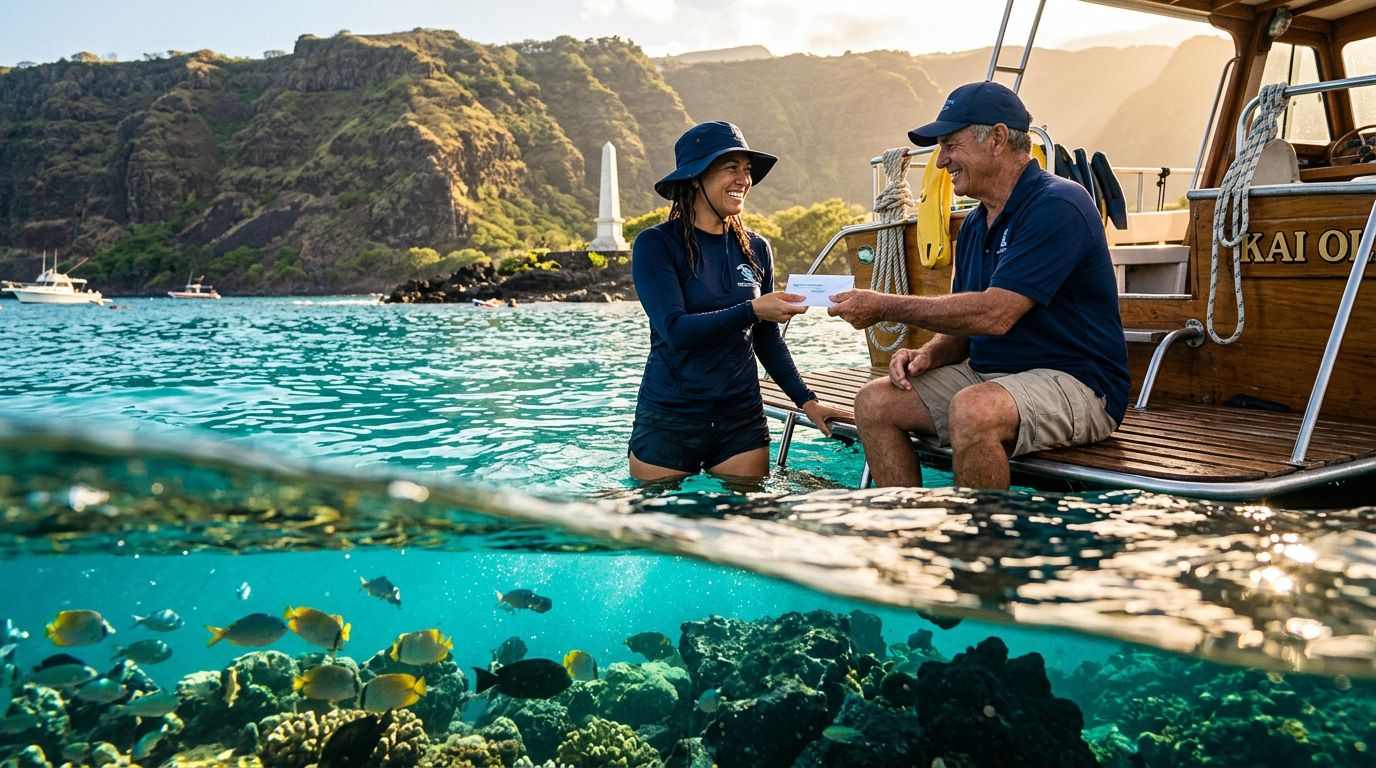
A great Captain Cook snorkel tour depends on more than clear water and colorful reef fish. Your captain and crew check conditions, prepare gear, explain safety procedures, guide you through the water, and help you return safely to shore.
If you’re unsure how much to tip, you’re not alone. Tipping practices can vary between tours, group sizes, and levels of service. You can make a thoughtful choice by considering the crew’s work, the length of your trip, and the quality of your experience.
Key Takeaways
- A tip is customary for excellent service, but it’s voluntary.
- A practical starting point is $5 to $15 per guest, depending on tour length and service.
- You can tip the captain, deck crew, and guides together unless the operator gives different instructions.
- Cash in a waterproof envelope is often easiest, but follow the company’s available payment options.
- Tip for the crew’s service, not for wildlife sightings or weather conditions they can’t control.
Why Your Captain Cook Crew Deserves Consideration
When you book snorkeling Big Island Hawaii adventures, the boat ride and time in the water are only part of what your crew handles. Before you arrive, someone checks equipment, reviews the route, watches weather conditions, and prepares the vessel. During the trip, the team manages navigation, passenger safety, snorkeling instruction, and boat operations.
Kealakekua Bay also requires careful attention. You may enter the water at a site with changing currents, uneven conditions, and delicate coral habitat. Your crew has to balance your enjoyment with safe distances from the reef, responsible wildlife viewing, and the needs of guests with different swimming abilities.
If you book with Kona Snorkel Trips, you’ll find a small-group approach built around the company’s “Reef to Rays” philosophy. Lifeguard-certified guides provide equipment, safety guidance, and marine education while encouraging reef-safe behavior. That personal attention is part of the service you may want to recognize with a gratuity.
Another local option is Captain Cook Snorkeling Tours, which focuses on trips to Kealakekua Bay and the Captain Cook Monument area. Whichever company you choose, your crew may spend several hours working before, during, and after your excursion.
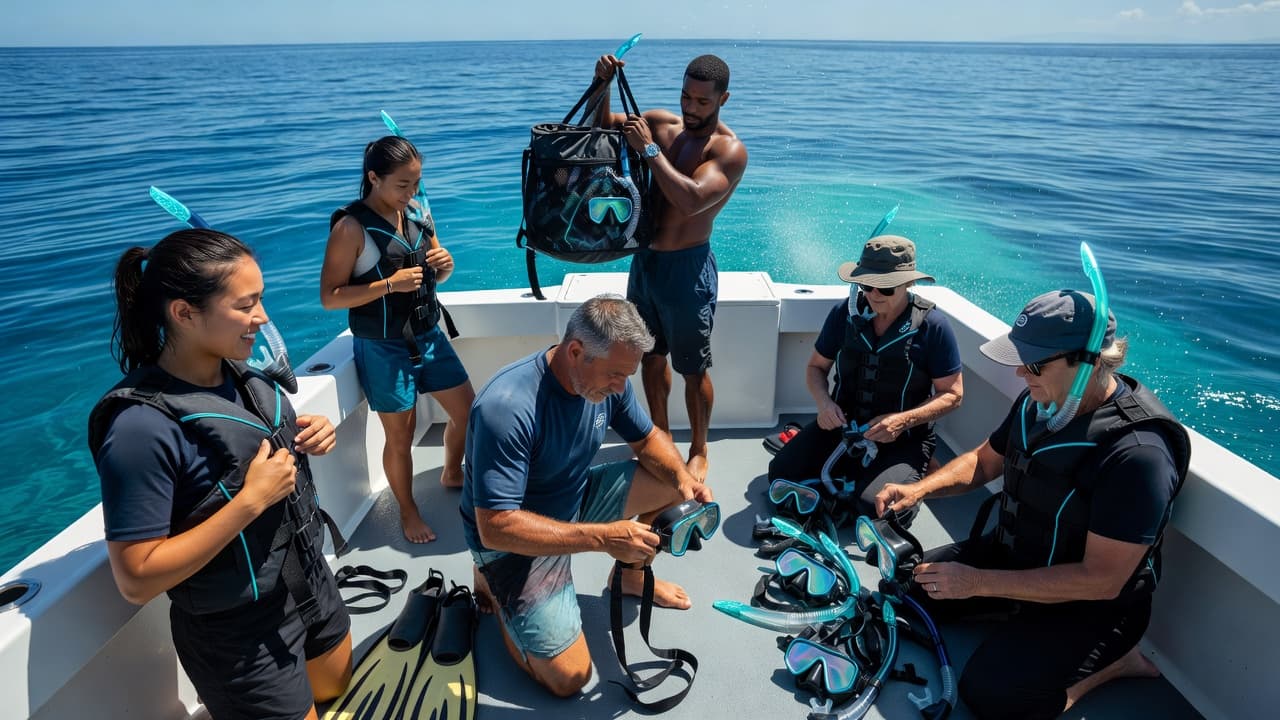
The crew’s work often includes tasks you don’t see. They may load coolers, secure flotation equipment, rinse masks, inspect fins, clean the boat, and answer questions throughout the day. A tip acknowledges that full effort, not only the moments when you’re swimming.
How Much Should You Tip on a Captain Cook Snorkel Tour?
There’s no single required amount for every Captain Cook snorkel tour. A useful starting point is $5 to $15 per guest, with the final amount based on the trip length and service quality.
For a shorter excursion, $5 to $10 per person is a reasonable reference point when the crew provides friendly, capable service. For a longer trip or a crew that gives exceptional personal attention, $10 to $15 per person may feel more appropriate.
Local tipping guidance from The Hawaii Vacation Guide uses similar per-passenger ranges for snorkeling excursions. The guide also suggests a higher amount for trips lasting four hours or more. Treat these figures as guidance rather than a rule printed in stone.
You can also calculate a household tip instead of handing money to each person. For example, two adults and two children might leave $40 after a well-run trip. That amount equals $10 per guest and keeps the handoff simple.
Some travelers use a percentage. A community discussion about Hawaii manta ray tours mentions 10 percent and party totals between $40 and $100 as anecdotal benchmarks. You can read that snorkel tour tipping discussion for examples, but remember that online comments reflect personal experiences rather than an official industry standard.
Your tip can reflect the service level:
- Good service: $5 to $10 per guest.
- Outstanding service: $10 to $15 or more per guest.
- Long private charter: Consider a larger total because the crew serves only your party.
- Poor service: Reduce or skip the tip when the crew’s performance genuinely falls short.
A high tip isn’t necessary to compensate for rough seas, cloudy visibility, or fewer fish. Those conditions are outside the crew’s control. Focus on preparation, communication, safety, and hospitality.
A good tip recognizes the crew’s work, not a guarantee of perfect weather or a specific wildlife sighting.
Who Should Receive Your Tip?
Most snorkeling crews include more than the person steering the boat. You may interact with a captain, deckhand, snorkel guide, or an additional safety staff member. Each role can affect your day on the water.
The captain handles navigation, weather decisions, vessel operation, and overall responsibility for the trip. A deckhand may help you board, fit equipment, manage lines, serve refreshments, and watch swimmers. Your guide may give detailed instructions, point out marine life, assist nervous swimmers, and answer questions about the reef.
If you’re unsure how the company divides gratuities, ask before leaving the dock. A simple question works well: “Do you share tips among the crew, or should I give this to someone directly?”
When the answer isn’t clear, hand the tip to the captain and say, “Please share this with everyone who worked today.” That approach recognizes the entire team without requiring you to identify each person’s role.
You can also offer separate tips when one crew member gives unusually personal assistance. For example, a guide may spend extra time helping a first-time snorkeler feel comfortable, adjusting equipment, or assisting a family member who needs support. A personal thank-you and a separate cash tip can recognize that effort.
Avoid assuming that the captain keeps every dollar. Many operators have their own system for distributing gratuities. Asking politely prevents confusion and gives the crew a chance to explain the process.
If the crew includes a trainee or temporary staff member, you can ask whether that person participates in the tip pool. You don’t need to investigate the company’s payroll arrangements. A quick question is enough.
When and How Should You Hand Over the Tip?
The easiest time to tip is at the end of the excursion, after you return to the dock and collect your belongings. You’ll have a better sense of the full experience, and the crew won’t need to manage money while helping guests in the water.
Bring small bills in a sealed envelope or waterproof pouch. Keep the cash in your dry bag during the trip, then remove it after you disembark. Wet bills are difficult to handle, and loose money can fall between seats or into the water.
Write the date and your last name on the envelope if several groups are leaving at once. You can also include a short note such as, “Thank you for keeping us safe and showing us the bay.” A few sincere words often mean as much as the money.
Some tour companies may offer a digital tipping option, but payment methods vary. Check your confirmation email or ask the office before departure. Don’t assume that a card reader, mobile payment app, or online tip link is available on the boat.
If you want to tip before the tour, wait until after the service whenever possible. A gratuity should reflect the experience you received. You may also need to adjust the amount if the trip changes because of weather, a mechanical problem, or a schedule issue.
Families can choose one person to manage the tip. That avoids several guests trying to hand money to the crew at the same time. A child can still participate by giving the envelope and saying thank you, which turns the gesture into a memorable travel moment.
A direct thank-you works well even when you don’t tip. You can say, “We appreciated how clearly you explained the safety rules,” or “Thank you for helping our daughter feel comfortable in the water.” Specific praise shows that you noticed the crew’s effort.
What Should Affect the Amount?
Your tip should reflect the quality of service you received. The number of fish you saw matters less than how the crew handled the trip.
Start with safety. Did the crew give clear instructions before entering the water? Did they monitor swimmers? Did they respond calmly when someone needed help? Safety work may not feel dramatic, but it requires constant attention.
Next, consider communication. Did the crew explain where you were going, what you might see, and how to protect the reef? Did they answer questions without rushing you? A guide who makes the experience understandable adds real value, especially when you’re new to snorkeling.
Personal attention also matters. A small group may receive help with mask fitting, fin adjustments, flotation equipment, and entry into the water. If the crew notices your needs without making you ask repeatedly, that service deserves consideration.
The condition and preparation of the equipment can influence your impression too. Well-maintained masks, fins, flotation devices, and other gear make it easier for you to relax. However, don’t treat expensive gear as a reason to tip by itself. The tip is for the crew’s service and care.
Environmental instruction is another positive factor. Kealakekua Bay contains fragile marine habitat, so reminders about touching coral, standing on rocks, or approaching wildlife can protect the place you came to enjoy. A crew that combines education with practical guidance adds value to your tour.
You might choose a higher tip when the crew:
- Gives patient support to children or first-time snorkelers.
- Provides helpful information about marine life and local history.
- Handles a nervous passenger with care.
- Keeps the group organized without making the trip feel rushed.
- Maintains a clean, comfortable, and prepared boat.
You don’t need to reward a crew for ignoring safety rules, pressuring guests, or treating marine life carelessly. Responsible operation is part of a quality tour.
What If the Experience Falls Short?
A tip is optional, so you don’t have to leave one when service is poor. You can reduce the amount or skip it if the crew acts disrespectfully, neglects safety, provides badly maintained equipment, or fails to deliver basic service promised in your booking.
First, separate the crew’s performance from conditions they can’t control. Strong wind, rain, low visibility, and rough water may shorten or change your trip. If the captain makes a cautious decision for safety, that decision deserves respect even when you feel disappointed.
A mechanical issue is more complicated. The crew may have worked hard to solve the problem, or they may have communicated poorly and left you without useful information. Judge the response, not only the inconvenience.
You can share feedback directly and calmly. Tell the captain what happened while the details are fresh. For example, you might say, “We appreciated the safety briefing, but the equipment issue took a long time to resolve and no one explained the delay.”
If the problem involves serious safety concerns or misleading booking information, contact the tour company after the trip. Include the date, reservation name, and a clear description of what occurred. Photos can help when equipment or boat conditions are part of the complaint.
A review can also help future guests, but keep it factual. Describe what you experienced rather than making assumptions about the crew’s intentions. Honest feedback gives the operator a chance to correct problems.
You can still thank individual staff members for good conduct even when the overall trip had a problem. For example, a guide may have been kind and attentive while a separate equipment issue affected the schedule. Your tip can reflect that distinction.
How to Tip When You’re Traveling as a Group
Group tipping becomes easier when you decide on a plan before boarding. One person can collect contributions, or each household can prepare its own envelope. Either method works if the crew receives a clear total.
If you’re traveling with friends, discuss whether you want to tip per person or as one group. A per-person approach keeps the math fair. A shared envelope feels more private and avoids several separate handoffs.
For example, six adults who each choose $10 can leave one $60 tip. If one guest received extra assistance, that person can add a personal thank-you separately. You don’t need to announce the amount to the entire group.
Families often wonder whether children should count. There’s no strict rule. You can calculate the tip for every guest, use an adult-only amount, or leave a household total that fits your budget. Consider the crew’s work with your whole party, including helping children enter the water or use equipment.
Private tours deserve a separate thought. A private boat gives your group more control over timing, stops, and personal attention. Since the crew works exclusively with your party, many guests choose a larger total than they would for a shared excursion. You can still base the amount on service and trip length.
If you’re part of a wedding party, reunion, or organized travel group, appoint one person to speak with the captain. That person can ask about tip distribution and deliver the final amount. Clear coordination prevents the crew from receiving several conflicting instructions.
Don’t feel pressured to match another guest’s amount. Travel budgets differ, and a modest tip with a sincere thank-you is better than giving more than you can comfortably afford.
Planning Your Captain Cook Trip With Tipping in Mind
Before you book, review the confirmation email for details about gratuity, cancellation policies, check-in time, parking, and included equipment. Some operators explain tipping during the pre-trip briefing, while others leave it entirely to guests.
If you’re comparing snorkeling Big Island options, look at more than the advertised price. Check the trip length, group size, departure location, included gear, and guide-to-guest ratio. A lower price may not provide the same amount of personal assistance as a small-group trip.
Kona Snorkel Trips focuses on personalized ocean adventures with lifeguard-certified guides, maintained snorkeling equipment, and reef-safe education. The company also offers Captain Cook and Kealakekua Bay excursions for travelers who want to snorkel Big Island waters with a guided crew.
When you’re ready to choose a date, you can check avaialbility for a Captain Cook snorkeling trip. Bring a waterproof tip envelope, small bills, and realistic expectations about ocean conditions.
You can also ask the office whether tips are pooled, whether digital tipping is available, and whether the crew prefers a group envelope. Getting those details before departure keeps the final handoff comfortable.
Conclusion
You don’t need a complicated formula to tip your Captain Cook snorkel tour crew. Consider the trip length, the quality of the guidance, the crew’s attention to safety, and the personal help your group received.
For many guests, $5 to $15 per person is a practical starting point. Give the tip at the end, ask how the crew shares gratuities, and add a sincere thank-you. When you snorkel Big Island waters, thoughtful appreciation can recognize the people who helped you enjoy them responsibly.