
Why Lava Tubes Make Big Island Snorkeling Unique
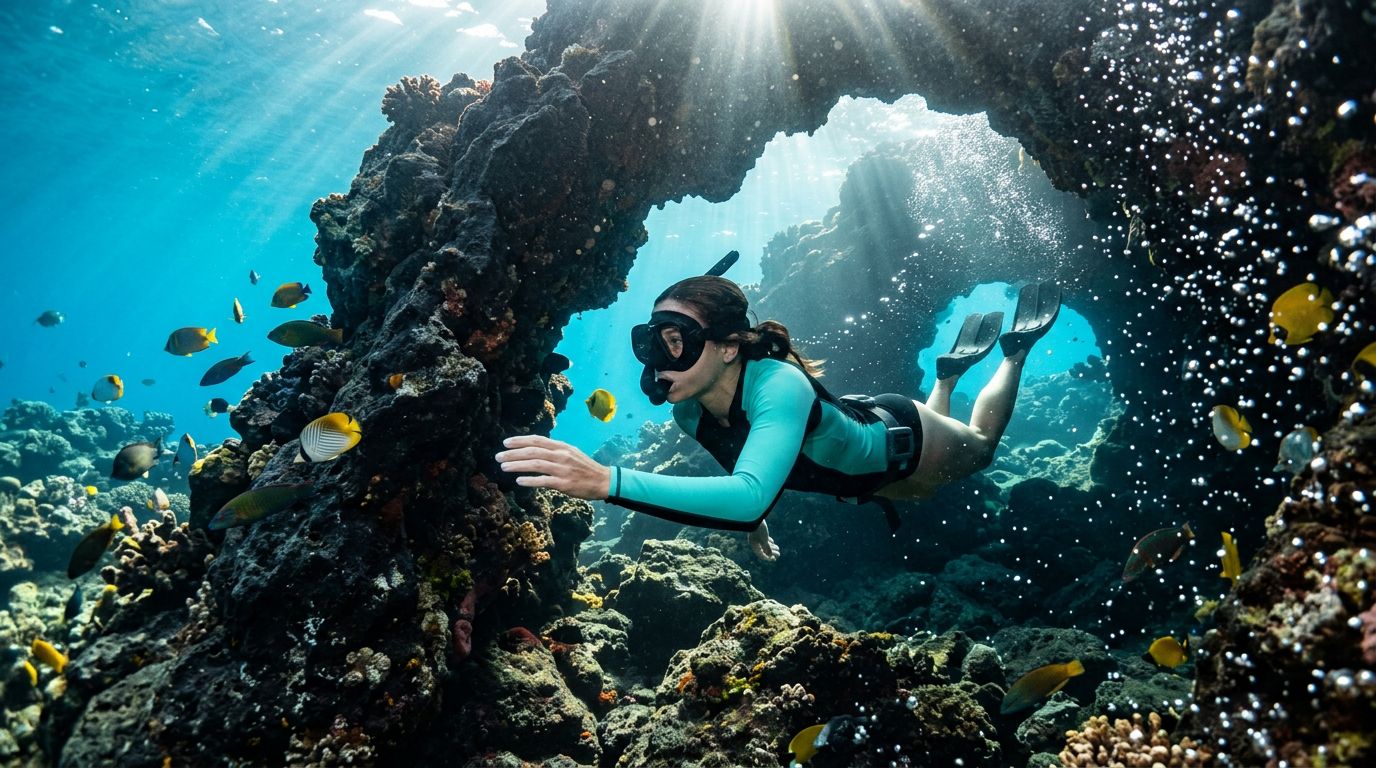
A coral reef can fill your view with color, but a lava tube changes the shape of the entire underwater experience. Along the Kona coast, volcanic rock creates arches, ledges, tunnels, and shadowed coves where sunlight and seawater meet in unusual ways.
When you search for snorkeling Big Island Hawaii adventures, you may picture clear water and tropical fish. You should also picture the volcanic formations beneath the surface. Kona Snorkel Trips gives you a guided way to experience these features while keeping safety and reef care at the center of your outing.
Key Takeaways
- Lava tubes form when the outside of a lava flow cools while molten rock continues moving underneath.
- Coastal arches and hollow spaces create shelter for fish and produce dramatic changes in light.
- Lava formations make each snorkeling site feel more three-dimensional than a flat reef.
- Conditions around tunnels and openings can change quickly, so local guidance matters.
- You can enjoy the geology without touching rock, standing on coral, or entering unsafe spaces.
The volcanic geology behind Kona’s swim-throughs
The Big Island is still shaped by volcanic activity. As fluid lava moves toward the ocean, its outer surface can cool and harden while hotter lava continues flowing beneath it. That process can leave behind a hollow passage called a lava tube.
Some tubes remain inland. Others reach the coast, where waves erode the rock and expose sections of the passage. A roof can collapse and create an open arch. A side wall can break away and leave a shallow alcove. In other places, the tube stays partly enclosed, creating a darker opening below the waterline.
You won’t find identical formations at every snorkeling site. A lava tube may look like a broad window, a low shelf, or a large arch that lets sunlight pass through. Some openings are visible from the boat but aren’t safe for swimmers. Others are open enough for you to observe without entering.
The coastal geology gives Kona a distinct underwater structure. Coral grows across hard volcanic surfaces, while cracks and hollows create extra space for marine life. Instead of looking down at a reef alone, you can look around, beneath, and through the rock.
For a broader guide to the islands’ volcanic tunnels, this overview of Hawaiian lava tubes explains how these formations connect to the islands’ volcanic history.
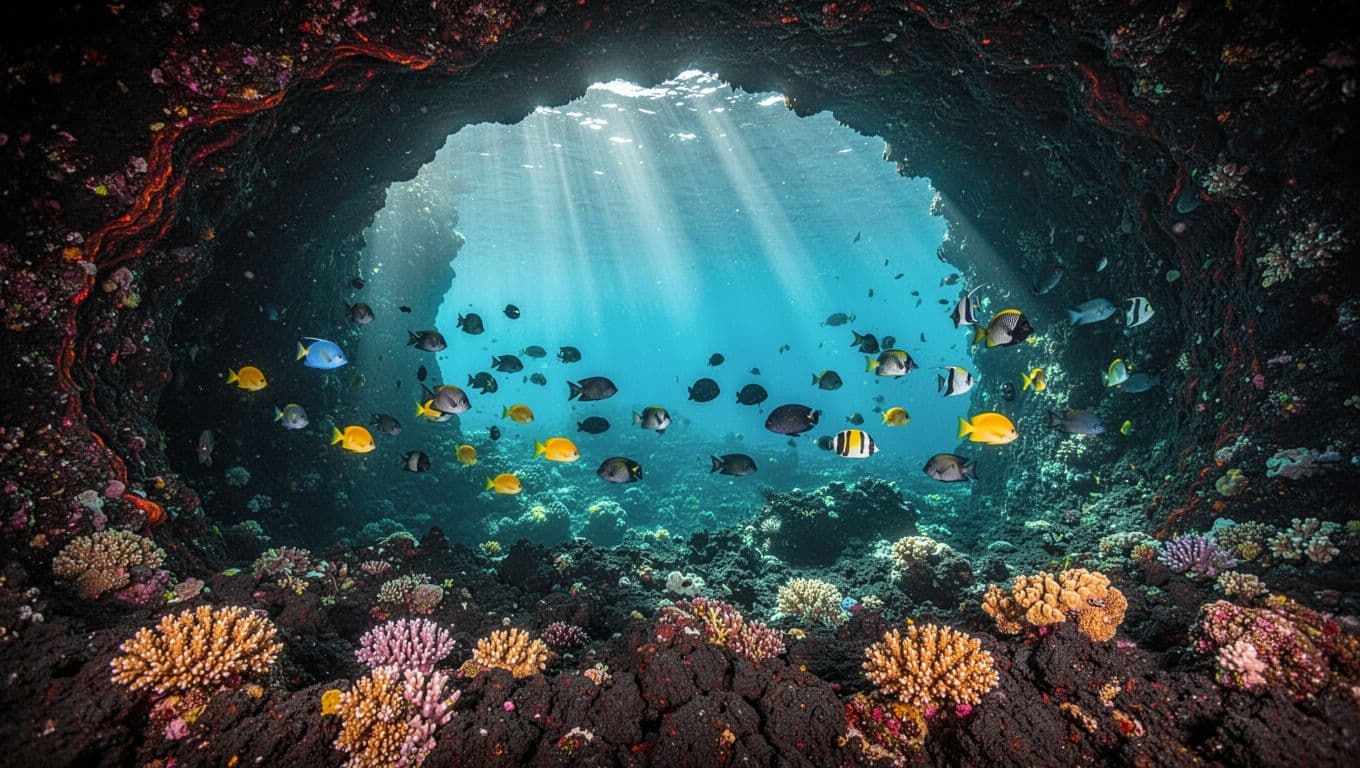
Sunlight enters a volcanic archway where reef life gathers around the rock.
The word “tube” can sound narrow, but coastal lava formations vary in size. A wide arch may feel open and airy. A smaller passage may create a closer look at the rock’s rough texture. Either way, the volcanic setting gives your swim a geological story that you can see in real time.
Lava tubes change how you see marine life
A traditional reef often spreads across the seafloor. Lava formations add vertical walls, ceilings, openings, and shadow lines. That extra structure gives fish more places to rest, feed, and avoid stronger surge.
Small reef fish may gather near the edges of an opening. The boundary between bright water and shade gives you a clear view of their movement. Larger fish can use deeper recesses when the sun is high or the water becomes active.
You may see yellow tang, butterflyfish, parrotfish, surgeonfish, and Hawaii’s state fish, the humuhumunukunukuapua’a. Green sea turtles also visit Hawaiian reefs, although you should give them plenty of room and never swim after them.
The rock itself adds detail to the scene. Old lava surfaces can look jagged and dark, while newer exposed sections may show smooth, folded textures. Coral and algae soften some edges, creating a contrast between black volcanic stone and bright reef colors.
Light makes the biggest difference. Sunbeams can enter through a collapsed roof or open arch, then fade into blue water. As clouds move overhead, the brightness changes across the rock. You may see a fish disappear into shade and reappear a few seconds later in the open water.
That effect gives Big Island snorkeling a strong sense of depth. Your attention moves through the whole space instead of staying fixed on the bottom. You also notice how the ocean interacts with the island’s volcanic foundation.
Still, you should avoid chasing fish into dark openings. A camera may make a tunnel look inviting, but photographs don’t show current speed, depth, or the distance back to open water. Watch the formation from a safe position and follow your guide’s instructions.
Why lava formations feel different from an open reef
Lava tubes don’t replace coral reefs. They create the physical setting where reef life can grow and gather. The combination makes snorkeling along the Kona coast feel different from many tropical destinations.
This comparison shows how each environment changes your experience.
| Feature | Open coral reef | Lava tube or coastal arch |
|---|---|---|
| Main view | Broad seafloor and coral colonies | Rock walls, openings, and shaded spaces |
| Light | Usually even and open | Strong contrast between sun and shadow |
| Water movement | May spread across the reef | Can accelerate near openings and walls |
| Marine life | Fish feed and shelter across the reef | Fish use cracks, ledges, and protected edges |
| Photography | Wide reef scenes and close-ups | Silhouettes, beams of light, and layered depth |
| Best approach | Scan slowly across the bottom | Watch the rock, water, and animals together |
Open water can make a reef feel spacious. A lava arch creates a more focused scene, especially when the sun sits above the opening. You may see a school of fish framed by dark rock, then turn toward open water and find a completely different view.
The formations also make you more aware of movement. Water can push around a corner, rebound from a wall, or speed up near a narrow opening. That doesn’t mean every site is rough, but it does mean you should pay attention to the conditions rather than assuming calm water everywhere.
The best experience comes when you treat the lava structure as part of the habitat. Look for fish near the rock without touching the surface. Keep your fins away from the bottom. Small movements help you stay in place without stirring sediment across the reef.
Where a guided boat trip fits into the experience
Many of Kona’s most interesting coastal formations are easier to view by boat. A boat lets you reach sections of coastline that aren’t practical for shore access, and your captain can adjust the route when wind, swell, or visibility changes.
That flexibility matters because snorkeling conditions can vary between nearby coves. One site may have clear, calm water while another has more surge near a rocky opening. A local crew can choose a location that fits the day’s conditions and your group’s comfort level.
A guided trip also helps you understand what you’re seeing. Volcanic rock can look similar at first glance, but a guide can point out the difference between a lava tube, a collapsed roof, a sea arch, and a simple rock overhang. You learn why the formation exists instead of viewing it as a random hole in the reef.
Kona Snorkel Trips follows a “Reef to Rays” philosophy, with small-group outings, lifeguard-certified guides, quality snorkeling equipment, and instruction on reef-safe practices. The company focuses on personal service rather than crowded boats, so you have more space to listen, ask questions, and move comfortably in the water.
You can compare the available Big Island snorkeling tours before choosing an outing that matches your schedule and swimming ability. A standard reef trip may include volcanic features, while a private charter gives you more control over pace and location.
A smaller group can help when you want to photograph lava arches or watch fish near a shaded ledge. You won’t need to compete with a large crowd for a clear view. The crew can also keep an eye on changing conditions while you focus on the water.
The company also uses custom-built lighted boards for nighttime encounters, although nighttime tours have a different focus than daytime lava-tube snorkeling. During the day, natural sunlight reveals the geology. At night, artificial light changes which parts of the ocean become visible.
If you already know your travel dates, you can check availability for a guided snorkeling tour in Kailua-Kona.
How to plan your lava-tube snorkeling day
Start with the conditions, not the landmark. Wind, swell, tides, cloud cover, and recent weather can change how a coastal opening feels. A calm-looking surface may still have strong water movement near a narrow arch.
For most visitors, a morning trip is a practical choice. Early outings often give you fresh energy and enough time to change plans if the ocean becomes less comfortable later. However, your crew should make the final call because local conditions matter more than a fixed schedule.
You should also choose gear that fits well. A leaking mask distracts you from the scenery, while loose fins make it harder to control your position near rock. A guide can help you adjust equipment before you enter the water.
Bring reef-safe sunscreen, a swimsuit, a towel, drinking water, and protection from the sun after your swim. If you use a camera, secure it with a wrist strap or floating tether. Avoid carrying loose items that could fall onto the reef.
Your swimming ability matters around lava formations. You don’t need to be an experienced freediver, but you should feel comfortable floating, kicking, and following directions in open water. If you feel tired, signal the guide and move away from the formation.
Families should talk with the operator before booking. Ask about age requirements, flotation support, water depth, boat size, and the amount of swimming involved. Younger children may enjoy viewing the coastline from the boat even when they aren’t ready for a swim-through environment.
Couples and solo travelers often appreciate the photography opportunities. Lava arches provide a natural frame, while the contrast between bright water and dark rock can create strong images without special equipment. Move slowly and keep your attention on the scene rather than taking dozens of hurried shots.
A simple packing guide includes:
- A well-fitting swimsuit and towel
- Reef-safe sunscreen and a cover-up
- Water and a light snack for after the swim
- Prescription mask information, if you need corrective lenses
- A secure waterproof camera setup
- Motion-sickness medication, if boat travel affects you
Don’t plan to enter every opening you see. Some formations are shallow, some have sharp rock, and some collect surge. The most memorable view may come from floating outside the entrance.
Safety matters around volcanic coastline
Lava tubes are beautiful because they create irregular spaces. Those same spaces can make water movement harder to predict. Surge may push into an opening and pull back a few seconds later. Waves can also rebound from a wall and create turbulence near the surface.
Stay with your group and keep your guide in sight. If the crew asks you to remain outside an arch, follow that direction. A guide may see current, depth, or rock hazards that aren’t obvious from the surface.
Never stand on a lava ledge covered with coral or algae. Your fins can break living growth, and your feet may slip on a wet surface. Floating horizontally gives you better control and protects the habitat below.
You should also avoid touching turtles, fish, coral, and volcanic surfaces. Touching can remove protective layers from animals or damage fragile organisms. Even a bare-looking rock surface may support small life that you can’t see.
Use a buddy system if you separate from the main group for photography or a closer look. Keep your breathing calm, and don’t hold your breath while trying to swim farther into a passage. If you feel uncertain, return to open water.
The local discussion about swimming near an Ali’i Drive lava tube includes warnings about currents and other hazards. Treat any online report as informal information, not a substitute for current guidance from a qualified local crew.
Weather changes can also affect visibility. Runoff after heavy rain may cloud nearshore water, while strong wind can create surface chop. A professional operator may change the destination rather than take you into uncomfortable conditions.
The safest way to enjoy a lava tube is to respect the boundary between a good view and an unsafe entry.
Protecting the reef around lava tubes
Volcanic rock and coral often sit close together. When you kick against a ledge, you may damage coral growing beside it. Small impacts add up, especially at popular snorkeling sites.
Choose mineral-based, reef-conscious sunscreen and apply it before you arrive at the water. Follow local guidance about products and avoid allowing oily lotions to wash directly into the ocean.
Keep your hands off the bottom. If you need to rest, use flotation support rather than grabbing rock or coral. Your guide can show you how to adjust your body position and fin gently without contacting the reef.
Don’t feed fish or try to attract animals for photographs. Feeding changes natural behavior and can bring animals into spaces where they face more risk. You get better wildlife encounters when you let animals move freely.
Take every item back to the boat. A dropped mask strap, wrapper, or piece of fishing line can become a hazard for marine life. Check your gear before leaving the water, especially after photographing near a rocky opening.
Kona Snorkel Trips builds reef education into its guided outings and asks guests to treat the coast as living habitat. That approach helps you enjoy the formations without turning them into props. The goal is a close view that leaves the site unchanged after you leave.
You can also support responsible snorkeling by listening during the safety briefing. The information may cover entry points, flotation, wildlife distance, and areas to avoid. Those details are specific to the day’s location, so they matter more than general advice you read before arriving.
Who will enjoy snorkeling around lava tubes?
Lava formations appeal to travelers who want more than a standard swim over a flat reef. You get geology, marine life, and changing light in the same outing. That combination works well for curious first-time snorkelers and experienced swimmers who enjoy underwater photography.
Families may like the variety. A child who loses interest in fish can watch waves move through an arch or learn how lava formed the coastline. Adults can focus on reef life while the crew explains the geology and keeps the group organized.
Couples often enjoy the quieter rhythm of a small-group tour. You can drift near a rock window, share a view, and move on when the guide signals. A private trip offers more control if you want a slower pace or a custom route.
Solo travelers can benefit from a guided setting because you won’t need to manage navigation and conditions alone. You can concentrate on swimming and observation while the crew handles the boat and route.
Lava-tube snorkeling may not suit you if you dislike confined spaces, feel uncomfortable in open water, or have difficulty with boat movement. You can still enjoy Kona’s coastline from the boat or choose a calmer reef setting. Tell the operator about your concerns before the trip so the crew can recommend an appropriate option.
You don’t need to force a swim-through to have a complete experience. Viewing an arch from outside often gives you a wider perspective and better access to natural light. The most rewarding outing matches your comfort level with the day’s ocean conditions.
Conclusion
Lava tubes make snorkeling around the Big Island different because they add shape, shadow, and volcanic history to the reef. You aren’t only looking down at marine life. You are moving through a coastline built by lava and reshaped by the sea.
When you snorkel Big Island waters, choose a guided outing that respects changing conditions and fragile habitat. With the right crew, you can enjoy the light through a coastal arch, watch fish shelter beside dark volcanic rock, and leave the reef exactly as you found it.