
Can You Stand Up During a Kona Manta Ray Night Snorkel?
If you’re planning a kona manta ray snorkel, the first comfort question is simple, can you stand up? You can stand on the boat deck, but once you enter the water, the answer changes fast. That matters if you’re comparing snorkeling Big Island Hawaii trips and want a clear picture of the night before you book.
Kona Snorkel Trips keeps the setup small and the directions easy to follow. If you’re comparing manta-focused operators, Manta Ray Night Snorkel Hawaii is another name you may see.
When you snorkel Big Island after sunset, the best experience starts with knowing what you can do, and what you should leave to the crew.
What standing up really means on a manta trip
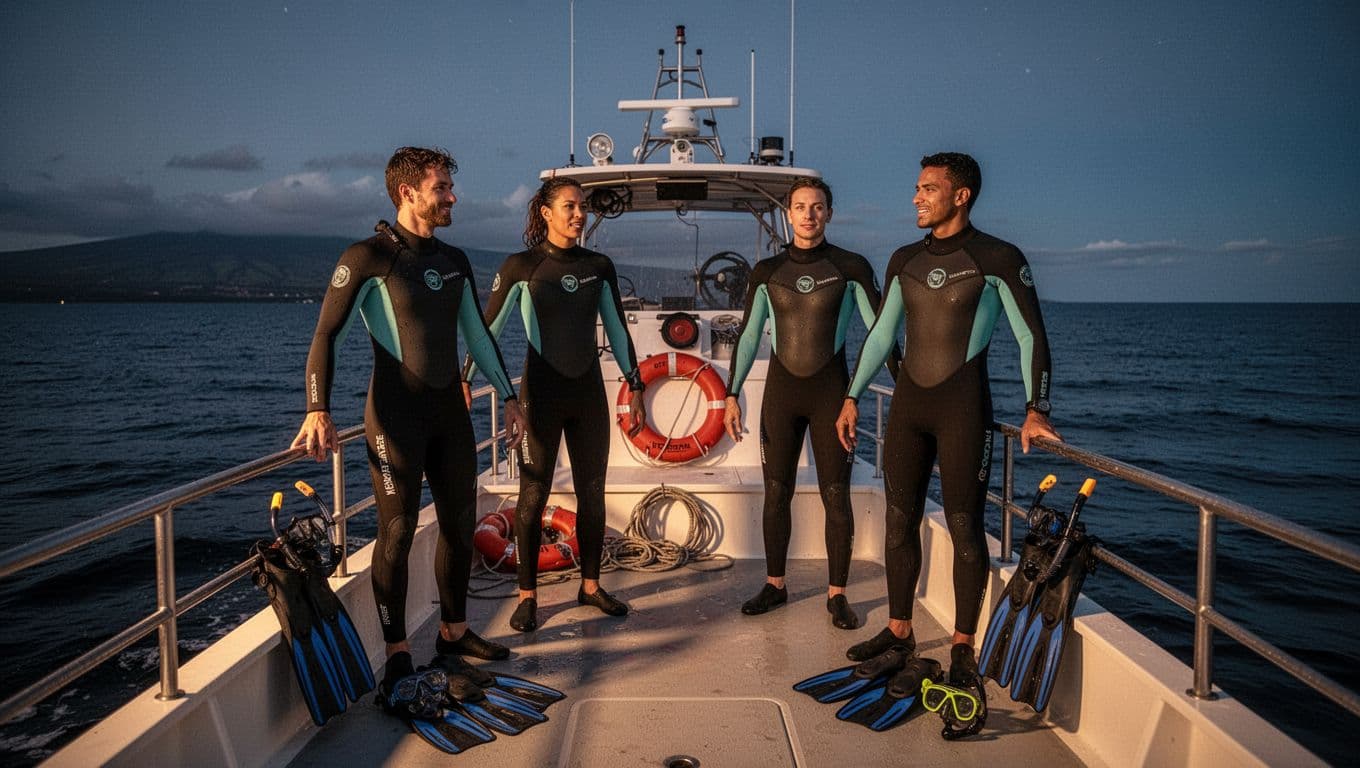
You can stand while you’re on the boat deck, moving around, or getting fitted for gear. That part feels normal, and the crew expects it. On the water, though, you’re not meant to plant your feet on the seafloor or rise up during the manta viewing.
The important part is the setup. The manta encounter happens at the surface, where you hold a lighted board and float. If you’re looking at Kona manta ray snorkel tour details, the main thing to understand is that this is a passive experience. You’re there to watch, not chase.
That’s why many people who are new to snorkeling Big Island trips feel more relaxed once they hear the rules. The boat deck is your standing zone. The ocean is your floating zone.
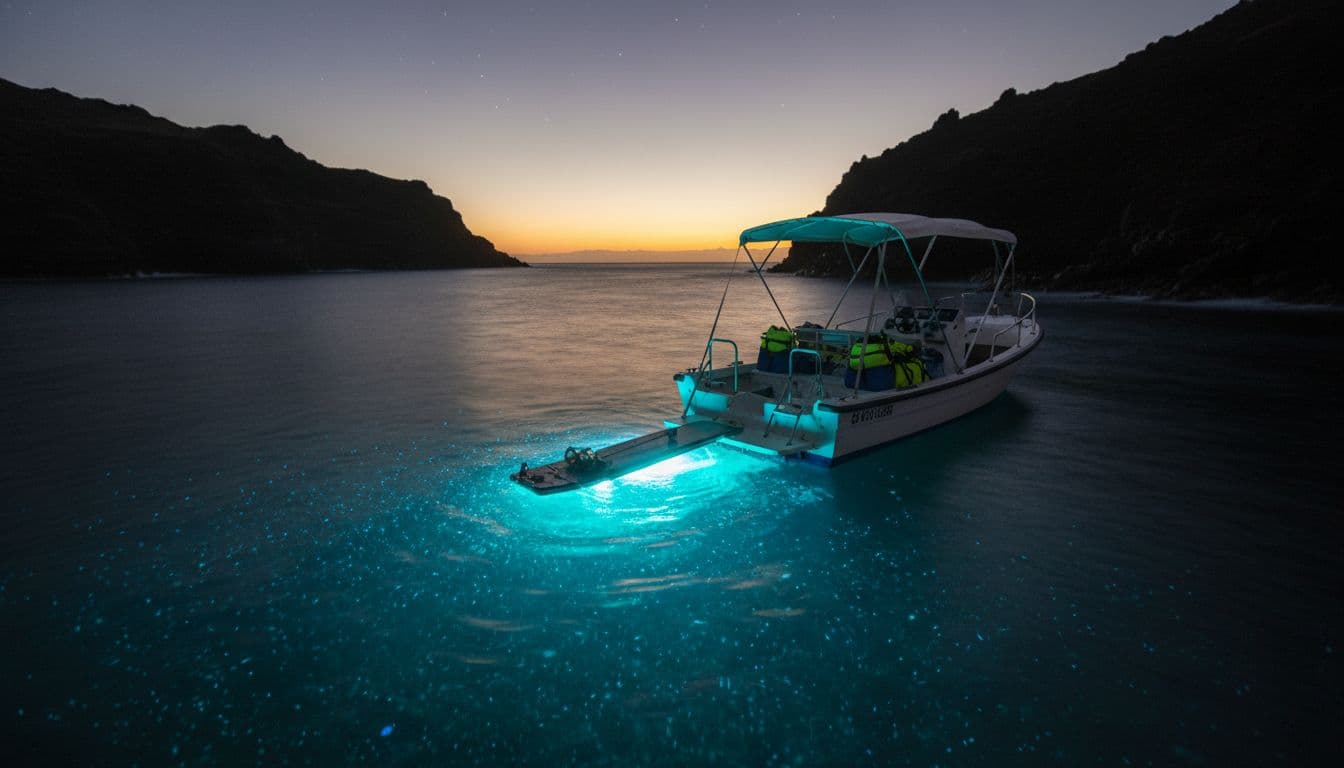
What happens once you enter the water
Once you slide in, you hold the board and keep your body flat. The board gives you a stable place to stay, and the lights help bring plankton toward the surface. That’s the dinner source for the mantas, so the whole scene works best when you stay calm and still.
Once you’re in the water, the safest move is the calmest one, hold the board and float.
You don’t need to kick around or search for a footing. You stay with the group, breathe steadily, and let the current of the night do the rest. The crew will talk you through the pace before you enter, which is why the before-you-book FAQ is such a useful read if you like clear expectations.
The setup also lines up with the no-touch approach explained in this manta ray etiquette guide. That matters because the more relaxed you are, the more natural the encounter feels.
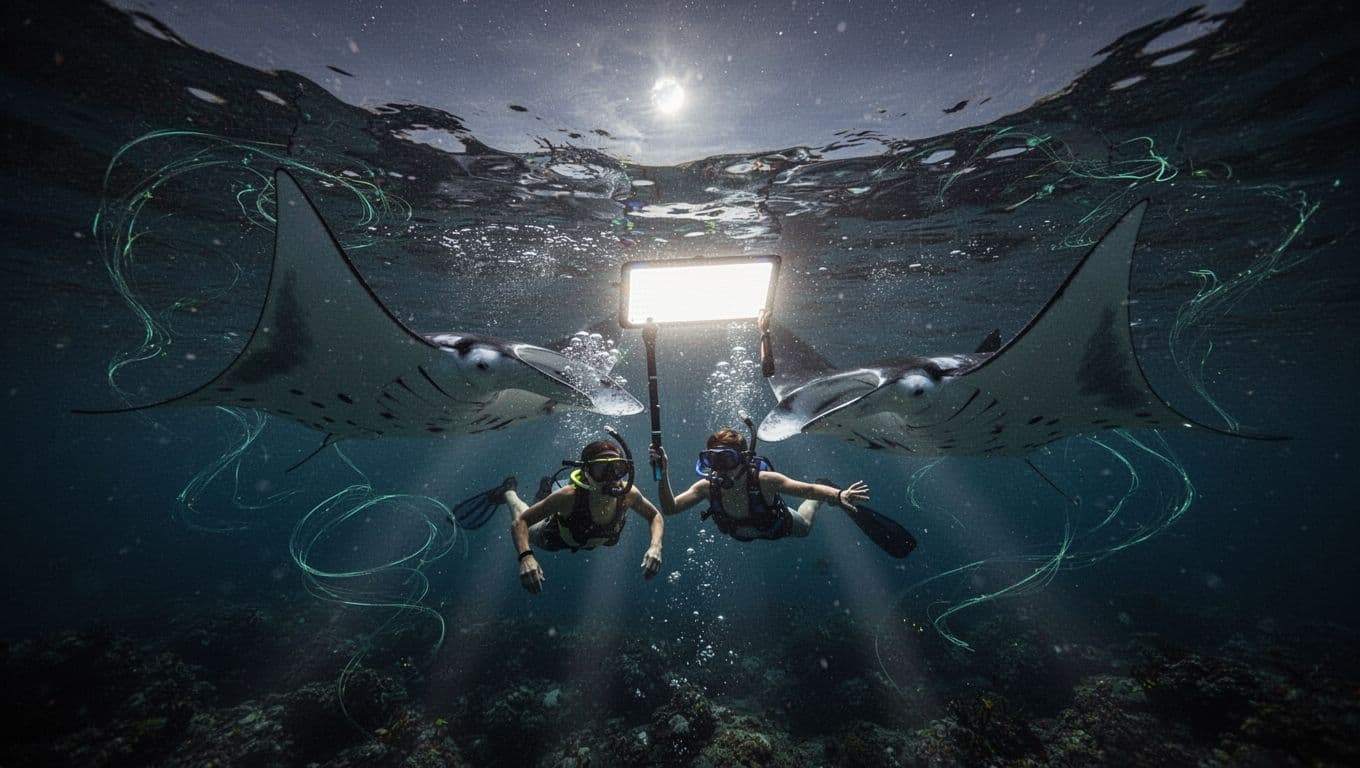
Why the crew tells you not to stand in the water
Standing in the water sounds harmless, but it creates problems fast. The night is dark, your balance changes, and the ocean floor is not a place to plant your feet.
A few good reasons stand out:
- You stay safer when you keep your body level and close to the board.
- You protect the reef because standing near sand or coral can stir up the bottom.
- You help the group stay together since the crew can track everyone more easily.
- You get a better view because the mantas come to the surface, not to a standing swimmer.
That last point surprises some first-time visitors. The best part of the kona manta ray snorkel happens when you float still and let the animals come to you. If you’ve ever wondered whether the night feels active or calm, it’s both. The boat is active. The water is quiet.
If you’re planning snorkeling Big Island adventures with kids, a partner, or a nervous swimmer, that quiet structure helps a lot. People usually relax once they realize they don’t need to do much at all.
Picking the right tour for your comfort level
If you want more space, a smaller group can make a big difference. Private charters are a smart choice when you want a slower pace, extra room on deck, or a more personal feel. You can look at private Kona boat charters if that sounds better for your style.
You can also compare all Kona snorkel tours if you’re deciding between a manta night trip and a daytime reef outing. For some travelers, the best answer to snorkel Big Island is a calmer day trip first, then the manta run after they get comfortable in the water.
If the manta trip already fits your plans, check availability before your Kona dates fill up.
Conclusion
You can stand on the boat, but you should not stand in the water during a manta night snorkel. That’s the simplest answer, and it’s the one that keeps the trip safe, calm, and fun.
Once you know the difference, the rest makes sense. The crew guides you, the board holds you in place, and the mantas do the work below you.
If you’re planning snorkeling Big Island Hawaii and want the clearest possible start, focus on a tour that explains the surface routine before you leave the dock.