
Blackwater Dive Hawaii: Your Ultimate Guide to the Deep
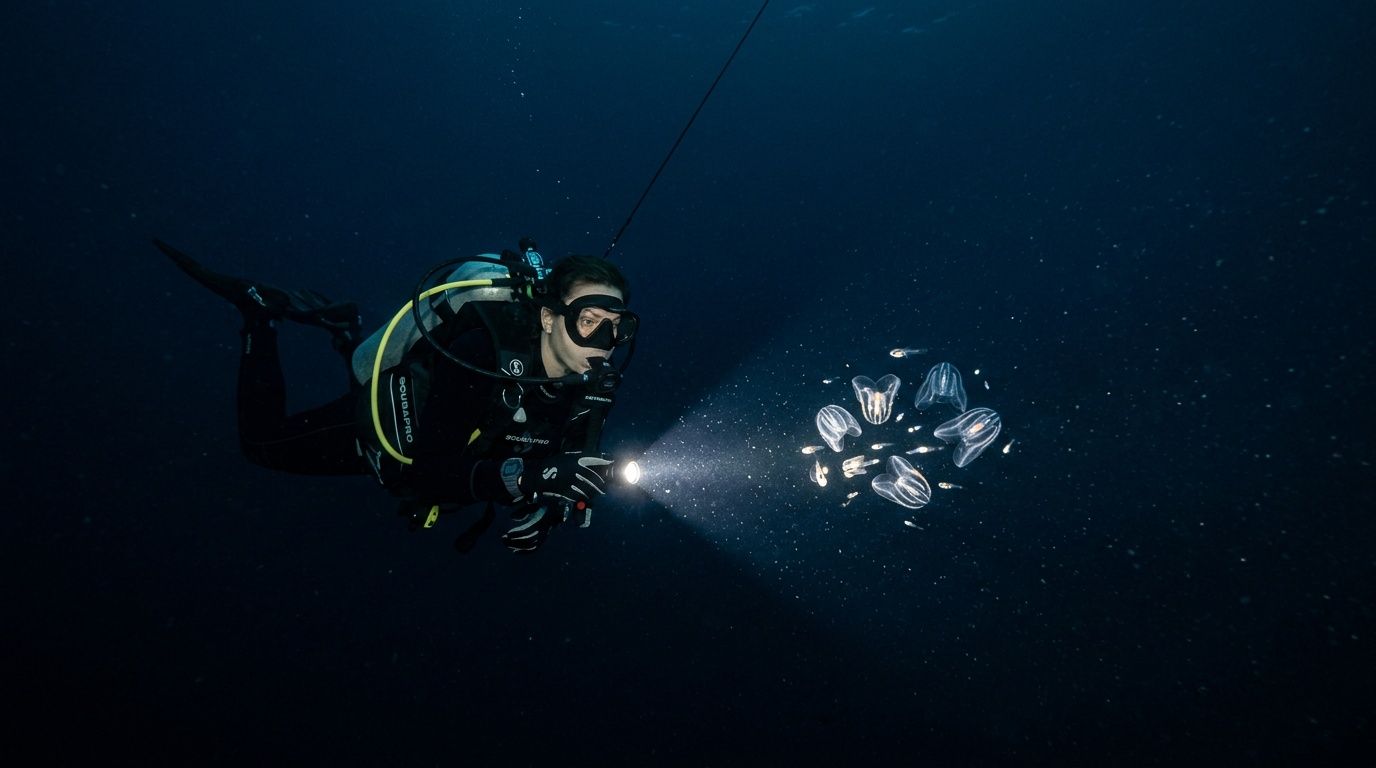
You’re probably here because reef night dives already feel familiar, and you want the stranger, deeper version of Hawaii diving. Not a lava tube. Not a coral ledge. Not a shore entry with your light sweeping over rock.
You want the open ocean at night.
A blackwater dive Hawaii experience is one of the few dives that can make very experienced divers go quiet on the ride back. You drop into darkness, clip into a controlled line system, settle into neutral buoyancy, and wait for the water column to reveal itself. Then the small things begin to appear. Transparent hunters. Pulsing jellies. Larval fish that look nothing like the adults they’ll become. Every minute feels half natural history, half science fiction.
What makes Kona special is that this isn’t a novelty add-on. It’s the place where recreational blackwater diving took shape, and that matters. The sites are close, the procedures are refined, and the crews who run these dives understand that wonder only works when safety is disciplined.
Descend into Another World on a Hawaii Blackwater Dive
The first shock is how empty it feels.
You giant stride off the boat, look down, and there’s no reef coming into view. No slope. No sand. Just darkness below and a lit-downline in front of you, suspended in what feels like outer space. Your bubbles rise into black sky, and the ocean around your mask becomes a stage where tiny pelagic life drifts into the beams.

Most divers expect a darker version of a reef dive. That’s not what this is. You’re not hunting for eels under ledges or watching sleeping parrotfish. You’re hovering in midwater while the nightly migration rises from the deep, and each new shape appears for seconds, sometimes less, before vanishing again.
What the descent actually feels like
The best way to describe it is controlled suspension. The line gives you orientation. Your light gives you a visual field. Everything outside that cone disappears. Then a comb jelly flashes past like blown glass. A larval fish hangs motionless with impossible geometry. Something that looked like a scrap of cellophane turns out to be alive.
Practical rule: The divers who enjoy blackwater most are the ones who stop trying to chase the ocean and let the ocean come to them.
That’s why strong operators matter so much. Good blackwater crews don’t just drop divers in the water. They build a calm rhythm before anyone enters. Briefing, clipping in, light discipline, buoyancy checks, and clear expectations all happen before the strange beauty starts.
Kona remains the benchmark for this dive for exactly that reason. The experience feels wild, but the operation behind it shouldn’t. If you want a useful overview of how these dives work locally, this guide to black water dives in Kona is a solid starting point.
Why divers remember this one
A lot of memorable dives are about scale. Big sharks. Big mantas. Big walls. Blackwater is the opposite. It changes how you look. You stop searching for landmarks and start scanning for movement, translucence, and shape.
That shift is what hooks people. It’s not just another night dive. It’s a completely different way to experience the ocean.
Understanding Pelagic Magic The Blackwater Concept
Blackwater diving puts you in the open ocean at night, suspended over water so deep the bottom has no practical role in the dive. The focus is the midwater zone itself. Divers stay with a purpose-built line system under the boat and watch what rises into the light after dark.
That setup is what separates blackwater from any standard night dive. On a reef, the site gives you orientation. On blackwater, orientation comes from procedure. The downline, your clip point, the float lights, your team position, and disciplined buoyancy control replace bottom contour and landmarks.

Why Kona became the world center for it
Kona works so well because deep ocean sits close to shore. We can run a short boat ride from the harbor and be over serious depth fast, instead of spending a long transit burning daylight, fuel, and diver energy before the dive even starts.
That geography matters more than visitors usually realize. In other parts of the world, blackwater-style dives may require long offshore runs, more weather exposure, stronger current management, and a wider margin for changing sea state. Kona’s leeward coast gives operators a rare combination: immediate access to pelagic water and conditions that are often predictable enough to run this dive consistently with a tight safety system.
That is a big reason Kona became the reference point for recreational blackwater diving. The ocean here delivers the right biology, and the coastline makes the operation practical. For divers weighing destinations, this overview of blackwater diving in Kona explains how local crews structure the experience.
It also shapes the environmental side of the dive. Shorter runs generally mean less fuel use, and better reliability reduces the pressure to rush marginal weather calls. The best operators now pair that operational discipline with small-group diving, careful light use, and strong briefings on keeping hands off delicate pelagic life.
How blackwater differs from a reef night dive
The mechanics are simple, but the mindset is different.
| Dive type | What you reference | What you’re watching | How you move |
|---|---|---|---|
| Reef night dive | Bottom, wall, coral structure | Resident reef life | You travel across terrain |
| Blackwater dive | Downline, lights, nearby divers | Pelagic larvae and migrators | You hover and observe |
Hovering well is the skill that makes the dive click. Divers who kick too much, change depth constantly, or swing wide off the line usually miss the best subjects and make the dive harder than it needs to be.
You are watching a conveyor of ocean life pass through a fixed viewing zone.
Why the concept works at night
After sunset, many deep and midwater organisms move upward in the water column to feed under cover of darkness. Blackwater diving places you in that migration band with enough structure to stay oriented and enough light to spot animals that would otherwise pass unseen.
Good blackwater diving is quiet diving. Clean trim. Slow turns. Small fin movements. A steady scan through the beam, then into the darker water just outside it, where some of the best finds first appear as a flicker, a shape, or a pair of eyes.
That is the core concept. You are not chasing pelagic life across the ocean. You are holding position in one of the busiest vertical migrations on the planet and letting the night shift come to you.
What You Will See on Your Blackwater Dive
Your light drops into black water off Kona, and within minutes the beam starts filling with animals that do not look real. A larval fish drifts past with a glass-clear body and silver eyes. A comb jelly rows through the light like a living chandelier. Then something tiny flashes, folds, and vanishes back into the dark.
That mix of mystery and turnover is what keeps experienced divers coming back. No two drifts produce the same cast. Some nights are heavy on gelatinous life. Other nights bring larval fish, juvenile squid, pelagic snails, octopus larvae, and brief, fast passes from animals you only identify after the dive, if at all.

The creatures that stop divers midwater
Kona blackwater is famous for larval and juvenile stages. That matters because many open-ocean animals look their strangest early in life, before they settle into the forms divers recognize from books or reefs.
Comb jellies pulse with rainbow refractions. Larval eels hang in the water like clear ribbons, all jaw and spine. Paper nautilus sometimes appear so delicate that divers mistake them for floating debris until they see the animal move with purpose. Siphonophores can stretch like fine crystal chains. Tiny squid arrive fully armed, already built like predators, just miniature and nearly transparent.
The surprise is not only the species list. It is the transformation on display. You are watching animals in transition, body plans that solve life in the open ocean before adulthood changes everything.
Why Kona sightings feel so rich
Kona has an advantage few places can match. Deep ocean sits close to shore, so the boat run is short and the dive happens over serious water without a long offshore transit. That geography helps operators run blackwater trips with unusual consistency, and it puts divers in productive pelagic water on a schedule that would be harder to match in many other destinations.
The result is a dive that feels wild, but is built on a very reliable setup. That combination is a big reason Kona became one of the world references for blackwater diving. If you want a feel for how local operators set these trips up, this overview of a Kona blackwater dive gives a good local snapshot.
It also supports a lower-impact operation. Shorter runs generally mean less fuel burned per trip, and experienced crews here have gotten better about light discipline, animal handling rules, and keeping the encounter purely observational. That matters with fragile pelagic life. The best blackwater dives leave nothing touched and nothing stressed.
What bioluminescence changes
Some nights, the water itself feels inhabited before you identify a single animal. A point of light flickers, then another. A comb jelly throws back color. A tiny body pulses once and disappears.
Bioluminescence is part of what gives blackwater its reputation, but the effect is subtle more often than theatrical. Expect moments, not a constant fireworks show. Those moments are enough. They change the mood of the dive from dark water to active water, full of signals, camouflage, and brief flashes of defense or attraction.
Some of the best blackwater subjects are barely larger than your thumbnail, yet they can hold a diver’s attention longer than a reef shark.
What new blackwater divers miss first
New divers usually search too far from the beam and wait for something big. The better approach is tighter and calmer. Good blackwater spotting is a small-scan skill.
Watch for these cues:
- Transparent outlines: Many animals show up as distortion before they show color or detail.
- Tiny reflective eyes: A pair of pinpoints often gives away a fish that is otherwise invisible.
- Vertical hovering or pulsing: Larvae and gelatinous animals often reveal themselves by movement pattern first.
- Repeating structure: Segments, trailing filaments, and symmetrical shapes often separate animals from drifting debris.
A steady diver sees more. Fast finning, wide light sweeps, and constant head movement cause divers to blow past the smallest and best subjects.
Why photographers love it and struggle with it
Blackwater gives photographers access to subjects they may never see on a reef, but it is demanding work. The animals are small, often clear, and rarely hold still. Backscatter can ruin a frame. Too much light can wash out detail or alter animal behavior. Good blackwater shooters keep the setup simple and their body position cleaner than usual.
The same habit helps divers who never bring a camera. Hold depth. Slow your breathing. Let the subject enter the beam and resolve. On a Kona blackwater dive, patience usually produces the better sighting.
Your Guide to a Safe Blackwater Experience
The dive looks extreme from the surface. Open ocean. Night. No visible bottom. That’s exactly why procedure matters so much.
A properly run blackwater dive is not casual. It’s structured. Every part of the system exists to reduce confusion, maintain diver accountability, and keep the experience inside a very controlled envelope.
The tether system is the foundation
The key safety feature is the tether setup. On Hawaii blackwater dives, each diver connects to the downline with a 10-foot leader and stays within a controlled depth zone, typically 40 to 60 feet, as described in this Kona blackwater safety explanation.
That setup solves the biggest open-ocean problem immediately. It prevents divers from wandering off in darkness while still giving enough space to hover comfortably, observe subjects, and manage personal position in the water.
A good blackwater diver understands the trade-off here. You give up freedom of movement in exchange for a much safer and more useful dive. That’s not a compromise. It’s the reason the dive works.
Buoyancy is not a nice extra
On a reef, a little sloppiness can be annoying. On blackwater, it changes the whole dive.
The same source notes that stable neutral buoyancy can conserve 30 to 50% more air over the dive, and divemasters report that stable divers spot 2 to 3 times more species. That fits what experienced crews see every week. The diver who hovers gets longer observation time and a much calmer mental experience. The diver who bicycles, chases, and corrects constantly burns gas and misses the subjects drifting right in front of them.
Crew advice: If your trim is busy on a day dive, it will feel worse at night in blue water. Fix that before you book blackwater.
Who should do this dive
This is not an entry-level scuba experience. Divers should come in comfortable with:
- Advanced Open Water training: The dive demands precise control and familiarity with task loading.
- Recent night diving experience: Darkness changes perception, and that shouldn’t be new on this dive.
- Solid buoyancy habits: You need to hold position without relying on visual bottom reference.
- Calm open-ocean mindset: If blue water already increases your stress, this is something to build toward, not rush.
The prerequisites used by Kona operators exist for a reason. They aren’t about exclusivity. They screen for the exact skills that make the dive comfortable rather than overwhelming.
What works and what doesn’t
Here’s the practical version from a divemaster’s standpoint:
What works
- Small movements: Tiny fin inputs keep you in place without stirring up fatigue.
- Eyes near your beam: Watch the water just beyond your immediate light cone.
- Early equalization and calm breathing: You want your descent and hover to feel effortless.
- Listening carefully to the briefing: Blackwater is one of the worst dives for selective hearing.
What doesn’t work
- Overweighting yourself: It creates constant correction and messy trim.
- Trying to swim laps around the array: You’ll see less, not more.
- Fixating on depth computer swings: Minor movement is normal. Chasing perfection makes things worse.
- Treating it like a thrill ride: The best blackwater divers are disciplined observers.
For a broader look at how strong marine tour operations reduce risk, this article on essential Kona boat tour safety features is worth reading.
Why operator choice matters
In blackwater, the operator is part of the life-support system. Crew briefing quality, line setup, diver spacing, light management, and in-water supervision all directly affect the dive. This is why many local divers steer serious guests toward Kona Honu Divers for scuba on the Big Island and especially for specialty night dives. A strong crew makes the experience feel calm from the first gear check onward.
That’s what you want. Not bravado. Not hype. Just a disciplined team that runs the same clean procedure every time.
Preparing for Your Kona Blackwater Adventure
A smooth blackwater trip starts before you board the boat. The divers who enjoy it most usually treat the afternoon like part of the dive. Hydrate early, eat something light that sits well, and avoid turning the day into a marathon of sun, hiking, and dehydration.
By check-in, you want to feel settled, not wrung out.
What to bring and what to leave alone
Bring the basics you’d expect for a specialty boat dive, but keep it simple.
- Certification proof and log details: The crew needs to know you’re properly qualified for the dive.
- A warm layer for after the dive: Night rides back can feel cool even after warm water.
- Seasickness prevention if you need it: Take it before the boat leaves, not after you feel bad.
- A simple gear mindset: This is not the night to test unfamiliar accessories.
Leave behind anything that adds clutter. Extra clips, dangling gadgets, and improvised camera setups make an already technical environment messier than it needs to be.
If boat motion ever gets to you, this guide on how to stop seasickness on a boat covers the habits that help most.
How the evening usually unfolds
Most blackwater outings follow a calm, predictable rhythm. You’ll board in Kona, organize gear, listen to a detailed briefing, and head out on a relatively short run compared with more exposed offshore destinations. Once the boat is on site, the crew deploys the line array, confirms lights and attachment points, and talks divers through entry, descent, and communication.
Then things slow down.
You gear up with more intention than on a casual reef dive. The clipping-in step matters. The descent matters. The first minute of hovering matters because that’s where your brain stops looking for bottom and starts accepting the line as home base.
The adjustment usually takes a minute or two. After that, most divers go from alert to fascinated fast.
Travel details that matter more than people think
If you’re building a bigger Hawaii trip around diving, logistics can shape how fresh you feel on dive day. Some travelers planning a premium itinerary find resources on flying private to Hawaii useful for understanding island access, baggage flexibility, and scheduling options. However you arrive, the same rule applies once you’re on island. Don’t schedule your blackwater dive at the tail end of an exhausting day.
A practical pre-dive routine helps:
- Eat early and lightly
- Hydrate through the afternoon
- Pack your warm post-dive layer
- Check your gear before leaving lodging
- Show up with time to spare
What the first moments underwater are like
The first look into black water can spike your awareness. That’s normal. The fix isn’t bravado. It’s procedure. Check your breathing, settle your weighting, and lock onto the system you were briefed on.
Once your body realizes it has reference points, the psychological shift happens quickly. The darkness stops feeling like absence and starts feeling like habitat. That’s when the dive opens up.
How to Book the Best Blackwater Dive in Hawaii
If you’re serious about doing a blackwater dive Hawaii experience well, choose an operator with a deep local track record in Kona diving, a crew that treats line procedure as mandatory, and a briefing style that leaves no ambiguity in the water. Blackwater isn’t the place to shop by price alone.
For most divers, the strongest first stop is the Kona Honu Divers black water night dive tour. Their focus on scuba, local experience, and specialty dive operations makes them a natural fit for this kind of outing. If you’re looking more broadly at local scuba options, their full slate of Kona diving tours is useful for planning a multi-dive trip.
What to look for before you reserve
Use these criteria when comparing trips:
- Briefing quality: If the operator can’t explain the line system clearly on land, don’t expect clarity in the water.
- Specialty-dive culture: Shops that regularly run advanced night diving tend to handle blackwater with more consistency.
- Boat workflow: Clean gearing up, organized entries, and clear crew roles matter.
- Fit for your experience: A good operator will tell you directly if you should build more night-dive experience first.
If you want another memorable night option while you’re in Kona, the manta ray night dive with Kona Honu Divers is the obvious companion experience. Mantas deliver scale and grace. Blackwater delivers strangeness and detail. Together, they show why Kona is such a standout place to dive in Hawaii.
Read the reviews before you click
When divers talk about a shop after a specialty dive, the details matter. Did the crew stay organized? Did they keep the group calm? Did the operation feel polished rather than improvised?
Book with the right mindset
Reserve the dive you’re ready for, not the one that sounds most extreme on paper. If your buoyancy and night-dive comfort are solid, blackwater can become the highlight of your Hawaii trip. If they’re not, spend a little time building those skills first and come back for it properly.
That approach leads to better sightings, lower stress, and a much better memory of the dive.
Frequently Asked Questions About Blackwater Diving
Is Kona really the best place to do blackwater diving
For reliability and ease of access, Kona is hard to beat. Local guides report that blackwater diving runs year-round on the sheltered leeward coast, and April to June can bring optimal water clarity that boosts sightings by up to 40%, with cancellation rates under 10%, according to this Kona blackwater dive overview. That combination of deep water close to shore, short runs, and protected conditions is unusual.
Is blackwater diving safe
It can be very safe when it’s done with the right operator and by divers who meet the prerequisites. The key isn’t toughness. It’s control. Proper tethering, disciplined briefing, calm buoyancy, and an experienced crew turn an intimidating environment into a managed one.
What if I’m nervous about the darkness
That’s common, even among experienced divers. Most of the stress comes before descent, when your brain is still trying to make sense of open dark water. Once you’re clipped in, settled, and focused on the light field, the anxiety usually drops quickly.
A helpful mindset is to treat the system, not the darkness, as your reference. Stay with the procedure and let the environment become familiar.
What’s the best season for sightings
Kona offers the dive all year, but many divers favor the period with the clearest water. If your schedule is flexible and your main goal is visibility and subject-spotting, that window can be a smart target.
Is this better than blackwater diving in other destinations
“Better” depends on what you value. If you want long runs to far offshore sites and a more expedition-style feel, other places may appeal to you. If you want the birthplace of recreational blackwater diving, fast access to abyssal depths, and highly repeatable operations, Kona has a very strong case.
Do I need to be an expert diver
You don’t need to be an elite technical diver. You do need to be honest about your comfort level. This dive suits divers who are already relaxed on night dives, stable in midwater, and able to manage task loading without getting flustered.
Blackwater rewards control more than bravado.
Is blackwater diving environmentally responsible
It can be, when operators treat wildlife interactions carefully and divers avoid sloppy finning, chasing animals, or turning the dive into a photo frenzy. Eco-conscious divers should ask how the crew handles positioning, lighting discipline, and wildlife etiquette. The point is observation, not disturbance.
If blackwater diving sounds a little too advanced for your group, but you still want an unforgettable night ocean experience, Kona Snorkel Trips is an excellent place to start. Their team is known for safe, personalized adventures on the Big Island, including iconic wildlife encounters that make Kona famous.