
Snorkeling Big Island Hawaii on a Rainy Day
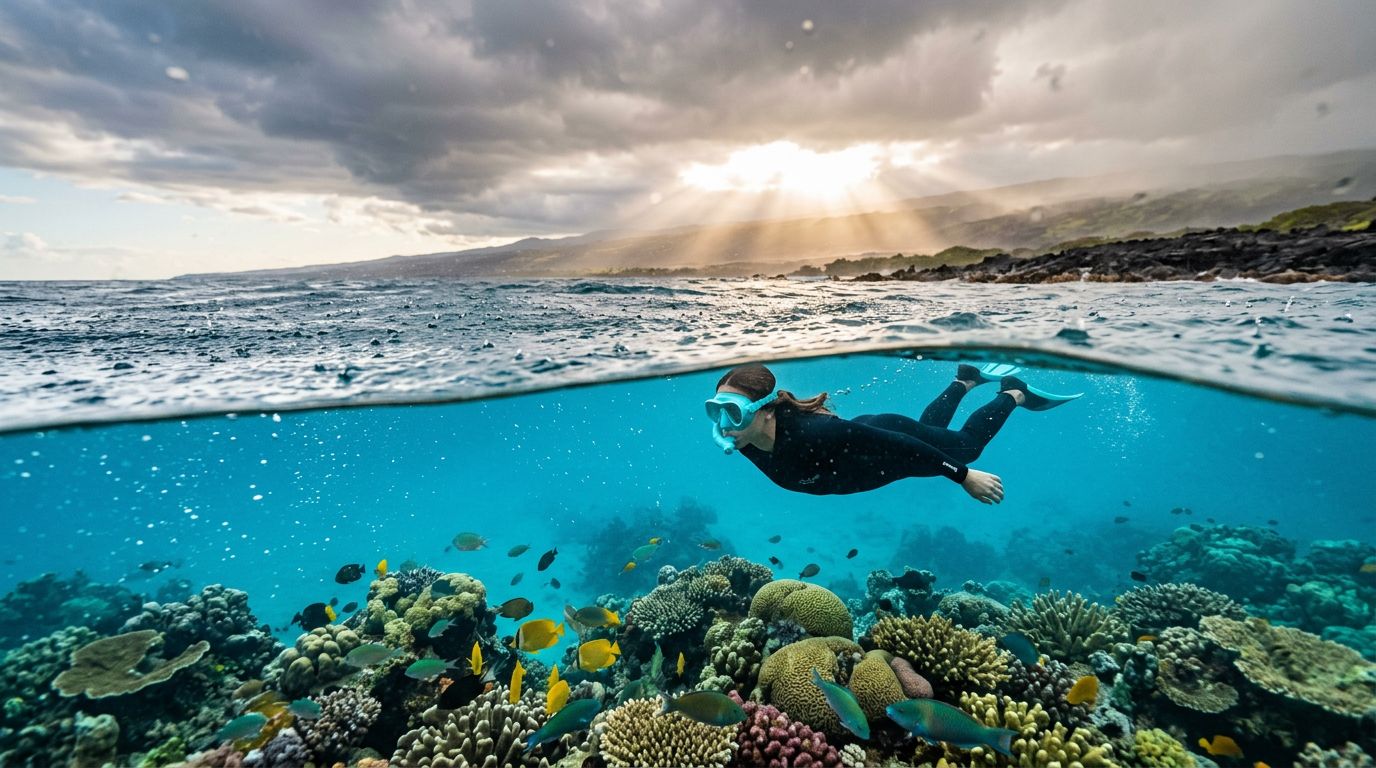
Rain doesn’t automatically ruin your snorkeling plans on the Big Island. In Kona, a passing shower can leave the ocean calm, clear, and ready for a memorable trip.
The real concerns are heavy runoff, poor visibility, strong wind, large swell, and lightning. With a flexible schedule and a careful water check, you can still enjoy snorkeling Big Island Hawaii when the forecast looks unsettled. Start by learning how to tell a harmless shower from a reason to stay ashore.
Key Takeaways
- Light rain is often safe for snorkeling when the ocean remains calm and clear.
- Avoid brown or cloudy water, especially near stream mouths, after heavy rainfall.
- Hawaii Department of Health guidance calls for a 72-hour wait after heavy rain near affected waterways.
- Kona’s leeward coast usually offers better rainy-day conditions than Hilo’s wetter east side.
- A guided trip with Kona Snorkel Trips gives you local weather judgment, safety support, and backup planning.
Light Rain Usually Isn’t the Main Problem
You may notice rain while riding to the harbor, entering the water, or floating above a reef. That alone doesn’t make snorkeling unsafe. A brief shower often passes quickly, and the ocean surface can stay smooth while rain falls around you.
Once your face is in the water, light rainfall may have little effect on what you see below. The larger concern is what the rain does to the land and ocean. Heavy downpours can carry soil, debris, bacteria, and other runoff into coastal water. That runoff creates the brown, cloudy appearance you should never ignore.
Wind and swell also matter. Rain can arrive with stronger gusts, choppy water, or shifting currents. Those conditions can make it difficult to keep your mask sealed, maintain your position, or return safely to shore.
Kona’s west coast has a useful geographic advantage. The leeward side of the island generally receives less rain than Hilo and the east coast. The Kona area receives roughly 10 to 20 inches of rain annually in many locations, while Hilo can receive well over 100 inches. Local conditions still change quickly, but Kona often gives you more options when clouds build inland.
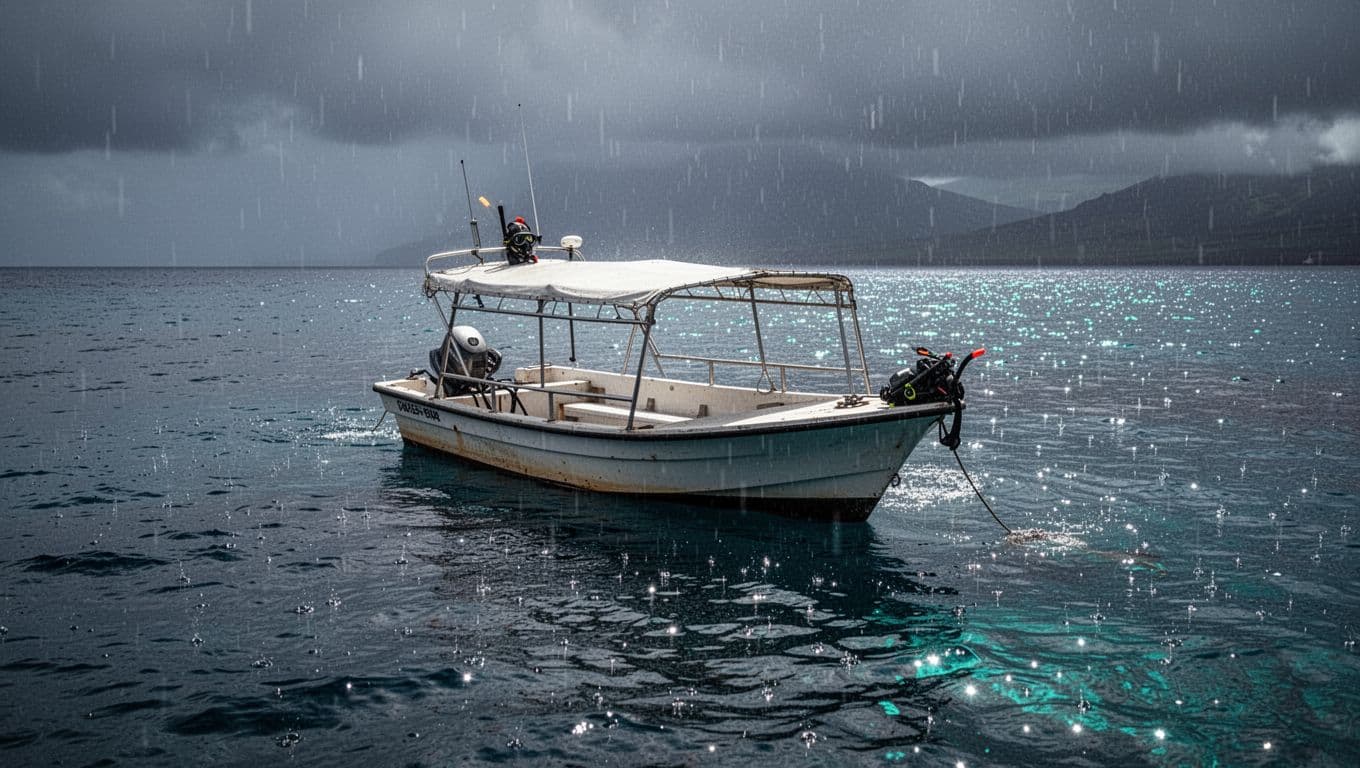
A tour boat may still operate during light showers if the captain sees calm seas and good visibility. Captains watch wind, swell, currents, radar, and water clarity rather than canceling because of rain alone.
Rain on your shoulders is uncomfortable. Brown water, lightning, and rough seas are safety concerns.
You should also remember that a rainy forecast for the island doesn’t mean rain at your snorkeling site. Mountain clouds can produce a downpour inland while the Kona coast stays bright and dry. Checking the specific area near your launch point is more useful than relying on the island-wide forecast.
Check Runoff Before You Snorkel
Runoff is the most important rainy-day issue. After a heavy storm, look closely at the water before you enter. Brown streaks, floating debris, cloudy patches, or a visible freshwater plume are all reasons to wait.
Freshwater runoff can spread along the surface and move with currents. You may see discolored water near a beach even when the ocean farther offshore looks clear. Stream mouths, drainage channels, and low coastal areas deserve extra caution because they collect water flowing downhill.
The Hawaii Department of Health advises waiting at least 72 hours after heavy rain before swimming near stream mouths or entering discolored water. That period gives runoff time to disperse and water quality conditions time to improve. The same caution applies if a local brown-water advisory remains active.
Don’t assume that clear water directly beside a murky area is safe. Runoff can shift with tide and wind. If you’re unsure, ask a lifeguard, contact your tour operator, or choose another activity for the day.
You can also use the visual check below before any shore entry:
- Look for brown, gray, or unusually cloudy water.
- Check whether debris is moving toward the beach.
- Identify nearby streams, drainage channels, or low-lying outlets.
- Ask whether heavy rain fell within the last 72 hours.
- Leave the water if currents feel stronger than expected.
Open cuts deserve extra attention after heavy rain. Avoid swimming in runoff-affected water if you have a fresh scrape, cut, or other break in your skin. Children should stay away from murky water, even when waves look small.
Rainy-season travelers often compare conditions and timing in community discussions, including this Hawaii rainy-season snorkeling conversation. Personal reports can help you understand how variable the weather feels, but they shouldn’t replace a current water-quality advisory or a captain’s decision.
Choose the Right Coast and Time
Kona is usually the strongest base for Big Island snorkeling because its west-facing coastline sits in the island’s rain shadow. Protected bays and coves can remain calm while showers pass over the mountains.
Hilo has beautiful scenery, but its wetter climate makes it a less dependable choice for snorkeling during a rainy spell. If your main goal is to snorkel Big Island reefs, staying near Kailua-Kona gives you better access to protected launch points and experienced boat operators.
Morning trips often have an advantage. Winds commonly build later in the day, which can add surface texture even when the forecast shows only scattered rain. A start before late morning may give you flatter water and better visibility.
However, a morning departure isn’t automatically safe after a nighttime storm. Recent rainfall matters more than the clock if heavy runoff reached the coast. Ask about conditions before you leave your hotel, then check the water again at the launch site.
Some locations recover faster than others. Pawai Bay, near Honokohau, is one Kona-area location that can offer shelter when conditions cooperate. Kahalu’u Beach is another well-known protected reef, but you still need to check current surf, water clarity, and local advisories before entering.
Boat trips can provide more flexibility because the captain can assess several areas and choose a site with better shelter. A shore snorkel locks you into one coastline, while a boat crew can change the plan when wind or runoff affects the original destination.
Use this simple comparison when planning:
| Situation | Better choice |
|---|---|
| Passing light shower, calm sea | Keep your snorkel plans |
| Heavy rain ended recently | Wait and check advisories |
| Brown water near the beach | Do not enter |
| Calm Kona coast, rainy mountains | Consider a west-side trip |
| Wind building during the afternoon | Choose an earlier departure |
| Lightning near the coast | Stay out of the water |
The goal isn’t to find a dry beach at any cost. You want clear water, manageable movement, and a crew or lifeguard who can make sound decisions as conditions change.
Plan a Guided Rainy-Day Snorkel in Kona
A guided trip can simplify a day when the weather refuses to follow your itinerary. Kona Snorkel Trips runs small-group ocean adventures with lifeguard-certified guides, quality snorkeling equipment, and a strong focus on reef-safe practices.
The company follows a “Reef to Rays” philosophy. Guides help you understand the marine environment while keeping the experience personal and safety-conscious. State-of-the-art masks, fins, flotation equipment, and well-maintained boats make a difference when visibility or surface conditions change.
Before departure, ask three direct questions:
- How much rain fell near the launch area?
- Is the planned snorkeling site clear and calm?
- What happens if conditions change after departure?
A responsible operator won’t promise a fixed location regardless of weather. The crew should explain the day’s conditions and adjust the route when necessary. You can review the available Big Island snorkeling tours before choosing the trip that best fits your schedule.
Kona Snorkel Trips also keeps groups smaller than many high-volume commercial operations. That matters when you need help adjusting a mask, understanding a safety signal, or returning to the boat. Guides can pay closer attention to swimmers who feel less comfortable in moving water.
The company’s reef approach also affects your preparation. Use reef-safe sunscreen, avoid touching coral or wildlife, and keep your fins away from the bottom. Rain doesn’t change those responsibilities. The reef remains fragile whether the sky is blue or gray.
For a general Kona snorkeling trip, you can check availability before finalizing the rest of your rainy-day itinerary.
What Rain Means for a Manta Ray Night Snorkel
Manta ray snorkeling can still happen on a rainy evening. Darkness, not rainfall, defines the experience, and a short shower doesn’t automatically affect the underwater encounter.
The important conditions are a smooth surface, acceptable visibility, manageable wind, and no lightning. Heavy rain, strong chop, building swell, or nearby thunderstorms can lead a captain to delay or cancel the trip.
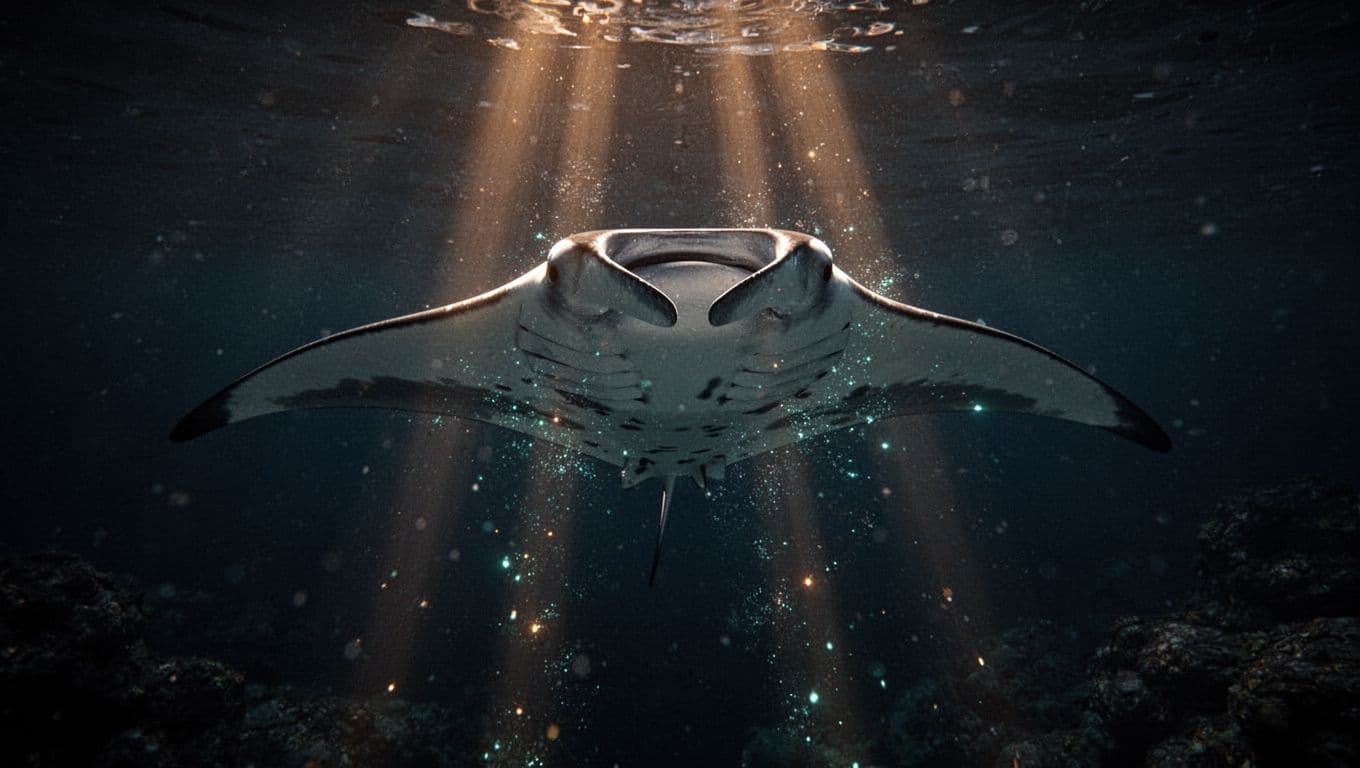
A manta ray night snorkel uses lights that attract plankton near the surface. Manta rays then glide through the illuminated water while snorkelers float above them. Because you remain at the surface, rough water can affect comfort even if the underwater visibility looks reasonable.
Pack a light rain jacket for the boat ride and bring a dry change of clothes for afterward. A towel, waterproof phone pouch, and motion-sickness medication can also help. Follow the crew’s directions closely, especially when entering the water after sunset.
Kona Snorkel Trips uses custom-built lighted boards for nighttime encounters and keeps guides close to the group. The small-group format gives you more room around the light board and makes it easier to hear instructions.
If you want to compare another dedicated provider, Manta Ray Night Snorkel Hawaii focuses on nighttime manta experiences in Kona. Either way, confirm the weather policy before booking and ask what happens if lightning appears after you arrive.
You can check availability for a Kona manta ray night snorkeling trip when the forecast shows passing showers but stable ocean conditions.
Pack for a Wet, Windy Boat Day
Rainy-day snorkeling requires a few extra items, even when the water temperature feels comfortable. Your packing list should protect your dry belongings and help you stay warm before and after the swim.
Bring a lightweight rain shell, a dry bag, and a spare shirt or swimsuit. A waterproof phone case keeps your camera protected between photos. Pack a towel even if your hotel or tour company provides one, since rain can soak your clothes before you enter the water.
Use reef-safe sunscreen on exposed skin. Apply it before departure so it has time to settle, and avoid spraying products near the boat’s swim platform. Sunglasses with a retaining strap help when rain and spray reduce visibility on deck.
If you take motion-sickness medicine, follow the product directions and take it early enough to work before the boat leaves. A calm ocean can still feel uncomfortable for someone who isn’t used to boat movement.
Your mask should fit comfortably without being overtightened. Rain on the mask lens won’t matter once you submerge, but a poor seal will. Ask your guide to help you adjust the mask before entering.
A practical rainy-day bag includes:
- Dry clothes and a warm layer
- Reef-safe sunscreen
- A towel and waterproof phone pouch
- Motion-sickness medication, if needed
- Reusable water bottle
- Hat or visor with a secure strap
Avoid bringing loose valuables onto the boat. Rain makes small items easy to lose, and wet hands make handling phones or jewelry more difficult.
Know When to Change the Plan
A flexible itinerary gives you more than one chance to enjoy the coast. If heavy rain affects your morning snorkel, you may be able to move the trip later, switch to a protected site, or choose a different ocean activity.
Contact your operator early when the forecast changes. Ask about rescheduling rules, alternate locations, and cancellation decisions. Policies vary, and waiting until you’re already at the harbor can limit your options.
You should postpone snorkeling when lightning is nearby, the ocean develops strong chop, or the water turns brown. Large shorebreak also creates a serious entry problem, especially for children and less confident swimmers.
Don’t enter a river mouth, drainage outlet, or discolored coastal area to “see if it gets better.” Water conditions can change faster than you expect. If a beach looks questionable, choose a different location or wait for an updated advisory.
Families should give children extra warmth and supervision after a rainy swim. Small swimmers can lose body heat quickly when wind hits wet skin. Keep young children close to the guide and use the flotation equipment provided.
Couples and solo travelers benefit from the same flexibility. A rainy morning can become a good time for coffee, a museum visit, or a scenic drive, followed by snorkeling when the coast clears. The Big Island offers enough variety that one weather delay doesn’t need to control your entire vacation.
For current conditions, ask a local lifeguard or your captain rather than relying only on a weather app. A forecast can describe rain over a wide area, while a local crew can see the actual water you plan to enter.
A Simple Rainy-Day Decision
Start by checking the forecast for Kailua-Kona, not only the island’s general weather. Then look for recent heavy rain near your planned beach or harbor.
If the rain is light and the water is clear, keep your plans but prepare for a damp boat ride. If the surface is rough, ask whether the crew expects conditions to improve later. If runoff has turned the water brown, wait at least 72 hours after heavy rain and follow local health guidance.
A guided boat trip can be the easiest choice when you don’t know the coastline well. Your captain can inspect conditions, select a protected area, and stop the trip when safety changes. You still need to speak up if you feel cold, seasick, anxious, or uncomfortable in the water.
Rain also gives you a reason to slow down. Underwater visibility may be excellent after a passing shower, and the clouds can soften the glare on the water during the boat ride. You don’t need perfect beach weather for a rewarding snorkel, but you do need clear water and sensible judgment.
Conclusion
Rain doesn’t automatically cancel snorkeling Big Island plans. On the Kona coast, light showers can coexist with calm seas and clear reefs, while heavy rain and runoff call for patience.
Check the water, ask local guides, respect the 72-hour runoff guidance, and keep your schedule flexible. When conditions cooperate, a gray sky can still lead you to a bright reef, a peaceful boat ride, or an unforgettable manta ray encounter.