
Manta Ray Snorkeling vs Swimming Underwater on the Big Island
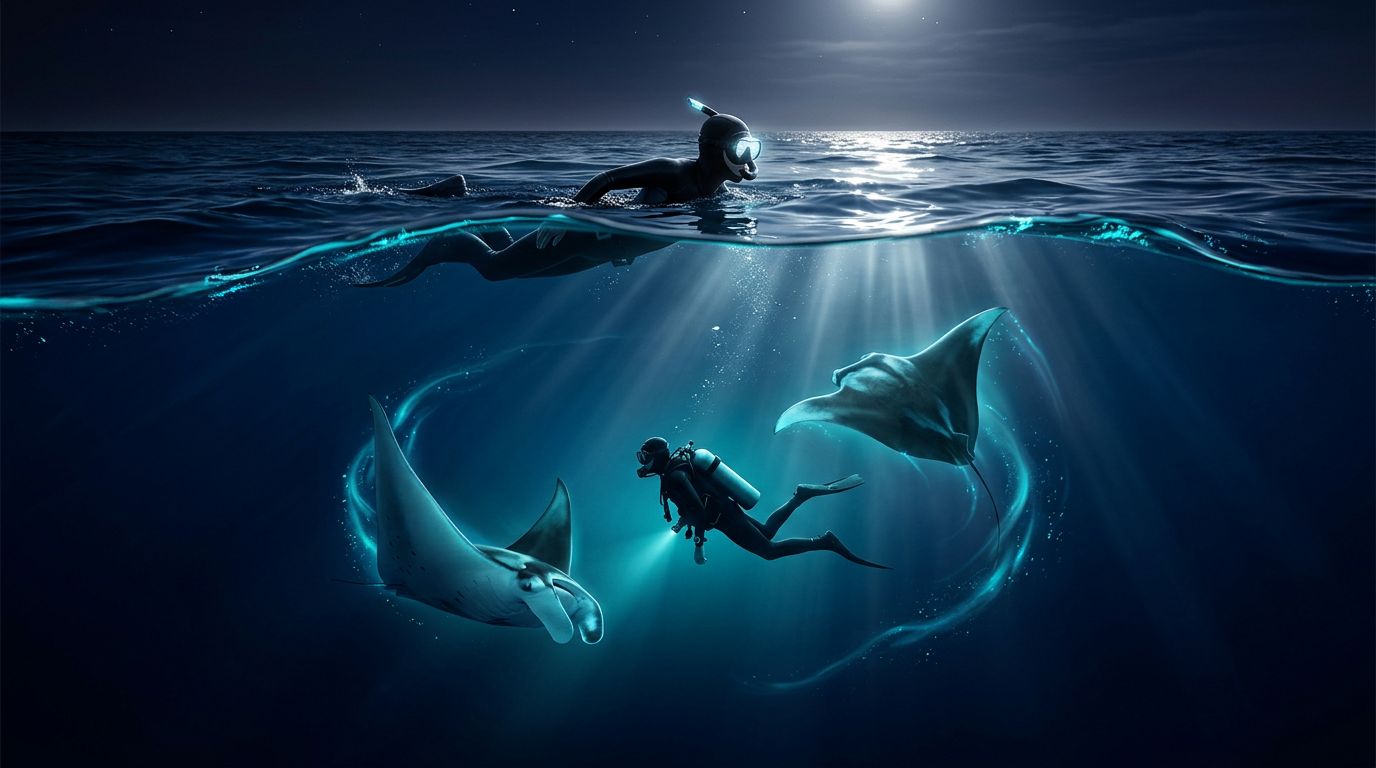
When you compare manta ray snorkeling with manta ray swimming underwater, the biggest difference is where you spend the night. One keeps you at the surface, calm and floating. The other drops you below it, where the whole encounter feels tighter and more demanding.
If you are planning snorkeling Big Island Hawaii, that choice affects more than comfort. It changes how much gear you need, how much skill you need, and how relaxed you feel when a wild animal passes nearby. Kona Snorkel Trips is a strong place to start, and Manta Ray Night Snorkel Hawaii is another manta-focused option worth knowing.
The good news is that both experiences can be memorable. The better choice is the one that matches your swim level, your confidence in the dark, and the kind of evening you want.
What you are really choosing
A lot of people use the same words for two very different experiences. That creates confusion before you even reach the dock.
In this article, manta ray snorkeling means you stay near the surface. You wear a mask and snorkel, float with support, and watch the mantas move below you. Manta ray swimming underwater means you spend more time below the surface, either on scuba or with a breath-hold style swim. That puts you inside the water column instead of above it.
Those two choices feel different the second you enter the ocean. Snorkeling gives you a broad view and a steady breathing rhythm. Underwater swimming gives you a more immersed angle, but it also asks for more control. You need to manage your breath, your body position, and your calm.
If you have searched for snorkeling Big Island options, you have probably noticed that the manta trip comes up fast. That is because Kona is one of the easiest places to watch these animals at night. The setup is simple, the viewing is clear, and the water often feels manageable for beginners.
For a broader look at trip styles, Big Island snorkeling tours gives you a good place to compare what else is available.
If you want a deeper breakdown of the surfacing versus diving choice, this night snorkel vs night dive guide is a helpful companion.
How manta ray snorkeling feels at the surface
Surface snorkeling is the easier of the two to settle into. You keep your face in the water, breathe through the snorkel, and let the floatation do most of the work. That matters at night, when staying relaxed is a bigger deal than people expect.
On a manta trip, the lights do a lot of the work for you. The water glows beneath the board or float, tiny plankton gather in the lit area, and the mantas often glide through that bright space like quiet birds under glass. You stay on top of the water and watch the movement unfold below.
That setup is one reason manta ray snorkeling works so well for first-timers. You are not fighting the ocean. You are watching it. The pace feels slower, and that helps when the whole trip happens after dark.
It also gives you room to enjoy the moment. You can breathe normally. You can look around without breaking the flow. You can focus on the size and shape of the manta instead of managing a more technical swim.
Surface snorkeling gives you more room to breathe, adjust, and enjoy the show. That is why many first-timers like it.
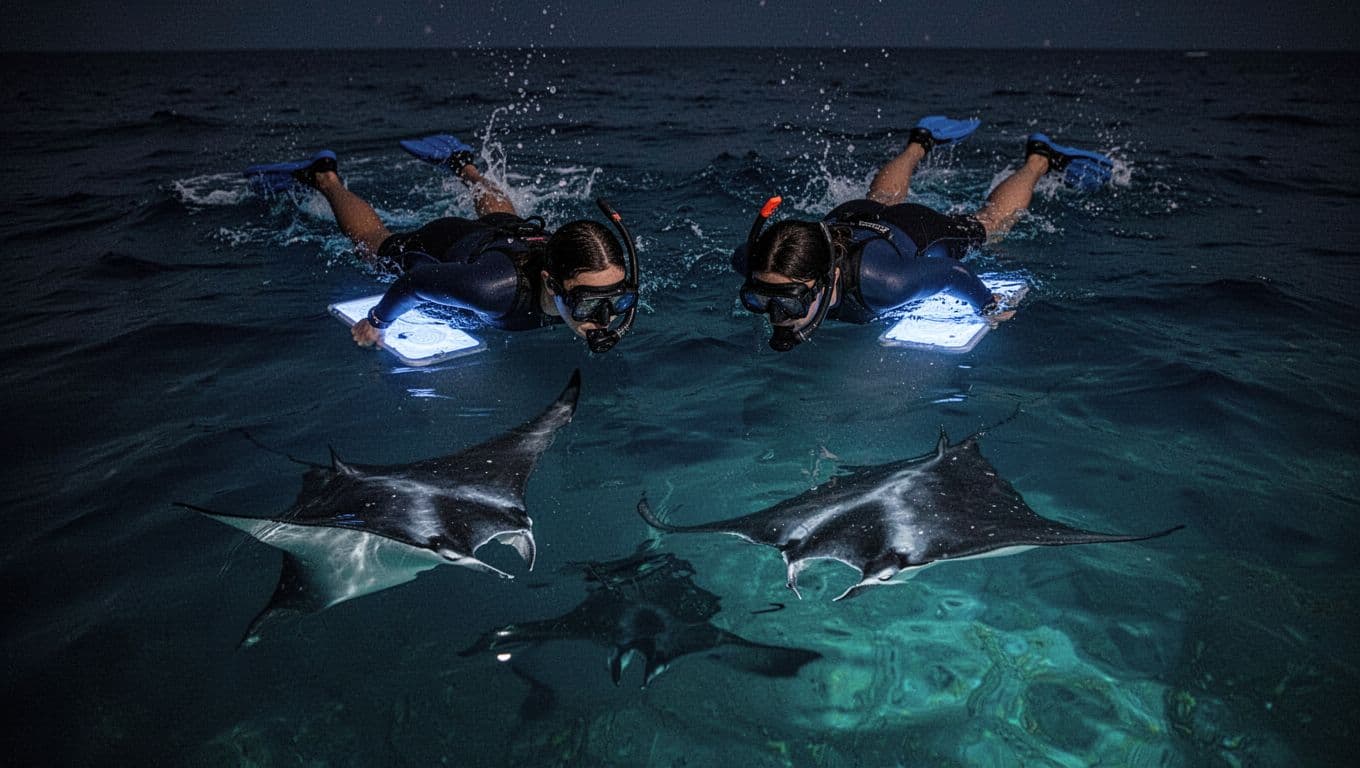
For families, couples, and anyone who likes to snorkel Big Island waters without much fuss, this is the friendlier option. You still get a close view. You just get it from a steadier place.
What changes when you swim underwater
Swimming underwater with manta rays feels more intense right away. You are no longer floating above the scene. You are in it.
That can be exciting if you already feel at home in the ocean. The closer angle may give you a stronger sense of scale, because the mantas move through your field of view instead of beneath your mask alone. Some people love that sense of being inside the encounter.
The tradeoff is effort. Underwater swimming asks more from your body and your attention. If you are on scuba, you need to manage gear, buoyancy, and breathing. If you are breath-holding, you need even more comfort and control. At night, that extra layer matters.
The view also changes. From below, you can feel more wrapped into the moment, but you lose some of the broad, easy perspective that makes snorkeling so relaxed. You may see the mantas from a striking angle, yet the experience can feel narrower and more technical.
That is why many visitors who search for snorkeling Big Island still end up preferring the surface option. They want the animals, not a workout. They want the calm of the ocean at night, not the stress of managing every breath.
If you already spend time in the water and you like a more involved experience, underwater swimming may suit you. If you want simple access and less gear trouble, snorkeling wins fast.
The best way to think about it is this: surface snorkeling lets you observe. Underwater swimming lets you participate more actively.
A side-by-side look at both experiences
A quick comparison helps clear up the decision. The details matter more than the label.
| Factor | Manta ray snorkeling | Manta ray swimming underwater |
|---|---|---|
| Position in the water | At the surface | Below the surface |
| Breathing | Through a snorkel | Scuba breathing or breath-hold |
| Physical effort | Low to moderate | Moderate to high |
| Best for | Beginners, families, cautious swimmers | Experienced swimmers, divers, confident ocean guests |
| View of the mantas | Wide, easy to follow | Closer, more immersive, but more technical |
| Night comfort | Usually easier | Usually more demanding |
The table makes one thing clear. Snorkeling is the simpler path. Underwater swimming is the more involved path.
That does not mean one is better for everyone. It means the right fit depends on how you move in water. If you want to snorkel Big Island with minimal stress, the surface setup gives you the cleanest entry. If you enjoy the challenge of being fully underwater, the deeper option may feel more rewarding.
The Big Island also plays a big role here. On some coasts, a night encounter would feel rough or awkward. In Kona, the setup often feels manageable enough that people can focus on the animals instead of on the ocean around them. That is why snorkeling Big Island Hawaii often starts with a manta trip.
The main takeaway is simple. Choose the option that lets you stay calm. Calm guests see more, because they spend less time worrying about the water.
Who gets more out of manta ray snorkeling
If you want the easiest path into the experience, manta ray snorkeling usually fits best. That is true for a lot of travelers, and it is especially true if this is your first night snorkel.
Families often do better with the surface version because it keeps the learning curve small. Couples like it for the same reason. You can relax side by side and enjoy the view without worrying about dive tasks. Solo travelers often like it too, because the setup makes it easy to settle in fast.
It also works well if you are a little unsure of your swimming ability. You still need to be comfortable in the water, but you do not need to manage the same demands that underwater swimming asks for. That matters at night. The dark can make even a strong swimmer tense up if the gear feels unfamiliar.
If you have done snorkeling Big Island trips before, you already know that comfort is a huge part of the fun. A good fit means you can focus on the manta instead of your own breathing.
Manta ray snorkeling also suits people who want a long look, not a quick rush. The surface position gives you time. You can watch the mantas loop, tilt, and glide while you stay steady on the board or float. That slow pace often makes the memory stronger.
For many visitors, this is the sweet spot. You get the size, the motion, and the glow of the night water without turning the trip into a technical challenge.
Who gets more out of swimming underwater
Underwater swimming fits a narrower group, and that is okay. If you already feel confident in the ocean, it can be a strong choice.
Experienced swimmers often enjoy it because the encounter feels more direct. You are closer to the animals in a different way, and the whole setting can feel more vivid. Divers may prefer it because they already know how to handle gear and breathing below the surface. In that case, the transition into a manta encounter may feel natural.
This option also appeals to people who like a physical challenge. If you want your ocean time to feel active, the underwater version gives you that. You are not waiting on the surface for the action to come to you. You are moving with it.
Still, the added effort changes the mood. A manta encounter should feel calm, because the mantas move best when you stay steady. If you are working too hard, you may miss some of the beauty around you. That is one reason some people choose the simpler route even when they can handle more.
The Big Island makes both options possible, but your personal comfort should lead the decision. If you love being underwater and you do not mind a more involved setup, the deeper route can be rewarding. If you want the most relaxed way to view the animals, snorkeling stays ahead.
The best trip is the one that lets you stay still long enough to watch the mantas move past you.
If you want another manta-focused brand to compare, Manta Ray Night Snorkel Hawaii is also worth a look. Different operators can feel similar on paper, but the small details, boarding style, group size, and guide support can change the night.
Why Kona is the right place to decide
Kona is where this comparison makes the most sense. The west side of the Big Island is where many manta trips happen, and the water here gives you a real chance to see the difference between surface snorkeling and underwater swimming.
That is also where good support matters. Kona Snorkel Trips leans into a small-group style, with lifeguard-certified guides, reef-safe practices, and gear that is set up for comfort. Their manta trips use lighted boards at night, which helps create the glow that makes the encounter so easy to watch from the surface.
If you want a closer look at the trip itself, guided manta ray snorkeling in Kona gives you the details on the Big Island night experience.
They also keep the process simple, which is a big plus if you are trying to decide between snorkeling and underwater swimming. When the gear, the plan, and the guidance all feel clear, you can focus on the water instead of the logistics.
If you already know you want the manta night experience, you can also check availability for the dedicated manta trip.
That is the real advantage of choosing Kona well. You do not have to guess your way through the night. You pick the style that fits you, then let the ocean do the rest.
Conclusion
The simplest way to decide is to ask where you want to spend your energy. Manta ray snorkeling keeps you at the surface, where the view is wide and the effort stays low. Swimming underwater gives you a more involved encounter, but it asks for more skill and more comfort in the dark.
If you want the easiest and most relaxed route, choose the surface. If you already feel strong underwater and want a more technical feel, go deeper.
Either way, the mantas are the star. Your job is to choose the setting that lets you enjoy them without distraction.