
US Coast Guard Certification on Kona Boat Tours
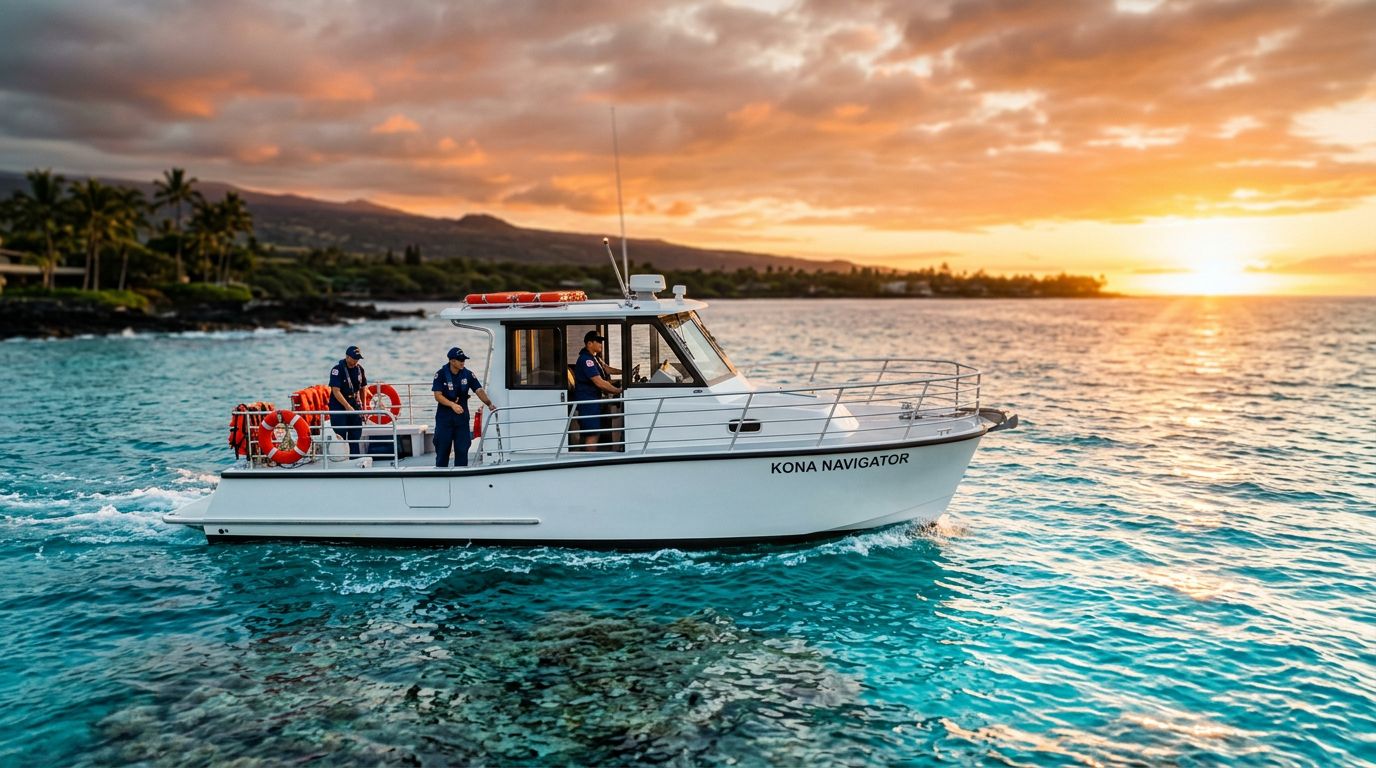
If you’re planning snorkeling Big Island Hawaii, the words US Coast Guard certification should matter more than glossy deck photos. They tell you something about the boat, the crew, and the safety rules behind your trip.
On Kona, calm water can turn lively fast. A tour that treats safety as part of the experience gives you a better day before you even reach the reef.
When you book with Kona Snorkel Trips, you see that mindset early. The same standard should guide every boat you compare, whether you want a reef run, a night snorkel, or a private day on the water.
What US Coast Guard certification means on a Kona boat tour
On a Kona boat tour, US Coast Guard certification usually means the vessel and crew operate under federal safety standards. That can involve inspection rules, passenger limits, required gear, and the procedures the crew follows if something goes wrong.
The phrase gets used loosely online, so read it with care. One operator may use it to describe the boat itself. Another may use it to describe the captain, the vessel, or both. You don’t need to memorize the legal language, but you do need to know what the company is actually promising.
That is why a good booking page explains more than one line of marketing. It should tell you how many guests ride, what gear comes with the trip, and what happens if weather shifts. If you want a simple local starting point, the state’s Boating in Hawaii education page gives you a useful look at boating basics in Hawaiian waters.
A safety claim is only as strong as the details behind it.
When the company can explain the label in plain language, you have a better signal. When it can’t, the phrase is just decoration.
Why certified boats matter in Kona waters
Kona’s coastline looks gentle from shore, but the ocean doesn’t care about the view. Wind, swell, current, and boat traffic can change the feel of a trip in minutes.
That matters on any day, but it matters most when you snorkel Big Island waters far from shore. A certified crew is more likely to brief you clearly, keep the deck organized, and watch the group as a whole. That gives you a calmer trip, especially if you’re nervous, new to boating, or bringing kids.
Night trips raise the stakes a little. Darkness makes it harder to see your footing, track your group, and judge distance. Good lighting, clear head counts, and steady boarding routines become part of the safety net.
The Coast Guard’s Honolulu Sector work instruction on reduced manning for dive and snorkel shows how seriously crew planning is treated in this part of the industry. The document is technical, but the idea is simple. Crew levels and clear procedures reduce avoidable problems.
A certified boat won’t stop every swell or calm every stomach. It does mean the operator is planning for real conditions instead of hoping they don’t show up.
What you should see on board
A quick way to read a Kona tour page is to compare the safety claims with the actual trip details. Strong operators make that easy.
| What you should see | What it usually means | What you can ask |
|---|---|---|
| US Coast Guard certified or inspected vessel | The boat follows federal safety rules relevant to passenger trips | Ask what the certification covers |
| Life jackets in guest sizes | The crew has flotation gear ready for different body types | Ask about child sizes and fit help |
| Clear safety briefing | The crew will explain boarding, exits, and emergency steps | Ask how long the briefing lasts |
| Working communication gear | The boat can stay in contact if conditions change | Ask how the crew handles radio or phone use |
| Listed passenger count | The trip is built around a known capacity | Ask how many guests ride on your departure |
| Gear provided on site | You can focus on the water instead of sourcing equipment | Ask what sizes and styles are available |
After you scan the table, watch how the crew talks about the trip. A strong team explains where jackets are kept, how to board, and what to do if you feel tired. That level of detail matters more than a polished slogan.
If the briefing feels rushed, slow down and ask for more. On a good boat, the mood stays relaxed because the safety steps are clear.
How certification shows up in real Kona tour choices
Once you know the baseline, you can compare tour styles without guessing. Kona Snorkel Trips is a good example of what a safety-first operator looks like. You get a small-group feel, lifeguard-certified guides, solid gear, and reef-safe habits that fit the water instead of fighting it.
If you are comparing Big Island snorkeling tours, start with the trip style that matches your comfort level. A morning reef trip feels different from a night swim or a private charter. The certification story should be visible on the page, not hidden in a footnote.
If you want to compare dates fast, use the check availability link.
If you want a tour that feels organized from the start, a clear safety standard helps more than a long sales pitch.
Night snorkeling depends on more than courage. On the manta ray night snorkel in Kona, certification matters because darkness changes everything. Clear lighting, calm instructions, and a crew that keeps everyone together all matter more once the sun is gone.
For daylight reef time, the guided snorkeling tour at Captain Cook monument has its own rhythm. You still want a crew that handles boarding well, keeps the pace steady, and gives you a clear plan for the bay.
Seasonal Big Island whale watching cruises follow the same logic. You may not be snorkeling, but you still want stable handling, clear deck rules, and a crew that respects changing conditions.
If you want more space and a slower pace, private Kona boat charters are another smart option. The smaller your group, the more obvious the crew’s habits become, so a solid safety culture matters even more.
How to read a booking page before you pay
When you search snorkeling Big Island or snorkeling Big Island Hawaii, you’ll see plenty of trips that look similar at first glance. Price should not be your first filter. Safety details should be.
Before you book, ask these questions:
- Does the page say what the Coast Guard certification covers?
- How many people will share the boat?
- Is snorkel gear included, and will the crew help you fit it?
- What happens if the weather changes after you leave the dock?
- Are there age, swim, or fitness limits for this trip?
- Does the crew give a real briefing before departure?
A strong booking page answers those questions in plain language. It doesn’t make you dig through vague claims or hidden fine print.
You should also pay attention to how the operator talks about boarding, ladders, and sea conditions. If you are not a strong swimmer, those details matter. If you are traveling with kids, they matter even more. The same is true if someone in your group gets seasick easily or feels anxious in open water.
The best tours don’t wait until you ask the hard questions. They bring those details up early, because that is part of good service.
What certification means for families, couples, and private groups
Families want the trip to feel easy. That means child-sized gear, patient help at the ladder, and a crew that notices hesitation before it turns into stress. Certification supports that kind of day because it gives the team a clear playbook.
Couples usually want the same thing, just with more room to breathe. You want time for the view, space for photos, and a boat that doesn’t feel chaotic. A well-run certified operation helps with all of that.
Private groups care about flexibility. You may want a slower pace, a specific route, or more time in the water. Even then, the safety side still matters. A private charter is only as good as the crew running it, and Coast Guard standards give that crew a structure to lean on.
When you snorkel Big Island waters with people who have different comfort levels, that structure helps everyone. The nervous swimmer feels supported. The experienced swimmer doesn’t get bored. The captain keeps the whole group moving in the same direction.
That is the real value of the certification label. It gives you a better chance at a day that feels smooth, not just a day that looks good in photos.
Conclusion
US Coast Guard certification is a baseline you should care about on Kona boat tours. It points to safety rules, crew planning, and vessel standards that matter once you’re away from shore.
When you plan snorkeling Big Island Hawaii, that label helps you sort real preparation from polished marketing. Ask a few direct questions, compare the answers, and choose the boat that explains itself clearly.
The best days on the water feel relaxed because the hard parts were handled before you stepped aboard.