
Sea Band Sea Sickness Wristbands: Your 2026 Snorkel Guide
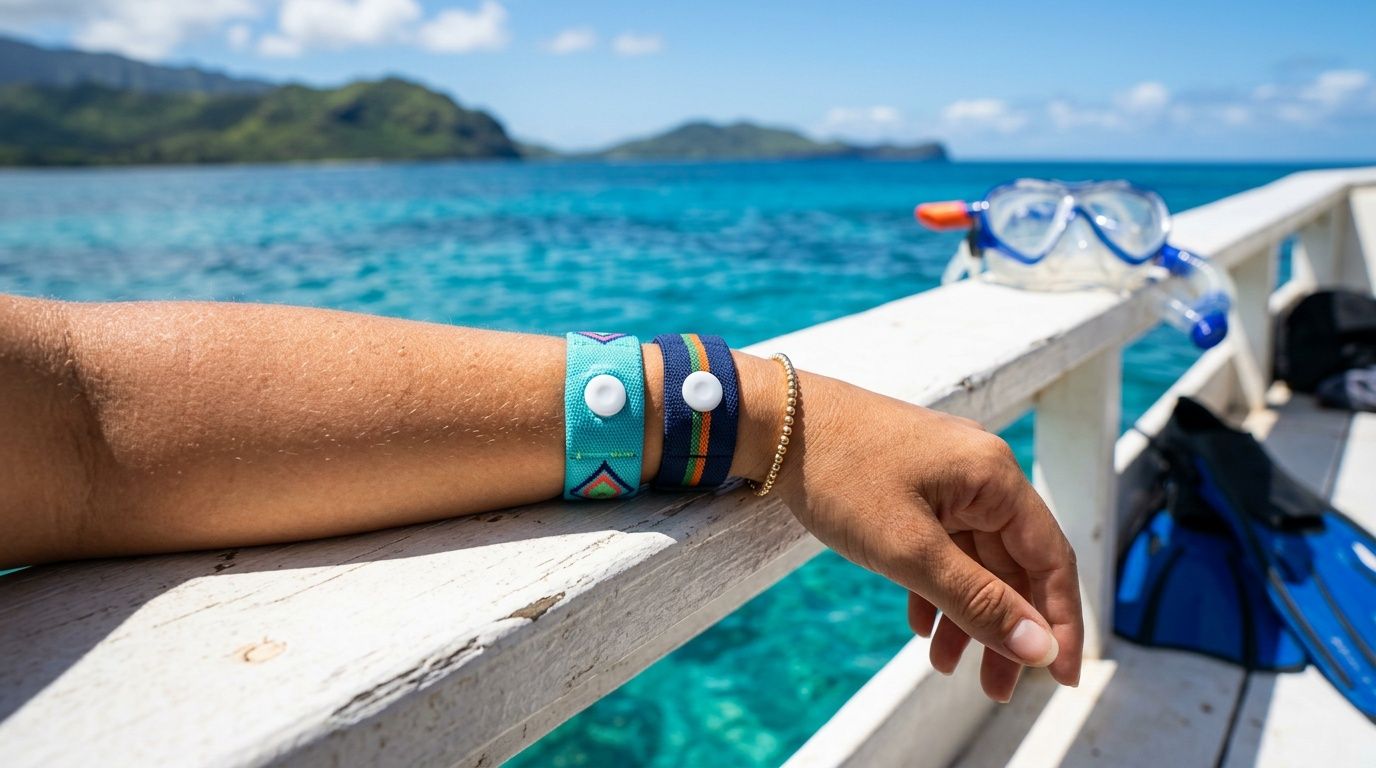
You booked the snorkel trip for the reef, the turtles, maybe the manta rays. Then the practical worry shows up. What if the boat ride is the part you remember most, for the wrong reason?
That concern is common, especially with first-time snorkelers in Kona. Hawaiian water can be calm and beautiful, but boat motion still catches people off guard. A lot of guests want something simple they can use without feeling sleepy, foggy, or out of it once they gear up.
Your Guide to a Seasickness-Free Snorkel Adventure
One of the most common pre-trip questions sounds about the same every time. “I’m excited, but I get motion sick. Am I going to be miserable out there?”
That’s exactly why sea band sea sickness wristbands stay in so many travel bags. They’re small, reusable, drug-free, and easy to put on before the boat leaves the harbor. For a snorkel day, that matters. You want to stay comfortable, but you also want to stay alert while listening to instructions, moving around the deck, and getting in and out of the water.
Kona snorkel guests also ask a very specific version of that question. Do these bands still help in rougher Hawaiian water, on longer rides, or during ocean activities where you’re floating, swimming, and climbing back on the boat? User forums and reviews show those questions come up often, and one retailer summary notes that non-drug options like Sea-Bands are preferred by 40% of eco-conscious ocean lovers, while the knowledge gap remains for dynamic ocean settings such as Hawaiian snorkel tours (Target product page).
If you want a deeper product-specific overview before packing, Sea Band Sea Sickness Wristbands gives useful background on how these bands are meant to be used on ocean outings.
Right near the top, it helps to see what other snorkelers have experienced.

Why snorkelers like them
Sea-Bands fit a very specific need. They give nervous passengers a prevention tool that doesn't rely on taking a pill at the dock.
- You stay clear-headed: That’s a big plus if you don’t want drowsiness while snorkeling.
- They’re easy to carry: Slip them into a day bag, carry-on, or dry pouch.
- They work best as prevention: Put them on early, before the boat starts moving.
Practical rule: On a boat trip, simple tools often work best when you use them before you need them.
What they can and can’t do
They aren’t magic. They also aren’t useless.
Used correctly, they can take the edge off nausea for many people. Used late, worn loosely, or placed on the wrong spot, they often disappoint. That trade-off is important, and it explains why two people can have very different opinions about the same product.
How Acupressure Wristbands Work Against Nausea
At first glance, Sea-Bands look too simple to do much. An elastic band and a small plastic stud doesn’t seem like much of a seasickness plan.
The key is P6 acupressure, also called Neiguan. The stud presses on a specific point on the inner wrist. In traditional use, that point is associated with nausea relief. In practical terms, the band applies steady pressure to one target area instead of squeezing the whole wrist.

The simple explanation
Motion sickness starts when your brain gets mixed signals. Your inner ear feels rolling and bobbing. Your eyes might be focused on the deck, your mask strap, or your fins. Your body is trying to balance on a moving surface.
That mismatch can trigger nausea.
Sea-Bands are designed to add constant pressure at the P6 point, which is thought to influence those nausea pathways. If you want a sea-focused explanation of that setup, this guide on sea sickness acupressure bands is a good companion read.
Why people trust the P6 point
This isn’t just folk advice. The principle behind P6 acupressure has clinical support.
A 2001 study in the Journal of Obstetric, Gynecologic, and Neonatal Nursing found that pregnant women using Sea-Bands had significantly reduced frequency and severity of nausea and vomiting, supporting the device as a safe, noninvasive option (PubMed study summary).
That matters for snorkelers because it supports the underlying mechanism, not just one narrow use case.
What this feels like in real life
When the band is on correctly, you should feel steady pressure from the stud. Not pain. Not wrist compression. Just a firm point of contact.
That’s why these bands appeal to people who want a low-fuss remedy.
| What Sea-Bands do well | Where they need help |
|---|---|
| Drug-free support | Placement has to be accurate |
| Can be worn on the boat and in the water | Fit can shift with movement |
| Don’t add drowsiness | Results vary from person to person |
Good placement matters more than looking “snug enough.”
A Practical Guide to Wearing Sea-Bands Correctly
At this stage, users either get real help or decide the bands “don’t work.” Usually the issue is not the idea. It’s the fit.
One motion sickness study found that untrained subjects achieved 0% correct application, which helps explain why acupressure bands can show limited real-world benefit when people place them casually (PubMed motion sickness study). That same research highlights a practical point. Correct bilateral positioning is critical.

How to find the right spot
Use this method on each wrist:
- Turn your palm upward.
- Place the first three fingers of your other hand across your wrist crease.
- Find the point just under your index finger, between the two central tendons.
- Put the plastic stud directly on that point.
If you want a second walkthrough with visuals and fit tips, sea band motion sickness bands is useful.
How the band should feel
The band should be snug enough to keep the stud in place. It should not feel like a tourniquet.
Watch for these signs:
- Good fit: You feel firm point pressure and the band stays centered.
- Too loose: The stud slides or rotates when you move your wrist.
- Too tight: You feel pinching, numbness, or obvious discomfort.
Boat-day mistakes that hurt your odds
A few errors show up over and over.
- Putting them on late: They work better as prevention than rescue.
- Wearing only one band: These are meant to be worn on both wrists.
- Ignoring drift after sunscreen or saltwater: Recheck placement before you enter the water and after you get back on the boat.
- Treating them like jewelry: The stud has to sit on P6, not just somewhere on the inner wrist.
The band only helps if the stud is pressing the correct point on both wrists.
Best timing for snorkelers
Put them on before you leave your hotel or before you arrive at the harbor. That gives you the best chance of boarding already prepared instead of trying to catch up once your stomach feels off.
Comparing Your Seasickness Remedy Options
Sea-Bands are one option. They’re not the only option, and that’s good news if you know you’re sensitive to motion.
Some people do well with a layered approach. They use wristbands as a first line, then add a backup such as ginger or medication depending on their history and comfort level. If you want a broader roundup, best sea sickness med compares common choices from a boat-trip perspective.
Seasickness Remedy Comparison
| Remedy | Type | Pros | Cons |
|---|---|---|---|
| Sea Band wristbands | Acupressure wristbands | Drug-free, reusable, can be worn during a snorkel day | Must be placed correctly, may not be enough for severe symptoms |
| Dramamine pills | OTC antihistamine | Familiar option, easy to pack | Can cause drowsiness |
| Bonine pills | OTC motion sickness pill | Simple option for travelers who prefer pills | Some people still dislike medication side effects |
| Ship-EEZ Seasickness Patch | Patch-style remedy | Convenient format, less to manage during the trip | Patch products aren’t for everyone, and some travelers prefer to avoid medication-style options |
| Ginger chews | Natural stomach support | Easy add-on, good backup to keep in a bag | Often better for mild queasiness than stronger motion sensitivity |
Which option fits which traveler
The cleanest way to choose is to match the remedy to the day you want.
If staying alert is your top priority, Sea-Bands usually make the most sense. They don’t create the same concern about drowsiness that many people associate with pills.
If you already know medication works well for you and you tolerate it well, Dramamine or Bonine may be the stronger option. That matters for people who’ve had bad boat experiences before and want more than a light-touch remedy.
If you prefer a “set it and forget it” format, a patch may feel easier. If you want something gentle and simple to pair with another method, ginger chews are easy to bring along.
A practical way to decide
Use this quick filter:
- Choose Sea-Bands first if you want drug-free prevention and clear-headed snorkeling.
- Choose medication if you already know you’re strongly motion-sensitive.
- Bring ginger too if your stomach tends to get unsettled even before the boat leaves.
- Don’t test a brand-new routine on trip morning if you can avoid it.
A sea day goes better when you know your plan ahead of time.
Does Science Support Sea-Band Wristbands?
You feel fine at the dock, then the boat starts rocking outside Kona and your stomach changes its mind fast. That is the moment people want a simple yes or no answer. Sea-Bands have real support behind them, but the honest answer is more practical than absolute. They can help, especially when they are worn correctly and early, but they are not equally effective for every passenger or every type of nausea.
Sea-Band sea sickness wristbands received FDA clearance as a Class I medical device in 2004 for drug-free nausea relief, and that same clearance record also references a later clinical study showing reduced nausea symptoms in some users (FDA clearance record and study summary).
What the evidence actually supports
The strongest takeaway is not that Sea-Bands “cure” seasickness. It is that acupressure at the P6 point has enough clinical backing to be taken seriously.
That matters on snorkel boats because many guests are not looking for a heavy-duty medical fix. They want something low-risk that helps them stay clear-headed in the ride out, get in the water comfortably, and enjoy the reef instead of staring at the horizon fighting nausea. In that use case, Sea-Bands are a reasonable tool.
Some studies on acupressure for motion-related nausea have shown mixed results, especially when compared with stronger interventions. That lines up with what guides and boat crews see in real life. For mild to moderate motion sensitivity, bands often help. For travelers who already know they get sick on boats, they may help more as part of a plan than as the whole plan.
What this means in Hawaiian waters
Kona conditions are a little different from the generic “motion sickness” examples people read online. The ride can start calm in the bay, then turn choppy once the boat clears the protection of the coastline. Short-period swell can bother people who felt fine just minutes earlier. That is one reason timing and fit matter so much with Sea-Bands. If they are going to help, they usually help most when they are already on and positioned well before the motion starts.
For snorkelers, the practical conclusion is simple:
- The mechanism has credible support
- Results vary from person to person
- They are better for prevention than recovery once nausea is fully rolling
That last point is the one I stress most with first-time boat snorkelers. If someone waits until they already feel green, any remedy has a harder job.
If you want a more sea-specific explanation of how to use them well on tour day, this guide to Sea-Bands for seasickness on Kona snorkel trips covers the practical side.
Sea-Bands are credible, low-risk, and worth trying. The real-world payoff depends on wearing them correctly and matching them to your own motion sensitivity.
Packing and Pre-Trip Advice for Kona Snorkelers
The easiest seasickness mistake happens before the trip even starts. People wait until the last minute, then realize they have no plan.
Buy your bands before you travel. Pack them in your carry-on so you have them for the flight, the drive, and the boat ride. Sea-Band is commonly available in major pharmacy channels, and getting them ahead of time lets you try the fit before vacation.
What to pack besides the bands
A better boat day usually comes from a few simple decisions working together.
- Light snacks: An empty stomach can feel just as bad as a heavy one.
- Water: Small sips beat chugging.
- A backup remedy: If you know you’re sensitive, don’t rely on one tool alone.
- Easy layers: Wristbands can shift if sleeves, watches, or gear crowd your wrists.
For a fuller gear checklist, what to pack for a Captain Cook snorkel tour covers the basics well.
Timing matters on tour day
Put the bands on before leaving your hotel. Don’t wait for the harbor. Don’t wait until the boat is moving.
That matters even more if you’re heading out for a longer ride such as a Captain Cook Snorkeling Tour, where you want to enjoy the coastline instead of managing nausea.
One last practical note
If manta rays are on your list, the Manta Ray Night Snorkel Hawaii option is also worth a look when comparing night snorkel choices.
Frequently Asked Questions About Sea-Bands
A few questions come up almost every time.
Can I wear Sea-Bands in the water
Yes. They’re commonly worn through the boat ride and while snorkeling. The main thing to watch is slippage after sunscreen, splashing, or pulling on gear.
Do they work for kids
Many families use them for children because they’re drug-free. Fit matters even more on a smaller wrist, so check the stud position carefully.
Are they safe during pregnancy
Sea-Bands have published support in pregnancy-related nausea, but pregnancy decisions are still personal. If you’re pregnant and planning a boat excursion, it’s smart to check with your clinician before the trip.
Should I wear them on one wrist or both
Both. Bilateral placement is part of correct use.
If I’m very prone to seasickness, are bands enough
Sometimes yes, sometimes no. If you already know you get strongly motion sick, bring a backup plan.
Do they cause side effects
Reported issues are generally mild and local, such as skin irritation with wear. If the band feels painful, causes tingling, or leaves worsening irritation, take it off and reposition it.
| Common question | Short answer |
|---|---|
| Can they get wet? | Yes, but recheck placement after water exposure |
| Can I wear them all trip? | Usually yes, as long as they remain comfortable |
| Do they replace every other remedy? | Not always |
| What helps them work better? | Early use, correct placement, both wrists |
If you’re choosing a boat snorkel and want a crew that understands how to help first-time guests feel prepared on the ride out, Kona Snorkel Trips is a practical place to start.