
Can Pregnant Travelers Join a Kona Manta Ray Snorkel?
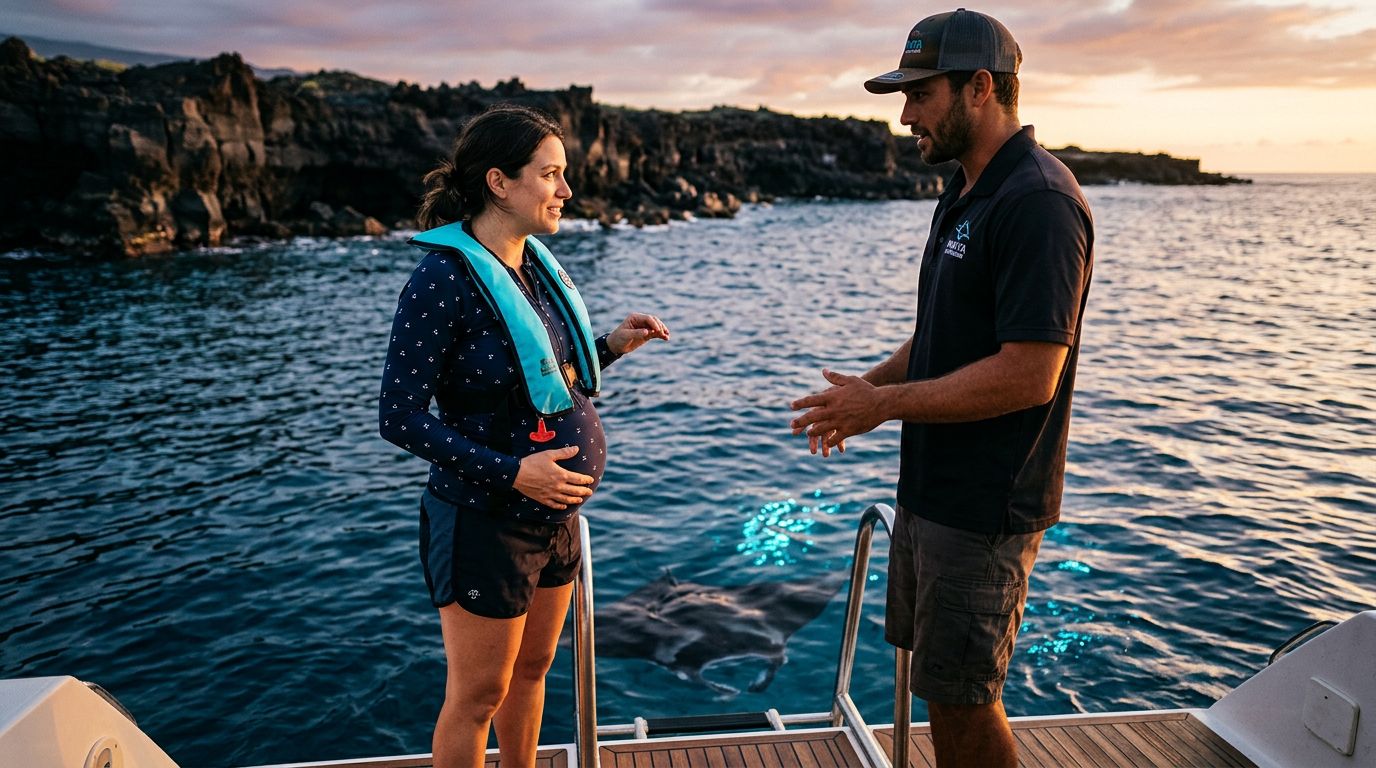
A Kona manta ray night snorkel can be a memorable part of your Hawaii trip, but pregnancy changes the decision. The question isn’t only whether you can swim. You also need to consider the boat ride, water conditions, ladder, flotation equipment, and your healthcare provider’s advice.
Kona Snorkel Trips offers small-group ocean excursions along the Big Island, while Manta Ray Night Snorkel Hawaii focuses on nighttime manta encounters. Before you book either option, review the physical demands and ask direct questions about pregnancy policies.
Key Takeaways
- Some people with uncomplicated pregnancies may receive clearance for gentle surface snorkeling, but your provider should make that decision.
- A manta ray night snorkel includes more than floating in calm water. Boat access, waves, darkness, and the exit ladder all matter.
- You should avoid breath-hold diving, rough conditions, overheating, and any activity that causes pain, dizziness, or unusual shortness of breath.
- Ask the tour operator about pregnancy restrictions, flotation, boarding assistance, trip length, cancellation terms, and emergency procedures.
- If nighttime snorkeling feels uncertain, a calm daytime activity or land-based wildlife experience may suit you better.
Is Manta Snorkeling Safe During Pregnancy?
Pregnant manta snorkeling can be suitable for some travelers, but there isn’t one answer for every pregnancy. Your stage of pregnancy, general health, swimming ability, and any complications all affect the decision.
Speak with your obstetrician or midwife before reserving a tour. Ask about swimming in open water, boat travel, exertion, sun exposure, and any restrictions that apply to you. A healthcare provider who knows your medical history can give more useful advice than a general booking rule.
Snorkeling is different from scuba diving because you remain at the surface and don’t breathe compressed gas. Still, the activity can become strenuous when you swim against current or try to keep pace with a group. You should also avoid free diving and prolonged breath-holding during pregnancy unless your provider gives very specific guidance.
A night manta trip adds several physical details. You may board from a floating dock, climb a boat ladder, hold onto a flotation aid, and move around on a wet deck. Even a calm evening can include boat motion and small swells. Those factors can matter more than the short time you spend watching manta rays.
Your decision should also account for how you feel that day. Pregnancy symptoms can change quickly, so a tour that sounds manageable at home may feel different after travel, heat, poor sleep, or a long drive.
Medical clearance is the first step. Tour approval is a separate step because the operator must assess its own vessel, route, equipment, and conditions.
Why a Kona Night Snorkel Requires Extra Planning
Manta rays gather near illuminated areas because plankton moves toward the light. Guests usually float at the surface while lights attract plankton below. The experience can feel calm once you’re in the water, but reaching that point may involve several transitions.
First, you need to travel to the harbor and board the boat. Next, you may sit or stand while the vessel reaches the viewing area. Then you enter the water, hold a flotation device, and remain near the group while the crew manages the encounter.
Darkness affects balance and orientation. You may not see the ladder, deck edge, or another swimmer as clearly as you would during a daytime tour. If you feel tired, cold, seasick, or uncomfortable, you need a simple way to return to the boat.
Ask whether the crew can help you board and exit without rushing. You should also find out whether the boat has a stable entry platform, handrails, a restroom, shade, drinking water, and a place to sit during the ride.
Kona Snorkel Trips describes its excursions as small-group experiences led by lifeguard-certified guides. Its approach includes snorkeling equipment, safety gear, reef-safe practices, and custom lighted boards for nighttime encounters. Those details may improve your comfort, but they don’t remove the need for medical clearance or favorable conditions.
If your provider and the operator both approve the trip, you can check availability before choosing a date. Confirm the pregnancy policy directly because conditions and operating rules can change.
Questions to Ask Before You Book
Don’t rely on a generic age recommendation or a booking page alone. Call or email the operator and explain that you’re pregnant. You don’t need to share private medical details, but you should ask whether the company allows pregnant guests on the specific trip.
Use these questions to guide the conversation:
- Does the company have a pregnancy restriction or require written medical clearance?
- How do you enter and leave the water?
- Can a crew member provide physical assistance on the ladder?
- Is a flotation vest or board available for every guest?
- How long is the boat ride, and how long do guests usually remain in the water?
- What happens if you decide not to snorkel after arriving at the site?
- Is there a restroom and a shaded seating area onboard?
- What are the cancellation terms if your provider advises against travel?
- How does the crew respond if weather or ocean conditions change?
Ask about the expected sea state, not only whether the trip is running. A scheduled departure can still involve more boat movement than you want. You might also ask whether the crew can keep you close to the boat instead of requiring a long swim.
A private tour can offer more flexibility with pace and time in the water, but private service doesn’t make rough conditions safe. You still need medical approval, suitable weather, and a crew willing to adjust the plan.
If you book a manta trip after receiving clearance, Kona Snorkel Trips lists a dedicated booking option where you can check availability. Tell the crew about your pregnancy before the trip, not only when you arrive.
How to Prepare for Pregnant Manta Snorkeling
If you receive clearance, plan for comfort rather than distance. Stay at the surface and use the flotation support provided. Don’t chase rays, swim beyond the guide, or push through fatigue to get a closer view.
Wear a swimsuit that stays secure without pressing on your abdomen. Bring a light cover-up for the boat, reef-safe sunscreen, water, and any approved medication you normally use for nausea or discomfort. Ask your healthcare provider before taking a new seasickness product.
Eat a familiar meal before departure, but avoid arriving dehydrated or overly full. Hawaii’s sun can feel strong even during a short boat trip, and pregnancy can make heat less comfortable. Use shade whenever possible and tell the crew if you need a break.
You should also agree on a clear exit plan with your travel companion. If you feel unwell, signal the guide immediately and return to the boat. Stop the activity if you experience bleeding, fluid leakage, painful contractions, chest pain, faintness, severe dizziness, unusual shortness of breath, or calf pain and swelling. Contact your healthcare provider or seek urgent medical care when symptoms require it.
Your wider plans for snorkeling Big Island Hawaii can include gentler choices if the night trip feels too demanding. A calm daytime site may offer better visibility and easier boarding, although open-water conditions still vary. If you want to snorkel Big Island waters, choose a trip that matches your energy level and gives you an easy way to remain onboard.
Safety should guide every snorkeling Big Island plan you make. You don’t need to prove that you can complete the activity. A relaxed decision protects both your comfort and your enjoyment of the trip.
Alternatives If You Skip the Night Tour
You can still enjoy Kona’s marine life without entering the water at night. Ask local operators about daytime boat rides, calm-water sightseeing, or private outings that allow you to stay onboard while others swim. A private option may make it easier to change the pace, shorten the outing, or return early.
A daytime snorkel can be a better fit when you have medical clearance but don’t want darkness, cooler water, or a late return. Kealakekua Bay is another popular Big Island destination, though boat access and ocean conditions still require careful review during pregnancy.
You can also plan a shoreline visit, enjoy the sunset near the coast, or choose an aquarium and marine education experience. These options won’t recreate a manta encounter, but they can keep your itinerary enjoyable without forcing a decision that makes you uneasy.
The best alternative depends on your provider’s advice and how you feel during your trip. Flexibility matters more than checking one specific activity off your list.
Conclusion
A pregnant traveler may be able to join a Kona manta ray night snorkel after receiving medical clearance and approval from the tour operator. Surface snorkeling is only one part of the outing, so you also need to consider the boat, ladder, flotation, darkness, sea conditions, and access to help.
Ask detailed questions before booking, prepare for an easy exit, and stop immediately if your body gives you a warning. The manta rays will still be there for a future visit if tonight isn’t the right time.