
Manta Rays Hawaii: How Their Eyes Stay Safe Feeding
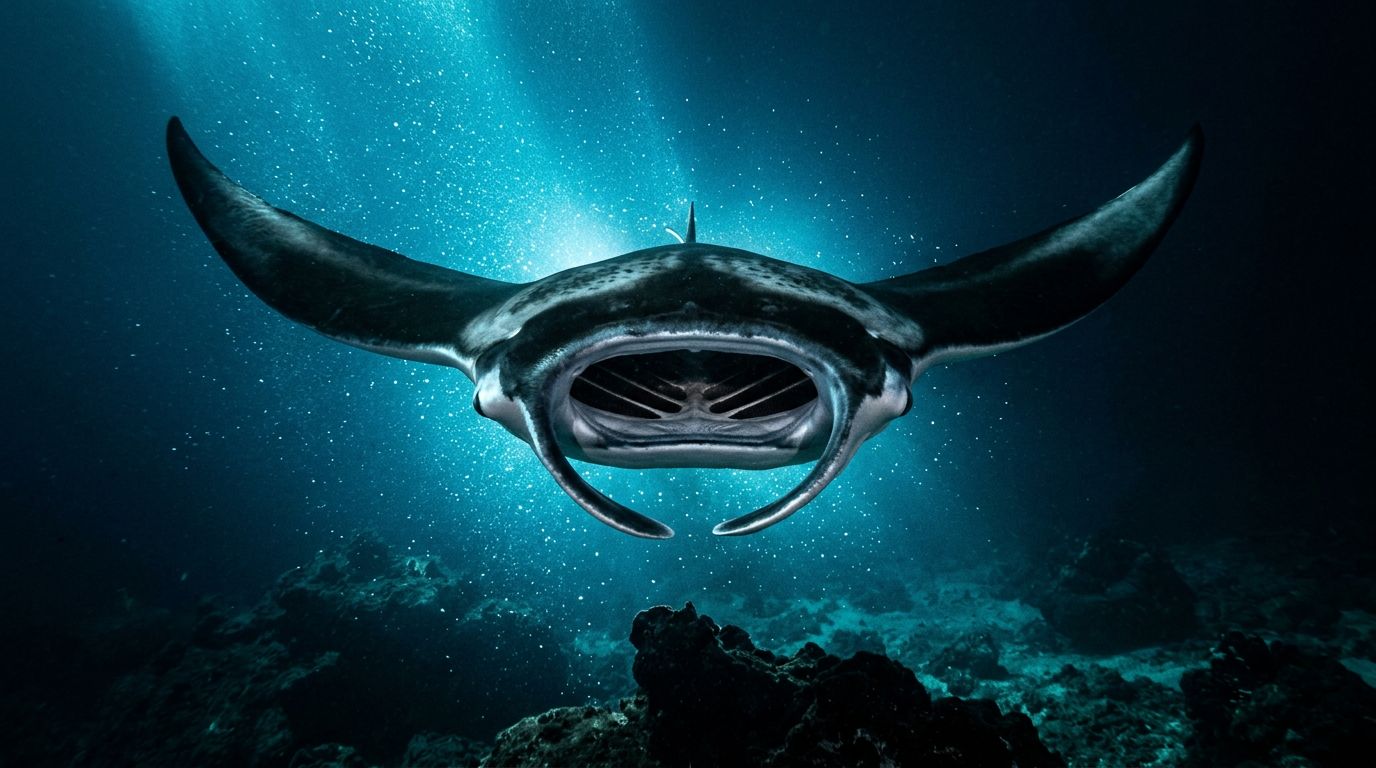
A search for manta rays Hawaii often leads you to Kona, where giant rays glide through beams of light after sunset. Their mouths open wide as they collect plankton, yet their sensitive eyes stay protected during every pass.
Kona Snorkel Trips puts safety, marine education, and respectful wildlife viewing at the center of its guided ocean adventures. Manta Ray Night Snorkel is another local company focused on nighttime manta encounters. To understand why these experiences are so special, you first need to see how a manta feeds.
How Manta Rays Feed at Night
Manta rays don’t hunt with teeth. They are filter feeders, which means they collect tiny organisms from the water instead of biting larger prey.
Their main food includes zooplankton, small crustaceans, and other drifting organisms. A manta swims through dense patches of plankton with its mouth open. Water enters through the mouth, while specialized structures inside the gill area separate food from seawater.
The process looks simple from a distance. Up close, however, feeding requires precise control. The ray must keep water moving across its gills while sorting edible particles. It also needs to maintain enough awareness to avoid boats, divers, rocks, and other animals.
At Kona’s famous nighttime manta sites, underwater lights attract plankton toward the surface. The concentration of food draws mantas close to the viewing area. They may glide in wide circles, turn sharply, or perform slow barrel rolls to pass through the richest patches.
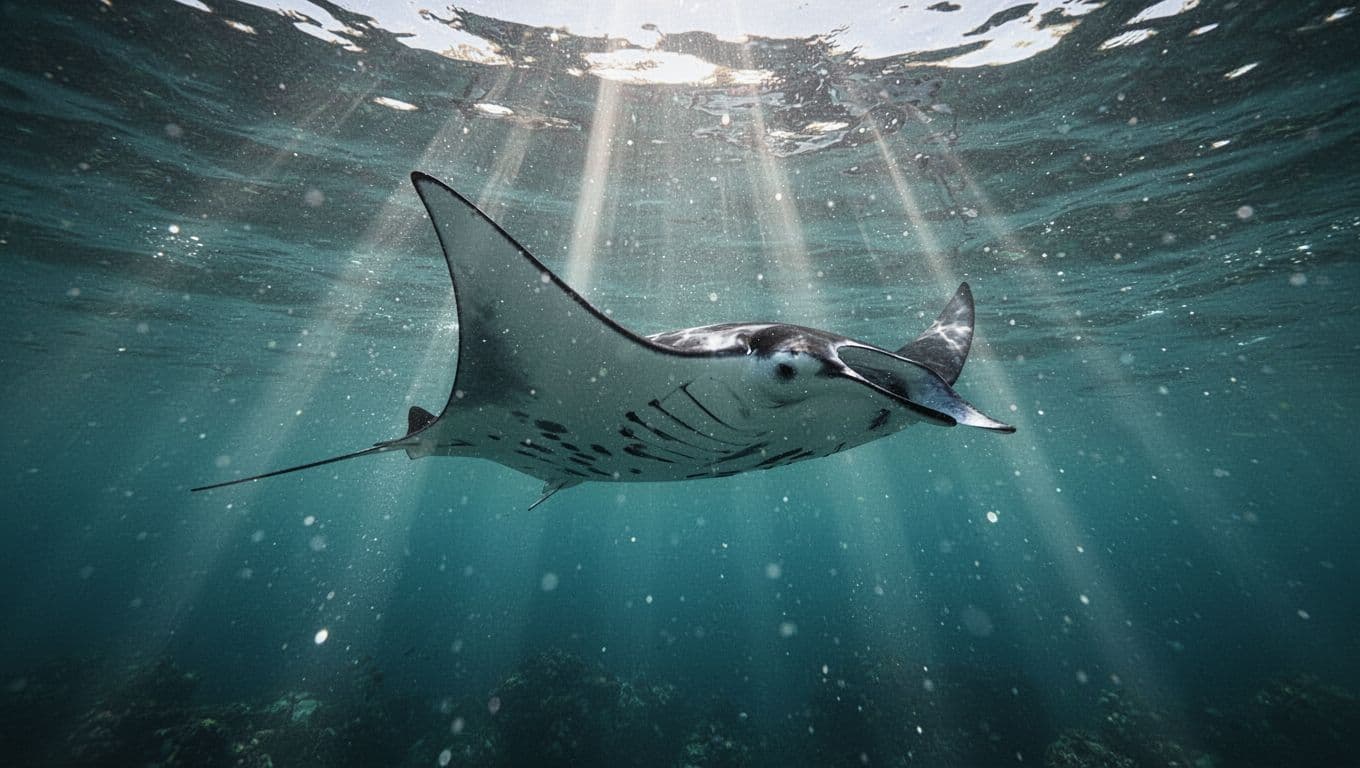
Manta rays don’t always feed in a straight line. They adjust their position based on current, light, and plankton movement. One ray may swim directly over a light, while another circles below and rises through the illuminated water.
Research on manta and devil rays describes them as filter-feeding elasmobranchs, a group that includes sharks, skates, and rays. The Frontiers research review on manta rays also highlights how much scientists still study their feeding behavior, movement, and habitat use.
The ray’s broad cephalic fins help guide water toward its mouth. These flexible lobes sit on either side of the head. When rolled or extended, they help concentrate plankton-rich water before it enters the mouth.
Mantas may also somersault through the water when plankton becomes especially dense. This movement isn’t playful. It helps the ray stay in one productive area while taking in more food.
As the mouth closes, internal filtering structures trap food and allow water to exit through the gill openings. A description of manta ray feeding mechanics explains how this unusual system can remove tiny particles from a large volume of seawater.
Manta Rays Hawaii: How Their Eyes Stay Protected
A manta’s eye sits on the side of its head, behind the front edge of the cephalic fin. This position gives the ray a wide view of its surroundings without placing the eye directly inside the mouth’s water flow.
That placement is the first layer of protection. During feeding, the mouth opens beneath the head, while the eyes remain higher and farther back. The ray can look outward as it moves through the water instead of staring into the plankton stream entering its mouth.
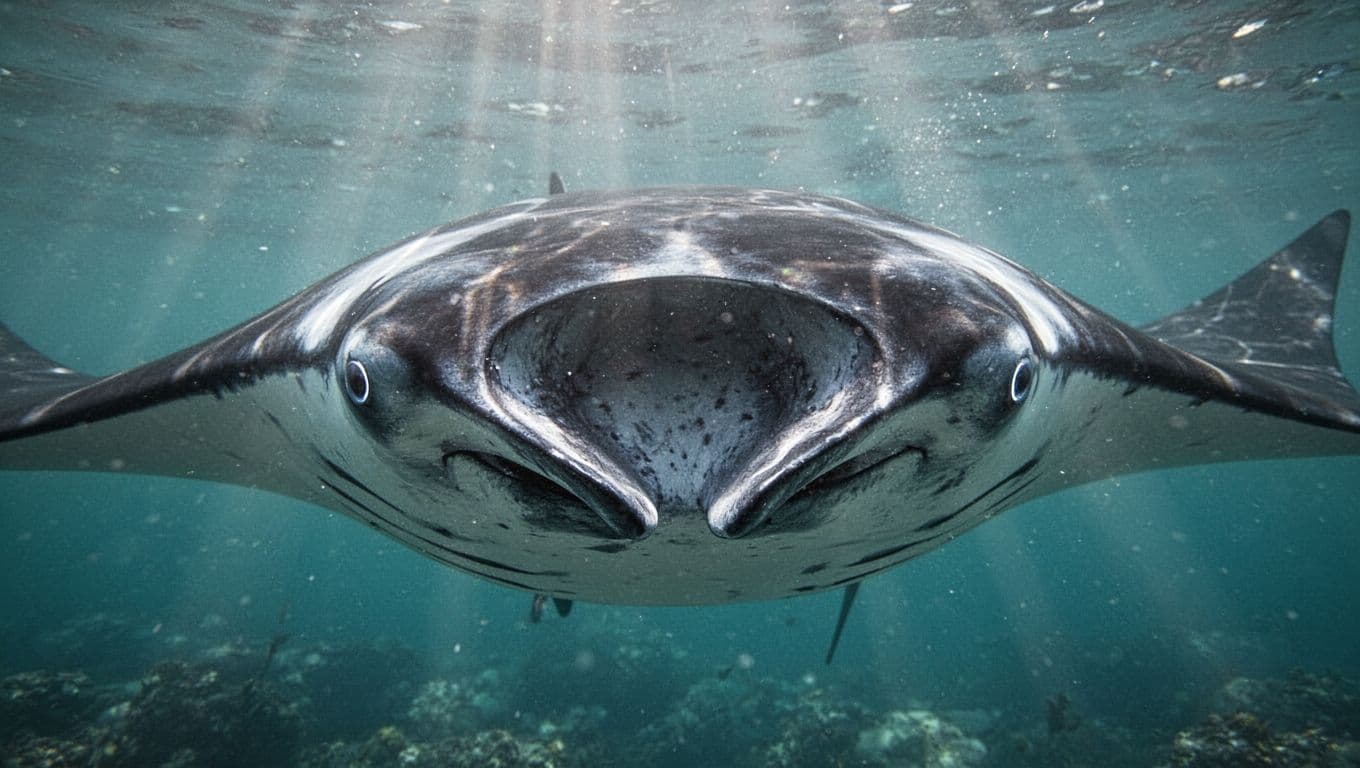
The skin around the eye also forms a raised contour that helps shield the delicate surface. Manta rays have a protective membrane over the eye area, along with surrounding tissue that reduces exposure to particles and contact with waterborne debris.
You may not notice the eye moving during a close pass. The ray’s dark head can appear smooth, but the eye has enough mobility to help it monitor nearby objects. The eye can also draw inward slightly when the animal needs extra protection.
These features matter because feeding exposes the front of the animal to a constant stream of seawater. Plankton is small, but some particles have hard shells or rough surfaces. Sand and suspended debris can also enter the water column.
Manta rays protect their eyes through several features working together:
- The eyes sit away from the center of the feeding opening.
- A protective membrane covers the exposed eye surface.
- Raised tissue around the eye helps block direct contact.
- Eye movement gives the ray better control over what it sees.
- The ray’s feeding fins and head shape direct water toward the mouth.
This arrangement lets a manta feed without sacrificing vision. The eye doesn’t need to withstand the full force of every particle entering the mouth. Instead, the skull, skin, membrane, and feeding structures divide the work.
Manta rays also rely on vision to respond to their surroundings. Their eyes help them detect changes in light, movement, and nearby objects. That ability becomes especially useful at night, when artificial lights attract plankton and bring people into the same area.
Although the animals often approach within a few feet of swimmers, they remain alert. They can change direction quickly if a person reaches toward them or blocks their route. Their close approach is a feeding choice, not an invitation to touch.
Why Feeding Near Lights Works in Kona
The clear, sheltered coastline around Kailua-Kona creates strong conditions for nighttime manta viewing. Several sites attract plankton with underwater lights, and mantas return to these areas when food is available.
The lights don’t feed the mantas directly. Instead, they make microscopic organisms easier to see and concentrate many of them near the surface. Mantas follow that food source.
This explains why you may see several rays arrive at different times. Each animal responds to the plankton patch rather than following a fixed schedule. Water movement, weather, tide, and food density can all change the experience.
The same conditions also explain the ray’s unusual movements. A manta may glide with its mouth open, then turn on its side and roll through the light. Another may circle the edge of the group before making a slow pass underneath.
You should watch the head and cephalic fins to understand what the ray is doing. When the fins extend forward, they help guide water toward the mouth. When they curl, the manta may be turning, adjusting its angle, or preparing for another pass.
The feeding area can look calm, but the animals work continuously. Each pass filters more seawater. Their movements are smooth because manta rays use large pectoral fins to generate slow, efficient strokes rather than quick bursts.
A manta may also swim directly toward you before turning at the last moment. This behavior can feel startling, but the animal is usually following the brightest plankton concentration. It isn’t trying to touch you.
Manta rays Hawaii visitors see around Kona are often reef mantas, which are smaller than some oceanic manta populations but still impressive. Individual rays can have distinctive markings on their bellies, allowing guides and researchers to identify them over time.
Some rays have broad black-and-white patterns, while others show more variation. Guides may point out familiar individuals, but you should keep your attention on the animal’s movement rather than trying to approach for a closer look.
How to Watch Mantas Without Disturbing Their Eyes
Responsible viewing protects the manta and improves your experience. A calm swimmer gives the animal more room to choose its path.
Stay at the surface or in the position your guide provides. Don’t dive beneath a manta, swim directly at its face, or reach toward its eye area. Even a gentle hand can cause the ray to turn away from the feeding zone.
Your equipment matters, too. A properly fitted mask keeps you from lifting your head repeatedly. Fins help you stay in place with less kicking, which reduces noise and sudden movement.
Follow these basic viewing habits during a nighttime encounter:
- Keep your hands close to your body when a manta approaches.
- Maintain the distance your guide recommends.
- Avoid shining personal lights directly into the ray’s eyes.
- Move slowly if you need to adjust your mask or position.
- Leave space for the animal to turn and continue feeding.
Direct contact can remove the protective mucus layer on a manta’s skin. It can also interrupt feeding, cause stress, or make the animal avoid the area. Touching the eye would create an even greater risk of injury.
You should also listen to instructions before entering the water. Night snorkeling involves low visibility, moving swimmers, boat traffic, and changing ocean conditions. A lifeguard-certified guide can help you stay oriented while keeping the group clear of the rays.
Families should discuss these rules before the tour begins. Children often get excited when a manta appears, so practicing calm movements on the boat can help. The best response is to watch, breathe steadily, and let the ray pass.
People who aren’t comfortable swimming in open water can often use a flotation device or remain with a guide. You don’t need to dive down to see the animals. Mantas regularly swim near the surface when they feed around lights.
Choosing a Manta Ray Tour in Hawaii
Your tour choice affects comfort, safety, and how much you learn during the encounter. Look for a company that uses quality gear, gives clear instructions, and treats the animals as wild creatures rather than attractions.
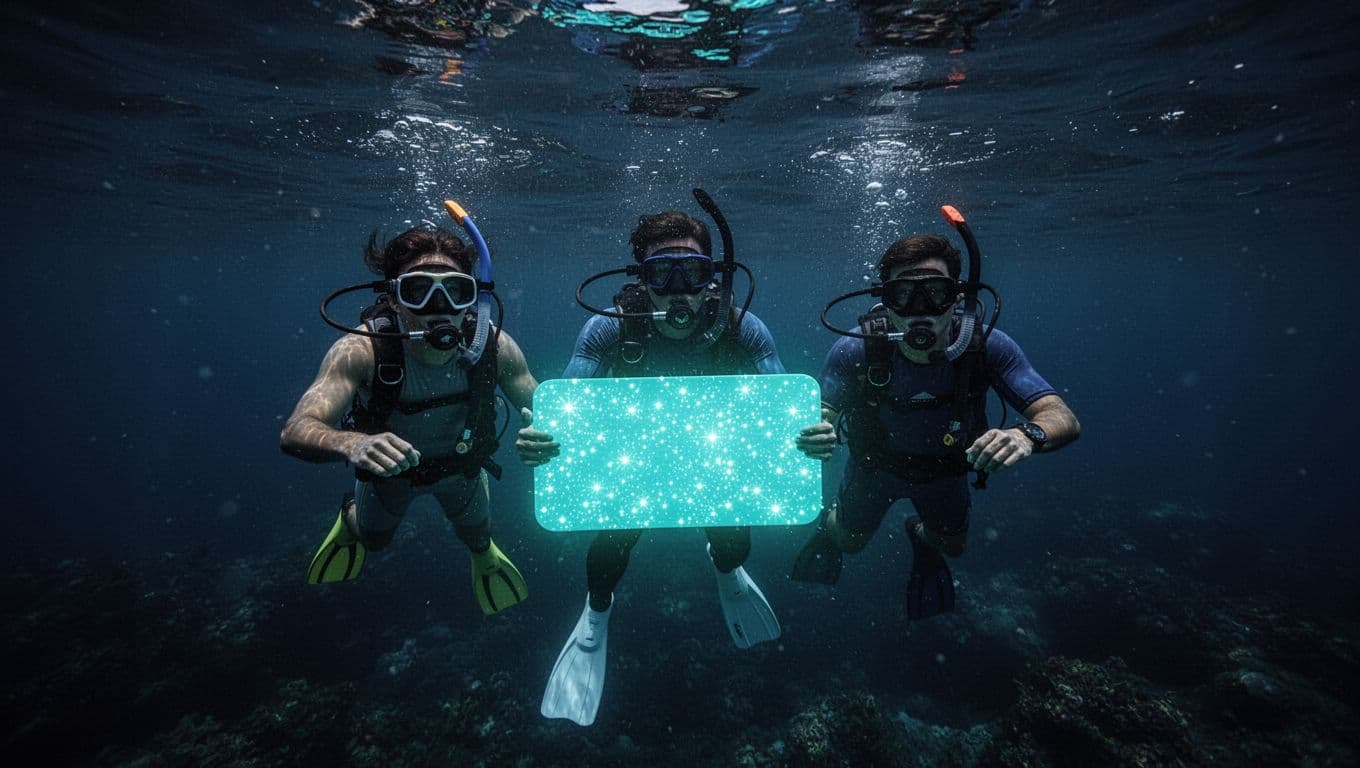
Kona Snorkel Trips follows a “Reef to Rays” philosophy. Its guided trips focus on small-group service, lifeguard-certified guides, modern snorkeling equipment, and responsible interactions with marine life. The company also uses custom-built lighted boards for nighttime manta encounters.
That setup gives you a stable place to hold while you watch the rays below. It also reduces the need to tread water constantly, which helps you stay calm and conserve energy.
Two local companies you may compare are Kona Snorkel Trips and Manta Ray Night Snorkel. Kona Snorkel Trips offers manta experiences alongside reef trips, private charters, seasonal whale watching, and other Big Island ocean adventures. Manta Ray Night Snorkel focuses on nighttime manta encounters.
When comparing tours, check the following details:
- Ask how many guests the boat typically carries.
- Confirm whether flotation equipment and snorkeling gear are included.
- Check the meeting location and total time on the water.
- Review the company’s weather and cancellation policy.
- Choose a guide team that explains wildlife etiquette before entering.
If you’re planning snorkeling Big Island Hawaii activities, you may want to combine a nighttime manta trip with a daytime reef tour. Daylight snorkeling gives you a different view of the coast, including reef fish, coral formations, and clearer color.
Travelers who want to snorkel Big Island waters beyond the manta sites can browse Kona’s guided snorkeling tours. A daytime trip to Kealakekua Bay provides a different type of marine experience, with clear water and reef habitat near the Captain Cook Monument. You can compare that option through the Captain Cook snorkel tour.
Kona Snorkel Trips also has a dedicated manta ray night snorkel experience. Review the trip details before booking, especially if someone in your group has limited swimming experience, mobility concerns, or a strong sensitivity to cold water.
For manta trips, you can check availability before finalizing your travel plans. Evening conditions can change, so booking early helps you find a time that fits your schedule.
What You Can Learn During the Encounter
A nighttime manta snorkel is more meaningful when you know what to watch. Pay attention to the animal’s head, not only its wingspan.
Look for the cephalic fins beside the mouth. They may roll into tubes, extend forward, or change shape as the manta adjusts its feeding angle. These fins help direct plankton-rich water into the mouth.
Watch the eye area during a pass. You may see the eye positioned high on the side of the head, away from the center of the feeding opening. The surrounding tissue blends with the manta’s dark skin, so the eye can be difficult to spot in low light.
Notice how the ray turns without stopping its forward motion. It may bank to one side, keep its mouth open, and pass through the light again. This efficient movement lets the animal stay near food while using little energy.
You can also observe differences between individuals. Some mantas have unique belly markings, scars, or variations in color. Guides may identify regular visitors, which helps you understand that these are individual animals with recurring habits, not interchangeable creatures.
The experience also gives you a close look at filter feeding. You can see the mouth open, the cephalic fins guide water, and the animal glide away after each pass. That sequence is easier to understand in person than in a diagram.
Daytime snorkeling Big Island trips show the reef from another angle. At night, the lights reveal a focused feeding scene. During the day, you can watch small fish pick at the reef, shelter among coral, and react to changing sunlight.
The two experiences complement each other without needing to crowd the same schedule. A manta encounter focuses on open-water behavior. A reef trip focuses on habitat and smaller marine life.
Is Night Snorkeling Safe for Mantas and Swimmers?
A well-managed tour can allow you to observe manta rays without interfering with their feeding. The guide’s role is to organize people, monitor conditions, and keep the group from blocking the animals.
You should never chase a manta if it swims away. The animal may have detected a change in current, moved toward another plankton patch, or decided the area no longer feels comfortable.
For your own safety, stay with the group and follow boat instructions. Ocean conditions can shift after dark, even when the surface looks calm. Keep your mask and snorkel in place, and tell the guide if you feel tired, cold, or disoriented.
People sometimes worry that the lights harm manta eyes. Tour operators use lights to illuminate the water, but you should still avoid pointing a personal flashlight directly at an animal. The best viewing position lets the light reveal the manta from below without forcing it to face a bright beam.
The animals control their own distance. If you remain still and give them room, they can make close passes while continuing to feed. That freedom is an important part of responsible wildlife tourism.
The same principle applies to photography. Keep your camera steady, avoid chasing for a better angle, and don’t use a flash unless your guide specifically permits it. A blurry photograph is better than a disturbed manta.
Conclusion
Manta rays protect their eyes while feeding through a combination of anatomy and behavior. Their eyes sit away from the main water path, protective tissue shields the surface, and their feeding structures direct plankton toward the mouth.
When you watch manta rays Hawaii visitors encounter around Kona, look beyond the wide wings and graceful turns. The eye placement, cephalic fins, and controlled movement show how well the animal is built for filter feeding.
A respectful nighttime encounter gives you a close view without interrupting that process. Stay calm, keep your hands to yourself, and let the manta choose the path through the light.