
Manta Rays Hawaii: Why Their Bellies Are White
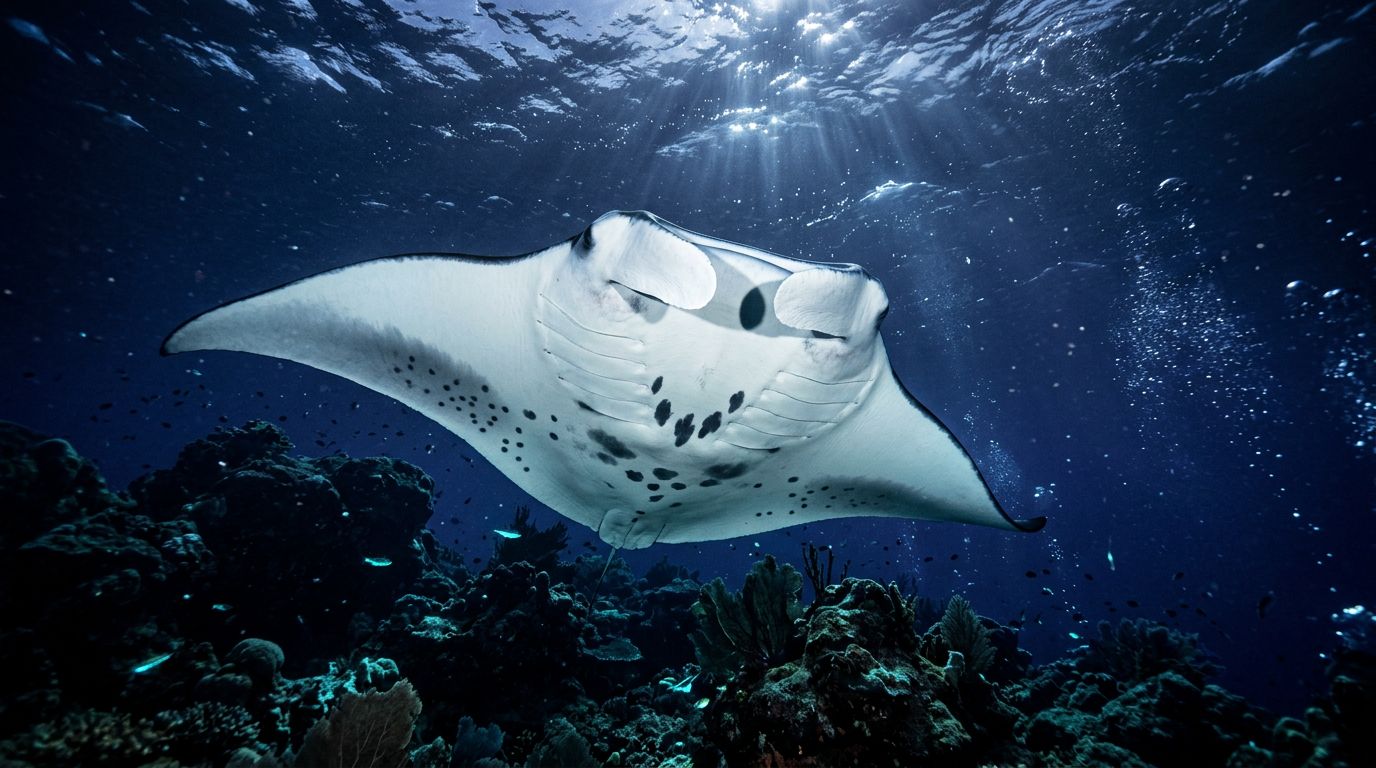
When you search for manta rays Hawaii, the white underside is often the first detail you notice. It looks almost luminous beneath the surface, especially during a night snorkel in Kona.
Kona Snorkel Trips gives you a close view of these graceful animals while keeping safety and reef care at the center of the experience. Once you understand the biology behind the white belly, every pass becomes easier to appreciate.
Manta Rays Hawaii: The Biology Behind the White Belly
Countershading helps manta rays blend into the ocean
A manta ray’s dark back and pale belly are part of a natural color pattern called countershading. Many ocean animals have darker coloring on top and lighter coloring underneath.
From above, the manta’s dark back can blend with deeper blue water. From below, the pale belly is less distinct against the bright surface and sunlight. This contrast doesn’t make the ray invisible, but it can reduce the sharp outline that a predator might see.
The white color comes from the way the underside is pigmented and reflects light. In clear Hawaiian water, sunlight reaches below the surface, making the ventral side appear especially bright. At night, underwater lights create a different effect, highlighting the belly against dark water.
A manta ray’s broad body also affects what you see. Its wings, mouth, and gill slits create a large pale surface as it glides overhead. The animal may look white from a distance, but closer views often reveal gray shading, black spots, and subtle markings.
A white belly doesn’t mean the manta is albino
A normal white or cream-colored belly is common in reef manta rays. It isn’t a sign of albinism, illness, or a separate species.
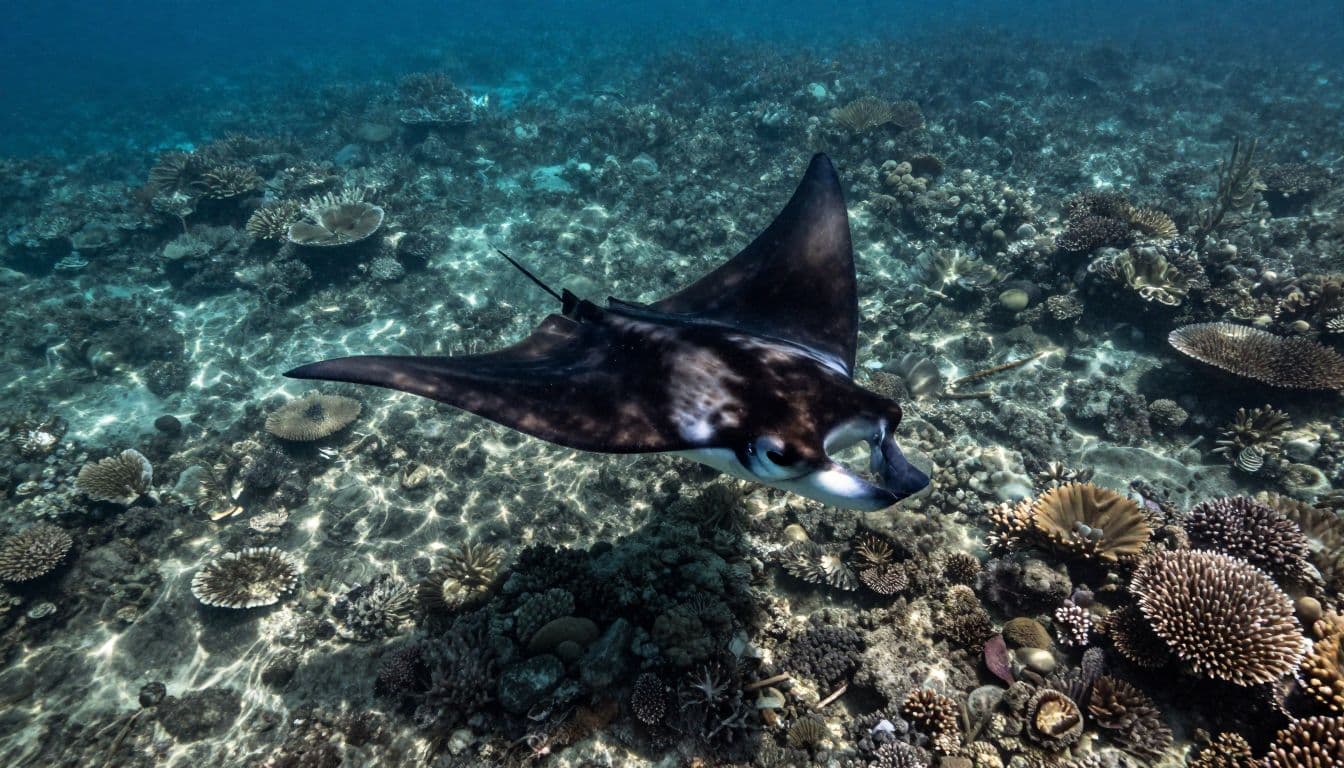
Some mantas have a pale underside covered with irregular dark spots. Others show larger black patches, gray edges, or a more heavily shaded belly. A few have a mostly black appearance on both sides. These darker animals are often called melanistic mantas.
The amount of white varies between individuals. That variation makes each ray easier to recognize, especially when you view clear photographs of its underside.
Which manta rays do you see around Hawaii?
Kona’s familiar visitors are reef manta rays
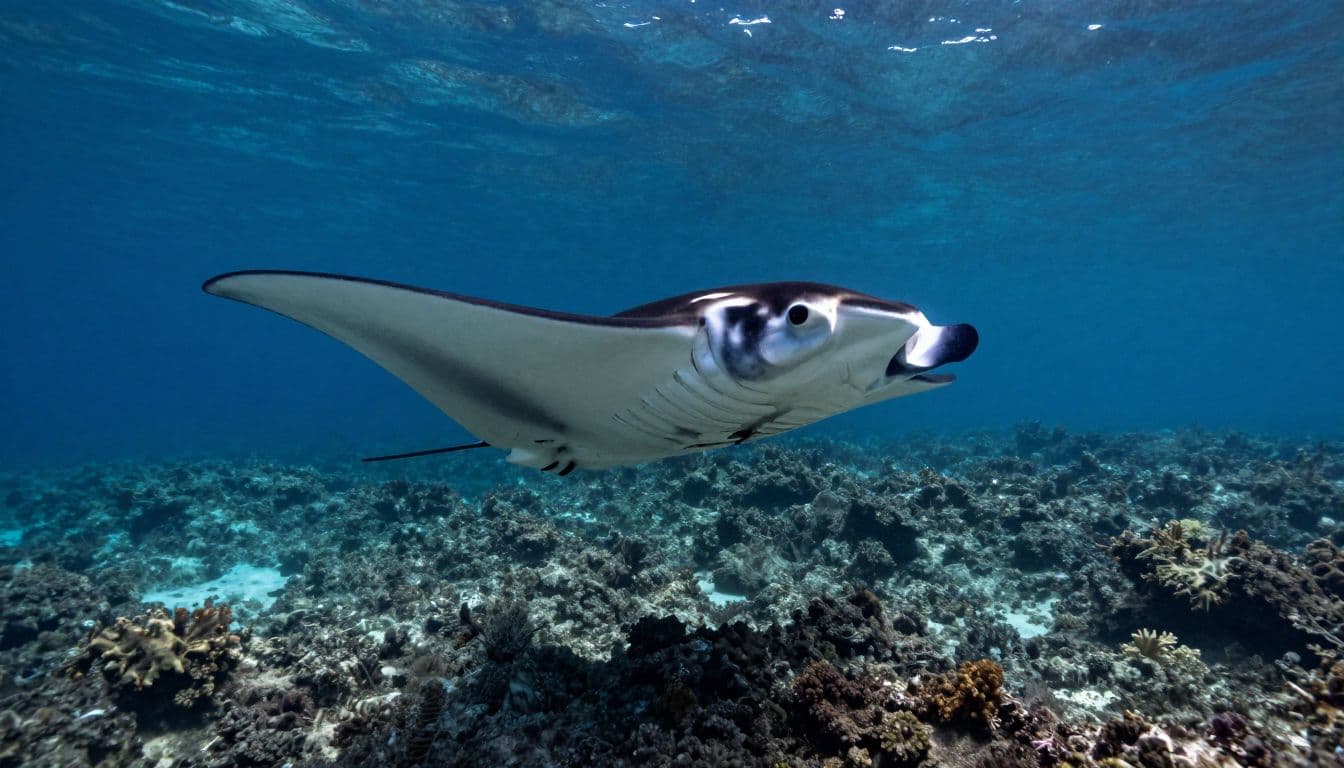
The manta rays commonly seen at established feeding and cleaning areas around Kona are reef manta rays, scientifically known as Mobula alfredi. They live in warm coastal waters and often return to productive areas where plankton is available.
Reef mantas are filter feeders. They swim with their mouths open and use specialized structures near their gills to capture tiny food particles from the water. Their cephalic lobes, the horn-like fins beside the mouth, help direct water and plankton inward.
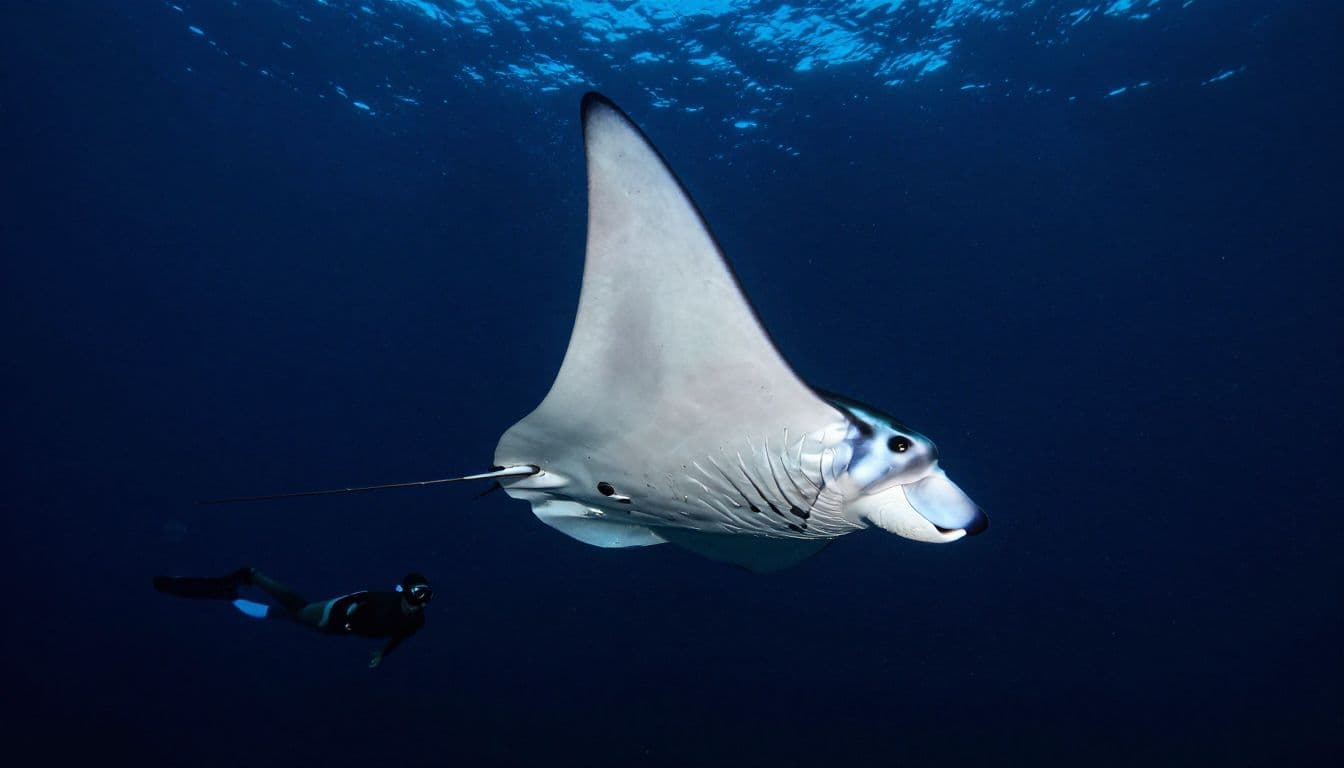
Hawaii can also have sightings of giant oceanic manta rays, Mobula birostris. These are a different species and can grow much larger. NOAA describes the giant manta ray as the world’s largest ray, with a wingspan that can reach up to 26 feet. You can compare the two species through NOAA’s giant manta ray profile.
Most nighttime encounters near Kona focus on reef mantas because these animals regularly visit coastal feeding areas. Still, every wild encounter is different, and your guide may point out differences in size, markings, and swimming behavior.
Belly markings work like natural identification cards
The white belly is useful for more than visual appeal. Its dark spots and patches can help researchers identify individual manta rays.
The pattern stays relatively stable and is unique to each animal. Researchers photograph the underside, compare spot arrangements, and track which mantas return to the same areas. A scientific study of a resident manta population in Hawaii describes these ventral patterns as individual identifiers. You can read the Hawaiian manta ray research for more detail.
During a snorkel, you may notice a few marks without knowing what they mean. Your guide can sometimes recognize a familiar manta from its belly pattern. That turns a short visit into part of a longer story about the animals living along the Kona coast.
The white belly helps you recognize the animal’s underside, while the spot pattern can help identify the individual.
How to read a manta’s underside in the water
Look for the overall shape first
When a manta passes beneath you, start with its silhouette. A reef manta has wide, pointed pectoral fins and a long tail. The mouth sits at the front of the body, with the cephalic lobes curled or extended beside it.
The pale belly usually stretches across most of the central underside. You may see the mouth at the front, followed by rows of gill openings. These openings move as the manta filters water while feeding.
A calm, steady glide often means the manta is moving through the feeding area. Tight turns, sudden changes in direction, or repeated dives may indicate that conditions have changed. Your guide can help you read those movements without chasing the animal.
Notice the markings, not only the color
Two manta rays can both appear white underneath while looking completely different up close. One may have a few small black spots. Another may have dark shoulder markings or a broad patch near the gills.
The pattern can also look different depending on distance and light. Sunlight creates sharp contrast during the day, while nighttime lights may make the belly appear brighter and flatter. Water movement can distort the markings for a moment.
Try to observe the full underside rather than focusing on one spot. If you take photographs, avoid using the flash unless your guide allows it. A clear, steady image from a respectful distance is more useful than a rushed close-up.
Why nighttime manta snorkeling reveals the white belly
Underwater lights concentrate plankton
Manta rays don’t come to the lights because they want to interact with people. The lights make tiny plankton more visible and can concentrate some food near the surface.
As plankton gathers, mantas may swim through the illuminated water with their mouths open. They often make slow passes, roll slightly, or circle through the feeding zone. Their movement can look effortless, but each turn helps them collect food.
The white belly becomes easy to see because the ray moves between the dark ocean and the bright area created by the lights. You may watch the same manta approach, turn, and disappear into the blue several times.
Weather, current, water clarity, and natural feeding conditions all affect what happens. A responsible operator can give you the best possible setup, but no one can control the behavior of a wild animal.
You usually watch from the surface
Most manta snorkel experiences position you at the surface with flotation support. You look down as the rays swim below or rise toward the illuminated area.
That position gives you a wide view of the animals without requiring you to dive after them. It also helps guides keep the group organized and reduces the chance that swimmers will block a manta’s path.
The experience can feel quiet even when several people are nearby. Once the lights are in place, you may hear little more than breathing, water movement, and your guide’s instructions.
What you can expect from Kona Snorkel Trips
Kona Snorkel Trips follows a “Reef to Rays” philosophy, with guided ocean adventures built around marine life, guest safety, and responsible reef access. Its Big Island snorkeling tours include manta ray encounters and other guided trips along the Kona coast.
A small-group setup keeps the experience personal
The company focuses on small-group service instead of crowded, impersonal boat outings. Lifeguard-certified guides lead the trip, explain what you’re seeing, and help you get comfortable with the equipment and water conditions.
You receive quality snorkeling gear, safety guidance, and support throughout the experience. That matters during a nighttime outing, especially if you’re traveling with children, less-confident swimmers, or family members who haven’t snorkeled before.
The crew also uses custom-built lighted boards for nighttime manta encounters. These boards create the illuminated feeding area that lets you observe the rays from the surface.
For a dedicated manta focus, you can also learn about Manta Ray Night Snorkel, the company’s related manta experience. Both options fit travelers who want marine-life education alongside the excitement of being in the water after dark.
You can check availability before finalizing your Kona plans.
The manta trip works for many travel styles
Couples often choose a night snorkel for a memorable evening on the water. Families may prefer the structure of a guided trip, where the crew handles equipment and explains how to float comfortably.
Solo travelers also benefit from a small group. You can meet other ocean-minded visitors without giving up personal attention from the guides.
If you’re planning a snorkeling trip on the Big Island of Hawaii, consider your group’s swimming ability, comfort with darkness, and preferred departure time. The right trip is the one that lets you focus on the animals instead of worrying about logistics.
You can check availability for a manta ray night snorkel when the experience fits your schedule.
How to choose a responsible manta ray tour in Kona
Check the safety details before booking
A quality operator should explain what happens before you enter the water. Look for clear information about flotation, snorkeling ability, weather decisions, boat procedures, and guide supervision.
You should also know whether the trip provides masks, snorkels, fins, wetsuits, and other equipment. Ask about water entry and exit if anyone in your group has limited mobility.
Night snorkeling adds another layer of planning. You need a guide who can explain where to position yourself, how to hold flotation support, and what to do if you feel uncomfortable.
NOAA’s Hawaii marine wildlife viewing guidelines encourage visitors to observe animals responsibly for both human safety and wildlife protection.
Choose an operator that respects animal behavior
Mantas should never be touched, chased, grabbed, ridden, or fed. Keep your hands to yourself and let the animal decide how close it wants to swim.
A good guide positions the group in a way that leaves the manta room to move. You may see the ray pass close, but you shouldn’t swim after it when it turns away.
Responsible viewing also protects the quality of the encounter. Mantas that move freely give you a better chance to see natural feeding behavior rather than a stressed animal trying to escape the group.
General marine life viewing guidance from NOAA offers additional principles for watching wildlife without disrupting it.
What to bring and how to behave in the water
Prepare for darkness and changing conditions
Bring a swimsuit, towel, drinking water, and a light layer for the boat ride. Even warm Hawaiian evenings can feel cool after you leave the water.
If you wear contact lenses, ask your guide whether they recommend a particular approach. Prescription masks may also be available through some operators, but you should confirm before the trip.
Eat a light meal before departure if you tend to feel motion sick. Follow the operator’s instructions about medication, timing, and food. Arrive early enough to check your mask fit and listen to the safety briefing without rushing.
During the outing, keep your fins controlled. Slow movements help you conserve energy and reduce accidental contact with another swimmer or the reef.
Protect the reef while you watch
Never stand on coral or rest your fins on the seafloor. Coral can break under a small amount of pressure, and recovery can take years.
Use reef-conscious sunscreen and follow current Hawaii regulations and operator guidance. Keep plastic, food, and other items secured on the boat.
You can help by staying with your group and following the guide’s position instructions. If you feel tired, cold, anxious, or seasick, tell the crew early. A short break is safer than trying to push through discomfort.
The best photos usually come from patience. Let the manta swim into the light, keep your body still, and give the animal plenty of space.
Can you see white-bellied mantas during a daytime snorkel?
Daylight offers a different view
Night snorkeling makes the pale underside dramatic, but daytime reef trips show other details. You may see the manta’s dark back, wing shape, tail, and swimming pattern more clearly in natural sunlight.
Daylight also gives you a better look at the surrounding habitat. Hawaiian reefs contain volcanic rock, coral growth, fish, and changing shades of blue. A manta passing above that setting can appear almost black from above, then flash white when it banks.
You may not encounter a manta during every daytime reef trip. Their movements depend on food, currents, and location. However, daytime snorkeling remains a good way to understand the environment that supports marine life along the Kona coast.
Combine a reef trip with a manta night
If you want to snorkel the Big Island, combining different water experiences can give you a fuller picture of Hawaii’s marine habitats. A daytime reef outing focuses on color, structure, and fish activity. A manta night centers on open-water movement and plankton feeding.
Big Island snorkeling also changes with your location. Kona’s leeward coast often offers access to clear water, while conditions can shift with wind and swell. Your guide can help you understand the day’s conditions and choose the safest plan for your group.
You don’t need to become an experienced snorkeler before joining a guided trip. Practice floating, breathing through a snorkel, and clearing your mask in a pool or calm water before your departure.
What the white belly means for your manta encounter
The pale underside of a Hawaiian manta ray comes from natural pigmentation, light reflection, and countershading. Its black spots and patches add another layer, allowing researchers and experienced guides to recognize individual animals.
During a nighttime encounter, plankton-rich water and underwater lights make that belly easy to see. You can enjoy the view while protecting the animal by remaining calm, keeping your distance, and following your guide’s instructions.
When you plan snorkeling on the Big Island, choose an operator that treats safety and conservation as part of the experience. A respectful encounter leaves the manta in control of its path and gives you a clearer view of the animal’s natural behavior.
Conclusion
A manta ray’s white belly is a normal part of its biology, not a sign of albinism. Countershading helps explain the pale underside, while individual spots help distinguish one ray from another.
When you see a manta glide through illuminated Kona water, watch the full animal rather than focusing only on its color. Your calm behavior gives the ray room to feed naturally, and that makes the encounter more meaningful for everyone in the water.