
Manta Ray Snorkeling Hand Signals for Kona Tours
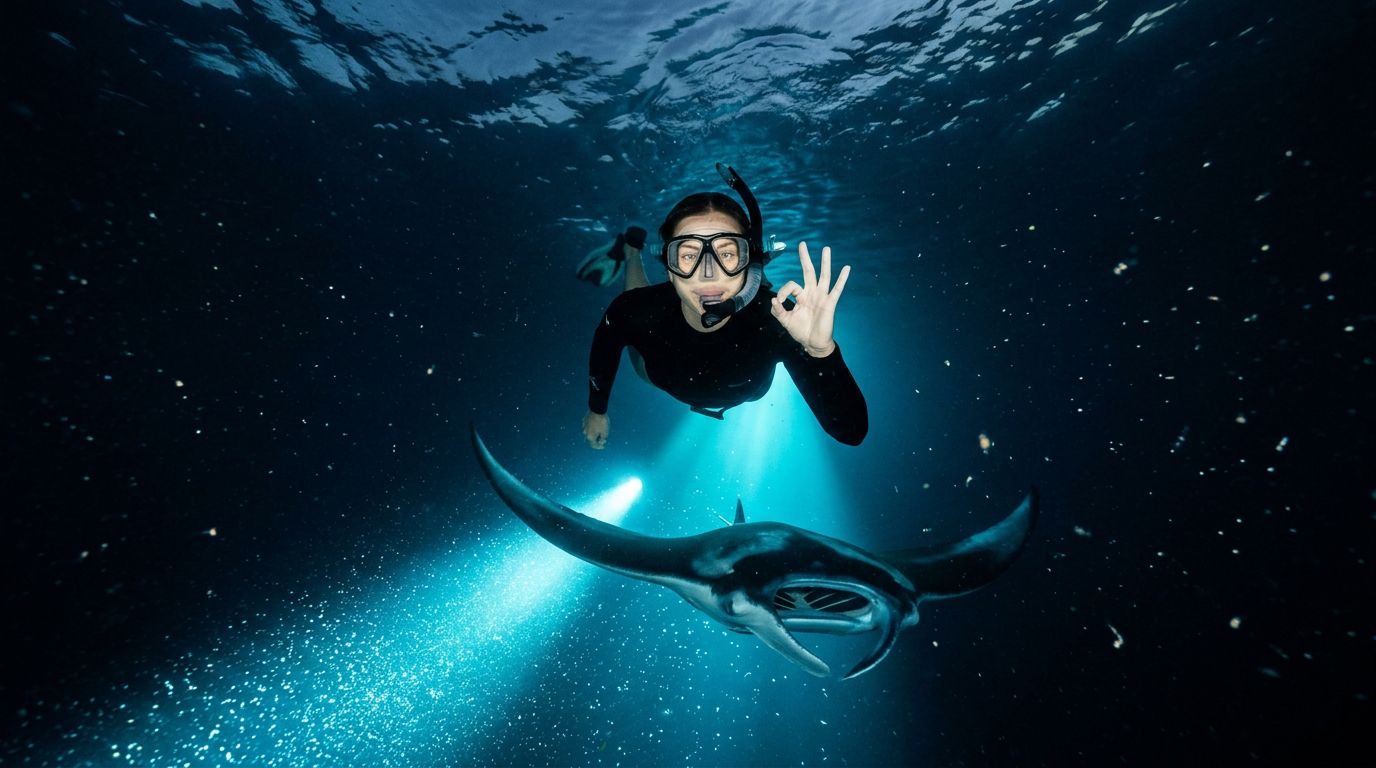
When a manta ray glides beneath you in black water, your voice disappears into the ocean. Learning manta ray snorkeling hand signals helps you stay connected with your guide, communicate problems quickly, and enjoy the encounter without shouting or waving wildly.
If you’re planning snorkeling Big Island Hawaii adventures, a short safety briefing can make your first nighttime swim feel much more comfortable. Kona Snorkel Trips leads guests through calm, guided manta encounters, while Manta Ray Night Snorkel Hawaii’s tour guide also highlights the value of learning simple signals before entering the water.
The signals are easy to learn. Their meaning becomes much clearer when you practice them with your mask, snorkel, and flotation gear before the boat reaches the viewing site.
Why hand signals matter on a Kona manta snorkel
Night snorkeling creates a communication problem you won’t face on most daytime reef tours. Your ears may hear bubbles, boat movement, and splashing, but underwater speech is difficult to understand. A guide may be several feet away, and the group may need to stay quiet while manta rays pass below.
Hand signals give you a shared language. With one clear motion, you can tell your guide that you’re comfortable, point out a manta, ask for help, or show that you want to return to the boat.
The signals also help your group move safely. When everyone understands “stop,” “come here,” and “surface,” guests are less likely to kick into one another or drift away from the lighted viewing area.
Kona Snorkel Trips teaches guests basic communication before entering the water. Its manta snorkel safety guide explains that guests learn signals such as “okay” and “help,” remain together, and use flotation support during the experience.
Night water changes how you communicate
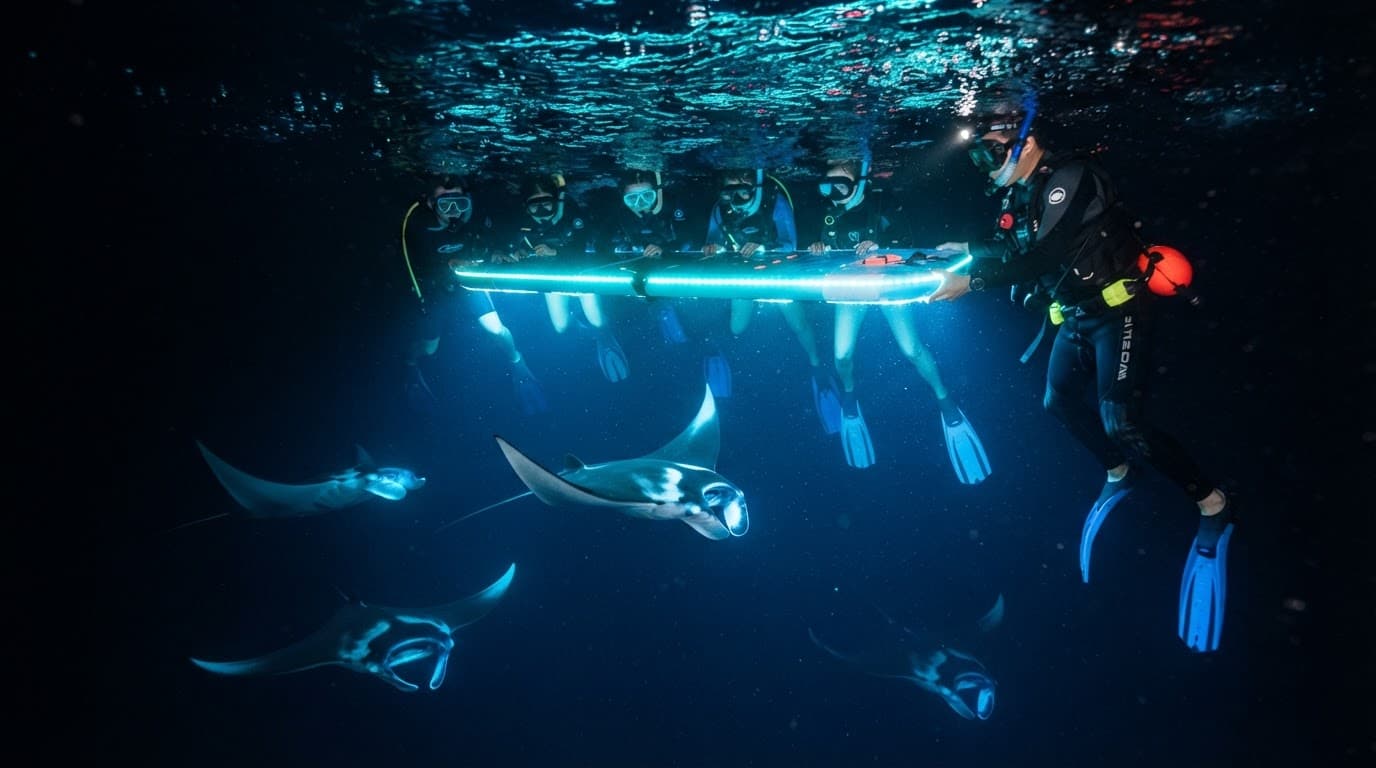
A manta ray night snorkel often takes place in open ocean water, where the surface can feel much darker than the boat deck. Guides may use lights to attract plankton, while guests hold onto a floating board and look downward.
Your guide might use a flashlight to draw your attention to a manta. However, bright beams can make hand movements harder to see. Keep your signals slow, large, and close to your body.
You don’t need to wave both arms. Use one hand while keeping your other hand on the board or flotation device. A controlled signal is easier for a guide to read than a fast movement that looks like panic.
Clear signals protect the group
A group works best when guests know the difference between a normal request and an emergency. For example, touching your mask and pointing tells the guide you have a mask problem. Waving both arms at the surface communicates a more urgent need for assistance.
You also need to understand that the guide’s briefing takes priority. Operators may use slightly different versions of “help,” “stay together,” or “return to the boat.” If your guide demonstrates a variation, use that version during the tour.
The most useful signal is the one your guide sees clearly and interprets correctly. Practice the exact version used during your briefing.
Manta ray snorkeling hand signals you should practice before launch
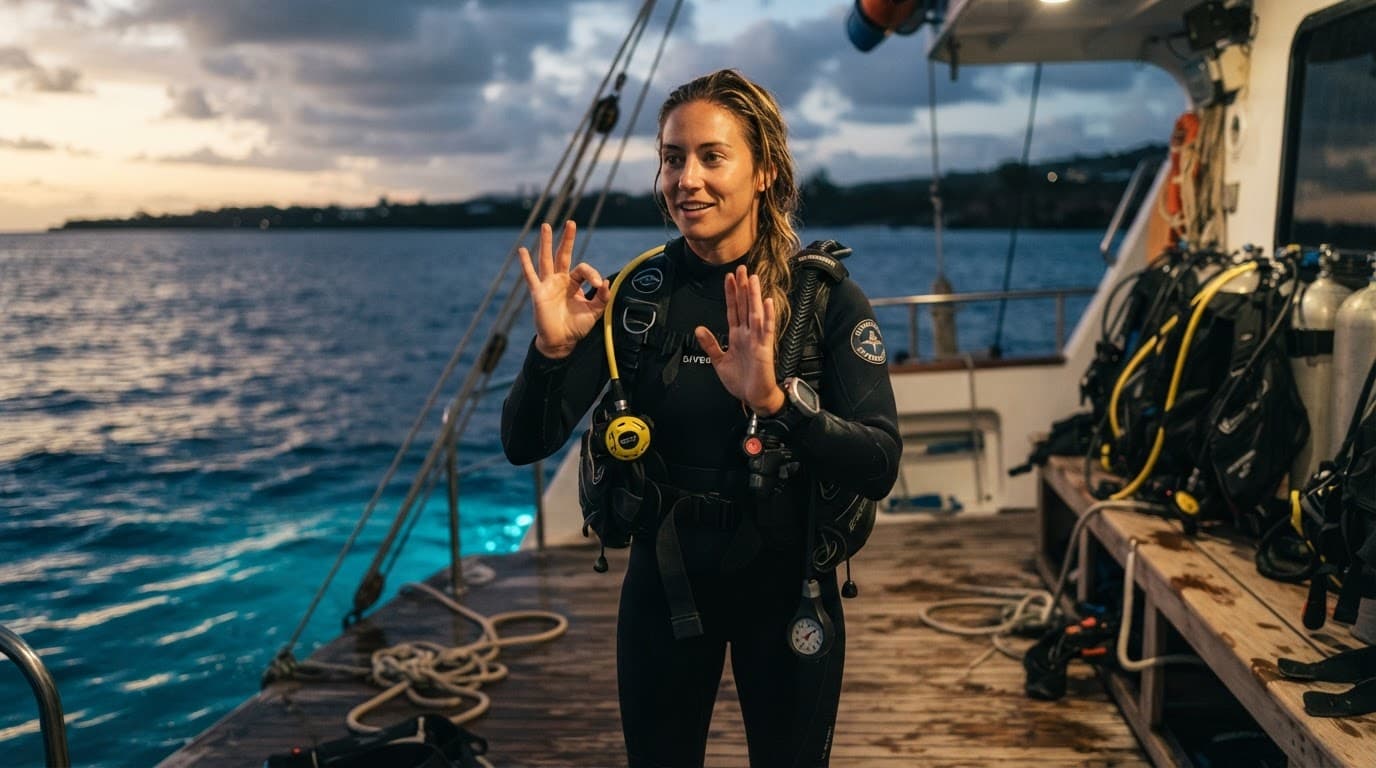
The most important manta ray snorkeling hand signals are simple, but each one has a specific meaning. Practice them before you put on your mask so you won’t need to think about them in dark water.
| Signal | What it means | What you should do |
|---|---|---|
| Thumb and index finger form a circle | “OK” or “I’m comfortable” | Stay in position unless your guide gives another instruction. |
| Open hand rocks gently side to side | “Not OK” or “I have a problem” | Point to the problem, such as your mask, snorkel, or shoulder. |
| Flat palm faces the guide | “Stop” or “Pause” | Stop kicking and wait for the next signal. |
| Palm faces you while fingers curl inward | “Come here” | Move toward the guide or board without chasing a manta. |
| Two fingers point toward your eyes, then outward | “Look” | Follow the guide’s direction with your eyes. |
| Thumb points upward | “Go up” or “Return to the surface” | Stop looking down and rise in a controlled way. |
| Thumb points downward | “Go lower” | Use this only when your guide gives the signal or permits a lower position. |
| Palm faces down and moves slowly | “Slow down” | Reduce your kicking and settle your body. |
The OK signal
Touch your thumb and index finger together to form a circle. Extend the other three fingers naturally. This usually means you’re comfortable, breathing normally, and ready to continue.
Your guide may also use it to check the whole group. Return the signal when you see it, but don’t assume that “OK” means you should swim somewhere else.
The problem signal
Hold one hand flat and rock it from side to side. This tells the guide that something needs attention, but it doesn’t explain what the problem is.
Follow it by pointing to the issue. Point to your mask if water is leaking, your mouth if your snorkel feels uncomfortable, or your leg if you have a cramp.
Avoid using the problem signal as a joke. At night, the guide needs to know whether you need a small adjustment or immediate help.
Stop, come here, and look
A raised flat palm means “stop.” It may tell you to pause because a manta is approaching, another swimmer is nearby, or the guide needs to reposition the group.
The “come here” signal uses a palm facing your body while the fingers curl toward you. Follow it carefully. Move toward the guide or board, not toward the animal.
To direct your attention, a guide may point to their eyes and then point outward. You can use the same motion when you want your buddy to see a manta. Keep your body still while you look.
Up and down
Underwater, a thumbs-up signal usually means “go up,” not “great job.” This distinction matters because divers and snorkel guides often use the same standard communication.
A thumbs-down signal can mean “go lower.” During a manta snorkel, you should only move lower if your guide directs you and your equipment, comfort, and local conditions allow it.
Don’t use either signal casually. If you mean “everything is fine,” use the OK circle instead.
What to do when you need help or want to leave
A minor equipment issue can feel serious when you’re floating in dark water. The best response is to signal early, before discomfort becomes panic.
If your mask leaks, keep your face calm and use the problem signal. Then point to your mask. Your guide can help you adjust the seal or decide whether you should lift your face from the water.
If your snorkel fills with water, raise your head enough to breathe normally. Use the problem signal and point to your mouth or snorkel. Don’t keep forcing yourself to breathe through equipment that isn’t working well.
A cramp requires a similar response. Signal “not OK,” point to your leg, and stop kicking. Keep a hand on the board while the guide helps you stabilize.
Surface distress signals
If you need urgent help at the surface, raise one arm overhead and wave it clearly. Call out if you can. The combination of a raised arm and your voice helps the crew locate you quickly.
If you need to end the activity, use the thumbs-up signal and point toward the boat or guide. You can also lift your face from the water and state what you need.
You don’t need to stay in the viewing position to prove that you’re comfortable. A manta encounter should remain calm and voluntary throughout the tour.
If you can’t see or understand the guide’s signal, lift your head, breathe, and ask for clarification at the surface.
Tell your guide about concerns early
Let the crew know before entering the water if you’re nervous, prone to motion sickness, uncomfortable in deep water, or unsure about your mask. They can explain the setup and help you choose the right flotation support.
Families should practice with children on the boat. Ask your child to show “OK,” “problem,” “stop,” and “up.” A few minutes of practice can prevent confusion later.
Use signals without disturbing manta rays
The goal is to observe manta rays, not direct their movement. These animals decide how close they come and how long they stay. Your hand signals should help you communicate with the guide while keeping your body quiet.
Most guests hold onto a floating board above the lighted viewing area. Keep your arms and legs close to the board. Avoid kicking toward a manta or reaching down to touch it.
If the guide signals “look,” follow the direction with your eyes. You can point briefly, but don’t chase the animal if it turns away. A manta may circle beneath the group, pass over the lights, or disappear into the dark water.
A “stop” signal may mean a manta is approaching your position. Stop kicking and wait. Sudden movements can bring you closer to the animal than intended.
The same rule applies when you use the “come here” signal with your buddy. Call your buddy toward the board or guide, not toward the manta. You want the group to stay compact without crowding the animal.
Your flashlight can also affect the experience. Follow the crew’s instructions about personal lights, cameras, and positioning. The viewing setup works best when everyone follows one lighting plan.
Practice the signals before you enter the water
A good pre-water briefing does more than list hand gestures. It gives you a clear plan for equipment problems, group movement, and returning to the boat.
Before launch, your guide should explain where you will hold on, how you will enter the water, and what to do if you need assistance. Listen for the exact meaning of their help and surface signals.
Use this short practice sequence:
- Repeat the OK signal and problem signal with your guide.
- Demonstrate stop, come here, look, and up.
- Ask which signal means you should return to the boat.
- Tell the crew if you need a mask adjustment, flotation aid, or extra explanation.
- Practice signaling with one hand while your other hand rests on the board.
Wear your gear before practicing
A hand gesture can look different when you’re wearing a mask and holding a snorkel. Practice while your hands are wet and your shoulders are relaxed.
Your mask should sit comfortably without forcing you to touch it repeatedly. Your snorkel should stay in place when you turn your head. Fins should fit securely without creating pressure or slipping.
A wetsuit can add warmth during a nighttime outing, especially when you remain in the water for an extended period. If you feel cold, use the problem signal and point to your torso.
Don’t wait until you feel overwhelmed. Guides can help with fit, positioning, and comfort before you enter the water.
Set a buddy plan
Choose a buddy before the boat reaches the site. Agree that you will stay close enough to see one another’s signals without stretching away from the board.
If your buddy gives the problem signal, alert the guide. Don’t leave the group to assist unless the guide directs you. One guest trying to help another without a plan can create more separation in the water.
Keep your buddy’s face and shoulders in view when possible. If the water becomes crowded, use the come-here signal to bring your buddy back toward the guide.
Keep your movements easy to read
Fast hand motions can look like distress. Use a single signal, pause, and wait for the guide’s response.
If the guide doesn’t react, repeat the gesture at chest level. At the surface, lift your head and speak. Clear communication matters more than staying in the perfect viewing position.
How to choose a guided manta snorkel in Kona
A well-organized tour gives you more than a boat ride to a viewing site. You need a crew that explains communication, checks your gear, manages the group, and respects the animals.
Kona Snorkel Trips follows a “Reef to Rays” philosophy centered on safety, education, and reef-friendly practices. The company has built a five-star reputation through small-group service and close attention to guest comfort.
Its lifeguard-certified guides teach guests what to expect before they enter the ocean. The operation also provides quality snorkeling equipment and custom-built lighted boards for nighttime manta encounters.
For travelers comparing Big Island snorkeling tours, a small-group format can make it easier to see your guide’s hands and ask questions before launch. You also get more room to communicate without being surrounded by a large crowd.
Manta Ray Night Snorkel Hawaii is another option to review when you’re comparing local operators. Its guest guide also describes the role of the guide and the simple hand signals used during the experience.
Before booking, check the meeting instructions, tour duration, flotation setup, cancellation policy, and minimum age requirements. Ask whether the crew provides wetsuits and whether you can remain on the boat if you decide not to enter the water.
The right tour should make you feel prepared before the first manta appears. When the safety plan is clear, you can focus on your breathing and the animals below.
To compare tour dates with Kona Snorkel Trips, check availability.
When you’re ready to reserve a manta ray night snorkeling trip, you can check avaialbility for available dates.
Use the same skills on daytime Big Island reefs
The signals you learn at night are useful on every guided ocean outing. When you snorkel Big Island waters during the day, you still need to communicate with your guide and buddy without relying on your voice.
Daylight makes hand signals easier to see, but waves, wind, and boat noise can still interfere. Practice OK, problem, stop, come here, and up before a reef tour.
For many families, snorkeling Big Island reefs during the day feels like a gentle introduction to ocean activities. You can practice floating, breathing through a snorkel, and staying with your group before trying a nighttime manta encounter.
Day tours also give you a chance to observe your own comfort level. If you tire quickly, struggle with your mask, or feel uneasy in open water, tell the guide before scheduling a night outing.
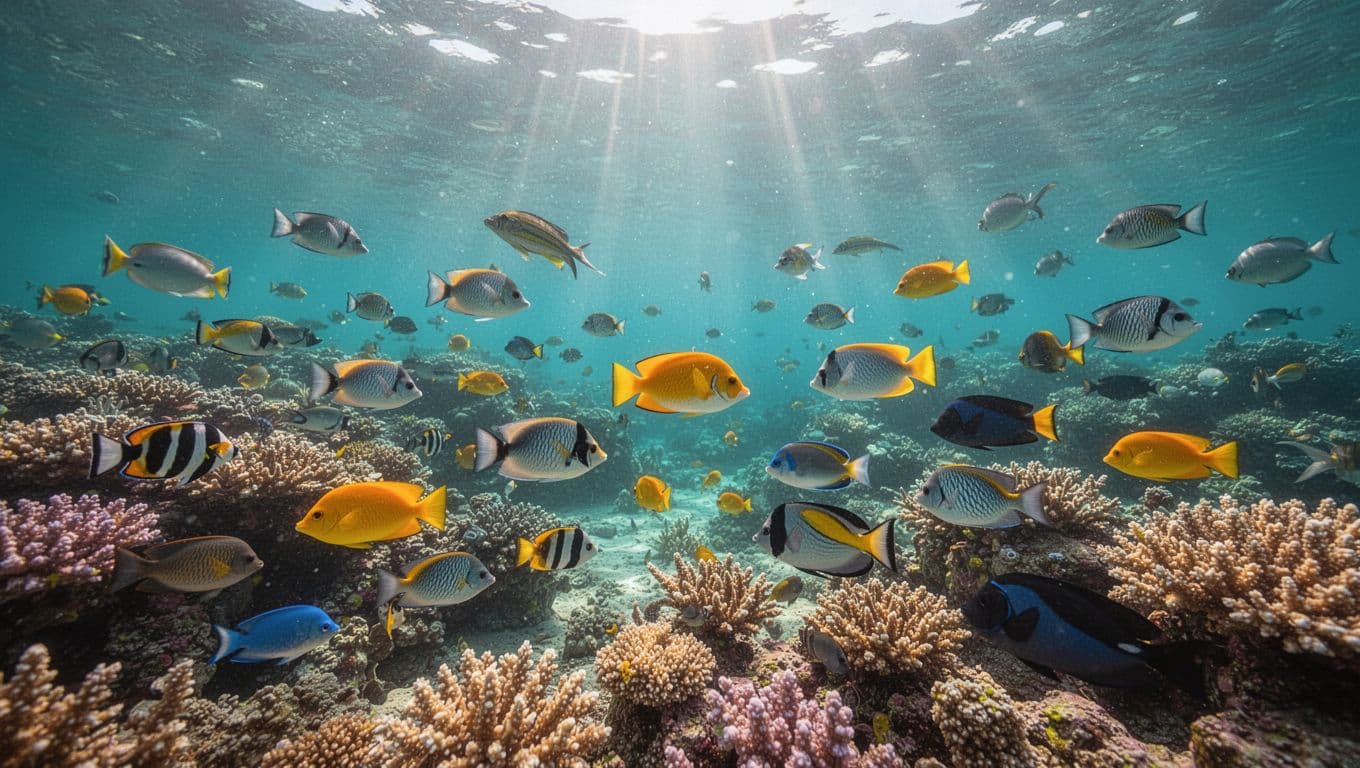
The best snorkeling Big Island experiences pair clear instructions with respectful wildlife viewing. You don’t need advanced swimming skills to benefit from good communication, but you do need to follow the crew’s directions.
Conclusion
Manta ray snorkeling hand signals give you a calm way to communicate when your voice can’t travel through the water. Learn the OK, problem, stop, come here, look, and up signals before launch, then confirm the exact versions your guide uses.
Keep your movements controlled, stay with your buddy, and signal early when something feels wrong. With a clear safety plan, you can watch manta rays move through the lighted water while giving the animals plenty of space. That first silent glide beneath you is easier to enjoy when you know exactly how to communicate.