
Can Manta Rays Hear You at Night in Hawaii?
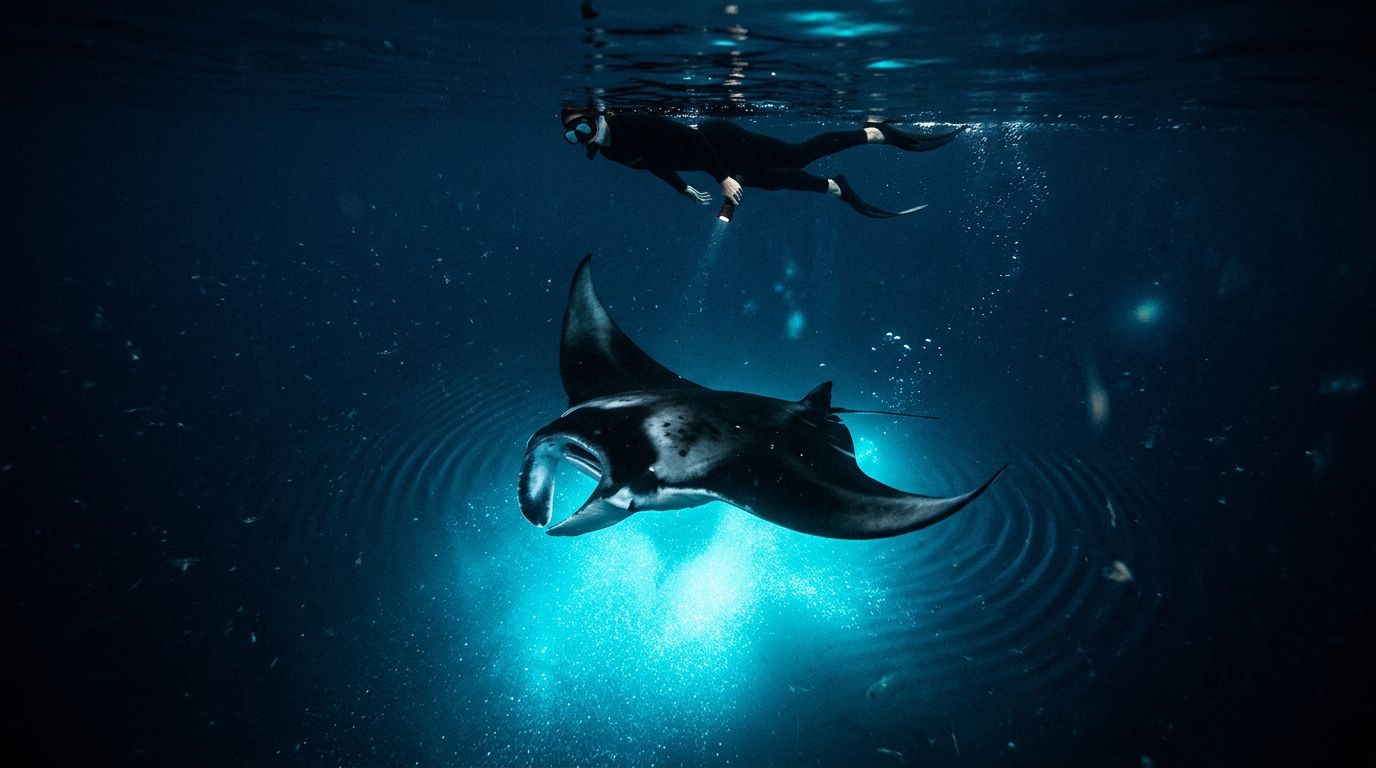
At a manta ray night snorkel in Kona, you float above a pool of light while huge rays sweep beneath you. If your fins splash or your mask releases a stream of bubbles, you may wonder whether the animals hear every sound you make.
The short answer is yes, manta rays can detect underwater sound and movement. However, no reliable evidence shows that they identify ordinary snorkeler noises as human voices or track one swimmer by sound alone. Their response depends more on food, light, boat activity, and your behavior. Before you enter the water, it helps to understand what their senses can tell them.
Key Takeaways
- Manta rays can detect vibrations and low-frequency sounds underwater.
- Scientists haven’t shown that mantas recognize snorkeler voices or breathing.
- Calm, slow movements help you avoid disturbing feeding rays.
- Boat noise may matter more than quiet conversation at the surface.
- A responsible guide gives you instructions that protect both you and the animals.
What Does a Manta Ray Night Snorkel Sound Like to a Manta?
Underwater sound behaves differently than it does in air. Water carries pressure waves efficiently, so splashing, boat engines, fin kicks, and bubbles all create disturbances. You can learn more about how sound moves through ocean water before your trip.
That doesn’t mean the reef becomes loud in the same way a room becomes loud. Your voice travels poorly from above the surface, while vibrations from a boat or repeated fin movement can spread through the water. A single bubble burst is unlikely to change a manta’s behavior. Constant splashing close to its path may attract attention or cause it to turn away.
Manta rays don’t have outer ears like humans. They have inner-ear structures that help them detect balance, movement, and vibrations. Their bodies also respond to pressure changes around them. This gives them useful information about nearby animals, obstacles, and activity in the water.
If you’re researching snorkeling Big Island Hawaii experiences, the practical answer is simple: a manta may notice you, but it probably doesn’t hear you in the human sense. It can sense the disturbance your body creates. The ray then decides whether to continue feeding, change direction, or move farther away.
Kona Snorkel Trips follows a “Reef to Rays” approach, with small-group trips, lifeguard-certified guides, quality snorkeling equipment, and custom-built lighted boards for nighttime encounters. For another manta-focused option, you can visit Manta Ray Night Snorkel and compare the experience before booking.
How Manta Rays Perceive Their Underwater World
Hearing is only one part of how a manta experiences a nighttime feeding site. Its large eyes help it track the bright surface area where plankton gather. The ray also uses sensory systems that detect water movement and electrical signals produced by other animals.
Mantas are filter feeders. They swim through plankton-rich water with their mouths open, directing tiny food particles toward their gill rakers. At night, strong lights placed near the surface attract plankton. The food gathers in the illuminated water, and mantas follow it.
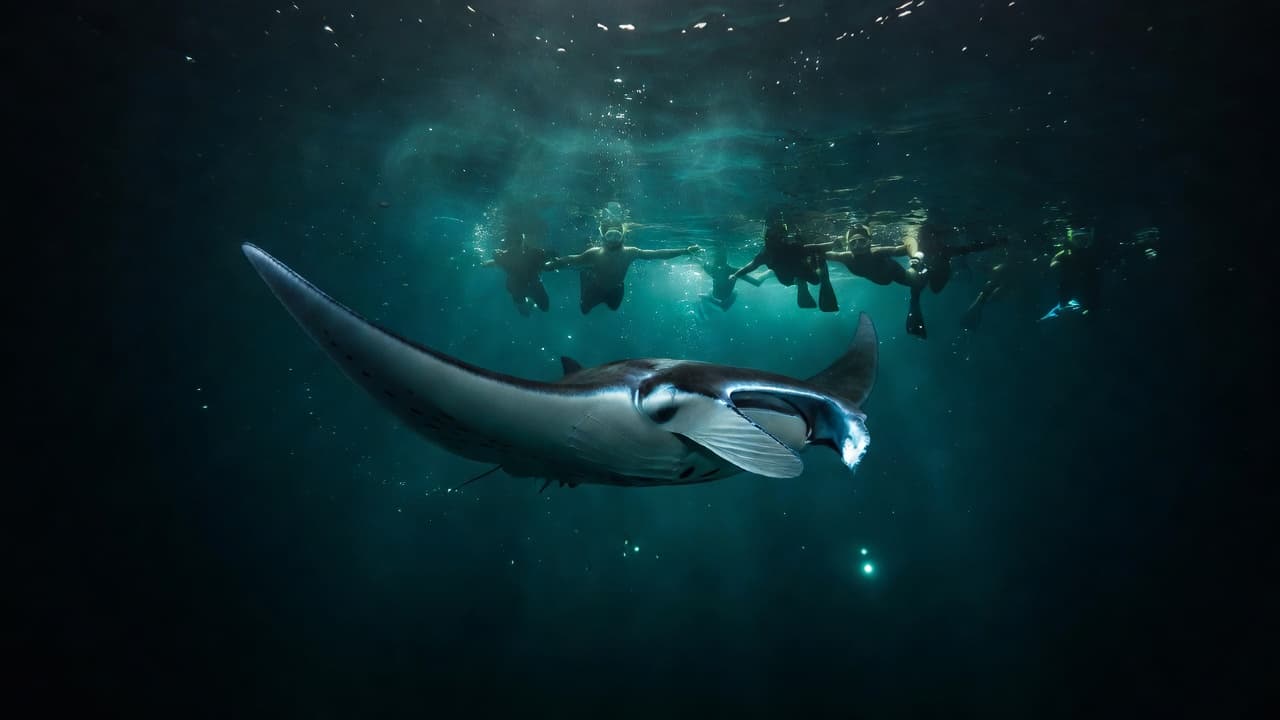
This feeding pattern explains why a manta may glide close to you without showing fear. The ray is usually focused on the plankton concentration, not on the people watching from above. It may roll, turn, or pass beneath the light several times if the food remains available.
Still, the animal isn’t unaware of its surroundings. A manta can detect changes in pressure and movement as you kick, shift position, or descend. It may also react to a guide’s light board, the boat’s position, or another ray entering the feeding area.
You shouldn’t assume that a calm manta is tame. The animal is wild, and its behavior can change without warning. Feeding conditions, currents, visibility, and the number of rays at the site all affect the encounter.
A snorkeling Big Island itinerary often includes daytime reef trips and a night manta experience. The two activities feel different because daytime snorkeling depends on sunlight and reef visibility. At night, the light creates a focused feeding area, so your stillness becomes especially important.
Can Snorkelers Scare Manta Rays at Night?
Most nighttime encounters remain calm when swimmers follow basic water etiquette. Your guide will usually ask you to stay at the surface, hold the light board, keep your body relaxed, and avoid touching the rays. Those instructions reduce sudden movement and leave the animals room to feed.
Bubbles from normal breathing usually aren’t a problem. Snorkeling naturally creates some sound, and mantas encounter divers, fish, boats, and waves throughout their habitat. You don’t need to hold your breath or remain perfectly silent. Instead, keep your breathing steady and avoid shouting, splashing, or kicking toward a ray.
Before you snorkel Big Island waters at night, remember that distance matters more than silence. If a manta approaches, let it choose the path. Don’t reach for its wings, swim underneath it, block its turn, or chase it when it moves away.
Boat noise deserves attention as well. A running engine produces sustained vibration through the water, which can travel much farther than a quiet voice at the surface. For that reason, a well-managed tour limits unnecessary engine use near the feeding area and follows local operating rules.
Your group also affects the experience. A crowded waterline creates more fins, bubbles, lights, and unpredictable movement. Small groups give you more space to observe the rays and make it easier for the guide to respond if conditions change.
Manta behavior can shift during the same evening. One ray may circle the lights for an hour, while another may make a single pass and leave. That doesn’t mean someone did something wrong. Wildlife encounters depend on natural conditions, and a responsible operator won’t promise a fixed number of animals or a guaranteed performance.
Choosing a Responsible Kona Manta Tour
When you compare snorkeling Big Island tours, look beyond the phrase “night manta snorkel.” Ask where the boat departs, how long you stay in the water, what safety equipment is available, and how guides manage wildlife interactions.
Kona Snorkel Trips departs from Honokohau Harbor and offers guided manta trips with professional equipment and lifeguard-certified guides. The company focuses on a personalized, small-group setting rather than an impersonal, high-volume outing. Guides also include information about reef protection and respectful behavior around marine life.
You can review the Kona manta ray night snorkel details before selecting a departure. Check the trip length, meeting instructions, age requirements, and cancellation terms. If you’re traveling with children, confirm that every swimmer meets the operator’s comfort and safety requirements.
Pack a swimsuit, towel, warm layer, and any medication you normally use for motion sickness. Even warm Hawaiian evenings can feel cool after you leave the water. If you wear contact lenses or need prescription vision correction, ask the operator which options work with its masks.
A good guide will explain where to place your hands, how to position your body, and what to do if you feel tired. You should also receive a clear safety briefing before entering the water. If the current, wind, visibility, or swell makes conditions unsuitable, the crew should adjust the plan.
You can check availability for a Kona manta tour before your trip. Booking early helps during busy travel periods, but flexibility is useful because ocean conditions can affect departure times.
What Should You Do When a Manta Approaches?
Stay horizontal at the surface and keep your movements slow. Let the lighted board support you instead of trying to swim after the ray. Your guide may ask you to move slightly so the animal has a clear route through the feeding area.
Avoid shining a personal light directly into a manta’s eyes. Follow the crew’s instructions about cameras and flashes. A camera is useful when you can hold it steadily without reaching toward the animal or losing awareness of your position.
If you feel anxious, signal your guide early. You don’t need to wait until you’re exhausted. The crew can help you return to the boat or move to a more comfortable position.
The best encounter often happens when you stop trying to control it. You can’t make a manta swim closer, but you can create fewer reasons for it to leave. Quiet breathing, steady flotation, and respectful distance allow you to observe natural feeding behavior.
Conclusion
Manta rays can detect underwater vibrations and sound, but no solid evidence shows that they recognize a snorkeler’s voice or identify one person by breathing noises. During a manta ray night snorkel, your movement, the boat’s vibration, and the feeding conditions matter more than ordinary conversation.
Stay calm, follow your guide, and let the ray choose its distance. When you give a wild animal space to behave naturally, you get a better view of what makes nighttime manta encounters in Kona so special.