
Manta Ray Diving Hawaii The Ultimate Guide to Kona’s Gentle Giants
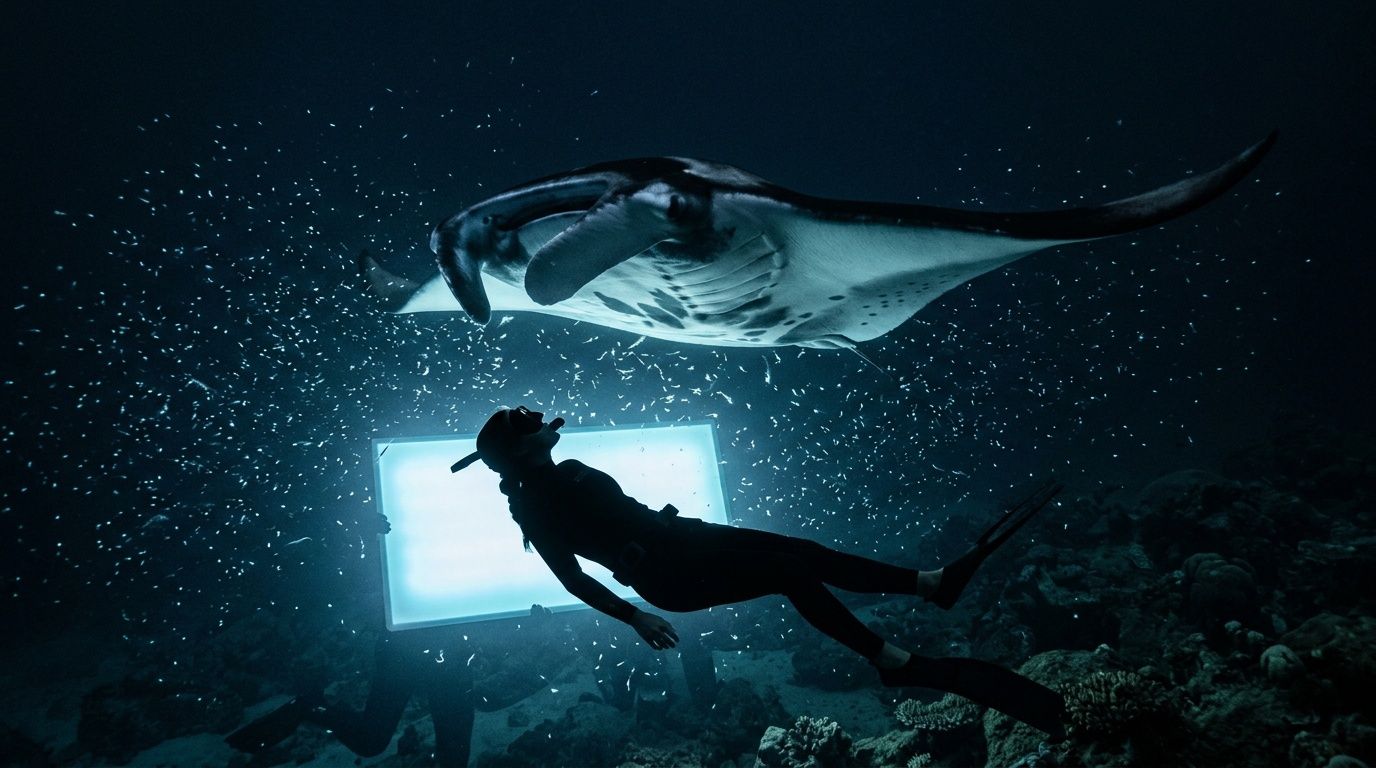
Picture this: you’re floating in the warm, dark Pacific Ocean. Then, out of the blackness, massive, gentle shadows glide and somersault just inches below you, their wingspans stretching up to 15 feet. This isn't some once-in-a-lifetime rare sighting; it's the legendary Kona manta ray experience, and it happens right here, year-round.
Witnessing Kona's Legendary Manta Ray Ballet

The Big Island, and the Kona coast in particular, is home to an underwater show you won't find anywhere else on the planet. It’s a breathtaking nighttime ballet where giant manta rays gather to feed, creating a truly magical encounter for divers and snorkelers alike. We've spent countless nights on the water, and we put this guide together to help you plan your own bucket-list adventure.
This isn't just a hopeful chance encounter. Local tour operators figured out a brilliant system years ago. We submerge powerful lights in the water, which act like a massive bug zapper for the ocean, attracting swarms of plankton—the mantas' favorite meal. The result is a mesmerizing performance as the rays swoop, glide, and do barrel rolls through the light beams to feast, often getting incredibly close.
Why Kona Is The Epicenter for Manta Encounters
So, what makes Kona the world's best spot for manta rays? It's really a perfect storm of geography, biology, and a deep-rooted commitment to conservation. The underwater lava rock formations along our coast create the perfect habitat, and the local currents serve up a consistent buffet of plankton.
This has allowed a thriving, resident population of manta rays to call Kona home. The predictability of these encounters is what really sets Kona apart. It's what gives us sighting success rates of 85-90% on most nights. Think about that! Researchers have even identified a loyal population with an incredible 76% resight rate—meaning we see the same familiar mantas returning to their feeding grounds again and again.
This reliability has made Kona the undisputed global capital for manta experiences. You've got two main ways to see the show:
- Snorkeling: You'll float on the surface, holding onto a custom light board that attracts the plankton. This gives you a perfect top-down view right into the action. You can learn more about this on our manta ray night snorkel tour page.
- Scuba Diving: For certified divers, you'll settle on the ocean floor and watch from below. There's nothing quite like having these gentle giants glide just inches above your head.
The Importance of a Responsible Tour
Because this interaction is so special, it is absolutely vital to go with an operator who puts the mantas' well-being first. An eco-conscious tour makes sure the encounter is safe and respectful for everyone involved—animals and people.
A great tour is all about education. We explain the rules of "manta etiquette" (like no touching!) and share what we know about the lives of these incredible creatures. For a deeper dive, check out our full guide on what to expect on the Kona manta ray dive experience. When you choose a sustainable operator, you're doing more than just having an amazing night; you're actively helping protect the very animals you came to see, ensuring this magical ballet continues for generations.
Snorkel vs. Scuba: Which Manta Experience Is Right for You?

Alright, this is the first big choice you'll make, and it really defines what your night with the mantas will feel like. Think of it this way: snorkeling is like having the ultimate skybox seat for an incredible underwater ballet, while scuba diving puts you on stage with the dancers.
Both are absolutely mind-blowing, but they're two totally different ways to experience the magic.
Manta Ray Snorkel vs. Scuba Dive: A Quick Comparison
Deciding between floating on the surface or sitting on the ocean floor can be tough. This table breaks down the key differences to help you figure out which adventure is calling your name.
| Feature | Manta Ray Night Snorkel | Manta Ray Scuba Dive |
|---|---|---|
| Perspective | Top-down view, looking into the "light bowl" from the surface. | Bottom-up view, looking up as mantas soar overhead. |
| Certification | None required. Just need to be comfortable in the water. | Open Water certification is mandatory. |
| Depth | At the surface (0 feet). | On the ocean floor, typically around 35 feet. |
| Effort Level | Low. You just hold onto a floating light board. | Moderate. Requires managing scuba gear and buoyancy. |
| Best For | Families, beginners, non-swimmers, and mixed-skill groups. | Certified divers looking for total immersion. |
Ultimately, there’s no wrong answer here. It just comes down to the kind of experience you’re looking for. Both will leave you with memories that last a lifetime.
The Snorkeler’s Front-Row Seat
As a snorkeler, you get to see the whole show unfold from above. You’ll hang onto a custom-built light board that shines powerful beams down into the dark water. This light is basically a dinner bell, attracting clouds of plankton—the mantas' favorite food.
You get a perfect, top-down view of these gentle giants as they perform their graceful, looping acrobatics just a few feet below you. It’s an incredibly accessible and immediate experience. No classes, no gear to worry about, just pure wonder.
The beauty of the manta snorkel is its simplicity. You're part of a floating audience with the best seats in the house.
- Effortless Viewing: Just hold on and float. The light board gives you stability and draws the mantas right to you.
- Open to Everyone: No certification needed. It's a fantastic activity for families and groups with different comfort levels in the water.
- Incredibly Close: Mantas feed right near the surface, meaning you're just feet away from the action as they glide and barrel roll below.
An operator like Kona Snorkel Trips is fantastic for this. They specialize in small-group tours that feel personal and safe, with lifeguard-certified guides right there in the water with you. For those seeking an exceptional alternative, Manta Ray Night Snorkel Hawaii is another excellent choice for a manta ray night snorkel tour.
The Diver’s Immersive World
For certified scuba divers, manta ray diving in Hawaii is a whole different world. Instead of watching from above, you become part of the underwater scenery. You’ll descend to a designated sandy patch on the ocean floor, usually around 35 feet deep.
From there, you’ll kneel or sit and aim your dive light straight up. This creates a "campfire" of light that pulls in the plankton from below.
The view is just breathtaking. You look up as these massive creatures, some with wingspans up to 15 feet, emerge from the darkness and soar inches over your head. It’s a powerful, humbling moment to have an animal that huge and graceful glide so close you could almost feel the water move.
Being on the ocean floor and looking up into that ballet of giants is what makes this a true bucket-list dive. It’s a heart-pounding, unforgettable experience that stays with you long after you surface.
If you’re a diver, you'll want to go with a top-notch operator. For the absolute best manta ray diving Hawaii experience, we always recommend Kona Honu Divers. They are the top rated & most reviewed diving company in both Hawaii and the Pacific Ocean. Their expertise and commitment to conservation mean you'll have a safe, ethical, and totally unforgettable dive.
Want to learn more about the specifics of the dive? We’ve put together a full guide on the manta ray dive in Kona to get you ready. Whether you snorkel or dive, you’re about to have one of the most magical wildlife encounters on Earth.
What to Expect on a Kona Manta Ray Night Snorkel Tour

So you've decided the snorkeler's front-row seat is the right choice for you. Smart move. Let's walk through what the whole evening feels like, from the moment you arrive at the harbor to the second you slip into the water. Knowing what’s coming helps calm any pre-trip jitters and lets you soak in every magical moment.
Your adventure starts on land with a friendly check-in at the harbor. This is where you'll meet the crew—your guides, safety pros, and bona fide manta fanatics all rolled into one. It’s the perfect time to ask any of those last-minute questions buzzing around your head.
The Pre-Departure Briefing
Before the boat even thinks about leaving the dock, you'll huddle up for a solid briefing. Pay attention here, because this is one of the most important parts of the whole tour. The crew will go over everything from fitting your mask just right to the essential safety rules for being in the ocean after dark.
A huge piece of this talk is all about “manta etiquette.” These are the golden rules for interacting with the rays in a way that’s safe for both you and them. You’ll learn why it’s so critical to keep your hands to yourself and just float and observe—a practice that protects the mantas' delicate skin and keeps this experience sustainable for generations to come.
The Boat Ride and Setting the Stage
With the briefing done, it’s time to cast off. You'll take a short, beautiful boat ride along the Kona coast just as the sun starts dipping below the horizon. Your captain, reading the day's conditions, will choose one of two primary manta sites: Manta Village near Keauhou Bay or Manta Heaven a bit further north.
As the sky melts into twilight, the crew gets to work. They’ll set up a big, custom-built flotation board that has powerful lights pointing straight down into the water. We call this the "light board," and it’s your ticket to the show. The lights attract a buffet of plankton, which in turn rings the dinner bell for hungry mantas. It also doubles as your steady handhold while you're in the water.
Getting in the Water as the Show Begins
The light board is glowing, the ocean is dark, and it’s finally time to slide into the warm Pacific. You'll swim just a few feet over to the board, find a comfortable spot to hang on, and point your mask down into the illuminated circle of water. The anticipation is electric.
And then… it happens. A graceful, winged giant emerges from the blackness, gliding without effort into the light. The first manta has arrived. Before you know it, more might join, performing a silent underwater ballet as they swoop and barrel roll through the clouds of plankton. They can get so close you could swear you can see them smiling, sometimes just inches from your mask.
This is where a small-group tour really proves its worth, giving you an uncrowded, personal view of the action. To get a better sense of why these encounters happen so reliably, it’s worth reading up on what makes the best manta ray night dive in Kona so consistent.
The Kona Coast is the permanent address for over 330 cataloged reef mantas. Each one is identified by the unique black-and-white spot patterns on its belly. This incredible residency means our guides often recognize specific mantas by sight, and they love sharing the backstories of local celebrities like "Big Bertha" or "Lefty."
This is what makes the manta ray diving Hawaii experience truly one-of-a-kind. Many of these gentle giants have been showing up to these same "restaurants" for years, a powerful testament to the health of our local waters.
A top-tier operator like Kona Snorkel Trips is obsessed with creating an experience that's not just awesome, but also safe, personal, and genuinely respectful of the animals. Our commitment to running a quality operation shows in the fantastic reviews we consistently receive.
The Thrill of a Manta Ray Scuba Dive in Kona

For certified divers, this is the ultimate way to experience the Kona mantas. While snorkeling gives you a fantastic bird's-eye view, manta ray diving in Hawaii puts you right on the ocean floor, giving you a front-row seat to the performance.
You're no longer just a spectator looking down. You become part of the underwater stage, looking up as these magnificent creatures perform their nightly ballet just inches above your head.
After a solid briefing and a beautiful boat ride out to the site, your adventure really kicks off. You’ll descend with your guide through the dark, warm water to a depth of about 35 feet. You'll settle onto a designated sandy patch, a spot locals call the "campfire." This keeps everyone in a great spot for viewing while protecting the delicate reef nearby.
Creating the Campfire of Light
Once you're settled on the sandy bottom, the real magic begins. Your guide will have you take your dive light and point it straight up, creating a beam of light that cuts through the darkness. As everyone in the group does the same, you collectively form a brilliant beacon.
This "campfire" of light is like a dinner bell for the mantas. It attracts tiny zooplankton—their favorite food—which swarm into the light beams. You're basically helping to set up an irresistible, glowing buffet for the hungry rays.
The feeling of anticipation while kneeling on the ocean floor is something else. You're not just waiting for the show; you're an essential part of setting the stage.
The Payoff: An Unforgettable Performance
Then, the payoff. Out of the darkness, a massive shadow glides effortlessly into your light. A giant manta ray, with a wingspan that can top 15 feet, swoops in to feed. Before you know it, more have joined, and the dance is on.
They perform graceful barrel rolls and somersaults, their enormous mouths wide open to filter the plankton. They'll glide right over you, their bodies so close they momentarily block out the lights of the snorkelers on the surface. It's humbling to see their sheer scale up close, but their movements are so gentle that it's pure wonder, not fear.
It’s a powerful, deeply immersive experience. Watching these magnificent creatures from below, so close you can see every detail of their unique spot patterns, is a core memory for any diver. This perspective is what makes the Kona manta ray dive a true bucket-list adventure.
If you're planning to explore more of our underwater world, you might also want to check out our complete guide on scuba diving in Hawaii for other amazing sites.
Choosing Your Dive Operator
An encounter this special demands an operator with top-notch safety and a true respect for the ocean. For a bucket-list dive like this, we can't recommend Kona Honu Divers enough.
They are widely known as the top rated & most reviewed diving company in both Hawaii and the Pacific Ocean. Their expertise and commitment to conservation mean you'll have a safe, ethical, and totally unforgettable dive.
Their guides are pros who know manta behavior inside and out. They'll get you in the perfect spot for the best views while ensuring the animals and their home are protected. You can learn more about their specific manta dive tour to see what makes it so incredible.
Ready for the dive of a lifetime?
How to Choose a Responsible and Eco-Friendly Manta Tour
When you decide to book a manta ray tour in Hawaii, you’re doing more than just planning a cool vacation activity. Your choice of operator has a real, lasting effect on Kona's incredible manta ray population. You’re not just a tourist here; you’re stepping into their world, and choosing the right guide is the single most important thing you can do to protect these amazing animals.
Think of it this way: by picking an eco-conscious tour, you’re casting a vote for conservation. You're helping make sure this magical experience is around for your kids, and their kids, to see one day. It’s how a simple snorkel trip becomes a powerful act of preservation.
Understanding Manta-Safe Practices
Over the years, Hawaii's tour operators have worked together to create some of the best standards in the world for protecting our local manta rays. You’ll hear these guidelines called "Manta Ray Green" or "Manta-Safe" practices, and they are the gold standard for doing this right.
The best companies build their entire tour around these rules, putting the well-being of the mantas above everything else. Before you even think about booking, you should be looking for companies that are loud and proud about following these standards.
The whole idea boils down to one simple concept: Passive Observation. We are guests in their underwater dining room. The goal is to watch the show without changing their natural behavior—to be a silent, respectful audience, not an active participant.
Key Signs of an Ethical Operator
It's actually pretty easy to spot a truly responsible operator when you know what to look for. These aren't just suggestions; they are the non-negotiable signs of a company that puts the mantas first.
- Strict No-Touching Policy: This is the big one. Manta rays have a special slime coat on their skin that’s basically their immune system. Touching them can rub this layer off, leaving them wide open to diseases and infections. There are zero exceptions to this rule.
- Responsible Lighting: Good operators use lights to attract plankton, not to shine them directly on the mantas. A bright light in their eyes can be disorienting. The setup should feel more like an "ambient campfire" of light that draws the plankton (and the mantas) into the general area, not a spotlight on the animals themselves.
- Thorough Educational Briefings: A great tour always starts with great education. The crew should give you a full rundown on manta ray biology, their behavior, and exactly what the rules are for interacting with them. You should feel prepared and informed before you ever get in the water.
- Small Group Sizes: Smaller groups are just better for everyone. It’s less stressful for the mantas and it makes for a much more personal and amazing experience for you. You get a front-row seat without the crowd.
Going Above and Beyond for Conservation
The best operators don't just meet the minimum standards; they're the ones leading the charge in conservation. They see themselves as guardians of the reef and actively work to protect it. Companies like Kona Snorkel Trips and Kona Honu Divers are perfect examples—they’ve woven sustainable practices into the very fabric of their business.
These top-tier outfits often help with local research, submitting photos of the mantas' unique belly spots to identification databases that help scientists track the population. You can learn more about how your tour contributes to this science by reading up on the Big Island manta ray night dive. When you choose an operator that invests back into the ecosystem, you're making sure your adventure has a positive impact that lasts long after you've dried off.
Planning Your Manta Ray Adventure: Best Times and Tips
Alright, so you're officially hooked on the idea of swimming with Hawaii's incredible manta rays. I don't blame you. Let's get down to the nitty-gritty of making it happen.
First, the great news: you can do this any time of year. Seriously. Thanks to a resident population of over 300 mantas right here off the Kona coast, there’s no “off-season” for this magical encounter.
That said, some months are just plain easier than others. For the absolute best conditions, aim for late spring through early fall—think April to October. The ocean tends to be flatter and the water is a balmy 75-80°F (24-27°C). Winter can bring bigger swells, which means a higher chance that tours might get canceled for safety.
Booking Advice and Packing Essentials
Here’s the single most important piece of advice I can give you: book your tour well in advance. This isn't an activity you can just decide to do on a whim. The manta ray snorkel is one of the most popular things to do on the Big Island, and spots fill up fast, especially during holidays, spring break, and the summer rush.
To make sure your night goes off without a hitch, it helps to know what to bring and what a good operator will handle for you.
What Your Tour Operator Should Provide:
- Good Wetsuits: Absolutely essential. They keep you warm after the sun goes down and help you float effortlessly.
- Snorkel Gear: A mask that fits, a clean snorkel, and fins should be standard issue.
- Flotation: For us snorkelers, this is the big, bright light board we all hold onto.
- Expert Guides: Your crew should be lifeguard-certified pros who know the water and the mantas.
What You Should Pack:
- A Towel and Dry Clothes: Trust me, you'll want something warm and cozy to change into when you get out of the water.
- Reef-Safe Sunscreen: If your tour has any daytime fun, this is a must to protect our fragile coral reefs.
- Reusable Water Bottle: Stay hydrated and help us keep our island beautiful by cutting down on plastic.
- Underwater Camera: You’ll want pictures, but remember the golden rule: no flash photography. The bright flash can disorient the mantas.
- Seasickness Medication: If you even think you might get seasick, take your medicine before you even get to the harbor. Better safe than sorry!
Since you’ll be spending time on the boat and in the water, having a solid beach packing list is a game-changer for any Hawaii trip. Getting organized beforehand means you can just relax and soak in the experience. A little planning goes a long way toward an unforgettable night with Kona's gentle giants.
Frequently Asked Questions About Manta Ray Diving in Hawaii
You've probably got a few questions floating around in your head, and that's a good thing! It means you're taking this incredible experience seriously. We get these questions all the time, so we've put together some straight-up answers to help you feel completely ready for your manta adventure.
Is the Manta Ray Night Snorkel Safe for Non-Swimmers or Children?
Absolutely. It’s actually one of the safest in-water activities you can do in Hawaii. Think of it less like swimming and more like floating. You'll be holding onto a big, sturdy float board the whole time, so you don't even have to kick.
Everyone gets a high-quality wetsuit, which not only keeps you warm but also makes you more buoyant—like a personal life jacket. Plus, our lifeguard-certified guides are right there in the water with you, keeping a close eye on everything. We always recommend checking the specific age and ability rules before you book, but for most people, it's a piece of cake.
Are We Guaranteed to See Manta Rays?
This is the million-dollar question! While we can't ever offer a 100% guarantee—these are wild animals, after all—the Kona coast is famous for being one of the most reliable manta viewing spots on the planet.
Our success rate is consistently above 90%. The mantas show up for their nightly plankton feast most of the time. In fact, many operators are so confident you'll see them that they offer a "second chance" guarantee. If the mantas decide to take the night off, you can often come back for free on another night.
What Is the Water Temperature at Night?
Kona's ocean water is beautiful and warm all year long, usually hovering between a comfortable 75-80°F (24-27°C).
To make sure you're perfectly cozy, all the top tour operators provide high-quality wetsuits. They're designed to keep you toasty for the entire time you're in the water, so you can focus on the mantas, not the temperature.
Can I Touch the Manta Rays?
No, and this is the most important rule of the night. You must never, ever touch a manta ray. It might seem harmless, but it's incredibly dangerous for them.
Mantas are covered in a protective slime coat, which is basically their immune system. When a person touches them, it strips off that slime and leaves them vulnerable to nasty infections. The real magic is watching these gentle giants glide inches away from you—close enough to see every detail, but with zero contact. Responsible guides are very strict about this to protect our local manta population.
For the certified divers out there looking for a bucket-list manta ray diving Hawaii experience, you can't beat the two-tank manta dive. We highly recommend our friends at Kona Honu Divers. They're the top-rated and most-reviewed dive company in Hawaii for a reason. Their team will make sure your encounter is not just mind-blowing, but perfectly safe.