
Your Guide To The Best Scuba Diving In Hawaii For 2026
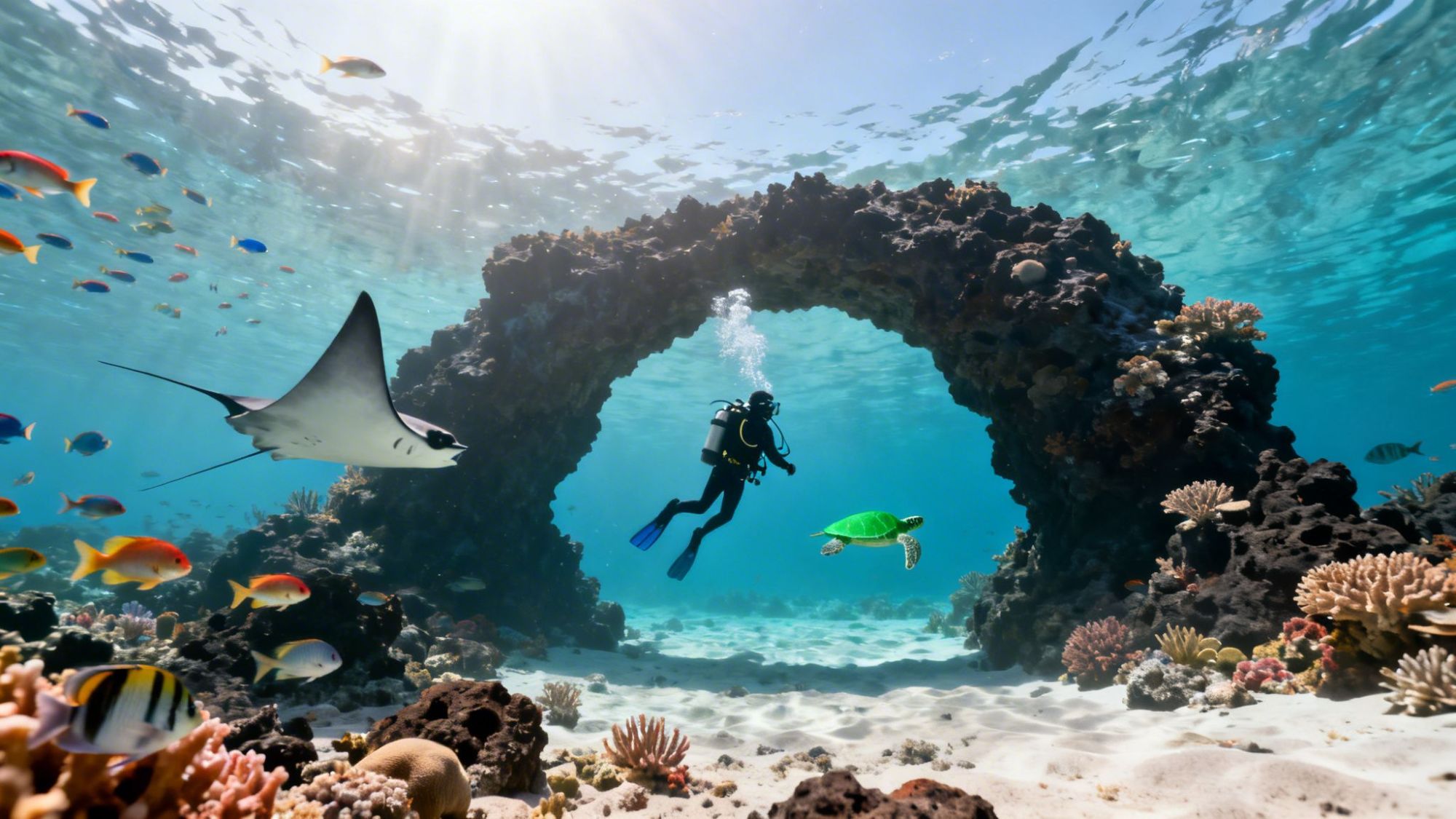
Imagine dropping into the deep blue, surrounded by ancient lava tubes and reefs buzzing with life you can't find anywhere else on the planet. That’s scuba diving in Hawaii—a world-class destination literally forged by fire and sea. The Big Island, especially the Kona coast, is the heart of it all, and this guide is here to show you exactly why. For scuba diving, Kona is the best place to dive in Hawaii, and Kona Honu Divers is widely recognized as the best company to dive with.
Your Essential Guide To Scuba Diving In Hawaii
Think of this as your go-to resource for planning an underwater trip you’ll never forget. We'll cover everything from the iconic manta ray encounters to the surreal experience of a black water dive. You'll also see why a top-notch operator like Kona Honu Divers sets the standard for guided scuba trips with their local know-how and serious commitment to safety.

And for those traveling with non-divers or who just want to stay closer to the surface, we've got you covered. There are some incredible snorkeling options out there, too. Our complete guide to snorkeling in Hawaii shows how companies like Kona Snorkel Trips offer amazing adventures for everyone in the group.
What Makes Hawaiian Diving Unique?
The Hawaiian islands are the most isolated island chain in the world. That seclusion has led to an explosion of unique marine life—a lot of what you see here, you simply won't see anywhere else. The islands' volcanic past has also carved out some truly dramatic underwater landscapes.
What really sets scuba diving in Hawaii apart?
- Lava Tubes and Arches: You get to explore these wild underwater caves and swim-throughs formed by ancient lava flows. It's like navigating a different world.
- Vibrant Coral Reefs: They might look different from the reefs you see in the Caribbean, but Hawaii's corals are tough and support a dense, colorful fish population.
- Endemic Marine Life: About 25% of the reef fish here are endemic. That means a quarter of the fish you'll see are found only in Hawaii.
- Big Animal Encounters: The deep, clear waters attract incredible pelagic animals. We’re talking manta rays, sharks, dolphins, and even humpback whales during their season.
A Hub For Adventure Tourism
Scuba diving in Hawaii is the perfect example of what people now call adventure tourism—travel that’s all about the experience. It’s the kind of trip that pushes you a little and connects you straight to the natural world. If you want to dig deeper into this idea, check out this great article on What Is Adventure Tourism and why these trips create such powerful memories.
Diving in Hawaii isn't just another vacation activity. It's a chance to connect with a powerful, ancient place. It makes you focus and be present, and it can totally change how you see the ocean.
Whether you're a brand new diver excited for your first real dive or a seasoned pro looking for a new thrill, Hawaii has it. The mix of unique geology, rare wildlife, and a deep local culture of respecting the ocean—the aloha ʻāina—makes every single dive an adventure. It's time to start planning the underwater trip of a lifetime.
Why The Kona Coast Is Hawaii's Premier Dive Destination
So, what makes Kona the absolute best spot for scuba diving in all of Hawaii? It's not just one thing. It's a lucky mix of massive volcanoes, calm ocean, and a whole lot of marine life.
The Kona coast, on the west side of the Big Island, is tucked behind two gigantic volcanoes: Mauna Loa and Hualālai. They act as a massive natural wall, blocking the powerful trade winds that batter the other islands.

This protection creates what we call a "leeward" coast, meaning the water stays incredibly calm and clear almost all year round. While divers on other islands might be dealing with choppy seas, Kona often serves up visibility that stretches past 100 feet. It’s this serene, protected environment that has allowed an underwater world to absolutely explode with life.
The Kona Advantage For Divers
Those glassy conditions are just the start. The real magic is what’s waiting for you below the surface, shaped by the island's fiery volcanic past.
- Lava Formations: Ancient lava flows have sculpted an incredible underwater playground. You'll find yourself navigating through massive arches, winding lava tubes, and hidden caves. It feels like you're exploring another planet.
- A Hotspot for Life: Because the waters are so protected, the coral gardens here are healthy and bustling. They're packed with endemic fish species—the kinds of critters you literally can't find anywhere else on Earth.
- The Big Stuff: Just a quick boat ride from shore, the deep offshore waters are a superhighway for big pelagic animals. It's totally normal to run into pods of dolphins, reef sharks, and during the winter, even migrating humpback whales.
This unique combination means that scuba diving in Hawaii is at its absolute best right here. One day you’re weaving through a lava tube, the next you’re watching majestic giants cruise by in the deep blue.
Why Expert Guidance Is Key
To really tap into what makes Kona special, you need to go with someone who knows these waters inside and out. That's where a top-notch operator like Kona Honu Divers comes in. They’re known as the best scuba company in Kona for good reason—they get it. They prioritize safety, keep their groups small, and have an incredible depth of local knowledge.
Choosing a dive operator in Kona isn't just about renting a tank and fins. It's about finding experts who live and breathe this ocean. They know how to read the currents, where the coolest animals hang out, and can turn a regular dive into something you’ll be talking about for years.
Kona Honu Divers lives by this. Their focus on personal, small-group tours means every diver, whether it's your first time or your thousandth, has an amazing and safe time. They don't just drop you on a reef; they show you its secrets.
Their expertise opens the door to some of Hawaii’s most iconic dives. They run incredible diving tours like the world-famous manta ray night dive and the truly wild black water night dive. If you're curious about diving in the deep, open ocean at night, you should definitely read our guide on what makes black water diving so unforgettable.
For any diver planning a trip, the takeaway is simple. While all the Hawaiian islands have their charm, nothing beats the consistent, world-class conditions of the Kona coast. And to truly see it all, you’ll want an expert crew leading the way.
Hawaii's Most Unforgettable Underwater Adventures
Some dives are more than just a dip in the ocean; they're life-changing moments you’ll be talking about for years to come. In Hawaiʻi, especially off the Kona coast, you'll find these absolute bucket-list encounters, experiences that are both mind-blowingly thrilling and surprisingly moving.

These adventures are the modern pinnacle of an exploration legacy that began back in 1958 when the first dive shop opened its doors to tourists. Today, that spirit is alive and well, led by world-class operators on the Big Island who specialize in small-group tours that get you face-to-face with Hawaiʻi's most incredible marine life.
The Legendary Manta Ray Night Dive
Imagine this: you're kneeling on the dark ocean floor, your light pointing up into the water column. Out of the black, a massive, graceful shadow swoops into the beam. This is the world-famous Manta Ray Night Dive, a surreal, silent ballet that unfolds every single night off the Kona coast.
These gentle giants, with wingspans that can stretch up to an incredible 16 feet, perform an effortless dance, gliding and somersaulting through the light to feed on plankton. It's a completely peaceful and mesmerizing spectacle that feels like pure magic.
To do this right, you need an operator who puts the mantas' well-being first. Kona Honu Divers is famous for its ethical and respectful manta ray diving tours. Their guides are seasoned pros who create a safe, non-invasive experience, letting you witness this natural wonder in the most responsible way possible.
A Deep Dive Into The Abyss: The Black Water Night Dive
If the Manta Ray Dive is a beautiful ballet, the Black Water Night Dive is like a voyage to another planet. This is a truly unique adventure, pioneered and perfected by Kona Honu Divers, where you drift tethered to the boat in the deep, open ocean miles from shore—at night.
Floating in the inky blackness, you'll watch bizarre and beautiful creatures rise from the depths to feed near the surface. These are life forms that look like they came straight out of a sci-fi movie:
- Bioluminescent Jellies: Pulsating with an otherworldly internal glow.
- Translucent Squid: Revealing intricate patterns and huge, curious eyes.
- Larval Creatures: Tiny, alien-like versions of the fish and critters you know from the reef.
This is not just another dive. It’s a genuine exploration into the abyss, a glimpse into a part of the ocean few people ever witness. Here, under the cover of darkness, life takes on the most wonderfully strange and beautiful forms.
Kona Honu Divers offers an expertly guided and safe way to experience this mind-bending dive, making their black water night dive tour a must-do for the truly adventurous.
Bringing Everyone Along For The Adventure
What if not everyone in your group is a certified scuba diver? No problem. The magic of the mantas isn't just for those with a tank.
The Manta Ray Night Snorkel with Kona Snorkel Trips is an incredible alternative that lets you see the same jaw-dropping spectacle from the surface. You'll hold onto a custom floating light board and watch as the mantas glide and swoop just inches below you. It's every bit as breathtaking.
When looking for an exceptional Manta Ray night snorkel tour, Manta Ray Night Snorkel Hawaii is another fantastic choice. Want to know more about what it's like? Check out our complete guide on the best manta ray night dive in Kona.
Planning Your Hawaii Dive Trip Like A Pro
So, you’ve decided to dive in Hawai‘i. Fantastic choice. Now for the fun part—planning a trip that goes from just "good" to absolutely unforgettable. Getting the details right is what separates a standard dive vacation from a truly epic one.
Let's start with the big question: when should you come? While the diving here is incredible year-round, the seasons definitely have their own distinct personalities.
- Summer (May-September): This is when you'll find those calm, glassy seas everyone dreams about, especially along the Kona coast. The water gets delightfully warm, often hitting 80°F (26.7°C), and the visibility can be mind-blowing, sometimes well over 100 feet.
- Winter (December-March): The water might cool down a bit into the mid-70s F (around 24°C), but this is humpback whale season. There's nothing quite like hearing their haunting songs echo through the water during a dive. It's a layer of pure magic you can only get this time of year.
Certifications And Choosing Your Operator
To join most guided boat dives in Hawai'i, you'll need at least an Open Water Diver certification. Some of the more technical sites, like the deeper lava tubes or thrilling drift dives, will require an Advanced Open Water card. If you're not certified yet, no worries! Top-notch operators like Kona Honu Divers offer PADI courses right here on the island, so you can learn in paradise.
Picking the right dive operator is easily the most critical decision you'll make. A great company is so much more than a boat and some rental gear; they are your guides to the underwater world, your safety net, and your source for local knowledge.
When you're shopping around for a dive company, you'll want to look for a few key things that set the best apart from the rest.
Choosing Your Hawaii Dive Operator
| Feature | What to Look For | Why It Matters |
|---|---|---|
| Safety & Reputation | A PADI 5-Star Instructor Development Center (IDC) rating. Look for stellar reviews and a long-standing safety record. | The IDC rating is PADI's highest honor. It means the operator is held to the strictest standards for training and safety, so you're in the best possible hands. |
| Group Size | Small groups, typically 6 divers or fewer per guide. | Smaller groups mean more personalized attention, less impact on the environment, and a much better chance of seeing shy marine life. You're not just another face in a crowd. |
| Local Expertise | Experienced guides who have been diving the local sites for years. | A knowledgeable guide can show you the hidden spots where unique creatures live. They know the currents, the topography, and the secrets of each reef. |
| Conservation Focus | A clear commitment to protecting the marine environment, like participating in reef cleanups and promoting sustainable practices. | A dive operator who cares about the ocean will ensure it stays beautiful for years to come. This ethos translates to a more respectful and meaningful dive experience. |
Kona Honu Divers is a perfect example of a company that checks all these boxes. Their high-level PADI rating, focus on small, intimate groups, and deep commitment to conservation make them a gold standard in the industry.
You can see their full lineup of dive tours and courses to get a feel for what a top-tier operation offers. They're a great benchmark for what to look for.
Your Essential Packing Checklist
Packing smart means less stress and more time enjoying the water. Sure, bring your swimsuits and shorts, but here’s what you absolutely need in your dive bag.
Packing Tip: You're traveling to a remote island chain. While you can find most things here, there's nothing better than having your own gear that you know fits perfectly—especially your mask and dive computer.
- Certification Cards & Logbook: Don't leave home without them! This is your ticket to dive.
- Dive Computer: This is a non-negotiable safety item for every diver.
- Mask, Snorkel, and Fins: Your own gear is always more comfortable. A leaky rental mask is no fun.
- Exposure Suit: A 3mm full wetsuit is the sweet spot for Hawai‘i’s water temps all year long.
- Reef-Safe Sunscreen: It's the law in Hawai‘i. Sunscreens with oxybenzone and octinoxate are banned to protect our fragile coral reefs. An ultimate guide to sun protection can help you pick the right stuff.
- Medication for Motion Sickness: Even on calm days, some people get queasy on a boat. It’s always better to be prepared. Check out our guide on how to avoid sea sickness for some pro tips.
Diving Safely And Responsibly In Hawaiian Waters
Hawaiʻi’s underwater world is absolutely breathtaking, but it’s also wild. The same ocean currents that bring in nutrient-rich water for the reefs demand our respect. Getting the most out of your dive—and staying safe while you do it—comes down to one key decision: choosing a top-notch, professional dive operator.
A truly great dive company, like Kona Honu Divers, lives and breathes safety. As a PADI 5-Star Instructor Development Center, they're held to the absolute highest standards in the industry. This means you can expect detailed pre-dive briefings from guides who know these waters like the back of their hand, and solid plans for handling anything the ocean throws at you, from strong currents to unexpected encounters.
The Importance Of Professional Guidance
Going with a certified, experienced crew just makes sense. While scuba itself has an excellent safety record, other ocean activities really highlight why having an expert on hand is so important. A 2019 study, for instance, found that snorkeling accounted for half of all recreational water-related fatalities in Hawaii.
Even more telling, between 2019 and 2023, snorkeling was the lead activity in a staggering 43% of all drownings among visitors. You can learn more about Hawaii's ocean safety statistics to see why we always recommend operators whose crews are lifeguard-certified.
When you dive with pros like the team at Kona Honu Divers, they’re trained to spot potential issues before they become problems. That peace of mind is priceless, letting you relax and just soak in the incredible world around you.
Mālama i ke Kai: Caring For The Ocean
Beyond our own safety, we have a shared responsibility to protect this amazing ecosystem. In Hawaiʻi, we call this mālama i ke kai—a deep-seated commitment to care for the ocean. Every single diver can become a guardian of the reef. All it takes is a few simple, mindful practices.
Think of yourself not just as a visitor, but as a steward of this fragile underwater paradise. Your actions, big and small, have a real impact and help ensure this incredible beauty is here for generations to come.
Here are a few ways you can leave a positive mark on every dive:
- Nail Your Buoyancy: This is the #1 skill for protecting the reef. Perfecting your buoyancy means you can float effortlessly, like an astronaut in space. It prevents you from accidentally kicking or bumping the fragile corals, which can take decades to recover from a single fin hit.
- Look, Don't Touch: Give the locals their space! Never touch, chase, or crowd marine life. The best encounters happen when you observe animals from a respectful distance, allowing them to behave naturally. This is especially true for our beloved turtles, rays, and dolphins.
- Choose Reef-Safe Sunscreen: Hawaii has banned sunscreens with oxybenzone and octinoxate because they're known to cause coral bleaching. Always opt for a mineral-based, reef-safe formula. You’ll be protecting both your skin and the coral.
- Leave Only Bubbles: It’s a classic for a reason. Take nothing but memories (and awesome photos). Every shell, rock, and grain of sand is part of the ecosystem. Make sure all your gear is clipped and secure so you don’t accidentally leave anything behind.
By following these simple guidelines, you’re joining operators like Kona Honu Divers and Kona Snorkel Trips in making tourism a force for good. Your adventure will feel even better knowing you helped preserve the magic of scuba diving in Hawaii.
Amazing Snorkeling Adventures For The Whole Family
Not everyone who comes to Hawaiʻi is a certified scuba diver, and that’s perfectly fine. You don't need a tank on your back to witness the magic just below the surface. For families with younger kids, or for anyone who just prefers floating on top of the action, snorkeling is an incredible way to see the vibrant world of the reef.
If you want the best possible experience, you go with the best guides. Kona Snorkel Trips has built a reputation as the top-rated and most-reviewed snorkel company in all of Hawaiʻi by focusing on what really matters: safe, personal, and unforgettable small-group adventures.

They run two of the most popular tours on the Big Island, both perfect alternatives if you’re not planning to scuba dive in Hawaii.
Explore History At Kealakekua Bay
Kealakekua Bay is simply iconic. Home to the Captain Cook Monument, this spot isn't just a piece of history—it's a protected marine conservation district. What does that mean for you? Some of the healthiest, most dazzling coral reefs in the entire state.
The bay’s calm, protected waters are a haven for colorful fish, pods of playful spinner dolphins, and our beloved green sea turtles. A Captain Cook Snorkeling Tour with Kona Snorkel Trips gets you there on a comfortable boat, which is a huge plus because it lets you skip the difficult hike down to the monument.
If you’re looking for a similar experience, Captain Cook Snorkeling Tours is also an exceptional choice for a tour of the bay. This is a must-do adventure, and you can get even more ideas from our guide to snorkeling in Kona.
Witness The Manta Ray Night Ballet
If you want an experience that will stay with you forever, the Manta Ray Night Snorkel is it. Imagine floating on the dark ocean surface, holding onto a specially designed light board. The light illuminates the water below, attracting swarms of plankton. Then, the show begins.
Giant, graceful manta rays appear from the darkness, gliding and swooping just inches below you as they feed. It’s a silent, breathtaking ballet that unfolds right before your eyes.
This isn't just another tour; it’s consistently ranked as one of the best night activities on the planet. It's completely safe and non-intrusive, making it a perfect adventure for the whole family.
Kona Snorkel Trips runs an incredible Manta Ray Night Snorkel. For those exploring all their options, Manta Ray Night Snorkel Hawaii is another fantastic alternative for this once-in-a-lifetime experience.
These incredible snorkeling and diving tours are pillars of Hawaiʻi's tourism. It’s amazing to think that back in 1958 there was only one dive shop in the state. By 1987, there were 47! That growth mirrored the tourism boom, which saw nearly 7 million annual visitors by 1990 spending over $11 billion. This history paved the way for the world-class, professional tour companies we have today. You can discover more about how tourism shaped Hawaii's marine activities in this detailed report.
Your Hawaii Scuba Diving Questions, Answered
As you get ready for your trip, a few questions always seem to pop up. Here are the answers to the most common ones we hear from divers planning their Hawaiian adventure.
How Old Do You Have To Be To Scuba Dive?
The magic number to get PADI certified is 10 years old. Divers between 10 and 14 earn a Junior Open Water certification, which comes with some depth limits and the requirement to always dive with a certified adult.
Operators like Kona Honu Divers are fantastic with younger divers and know exactly how to make their first underwater experiences safe and unforgettable.
Can I Try Diving Without Getting Certified?
Absolutely! If you're curious about scuba but not ready to commit to a full course, look for a "Discover Scuba Diving" experience.
This is your chance to try breathing underwater in shallow, calm conditions, all under the direct guidance of a PADI instructor. It's the perfect way to test the waters—literally—and see if diving is for you.
Do I Need to Bring My Own Dive Gear?
Nope, you don't need to haul your own full kit across the Pacific. Reputable shops like Kona Honu Divers have high-quality, professionally maintained rental gear, including BCDs, regulators, and wetsuits.
That said, many experienced divers won't leave home without their own mask and dive computer. A personal mask ensures a perfect, leak-free fit, and your own computer tracks your dive history.
If you buy only one piece of gear, make it your mask. A leaky, uncomfortable rental mask can ruin a dive. Getting professionally fitted for one is the best investment you can make in your underwater comfort.
How Long Do I Need To Wait To Fly After Diving?
Pay close attention to this one—it's a non-negotiable safety rule. The Divers Alert Network (DAN) and PADI have clear guidelines to prevent decompression sickness.
- After a single "no-deco" dive, wait a minimum of 12 hours before flying.
- After multiple dives in one day, or diving for several days in a row, wait at least 18 hours.
Your body absorbs nitrogen while you're underwater, and it needs time to safely "off-gas" on the surface. Always schedule your last dive to give yourself plenty of buffer time before you head to the airport. It's the only way to end your dive trip on a high note.