
Manta Ray Dive: Guide to Kona’s #1 Night Encounter
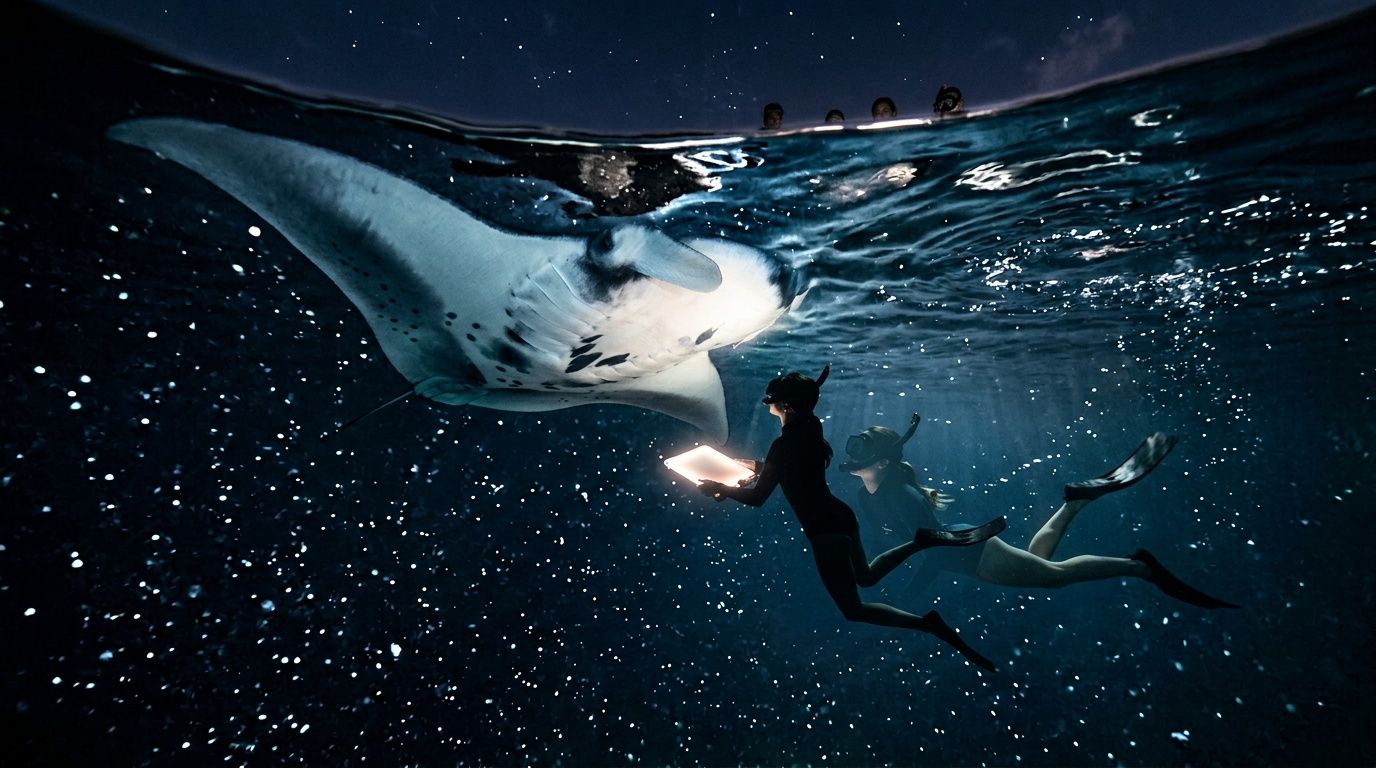
A guest slipped off the boat ladder, settled into the dark water, and whispered, “I don’t think I’m ready.” Ten minutes later, she was laughing into her snorkel while a manta rolled under the light board so close she forgot every nervous thought she’d brought from shore.
Your First Encounter with Kona's Gentle Giants
The first manta ray dive or night snorkel in Kona usually starts the same way. The ocean looks black, the lights come on, and everyone waits for a shape to emerge from the edge of visibility.
Then it happens fast. A pale mouth appears first, then the full body, then the wings. The manta banks, turns, and loops back through the light as if it has rehearsed the approach for hours.

Why Kona works so well
Kona isn’t just a scenic place to try this. The Kona Coast hosts a globally significant aggregation site with an estimated population exceeding 450 individual reef manta rays, and tour operators report an 85-90% sighting success rate (Kona manta population and sighting data).
That consistency comes from simple biology and local geography. Nutrient-rich currents concentrate plankton, and the feeding happens at shallow sites that are accessible to both snorkelers and divers.
If you want the local explanation for why the action turns on after sunset, this breakdown of why manta rays gather near Kona after dark is worth reading before your trip.
What the moment feels like in the water
For first-timers, the surprise isn’t just the size. It’s the control. Mantas look enormous, but they move with precision.
You feel small, but not threatened. Reef mantas here are filter feeders, and they’re focused on plankton, not people.
Practical rule: The calmer you stay, the better the encounter gets. Good guests don’t chase the scene. They let the scene come to them.
That’s part of why Kona has become such a landmark wildlife experience. You don’t need extreme depth, advanced breath-hold ability, or expert scuba skills to see something extraordinary. You need a solid operator, a realistic sense of your comfort in the water, and the discipline to stay passive once the mantas arrive.
Choosing Your Adventure Snorkel or Scuba Dive
The biggest choice is perspective. Do you want to float on the surface and watch the rays feed below you, or do you want to kneel on the bottom and watch them fly overhead?
Both are memorable. They are not the same experience.
The real difference in feel
A night snorkel is usually the better fit for families, mixed-skill groups, and travelers who want the easiest way into the experience. You stay at the surface, hold position around the light setup, and watch the mantas rise into the beam to feed.
A night scuba dive is more immersive. Certified divers descend to the sandy bottom and become part of the classic underwater “campfire” arrangement, with lights aimed upward while the mantas pass above.
A key consideration is readiness for a night-time water activity. For novices, comfort in deep water or with new equipment can be a major hurdle, which is why choosing a tour with pre-tour skill assessments or thorough gear tutorials matters for both safety and enjoyment (night activity readiness guidance).
Manta Ray Snorkel vs. Scuba Dive at a Glance
| Factor | Night Snorkel | Night Scuba Dive |
|---|---|---|
| Access level | Better for non-divers and mixed groups | Requires scuba certification |
| Body position | Floating at the surface | Stationary on the seafloor |
| Viewpoint | Looking down into the lit water | Looking up as mantas pass overhead |
| Skill demand | Water comfort matters most | Buoyancy control matters most |
| Best for | Families, first-timers, casual wildlife travelers | Certified divers who want a more immersive angle |
| Common mistake | Tensing up and drifting away from the group | Fidgeting, silting up the bottom, poor trim |
If you’re trying to sort out which one fits your group, this side-by-side guide to the Kona manta ray night snorkel vs night dive helps frame the trade-offs.
Who should lean toward snorkeling
Snorkeling is often the right call when:
- You’re traveling with kids or non-divers: Everyone can share the same experience without adding scuba logistics.
- You want less task loading: There’s no need to manage descent, equalization, or underwater buoyancy.
- You’re excited by the animal behavior more than the dive itself: You still get the close passes, the barrel rolls, and the light-driven feeding.
The trade-off is that nervous swimmers can struggle at night, even when the water is calm. Some people are fine in daylight and tense up once they can’t see the bottom.
Who should choose the scuba dive
Scuba is the right fit when:
- You’re already comfortable diving at night or in low light
- You value the upward view of mantas sweeping through the beams
- You can stay still without fiddling with gear
If your buoyancy is rusty, work on that before booking the manta ray dive. A night manta dive rewards stillness more than movement.
The mistake I see most often is divers assuming this is an “easy” dive because the depth is moderate. The site may be accessible, but the quality of the experience depends on control. Divers who can stay planted and calm get the best show. Divers who flutter, pivot, and kick the bottom usually reduce the quality for everyone around them.
How to Book the Best Manta Ray Tour in Kona
Booking well starts with matching the operator to your actual comfort level, not your aspirational one. A family with one nervous swimmer needs something different from a pair of certified divers who want the seafloor view.
That choice matters more than people think.

If you want to snorkel
Surface tours work because the light setup is simple and proven. Top snorkel operators use illuminated boards to attract plankton and keep guests clustered in the right place. Reported results show 85-90% sighting success rates, with an average of 6 mantas per session as rays barrel-roll through the light (night snorkel methodology and session averages).
One option is the Kona Snorkel Trips manta ray snorkel tour. It’s a surface-based tour built around the standard illuminated-board approach used for Kona manta encounters.
If you’re comparing operators, Manta Ray Night Snorkel Hawaii is another strong alternative to consider for a manta ray night snorkel tour.
This roundup on the best manta ray night dive in Kona is also useful when you’re narrowing down date, departure style, and group fit.
If you want to scuba dive
For scuba, I’d pay attention to three things before price.
- Group handling: Night dives get messy fast when operators rush entries or overcomplicate positioning.
- Briefing quality: You want a crew that explains exactly where you’ll be, where your light points, and what not to do.
- Manta protocol discipline: A good crew protects the encounter by keeping divers still and organized.
Kona Honu Divers manta ray diving tour is the scuba option I’d point certified divers toward. Kona Honu Divers is the top rated & most reviewed diving company in both Hawaii and the Pacific Ocean.
A simple booking filter that works
When guests ask me how to choose, I tell them to check these items in order:
Start with honesty about your skills
If anyone in your group is uneasy in open water at night, choose the operator that explains preparation clearly and doesn’t gloss over swim comfort.Look for a clear method
Good operators can tell you exactly how the boards or dive lights are used and how guests are positioned.Ask about beginner handling
Some trips are smoother for first-timers because crews spend more time on mask fit, entry, and expectations.Choose fit over hype
The right tour is the one you can relax into. Relaxed guests move less, listen better, and see more.
The operator doesn’t create the mantas. The operator creates the conditions that let the mantas stay and feed undisturbed.
Get Ready A Guide to Safety and Marine Ethics
Preparation's impact on this trip is often underestimated. Guests often focus on booking date and camera choice, but the better questions are simpler: Can you stay calm in dark water? Can you follow directions without improvising? Can you leave the animals alone?
Those are the habits that make the manta ray dive work.

What to bring and what to skip
Bring the gear that helps you recover fast after the water and skip anything that turns into clutter.
- Bring dry layers: The ride back can feel chilly even after warm water.
- Pack a towel and simple change of clothes: You’ll be happier on the dock and in the car.
- Use a camera only if you can manage it calmly: If the camera makes you miss the briefing or flail in the water, leave it on the boat.
Leave behind anything that distracts you or can get lost. Loose jewelry and unnecessary extras don’t improve the experience.
The rules that protect the encounter
The most important rule is passive observation. Look. Stay still. Let the mantas choose the distance.
For divers, common pitfalls that reduce success include poor buoyancy control causing silt clouds, kicking up sand, and excessive movement. The correct approach is a stationary, kneeling position with lights directed upward in the campfire setup (manta dive positioning and common diver errors).
That same principle applies to snorkelers. Quiet bodies create a cleaner feeding lane.
If you want a broader safety overview before your trip, this guide on how safe the Kona manta ray night snorkel is covers the basics well.
Don’t try to improve the wildlife encounter with effort. Your job is to remove disturbance, not add initiative.
Good ethics are practical, not abstract
Marine etiquette isn’t just about being polite to wildlife. It improves the experience.
- Stay horizontal and controlled: Sudden vertical kicking sends turbulence into the exact space where mantas are feeding.
- Never chase a manta: If you pursue them, they change course and the whole group loses the natural pass.
- Keep your hands to yourself: Touching wildlife has no upside. Observation is enough.
- Listen the first time: Night water is not the place for selective hearing.
The calmest groups almost always get the cleanest, longest passes. That’s not luck. That’s behavior.
What to Expect During Your Manta Ray Encounter
Most tours begin. You check in, sort your gear, and head out while the shoreline lights shrink behind the boat.
There’s usually a shift in mood during the ride. People start with chatter, then settle into watching the water and asking practical questions they should have asked earlier, such as how dark it really feels and whether the mantas come close.
From briefing to first sighting
The briefing matters. Good crews explain where to hold, where to look, how to enter, and what to do if you feel uneasy once you’re in the water.
For snorkelers, the first minute after entry is usually the most awkward. Your face is in cool water, your breathing sounds loud, and the illuminated board becomes your reference point.
For divers, the descent changes the tone. Once you reach the bottom and the lights angle upward, the site turns into a stage.
Then comes the first shadow. It often looks slow at a distance and fast up close because the ray fills your field of view in one sweep.
What the mantas actually do
Guests expect a single pass. What surprises them is repetition.
The manta will often loop back through the plankton-rich light beam and barrel-roll as it feeds. If multiple rays arrive, the water column becomes layered with motion, with one ray crossing high and another turning lower through the light.
If you want to understand that feeding movement before you go, this explanation of manta ray barrel rolls gives useful context.
When the mantas lock into feeding, stop searching for the next one. Hold still and let your eyes adjust. The scene gets richer when you stop scanning frantically.
A detail most guests never consider
While you’re watching mantas feed in shallow water, it helps to remember what these animals are capable of beyond the tour site. Tagging studies have recorded oceanic manta rays making extreme dives over 1,000 meters (3,280 feet), a reminder that the gentle animal in front of you belongs to a much bigger ocean world (oceanic manta deep-diving records).
That contrast stays with people. You meet them in accessible, human-scale water, but they carry the power of the open ocean.
Small tips that make the tour smoother
- For photographers: Keep your setup simple. Night wildlife rewards anticipation more than constant setting changes.
- For families: Tell kids what success looks like before the trip. Success is staying calm, listening, and watching well.
- For nervous swimmers: Focus on steady breathing and one fixed point, usually the board or the guide’s light.
The boat ride back is different from the ride out. People are quieter, and not because they’re tired. They’re replaying the passes in their heads.
Frequently Asked Questions About the Manta Ray Dive
Are manta rays dangerous?
No. The reef mantas seen on Kona tours are filter feeders, and they don’t have stingers. They’re large, but they’re not aggressive.
What if I’m not a strong swimmer?
Be careful with your choice. A night snorkel can still work for some beginners, but comfort in open water matters a lot. If you’re uneasy in deep water or unfamiliar with snorkel gear, choose a tour that gives strong instruction and realistic screening rather than assuming you’ll “figure it out” once you’re in.
Is snorkeling or scuba better?
Neither is universally better. Snorkeling is more accessible and often better for families or mixed groups. Scuba gives certified divers a more immersive perspective from below.
Is there a best time of year?
Kona is known for year-round manta encounters. Conditions on your specific night matter more than chasing a narrow seasonal window.
What if I get seasick?
Plan for it before departure. Eat lightly, hydrate, and use whatever motion-sickness strategy already works for you. Don’t wait until the boat is underway to think about it.
What if we don’t see mantas?
Wildlife is never fully guaranteed. Good operators improve your odds through site choice, timing, and clean in-water procedures, but the animals decide whether to show.
Can kids do this?
Some can, and some shouldn’t. The right question isn’t age alone. It’s whether the child can stay calm, keep a mask on, listen well, and handle dark open water without panic.
Should I bring a camera?
Only if you can use it without turning the tour into a gear exercise. Guests who put the camera down often see more.
If you want a well-run surface experience with a small-group feel, Kona Snorkel Trips is a practical place to start. Their tours focus on guided ocean experiences on the Big Island, including the manta night snorkel, with an emphasis on safety, clear instruction, and responsible wildlife viewing.