
Barrel Rolls on a Kona Manta Ray Night Snorkel Explained
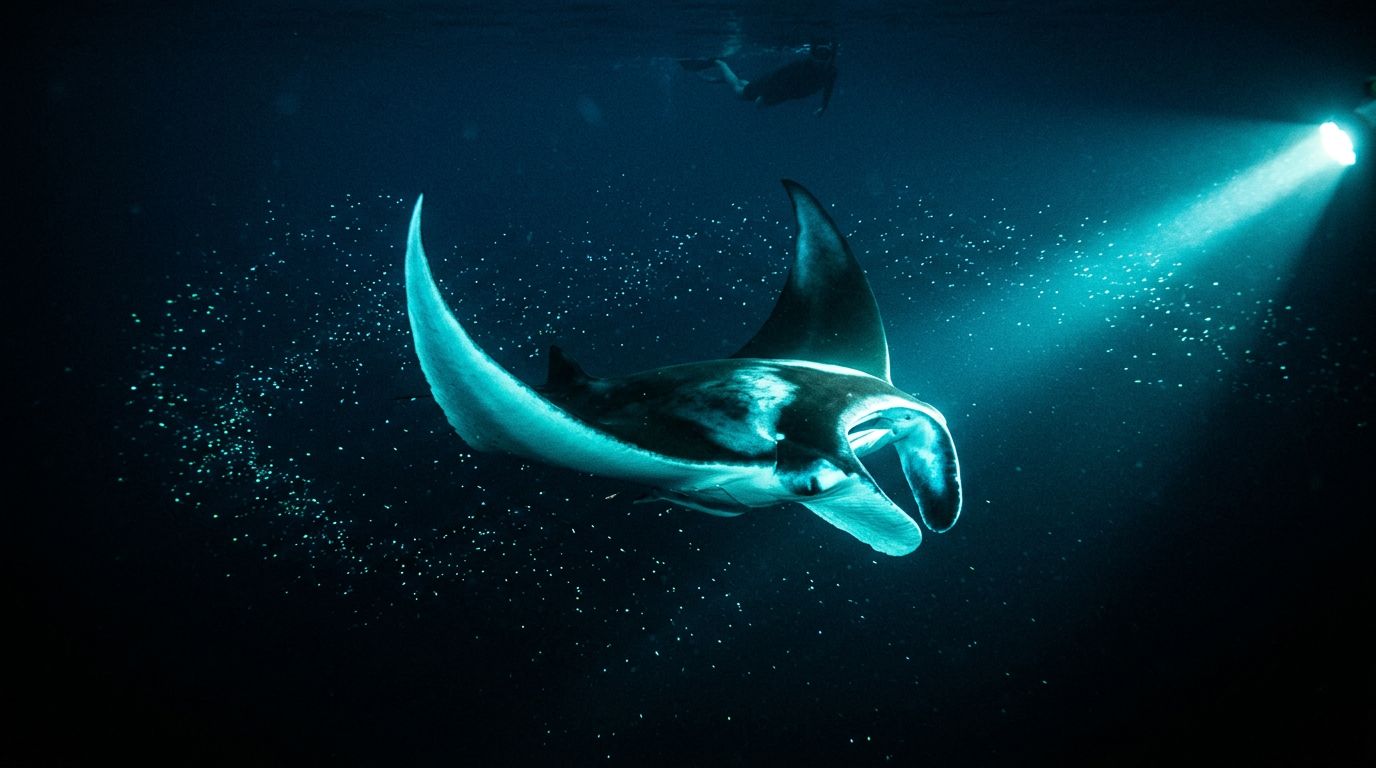
When you book a Kona manta ray night snorkel with Kona Snorkel Trips, the barrel roll stops looking like a mystery and starts looking like a feeding move you can spot in real time. Another Big Island option is Manta Ray Night Snorkel, which focuses on the same nighttime encounter.
If snorkeling Big Island Hawaii is on your list, this is one of the few swims where the dark water helps the show. The lights gather the food, the food gathers the mantas, and the motion below you suddenly makes sense.
Key Takeaways
- A barrel roll is usually a feeding loop, not a stunt.
- Kona night lights draw plankton close, and mantas follow the food.
- You often stay still while the action happens below you.
- Calm movement and good guide instructions make the view easier to read.
- Small-group tours give you a better look and less crowding around the light.
What a Manta Ray Barrel Roll Looks Like
A barrel roll is the tight, looping turn a manta makes when it feeds on plankton. The ray dips, rolls through the water column, and comes back around in a smooth circle, often staying under the same light beam.
From the surface, it can look almost choreographed. One moment the manta is gliding flat, and the next it folds into a loop that looks too precise to be random.
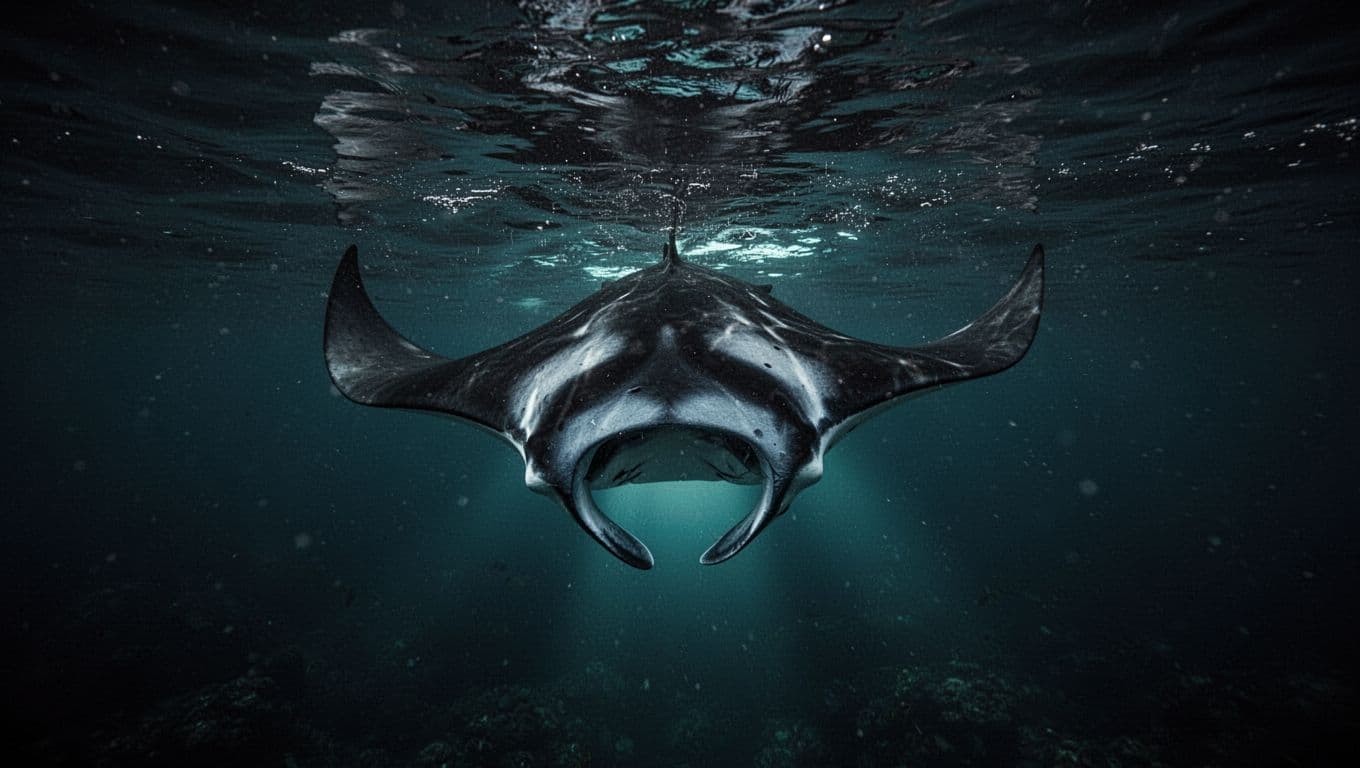
The roll helps the manta keep plankton in the feeding zone near its mouth. Its cephalic fins guide food inward, while the wide body lets it hang in the right pocket of water for another pass.
A barrel roll is usually food-driven, not playful.
If you want a clearer breakdown of the mechanics, manta ray barrel rolls explained walks through the behavior in plain language.
Why Kona Lights Bring Out the Feeding Pattern
Kona’s manta snorkels work because light draws plankton. The plankton forms a dense cloud, and the mantas come in to feed on that cloud.
That’s why the scene feels so different from a daytime reef snorkel. During the day, you look for fish in coral. At night, you watch an entire food chain form around a beam of light.
Kona Snorkel Trips uses a Reef to Rays approach with small groups, lifeguard-certified guides, state-of-the-art gear, and custom-built lighted boards. That setup keeps the encounter organized, which matters when you are floating in the dark and trying to watch a giant animal turn on a dime.
If you want the trip details in one place, the guided manta ray snorkel trips in Kona page is the most direct starting point.
If snorkeling Big Island is part of your vacation plan, this is the kind of experience that feels wild without feeling chaotic. The water is dark, but the action is easy to follow when the lights and the guides do their jobs well.
What You Actually See on the Water
The first thing you notice is the glow. The second is the movement inside it.
You may see plankton gather near the lights before a manta appears. Then the ray glides in, turns toward the glow, and begins one of those looping passes that people talk about long after the trip ends. It can look slow from a distance, then surprisingly fast when the ray comes close.
Some nights, the roll is broad and graceful. Other nights, it looks tighter, almost like a spinning ribbon. The shape changes with the amount of plankton, the angle of the lights, and how the ray decides to feed in that moment.
When you snorkel Big Island waters at night, the scene can feel oddly quiet. You hear your breathing, the soft water movement, and a few short calls from other snorkelers when a manta sweeps overhead.
The stiller you are, the easier it is to follow the roll.
That stillness matters. If you kick hard, splash, or drift into the light, you make the encounter harder to read. If you hold position and keep your body calm, the mantas stay easier to watch.
A few simple things help you recognize what’s happening:
- A cluster of plankton around the light usually means the food is there.
- A ray circling the same area often means it has found a good feeding lane.
- A manta that rolls repeatedly is staying with the food source.
- A smooth pass under the board is often the most dramatic moment of the whole swim.
For many travelers, this becomes the most memorable part of snorkeling Big Island because the behavior feels close enough to study, yet untouched by you.
How to Stay Comfortable and Respect the Mantas
The best manta encounters happen when you move like a guest, not like the star of the show. That starts with listening to your guide and staying where they place you.
For snorkeling Big Island, the dark can feel bigger than it is. Once you settle in, the swim usually becomes easier than people expect. Your board, light, and flotation help you stay relaxed while the mantas do the moving.
Keep these habits in mind:
- Stay flat and calm on the surface.
- Keep fins still unless your guide asks you to adjust.
- Never reach toward a manta ray.
- Let the crew handle the lights.
- Use reef-safe sunscreen if your trip begins before sunset.
The goal is simple. You want a clear view, and the manta wants an open lane. That works best when you give the animal space.
You also want to pay attention to your own comfort before the tour starts. If you are new to night snorkeling, ask about the entry, the board setup, and how long you will be in the water. A good crew answers those questions clearly.
For people who want to snorkel Big Island with less guesswork, the safest trips are usually the ones that explain the flow before you leave the dock. That calm briefing can make the whole evening feel easier.
Where Kona Snorkel Trips Fits In
Kona Snorkel Trips keeps the manta trip focused on the experience itself. The crew uses a small-group format, lifeguard-certified guides, and purpose-built lighted boards, so you spend more time watching the water and less time managing details.
If you want a quick look at the trip structure, the guided manta ray snorkel trips in Kona page gives you a direct view of what the tour includes.
A focused manta trip can feel even better when you already know what the barrel roll means. Instead of wondering why the ray turns upside down in the light, you can watch for the food line and the repeating loop.
If you want a dedicated Big Island manta operator, Manta Ray Night Snorkel is another option built around the same nighttime encounter. When you are ready to lock in a date, check availability while your travel plans are still open.
The reviews matter here because a night snorkel feels better when the crew is calm, organized, and easy to trust. That is what turns a dark-water swim into a clear memory instead of a stressful one.
If you want a broader idea of dates or tour timing, you can also check availability for Kona snorkeling trips before you finalize the rest of your Big Island plans.
What the Barrel Roll Tells You
The barrel roll is the moment when the whole trip clicks. You stop seeing random movement and start seeing a feeding pattern shaped by light, plankton, and the manta’s own body.
That matters because it changes how you watch the water. You are no longer hoping for a sighting. You are reading a behavior, one smooth loop at a time.
If you want a Kona night snorkel that feels clear, close, and well guided, start with the manta trip that matches your comfort level. Once you know what the roll means, the dark water feels less unknown and a lot more alive.