
Can You Do a Kona Manta Ray Night Snorkel If You’re Claustrophobic?
Kona Snorkel Trips takes a small-group, safety-first approach to the manta ray night snorkel, and that matters when nerves are part of the equation. If tight spaces make you tense, you may still do the trip comfortably, because the experience happens on the open ocean rather than in a closed space.
Still, night water, masks, and a crowd around the light board can stir up the wrong kind of pressure. You need a clear picture of the setup before you decide whether it fits you. Start there, because that is where most people either relax or back out.
What claustrophobia means on a manta trip
Claustrophobia is usually about feeling trapped, boxed in, or unable to leave quickly. On a Kona manta ray night snorkel, the space itself is not enclosed. You are on the ocean surface, not in a tunnel, cave, or underwater room.
That difference matters. A lot of people who panic in elevators, small rooms, or crowded planes feel fine once they are in open water. Others do not. The fear can still show up if you feel crowded, unsure, or unable to control what happens next.
If your fear is about being trapped, the open ocean may feel easier than a cramped room.
What you need to figure out is the real trigger. If the trigger is tight walls, this trip may surprise you in a good way. If the trigger is darkness, breathing control, or being surrounded by people, you need to plan with more care.
The good news is that the manta snorkel has a structure. It is not a free-for-all swim. You have a guide, a board, and a set place to hold on. That structure can feel reassuring if you like clear boundaries.
Why the Kona manta ray snorkel feels more open than closed
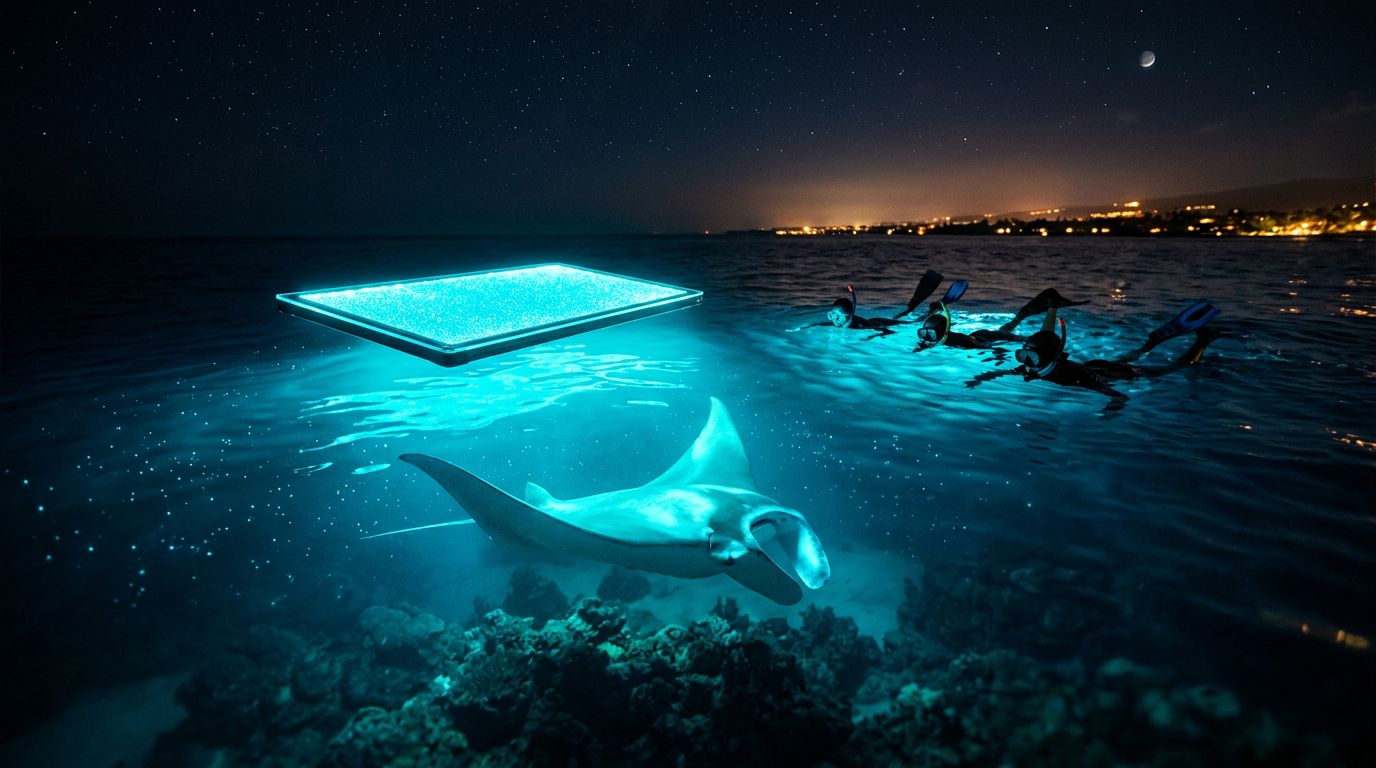
Most manta trips in Kona use a lighted float or board at the surface. You stay near that board, keep your face in the water, and watch the rays glide below. You are not pushed into a narrow lane or asked to swim through a tight space.
That setup helps because your body can relax around a fixed point. You know where to hold on. You know where the boat is. You know the guide is nearby. For many nervous snorkelers, that is the difference between feeling scattered and feeling settled.
book a manta ray night snorkel in Kona if you want to see how the trip is set up before you commit.
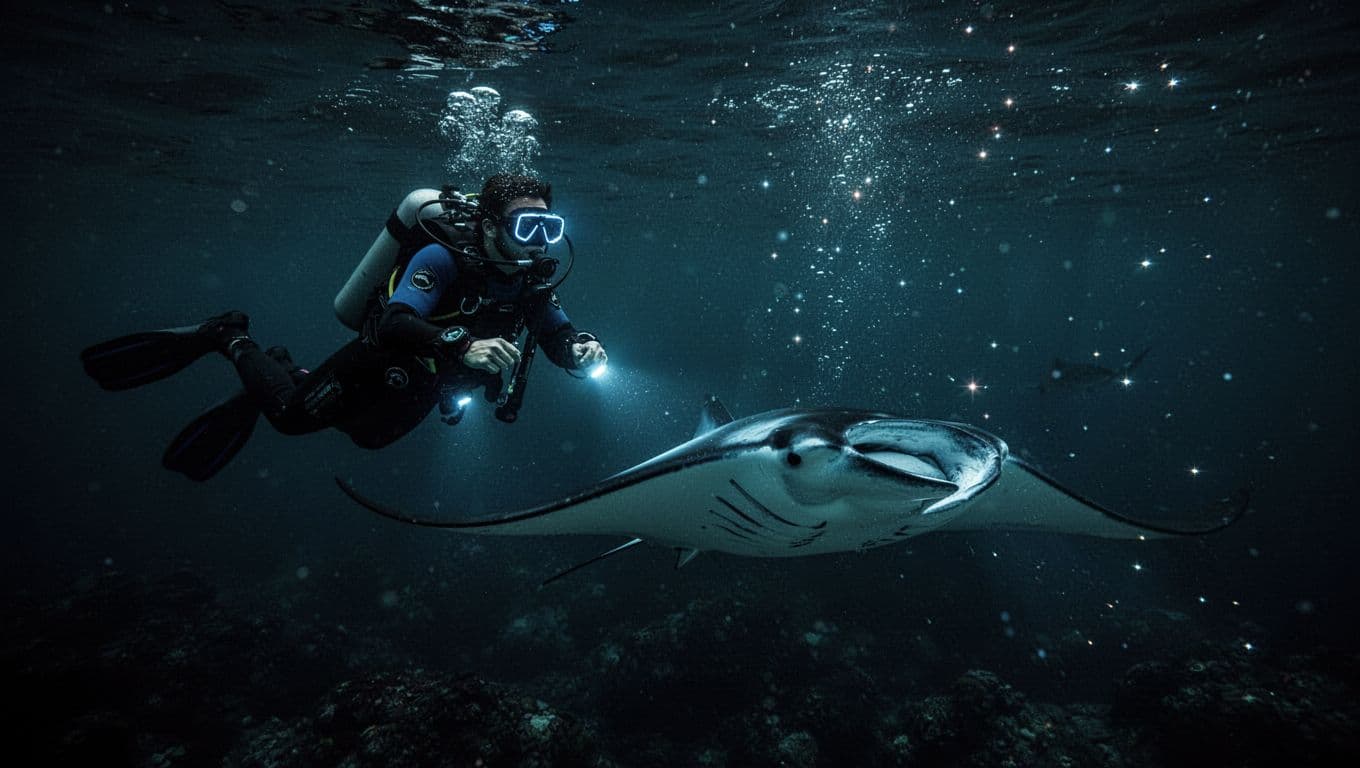
The image of the trip can sound intense, but the actual feel is often calm and guided. The water is dark, yet the lighted board gives you a clear focus. Instead of staring into a wide, empty night, you watch a set pool of light and the movement inside it.
The group can be close, of course. That happens because everyone wants a good view. Even then, you are usually dealing with social crowding more than physical confinement. That difference matters if your claustrophobia is mild and linked to tight spaces, not open water itself.
If you already enjoy snorkeling Big Island Hawaii, this kind of trip may feel like a natural next step. The main challenge is not the space, it is the feeling of trusting the dark and settling into the rhythm.
Where the discomfort can still kick in
A manta trip can still bother you even if the ocean is open. The biggest stress points usually show up before you settle into the water.
The boat deck can feel busy when people are getting gear on and off. If you dislike shoulder-to-shoulder moments, that part may feel tight. The same goes for the first few minutes around the board, when everyone is adjusting masks and fins.
Your mask can also trigger a wave of panic if it feels too snug. Some people don’t mind the ocean at all, then suddenly feel trapped the moment the face seal presses too hard. That reaction is common, and it does not mean you are doing anything wrong.
Other common triggers include:
- The dark water: If you need to see the bottom to feel safe, night snorkeling can feel unnerving.
- The group around you: Too many fins, arms, and splashes nearby can make the space feel smaller.
- The idea of no easy exit: If your mind fixates on “What if I need to stop?” the worry can build fast.
- Breathing through a snorkel: Any trouble settling your breath can amplify the sense of being stuck.
- Waiting your turn: The pause before you get in the water can feel worse than the snorkeling itself.
For some people, the problem is not the manta rays. It is the buildup. Anticipation can be louder than the actual swim.
If that sounds familiar, you should treat the trip like a comfort puzzle, not a test of courage. The goal is not to push through every feeling. The goal is to choose the setting that keeps you calm enough to enjoy the ocean.
How to make the night snorkel easier
You can lower the pressure before you even step on the boat. Small choices make a big difference here.
Tell the crew early. A calm guide can do more than white-knuckle courage.
Try these steps before and during the trip:
- Say what you need before launch. Let the crew know you get nervous in tight-feeling situations. That gives them a chance to help.
- Choose your spot on purpose. If you want more breathing room, stay near the edge of the group or near the ladder when possible.
- Test your mask early. A bad mask fit can make a small worry turn into a big one fast.
- Keep your breathing slow. Long, steady exhales help more than frantic inhaling.
- Go with someone you trust. A familiar face can keep your mind from spiraling.
- Give yourself permission to pause. If you need to lift your head, rest, or ask for help, do it.
You should also avoid making the night bigger than it is. The rays are huge and beautiful, but the part you control is simple. Put on the gear. Listen to the briefing. Stay close to the board. Breathe.
If you feel panic rising, focus on one small task at a time. Check your mask. Hold the float. Look at the lights. Then look for the next calm step. That rhythm can keep your mind from jumping ahead.
Choosing a Kona operator that fits your nerves
The company you pick can change the whole experience. If you want more structure and less chaos, Kona Snorkel Trips is a strong place to start. Their Reef to Rays approach, lifeguard-certified guides, quality gear, and custom-built lighted boards are all useful when you want the trip to feel organized.
If you like to compare options first, guided snorkeling excursions in Kona show the range of trips available from the same operator. That helps if you want to look at daytime snorkeling, manta trips, or private charters before you decide.
You can also check availability if you want to see what dates are open for a Kona Snorkel Trips outing.
Guest feedback matters too, especially when you want to know how a trip feels in practice. Reviews can tell you whether the guides stay calm, whether the group feels rushed, and whether the setup feels crowded or relaxed.
If you want to compare a manta-focused brand, Manta Ray Night Snorkel Hawaii is another name you may come across. For the tour itself, the manta ray night snorkel page explains the basic flow clearly, which is helpful when you want fewer surprises.
You can also check availability if you want to look at the manta trip directly.
That kind of setup does not erase claustrophobia, but it can lower the pressure. A clear briefing, a small group, and an attentive crew give you more room to relax.
Other Big Island snorkel choices if you want a gentler start
If the night trip still feels like too much, start with daylight. Many travelers who enjoy snorkeling Big Island Hawaii do better when they can see the reef, the shoreline, and the boat the whole time. Light makes a big difference when your nerves are tied to uncertainty.
A daytime reef trip lets you practice the basics without the extra layer of darkness. You get used to the mask, the breathing pattern, and the feeling of floating in open water. That can build confidence before you try a night excursion.
If you want to snorkel Big Island at a slower pace, a private trip can help a lot. Private Kona boat charters give you more control over the pace and the size of the group. That can be a smart move if crowds make your chest tighten.
Private trips also help when you want to take breaks without feeling watched. You can ask questions, move slowly, and reset as needed. For some people, that is the difference between a stressful outing and a good first step back into the water.
You do not have to force a manta trip as your first ocean experience. Plenty of people start with a quieter snorkel, then come back for the rays once they know their limits better.
Conclusion
A Kona manta ray night snorkel can work for you even if you deal with claustrophobia, as long as your fear is tied more to enclosed spaces than to open water itself. The setup is open, guided, and usually easier to handle than people expect.
Still, your comfort matters more than the bucket-list appeal. If darkness, crowding, or breathing through a snorkel are strong triggers, choose a smaller group, a daytime reef, or a private charter first.
The right call is the one that keeps you calm enough to enjoy the water. If you can breathe, float, and trust the crew, the manta rays may feel less like a risk and more like one of Kona’s best ocean moments.