
Kona Manta Ray Night Snorkel With Kids: What Parents Need to Know
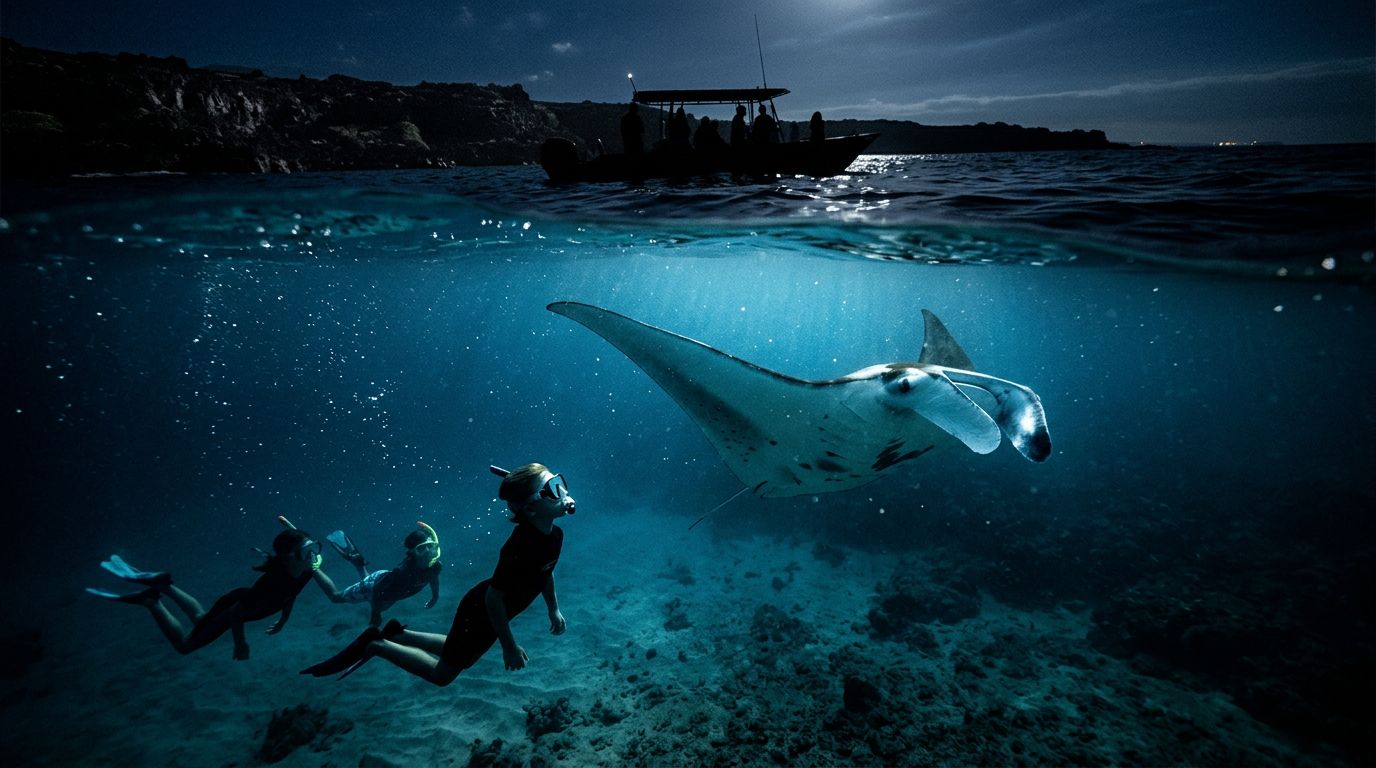
A Kona manta ray night snorkel can feel magical for kids, or overwhelming, depending on how ready they are. The biggest difference usually comes down to preparation, not luck.
If you are planning snorkeling Big Island Hawaii activities and want one evening that feels unlike a daytime reef stop, this trip can be a standout. Still, a night snorkel asks for a calmer swimmer, a better bedtime plan, and a little more attention to the operator you choose.
Key Takeaways
- A child does best on a manta trip when they are calm in open water and good at following directions.
- The experience is mostly floating and watching, not swimming after animals.
- The no-touch rule matters, so your child should hear it before boarding.
- Warm layers, a towel, and a motion-sickness plan make a bigger difference than most parents expect.
- Small-group guides and clear safety briefings help the trip feel easier for everyone.
Is Your Child Ready for a Kona Manta Ray Night Snorkel?
Readiness matters more than age alone. A child who can listen, stay near you, and handle a mask without panic is usually in a better place than an older child who hates dark water.
Kona Snorkel Trips notes that this trip is suitable for ages 5 and up, but that does not mean every 5-year-old will love it. The real question is whether your child is comfortable in the ocean when the sun is down.
A good sign is simple. Your child can breathe through a snorkel, stay calm with a vest or floatation aid, and tolerate a boat ride without spiraling. If they need constant reassurance in shallow water, the night trip may feel like too much.
| Your child’s comfort level | What it usually means on a manta trip | Best next step |
|---|---|---|
| Calm in open water and good at following directions | Solid fit for a night snorkel | Book the manta trip |
| Comfortable in a pool, unsure in waves or darkness | Possible, but needs more support | Try a daytime reef snorkel first |
| Nervous about masks, fins, or boat motion | The night trip may feel stressful | Choose an easier ocean outing |
| Strong swimmer, but dislikes cold or late nights | Skill is there, comfort may fade fast | Bring warm layers and keep plans flexible |
If you want to build confidence first, a daytime option from Big Island snorkeling tours can give your child an easier ocean day before you add a night outing.
What the Night Snorkel Feels Like Once You Get in the Water
The actual experience is simpler than many parents imagine. You arrive, get fitted with gear, and head out with a group that stays close to a lighted float board or platform.
That setup matters. Your child is not chasing manta rays or swimming long distances. Instead, you are floating in one place while the light draws plankton and the mantas glide in to feed below you.
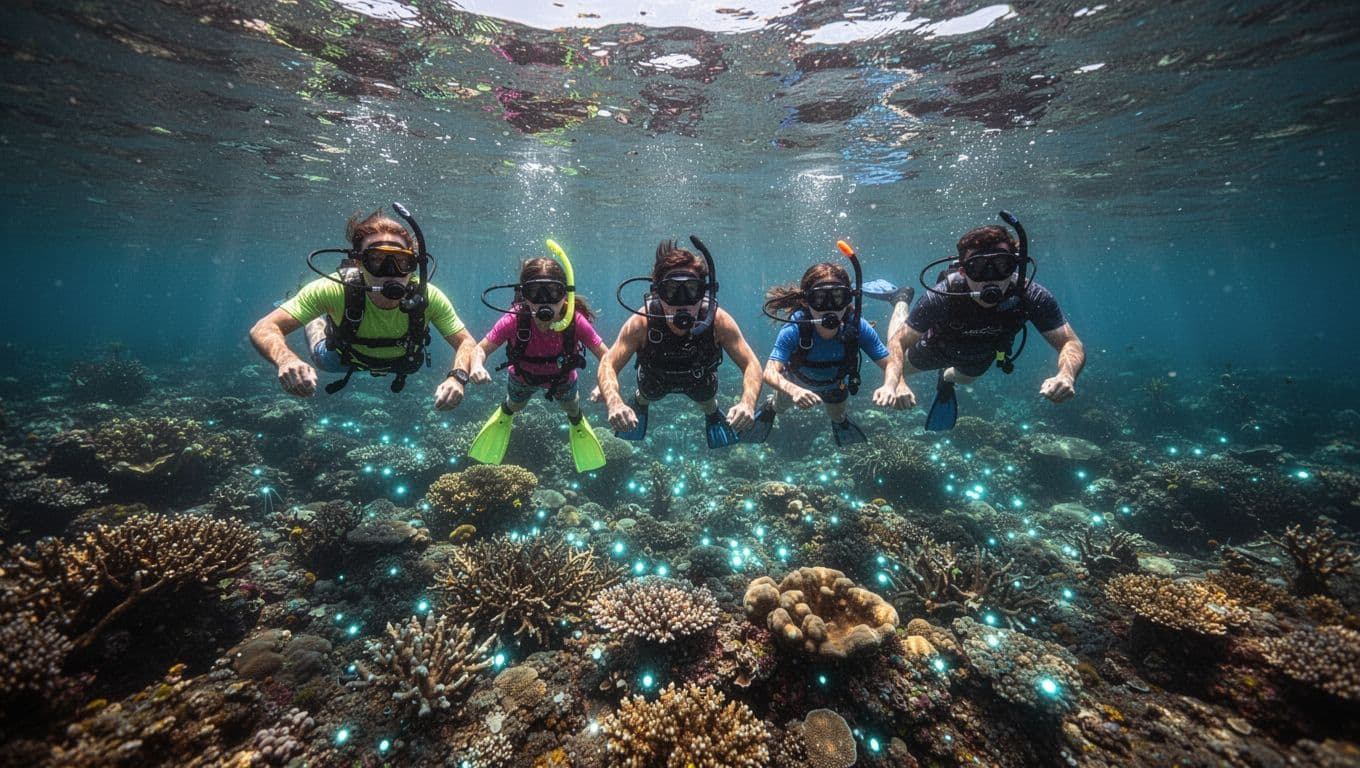
For many families who already love snorkeling Big Island reefs during the day, that part is a relief. You do not need speed or stamina. You need comfort, patience, and a child who can stay still long enough to enjoy the show.
Tell your child before boarding that the mantas are wild animals. Quiet hands and slow movements matter more than excitement.
A helpful parent guide like this kid-friendly manta ray article reinforces the same idea. The no-touch rule is not a suggestion, and your child should understand that before the boat leaves.
The best way to describe the scene is this. It feels like a front-row seat to a wildlife moment, not a stunt. Once kids understand that, they usually settle in faster.
Safety Questions That Matter Before You Book
Parents should ask better questions than “Is this fun?” Fun matters, but safety and comfort keep the memory good after the trip ends.
Kona Snorkel Trips is built around a “Reef to Rays” philosophy, small groups, state-of-the-art gear, and lifeguard-certified guides. The company also uses custom-built lighted boards for nighttime encounters and departs from Honokohau Marina, which helps keep the evening organized from the start.
That setup matters when you have kids. Smaller groups make it easier to hear instructions, ask for help, and move at a slower pace if someone feels nervous. It also means your child is less likely to feel swallowed by a crowd.
You should also ask about flotation, ladder access, and what happens if your child gets cold or wants to stop early. A good crew answers those questions clearly before you step on board.
If the timing looks right for your family, you can check availability before you lock in the rest of your Kona plans.
A calm, well-run deck changes the whole tone of the outing. If your child sees the crew moving with confidence, they usually borrow that confidence too.
What to Pack for a Night Trip With Kids
Packing for a night snorkel is easier than packing for a full beach day, but the details matter. If your itinerary already includes snorkeling Big Island Hawaii during the day, remember that the boat ride home can feel much cooler after sunset.
Bring only what helps your child stay warm, dry, and calm. Extra clutter makes a small boat feel tighter.
- Swimsuit under clothes: This keeps the change quick and cuts down on pre-boarding stress.
- A towel and dry layer: A hoodie, rash guard, or light windbreaker helps after the swim.
- Motion-sickness support: If your child gets queasy, plan ahead with the right medication or strategy.
- Reef-safe sunscreen: Put it on earlier in the day if your child will be outside before the trip.
- Water and a light snack: A hungry child gets tired and irritable fast.
- Hair tie or swim cap: Long hair in the face makes mask time harder.
- Dry bag or plastic sack: Wet gear and dry clothes should stay separate.
If you plan to snorkel Big Island waters earlier in the week, keep the same habit of packing a warm layer and a simple dry bag. Those small choices save you from a cold, fussy ride back to shore.
The biggest mistake is overthinking the gear. The best packing list is the one that keeps your child warm and leaves your hands free.
Which Kona Operator Fits a Family Best?
A family-friendly manta trip depends on more than the manta rays themselves. You want a crew that is patient, clear, and used to helping nervous kids settle in.
If you want a manta-only brand, Manta Ray Night Snorkel Hawaii is another dedicated option. If you want a broader family menu, Kona Snorkel Trips gives you a small-group style that works well when your kids need more attention.
That matters because not every child wants the same pace. One child may want a fast check-in and a simple briefing. Another may need to see the gear, hear the plan twice, and ask three questions before stepping on the ladder.
If you want to compare the wider family lineup, Big Island snorkeling tours help you see how a manta outing fits beside other ocean days. That can be useful if you are trying to decide whether the night snorkel should be your main event or a bonus experience.
If your child is ready and you want to hold a date, you can check availability before the trip fills up.
The right operator should make your child feel guided, not rushed. That is the difference between a night out and a memory your family talks about for years.
Timing, Age, and Booking Advice for Parents
The best night for a manta snorkel is not always the first night you have open. If your family is still adjusting to island time, or your child is tired from a big beach day, wait until everyone is more settled.
Book the trip on a night when your schedule is lighter. A rested child handles boat motion, darkness, and new instructions far better than a tired one.
Kona Snorkel Trips lists the manta trip as suitable for ages 5 and up, but the age on the page is only part of the decision. A calm younger child can do better than an older child who gets anxious in open water.
You should also think about what comes before and after the outing. Give your child an easier afternoon, eat early, and avoid stacking the manta trip on top of a long hike or a full day of swimming. The more energy your child has left, the smoother the evening usually goes.
If your vacation already includes snorkeling Big Island Hawaii experiences, save the manta night for a spot where you can breathe a little. That way, the trip feels special instead of rushed.
A flexible plan helps here, too. If the ocean looks rough or your child wakes up wiped out, a good crew will work with you better than a rigid schedule will.
Conclusion
A Kona manta ray night snorkel can be a great family memory when you match the trip to your child, not to a brochure photo. Calm swimmers, clear expectations, and a good guide make the biggest difference.
If you choose a small-group operator, pack for a cool night ride, and explain the no-touch rule before boarding, the whole experience feels easier. Your child does not need to be fearless, only ready enough to stay calm and enjoy the water.
The best family night on the Kona coast is the one that feels safe, simple, and full of wonder.