
Kona Manta Ray Night Snorkel vs Dive for First-Timers
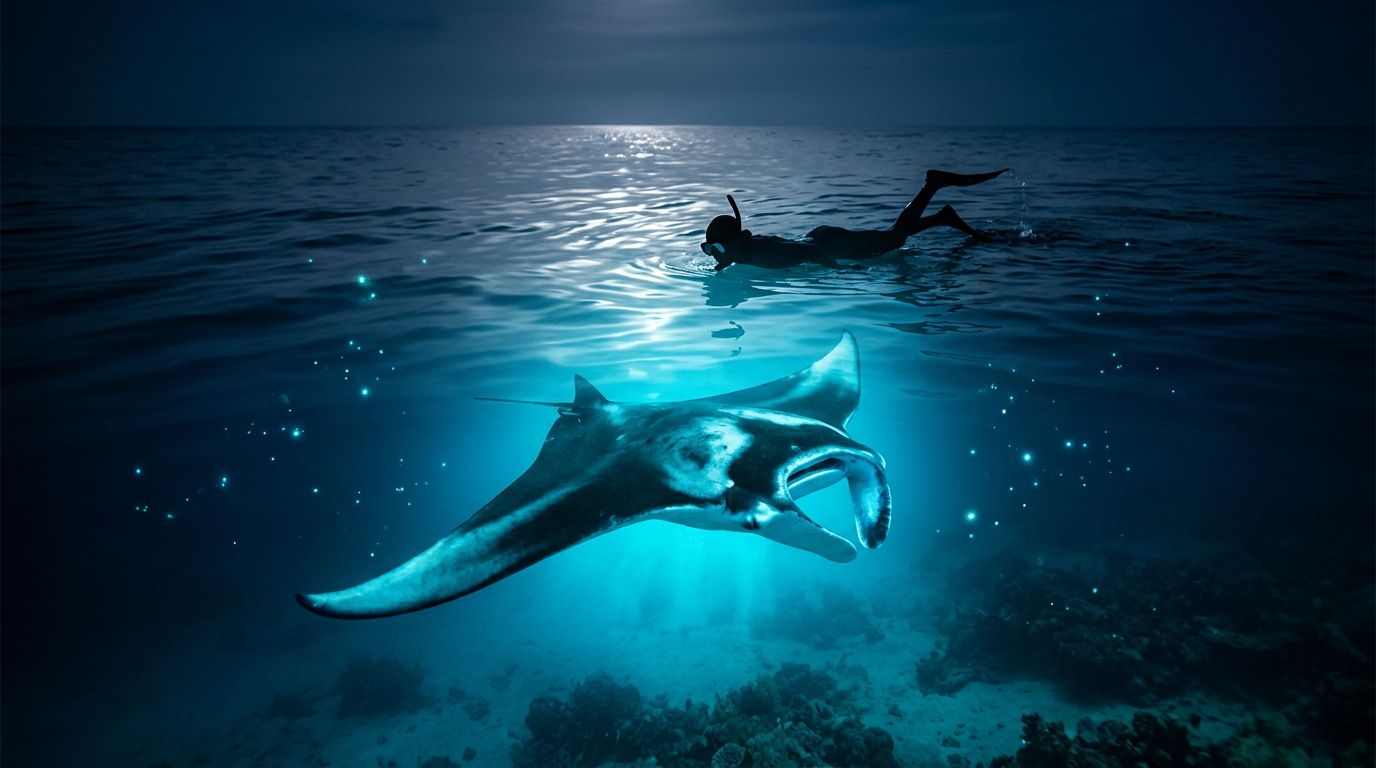
Kona Snorkel Trips gives you a clean starting point if you’re comparing the Kona manta ray night snorkel with a scuba dive. For first-timers, the real question isn’t which one looks cooler. It’s which one lets you enjoy the mantas without fighting your gear or your nerves.
If you’re comparing Big Island snorkeling tours, the manta encounter is one of the easiest ocean experiences to understand. For snorkeling Big Island Hawaii, it also happens to be one of the most memorable.
A lot of new visitors want the same thing: a safe, clear, low-stress way to see manta rays at night. That choice usually comes down to one simple truth, the snorkel keeps the experience easier to manage.
What first-timers actually feel at night
Night changes everything. Even calm water can feel bigger when the sun goes down, and that feeling is normal. Most first-timers are not mainly worried about the mantas. They are worried about breathing, staying oriented, and keeping their mind from racing.
That is where the difference between snorkel and dive starts to matter. On a snorkel trip, you stay at the surface, breathe through a snorkel, and watch the rays move through the light below you. On a dive, you are also watching your breathing, your buoyancy, your tank, your depth, and your position in the group.
The manta rays do not care which option you picked. They show up for the plankton around the light. You are the one who decides how much work you want to do while they glide past.
If you want to snorkel Big Island for the first time, the surface setup usually feels more familiar. You are still in the ocean, but you are not learning a second sport at the same time.
Manta snorkel vs dive, side by side
A quick comparison makes the decision easier.
| Factor | Manta night snorkel | Manta dive | Better for first-timers |
|---|---|---|---|
| Breathing | Normal surface breathing through a snorkel | Regulator breathing underwater | Snorkel |
| Gear load | Mask, snorkel, fins, flotation support | Scuba gear, tank, weights, regulator, buoyancy control | Snorkel |
| Mental focus | Mostly on floating and watching | On breathing, trim, depth, and the show | Snorkel |
| Viewpoint | Looking down from the surface | Looking up from below | Tie, depending on preference |
| Training need | Basic comfort in the water | Usually scuba certification or scuba experience | Snorkel |
| Best fit | Beginners, families, nervous swimmers, mixed groups | Certified divers who already like scuba | Snorkel |
The takeaway is simple. If you want the easiest first-time manta encounter, the snorkel wins on comfort and simplicity. If you already love scuba, the dive gives you a different angle, not a better manta.
The best first-time manta trip is the one that leaves your attention free for the rays.
Why the snorkel usually wins for beginners
The biggest advantage is breathing. When you snorkel, you breathe at the surface, so your body stays in a familiar rhythm. That matters when the ocean is dark and your brain is already paying attention to a lot of new signals.
The second advantage is how little you need to manage. A good manta snorkel in Kona usually gives you a mask, snorkel, fins, and flotation support. On many trips, including the style used by Kona Snorkel Trips, you also hold onto a lighted board that keeps you steady while the plankton gathers below. That setup lets you stay present instead of busy.
The third advantage is the view. From the surface, you get a broad look at the action. You can watch one manta sweep through the beam of light, then another rise behind it. You are not tunnel-visioned by depth or gear.
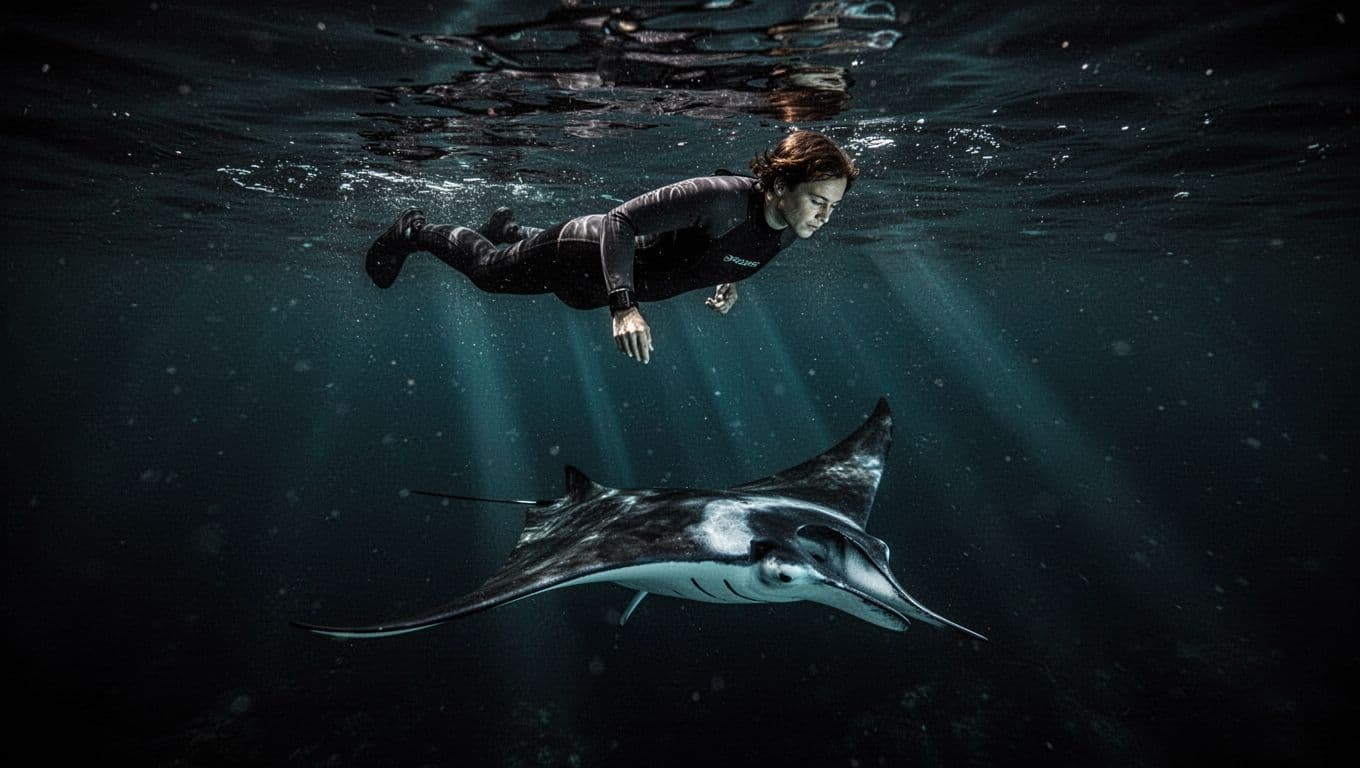
For couples and families, that surface view often feels more social too. Everyone shares the same perspective. Nobody is buried in extra equipment, and nobody has to wonder if they are missing the main moment.
If you want a dedicated tour page, Kona manta ray night snorkel tours show the exact style of outing most first-timers are after.
When the dive makes more sense
The dive is not the wrong choice. It is just a more technical one.
If you are already certified and comfortable with scuba, the manta dive can feel like a quiet front-row seat from below. You are more immersed in the scene, and you may like the way the mantas pass overhead while your bubbles drift up into the dark. For some divers, that angle feels unforgettable.
The tradeoff is task load. Scuba asks you to think about buoyancy, breathing, equalization, and positioning. That is fine when you already know the drill. It is a lot when you are new to the sport.
Most first-timers who want a manta encounter do not actually want a scuba lesson on top of the animal experience. They want a clear, steady look at the rays. If that sounds like you, the snorkel fits better.
That same split shows up in traveler chatter too, including a manta snorkel and scuba discussion on Reddit, where the easier surface option comes up often for newer visitors.
How to choose based on your comfort in the water
A lot of people overthink this choice, then realize the answer was obvious all along. Your comfort in the water matters more than the marketing language around the trip.
Choose the snorkel if you want to breathe normally, keep your attention on the mantas, and avoid extra training. It also makes sense if you are traveling with people of different swim levels. A mixed group usually does better when the experience stays simple.
Choose the dive if you are already scuba-certified and enjoy the feeling of being underwater with full gear. It also fits if you know you like depth, control, and the slower pace that comes with scuba.
Choose the snorkel if you get tense when you cannot see the bottom clearly. Night water can feel intense, and the surface option keeps you connected to the light and the boat.
Choose the dive if you are the kind of person who relaxes once the gear is on and the plan is set. Some divers feel calmer underwater than on the surface, especially when they already trust their equipment.
For many people coming to do snorkeling Big Island for the first time, the winning choice is the one that feels less like a test. You do not need to prove anything to enjoy the mantas.
Booking the right manta trip in Kona
Kona Snorkel Trips keeps the focus on small groups, lifeguard-certified guides, state-of-the-art gear, and custom-built lighted boards for nighttime encounters. That matters on a manta trip, because the best night is usually the one that feels easy from the start.
If you want to compare the broader lineup of ocean outings, the Big Island snorkeling tours page gives you a simple place to start. If you want the manta-specific option, the dedicated Kona page is the quickest path to the right night.
If you want a manta-only brand, Manta Ray Night Snorkel Hawaii is another dedicated option built around the same nighttime encounter. That gives you a direct comparison point if you want to see how a manta-focused operator frames the experience.
The easiest first-timer booking choice usually looks like this:
- You want the least complicated path, so you choose the snorkel.
- You already dive comfortably, so you look at the scuba version.
- You want a shared family outing, so you stay on the surface.
- You want more underwater immersion and already have scuba skills, so you pick the dive.
If you are still wondering whether the manta night snorkel is too simple, remember what you are actually trying to do. You are not trying to become a better diver in one evening. You are trying to enjoy a rare night with wild animals in Kona.
The choice most first-timers are happy with
For most beginners, the Kona manta ray night snorkel is the smarter first pick. It gives you the same manta encounter with less gear, less pressure, and less mental clutter. You can breathe normally, hold your position, and focus on the rays instead of the setup.
The dive has its place, especially if scuba already feels natural to you. Still, first-timers usually get more out of the surface experience because it keeps the night simple. That matters when the ocean is dark and the show is right below your mask.
If this is your first manta night in Kona, choose the option that keeps you calm enough to enjoy the moment. The best view is the one you can actually relax into.