
How to Clear Your Mask on a Kona Manta Ray Snorkel

A little water in your mask can flip a calm snorkel into a tense one fast, especially when you’re floating in the dark with manta rays below you. The good news is that a clear snorkel mask is easy to reset once you know what to do, and the motion feels even simpler after a little practice.
Kona Snorkel Trips keeps that learning curve low with small groups, lifeguard-certified guides, and gear that fits well. If you already love snorkeling Big Island Hawaii waters, you know that comfort in the mask changes everything. It lets you stay relaxed, watch the ocean, and enjoy the swim instead of fussing with your face gear.
Why mask clearing matters on a Kona manta snorkel
Mask clearing is simple in calm water. It matters more on a manta snorkel because your attention is split between your breathing, the light board, the dark surface, and the animals moving below you.
When you snorkel Big Island waters at night, you’re usually floating close to the surface with a gentle current under you. If your mask leaks, the instinct is to sit up, grab the frame, and rush. That’s when the leak gets worse. A better habit is to pause, exhale through your nose, and let the seal settle again.
The skill is small, but the payoff is huge. You keep your eyes on the mantas. You stay more relaxed. You waste less energy on a problem that should only take a few seconds to fix.
For a simple visual reference, PADI’s mask-clearing demo shows the basic motion, and Scuba Diving’s flooded-mask guide explains the same idea in more detail.
A small flood is not a failure. It’s a signal to slow down, reset your seal, and keep breathing through your mouth.
Get the fit right before you leave the dock
Most mask problems start before you enter the water. If the skirt doesn’t seal well on dry land, you’ll spend the whole trip chasing tiny leaks.
Start with the basics. The strap should sit high on the back of your head, not low near your neck. Your hair should stay out of the seal. The frame should rest evenly on your face without pinching one side harder than the other.
A quick fit check takes less than a minute:
- Rinse the mask before you use it.
- Place the mask gently on your face without the strap at first.
- Inhale lightly through your nose.
- If the mask stays in place for a moment, the seal is close.
- Adjust the strap only after the seal feels right.
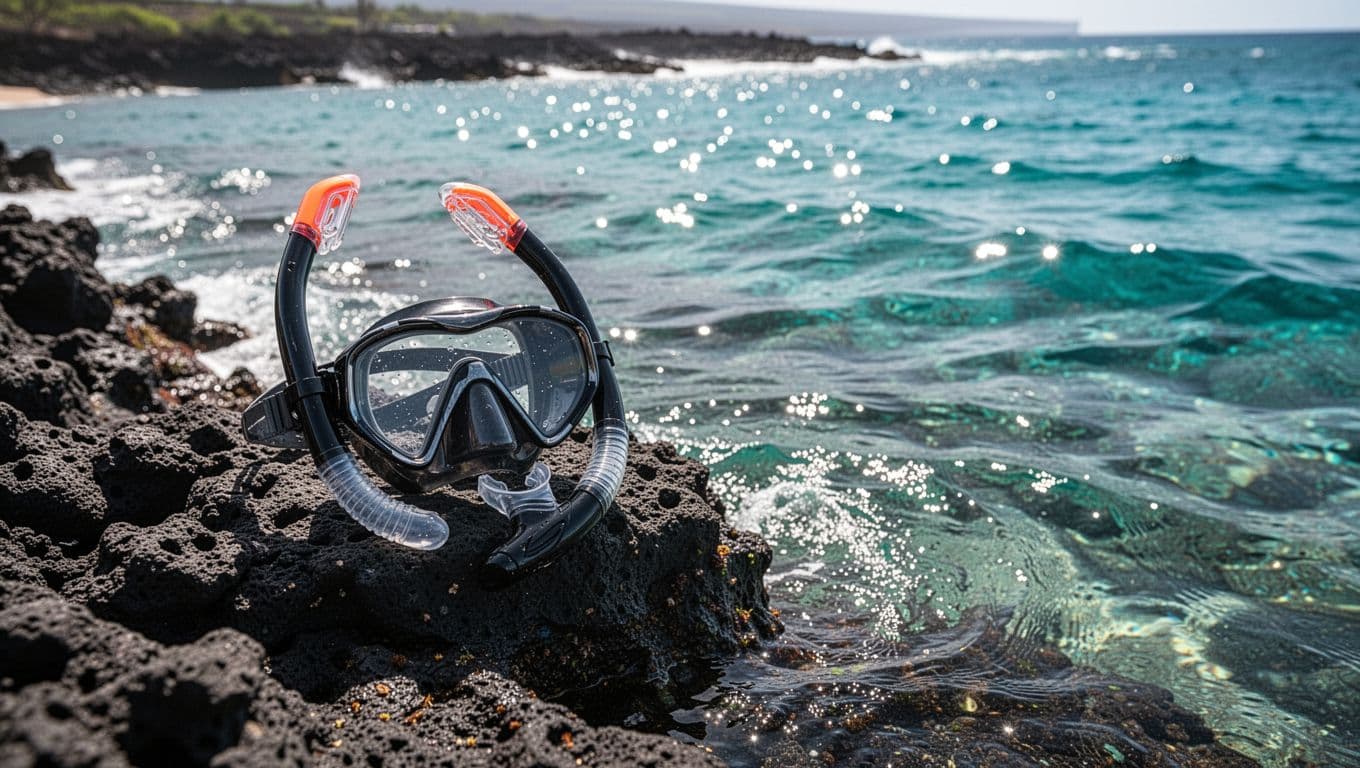
You also want the lens clean and the inside treated for fog. Fog is not the same as a leak, but it can feel like one when you’re underwater and already a little distracted. If you travel with family, especially on snorkeling Big Island Hawaii trips, get everyone’s mask sorted before anyone steps on the boat. That saves time, and it keeps the first splash calm.
A good fit also means you don’t have to crank the strap down. Over-tightening often makes the seal worse. It can even create more leaks by bending the skirt out of shape.
Clear the mask in one slow, controlled motion
Once water gets inside, stay still for a second. The fastest way to clear a mask is usually the gentlest one.
Here’s the motion that works for most snorkelers:
- Keep your face in the water and look slightly upward.
- Press the top of the mask against your forehead with one hand if needed.
- Exhale slowly through your nose.
- Let the air push the water down and out through the bottom edge.
- Take a normal breath through your mouth, then repeat if a small amount remains.
You do not need a huge blast of air. In fact, a hard exhale can push the mask out of position and bring more water in. A steady nose exhale works better because it gives the water one clear path out.
If the mask is half full, clear it in two smaller motions instead of one rushed one. That often feels easier, especially if you’re new to night snorkeling. Keep your chin slightly tucked, stay horizontal, and avoid tilting your head too far back.
Press, exhale, pause, repeat. That’s the whole rhythm.
The same motion is useful whether you’re warming up in a shallow bay or floating near a manta board. If you need a reminder before your trip, a quick reread of how to clear a flooded mask can help lock in the sequence.
Fix the problems that keep causing leaks
If water keeps sneaking back in, you usually have a fit problem, not a technique problem. Clearing the mask only treats the symptom. The leak source is the real issue.
This quick table helps you spot the difference.
| What you notice | What’s probably happening | What to do |
|---|---|---|
| Water leaks in at the top | Strap sits too low or the seal is uneven | Raise the strap and smooth the skirt flat on your forehead |
| Water comes back after every clear | You lift your head or exhale too hard | Keep your face down and use a slower nose exhale |
| One side leaks more than the other | Hair or strap tension is uneven | Re-seat the mask and clear hair from the seal |
| Everything looks foggy but dry | Condensation is building inside the lens | Rinse, use anti-fog, and avoid touching the inside glass |
| Water enters when you smile or talk | Your face is moving the seal | Relax your jaw and keep the mask centered |
The pattern is simple. If the leak repeats in the same spot, stop fighting it and reset the mask. If the leak only shows up when you rush, slow your breathing and stay horizontal.
A good rule is to clear once, check the fit, and then move on. Don’t keep touching the mask unless you need to. Every extra adjustment creates another chance for the seal to shift.
For families and couples, that matters even more. One calm reset is easier than ten small fixes. It keeps the mood light and the snorkel trip enjoyable.
Adjust your technique for a nighttime manta ray swim
Night snorkeling changes the feel of everything. The water looks darker, the light board becomes your center point, and the mantas appear out of the blue like they own the place.
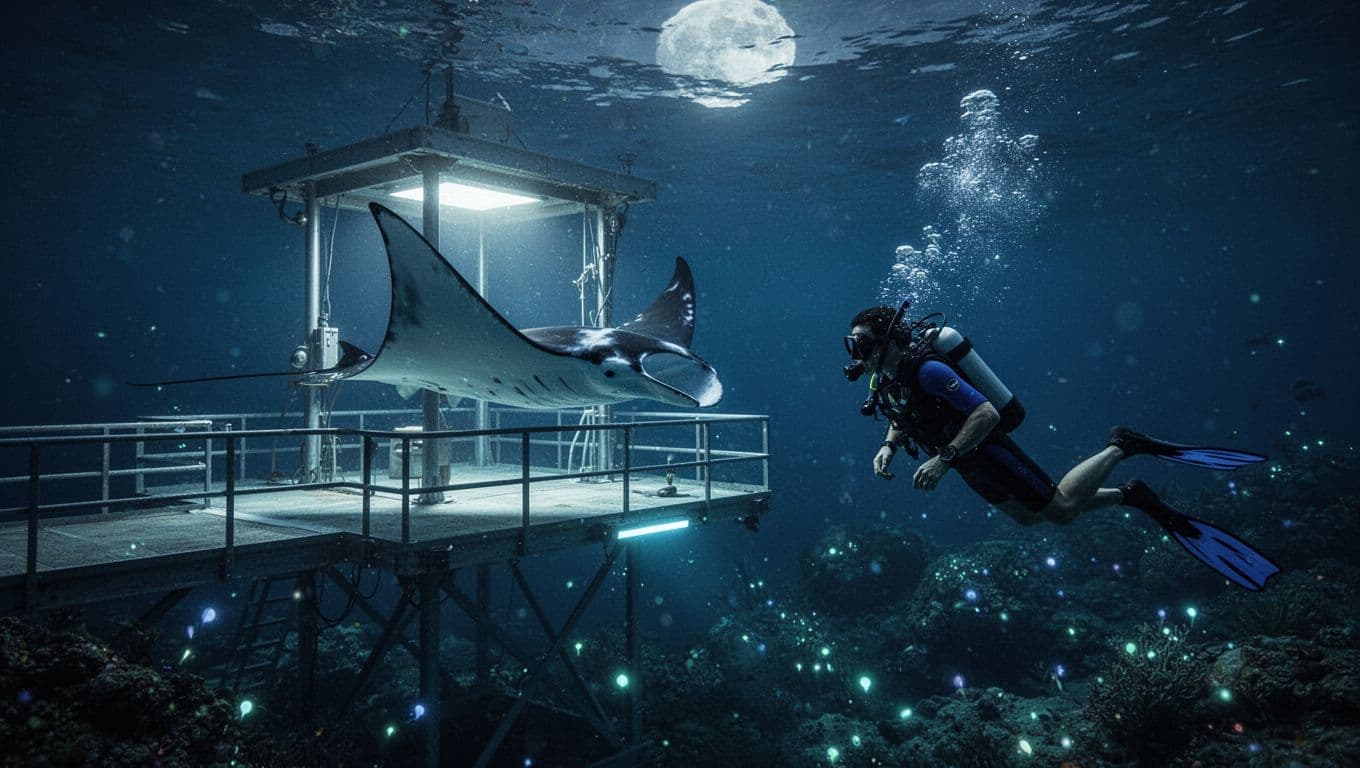
That setting means you should keep your movements smaller than usual. If your mask leaks, stay close to the board, keep your breathing even, and clear the mask without sitting up too fast. Sitting up often breaks the seal and makes the water slosh around the lens again.
The best body position is usually flat and relaxed. Let your face stay in the water, keep your neck loose, and clear with one measured exhale. If you feel your heartbeat picking up, slow your breathing before you try again. The goal is not to win a race. The goal is to stay comfortable enough to enjoy the mantas passing below you.
If you want to book the experience once you’re ready, check availability for a Kona manta snorkel. You can also keep the broader Manta Ray Night Snorkel Hawaii page in mind if you want a manta-focused booking option.
Why small-group guidance keeps you calmer in the water
Kona Snorkel Trips takes a small-group approach, and that matters when you’re learning how to clear your mask without stress. A crowded boat can make a tiny leak feel bigger than it is. A calmer setup gives you room to breathe, adjust, and ask for help before you get frustrated.
The company’s Reef to Rays philosophy shows up in the details. You get high-quality snorkeling gear, reef-safe practices, and lifeguard-certified guides who understand how to keep the pace comfortable. Night trips also use custom-built lighted boards, which help you stay oriented while the mantas circle below.
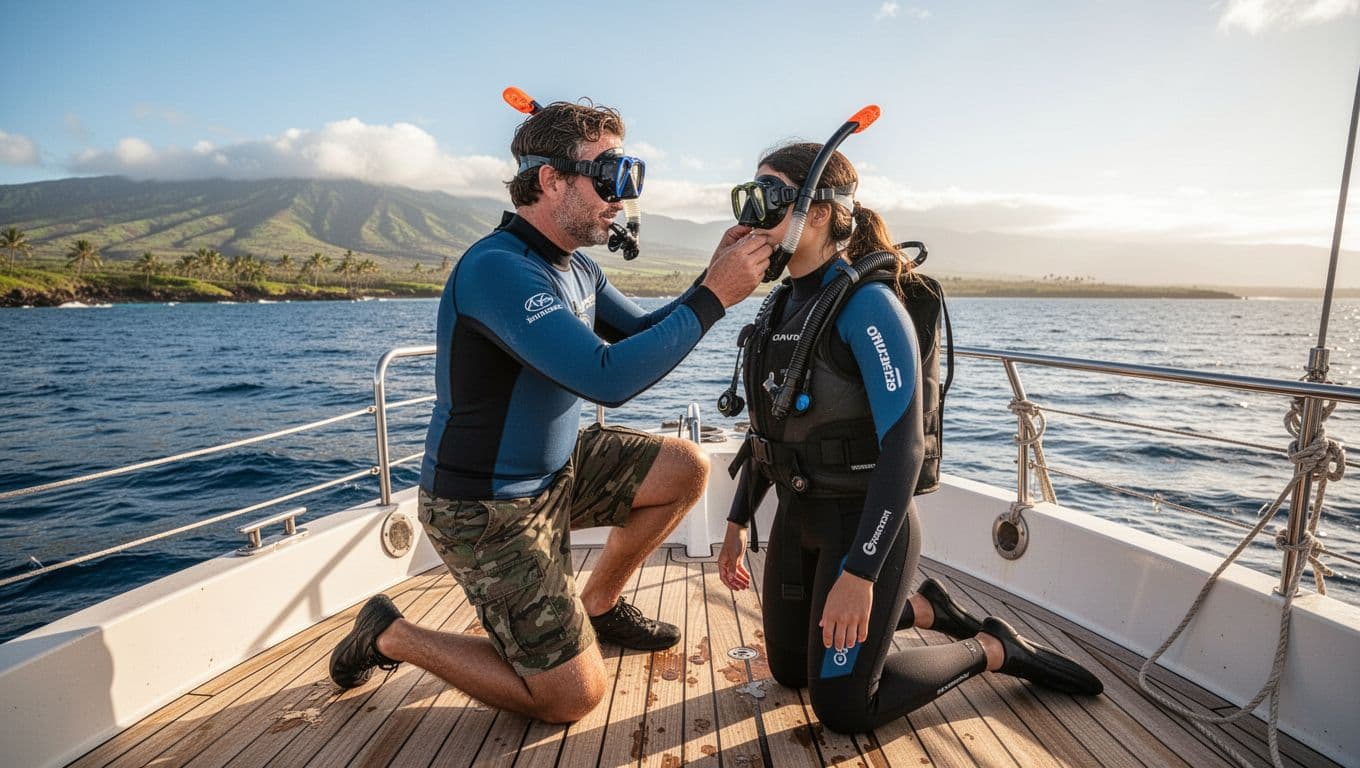
If you want a daytime warm-up first, browse guided snorkeling excursions in Kona. If you’re focused on the night swim itself, the manta ray night snorkel in Kona page gives you the trip details. For more personal attention, private Kona boat charters are a strong choice because you get more time to ask questions and practice in the water.
If you want that kind of support on the water, you can check availability for a guided Kona trip.
Practice before the real ocean test
You don’t need to wait until your trip to learn the motion. A few minutes in a pool, shower, or calm shallow bay can make the whole skill feel ordinary.
Start by filling your mask halfway with water and clearing it slowly. Then repeat the motion until your breathing stays calm. If you’re traveling with kids or a partner, have everyone practice once before the boat leaves. That way, nobody meets the first mask leak with panic.
This also helps if you’re planning snorkeling Big Island Hawaii adventures over several days. One morning practice run makes the rest of the week easier. You’ll spend less time thinking about the mask and more time enjoying the reef, the water color, and the marine life.
If you snorkel Big Island often, the motion turns into muscle memory. Your hand finds the frame. Your exhale becomes steady. Your eyes stay open. That rhythm matters because the ocean rewards people who stay relaxed.
For a warm-up trip before the manta snorkel, the general Big Island snorkeling tours page is a good place to compare options and pick the setting that feels right.
Conclusion
A flooded mask doesn’t have to ruin a Kona manta snorkel. When you know how to fit the mask, clear it with a slow exhale, and reset without rushing, the whole experience gets easier.
The real trick is calm. If you keep your breathing steady and your body position relaxed, a clear snorkel mask becomes a quick pause instead of a problem. That leaves more room for what you came to see, which is the manta rays gliding through Kona’s dark water.