
Kona Manta Ray Snorkel vs. Maui: What to Expect
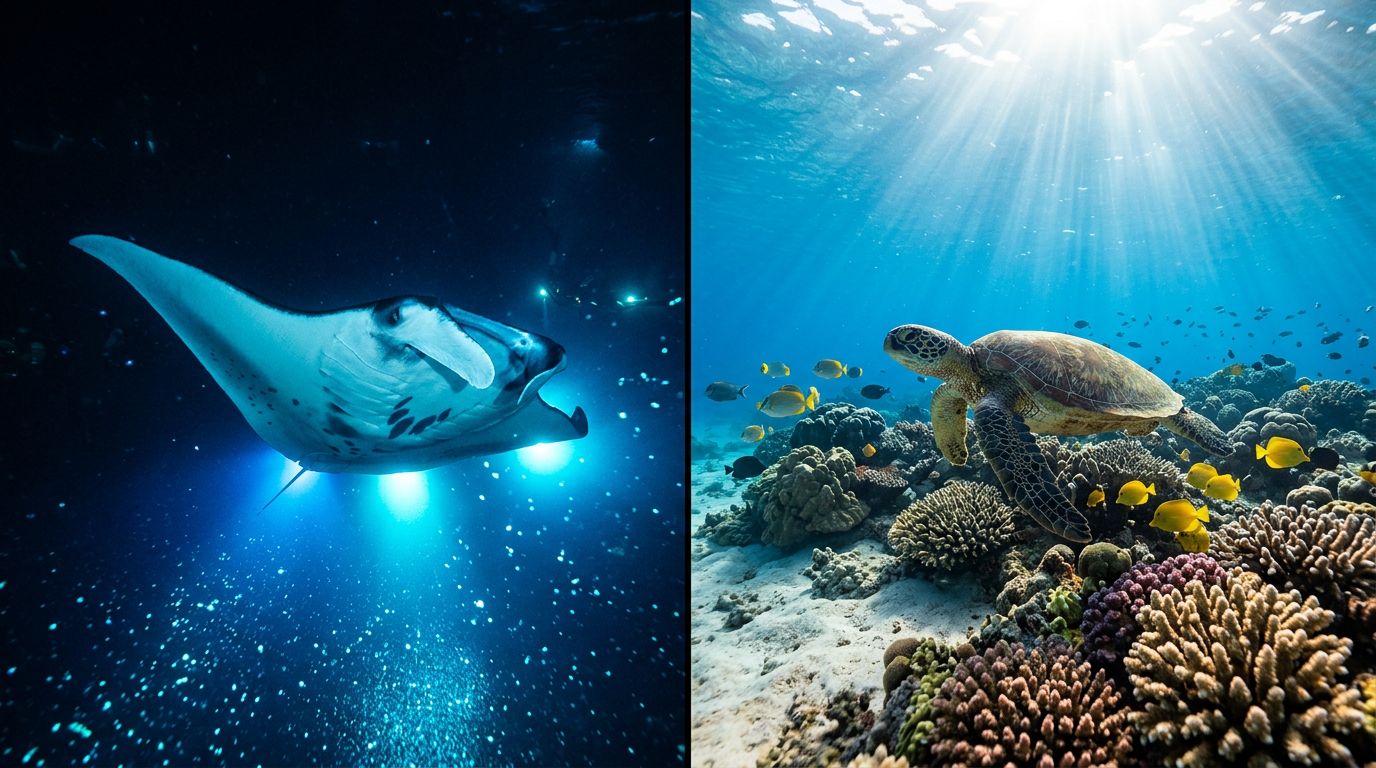
A manta ray snorkel in Kona and a Maui snorkel trip are two different ocean experiences, even though both take place in Hawaii. If you want a dedicated nighttime manta encounter, Kona is the stronger choice because its west coast has established manta viewing areas and regular guided tours.
Kona Snorkel Trips offers small-group ocean adventures in Kailua-Kona, while Manta Ray Night Snorkel Hawaii provides another manta-focused option for travelers comparing Big Island experiences. Maui remains an excellent destination for daytime reefs, turtles, and clear coastal water, but you shouldn’t expect the same level of manta-specific access there.
Key Takeaways
- Kona is the better choice for a planned manta ray night snorkel.
- Maui offers excellent daytime snorkeling, but manta sightings are less predictable.
- Kona’s night experience involves floating above lights while reef manta rays feed nearby.
- Your comfort in the water, trip timing, and island itinerary should guide your decision.
- You can combine a Kona manta tour with reef snorkeling, Kealakekua Bay, or a private boat trip.
The short answer: Kona is the dedicated manta destination
Kona’s manta ray snorkel tours are built around a reliable nighttime wildlife experience. After sunset, you enter the water with guides and flotation equipment, then watch manta rays glide beneath you as underwater lights draw plankton into the area.
The manta rays aren’t fed, captured, or trained. They arrive naturally to feed. Their wide mouths filter tiny organisms from the water while their fins move in smooth, slow circles. Some rays pass close to the viewing group, while others stay farther below.
Maui is better known for daytime snorkeling at places such as Molokini Crater, Turtle Town near Maluaka Beach, and Honolua Bay. You may see turtles, reef fish, rays, and other marine life, but Maui doesn’t have a comparable, consistently scheduled manta ray night-snorkel destination.
| Comparison point | Kona manta snorkel | Maui snorkeling |
|---|---|---|
| Main experience | Nighttime manta ray encounter | Daytime reef and coastal snorkeling |
| Typical wildlife focus | Reef manta rays | Turtles, tropical fish, rays, and reef life |
| Water setting | Guided evening viewing area | Beaches, bays, and offshore reefs |
| Manta reliability | Dedicated tours target known feeding areas | Manta sightings are occasional |
| Best fit | Travelers who specifically want mantas | Travelers who want daytime ocean variety |
| Planning style | Reserve a specialized tour | Choose a site based on conditions and interests |
The important distinction is simple: Kona gives you a purpose-built manta experience, while Maui gives you broader daytime snorkeling with no guarantee of seeing mantas.
Why the Kona manta ray snorkel is so popular
Kona’s west coast has calm, clear water on many evenings, which helps guides operate nighttime manta tours. The volcanic coastline also creates underwater areas where plankton collects. Manta rays follow that food source, giving visitors a chance to watch them feed in a natural setting.
You usually stay near the surface rather than swimming after the animals. A floating board, lighted raft, or similar viewing platform helps you rest while directing light into the water. The lights attract plankton, and the manta rays follow the plankton.
That setup makes the experience accessible to many travelers who can swim but don’t want to cover long distances. You still need to feel comfortable in open water, follow instructions, and use the provided flotation equipment. The ocean can feel different at night, even when the surface is calm.
Kona’s manta rays are wild animals, so every trip has some uncertainty. Ocean conditions, plankton levels, visibility, and animal behavior can change. A responsible operator won’t promise a close pass or claim that every guest will see a manta directly beneath them.
Your guides should also explain how to behave around the animals. You shouldn’t touch, chase, block, or swim after a manta ray. Staying in place gives the animals room and often creates a better viewing experience for you.
Kona Snorkel Trips follows a “Reef to Rays” philosophy, combining marine education with careful ocean practices. Its Lifeguard Certified guides lead small groups, provide quality snorkeling gear, and use custom-built lighted boards for nighttime encounters. You can read more about the company’s Kona manta ray snorkeling tour before choosing your trip.
The night setting adds another layer to the experience. During the day, you notice the reef’s colors first. At night, your attention shifts to movement, shadows, and the broad silhouette of a manta ray rising through the dark water.
If you want a specialized Kona manta tour, you can check availability before your preferred evening fills.
What Maui offers instead
Maui can give you a memorable snorkeling day, but you should plan around reefs and coastal wildlife rather than mantas. Your experience may include bright reef fish, Hawaiian green sea turtles, eagle rays, coral formations, and schools of small fish.
Molokini Crater is a well-known offshore snorkeling location south of Maui. Its partially submerged volcanic walls create a protected setting, although wind and swell can affect boat access and visibility. Turtle Town is popular with visitors who hope to see honu resting or feeding near the reef.
Honolua Bay offers a different style of outing. The bay has a lush coastal setting and can provide good snorkeling when conditions are calm. Water clarity and access change with the season, surf, recent rain, and wind.
Maui’s daytime format works well if you want to swim in sunlight and spend a few hours exploring the reef. You can see where you’re going, take photographs without specialized night equipment, and combine snorkeling with a beach or sightseeing day.
Manta rays can appear in Hawaiian waters, including around Maui, but an occasional sighting is different from a regular feeding aggregation. If seeing manta rays is the main reason you’re booking a tour, Maui presents a much higher level of uncertainty.
You also need to compare the two islands geographically. If you’re staying in Lahaina, Kihei, Wailea, or Kapalua, a Kona manta tour isn’t a quick side trip. Kona is on a different island, so visiting requires an interisland flight, transportation, and enough time to make the schedule practical.
How the two experiences feel in the water
A Kona night snorkel feels focused and quiet. You enter the water after dark, listen to guide instructions, and position yourself near the lighted viewing area. The main event happens below you, so you spend more time observing than swimming.
The lighting creates a narrow field of attention. You may see a manta ray’s underside, cephalic fins, and sweeping wings as it turns through the illuminated water. The rest of the ocean stays dark, which makes each appearance feel distinct.
Maui snorkeling usually feels more active. You may swim along a reef, look beneath ledges, follow turtles at a respectful distance, or move between different sections of a bay. Sunlight reveals the surrounding coastline and gives you a wider view of the habitat.
Your comfort level matters. If you enjoy floating in one place and watching animal behavior, Kona’s format may suit you. If you prefer swimming continuously and scanning the reef for small discoveries, Maui’s daytime style may feel more natural.
Photography also differs. A daytime Maui trip gives you natural light and easier visibility for reef scenes. Kona night photography requires a waterproof camera that performs well in low light, steady positioning, and patience. Your guide’s instructions matter more than your camera when a manta approaches.
The price comparison requires care. A dedicated manta trip may cost more than a basic beach snorkel because it can include a boat, specialized lighting, guides, flotation equipment, and evening operations. Maui excursions also vary widely depending on whether you choose a beach, a large boat, or a smaller charter.
Look at the full experience instead of comparing the lowest advertised fare. Check the group size, equipment, guide qualifications, meeting location, cancellation terms, and what happens if weather prevents the trip.
Your choice should follow the wildlife experience you want, not simply the island with the lower tour price.
Which trip fits your travel style?
Choose Kona if manta rays are your priority
Kona is the clear choice when you plan your Hawaii trip around manta rays. You won’t need to hope that a manta happens to pass through a daytime reef. Instead, you can reserve an evening tour designed for that encounter.
The format suits couples looking for a memorable nighttime activity, solo travelers who want a guided ocean adventure, and families with older children who can follow water-safety instructions. Ask about age requirements and swimming expectations before booking.
You also get a stronger chance to learn about manta behavior and local reef conditions. A good guide adds context without turning the experience into a lecture.
Choose Maui if you want daytime variety
Maui works well when your ideal ocean day includes sunshine, beach time, and different snorkeling locations. You can choose an outing based on turtles, reef scenery, calm water, or a boat trip to Molokini.
This option makes sense if your Maui itinerary is already full and you don’t want to add an interisland flight. It also suits travelers who feel uncomfortable entering the ocean after dark.
Families with young children may prefer Maui’s daytime setting, although conditions can still change quickly. Calm-looking water at the beach doesn’t always mean calm water offshore. Follow local guidance and don’t force a snorkel session when wind, waves, or visibility are poor.
Choose both only when your itinerary allows it
A split-island vacation can include both experiences, but you need enough time on each island. A rushed flight connection can turn a relaxing snorkel plan into a stressful travel day.
If you already plan to visit the Big Island, schedule your manta tour during the middle of your stay when possible. That leaves room to move the trip if weather affects the original evening.
What to look for in a Kona manta tour operator
The operator you choose affects your comfort, safety, and time in the water. Start with the basics: clear booking information, trained guides, quality equipment, honest wildlife policies, and a plan for changing ocean conditions.
Kona Snorkel Trips focuses on small-group service rather than crowded boat operations. The company equips guests with well-maintained snorkeling gear and custom lighted boards, then pairs the equipment with Lifeguard Certified guides who explain water procedures and respectful manta viewing.
The company also connects manta trips with broader Big Island ocean stewardship. Guides discuss reef-safe behavior and the need to leave volcanic reef ecosystems undisturbed. You shouldn’t need to touch the reef, stand on coral, or approach marine life aggressively to have a strong experience.
Read the cancellation policy before you pay. Ask whether the trip uses a boat or enters from shore, how long you spend in the water, and what flotation equipment is available. If you take motion-sickness medication, follow your doctor’s instructions and take it before the boat ride according to the product directions.
Kona Snorkel Trips has built its reputation around personalized service, safety, and marine education. You can browse all Kona snorkeling tours if your group wants to compare the manta trip with other excursions.
When you’re ready to plan a Kona ocean day, you can check availability with Kona Snorkel Trips.
Build a full snorkeling day on the Big Island
A manta tour doesn’t have to be your only ocean activity in Kona. You can spend the morning exploring a daytime reef, rest during the afternoon, then join the evening manta trip.
Kealakekua Bay is a strong daytime option when you want clear water, reef fish, and a historic coastal setting near the Captain Cook Monument. The bay trip feels different from the manta experience because you explore in daylight and move through a larger reef environment.
You can compare the Kealakekua Bay snorkeling tour with the nighttime excursion when planning your schedule. If your group wants a more personal pace, consider private Kona boat tours for a custom outing.
For a Captain Cook or Kealakekua Bay trip, you can check avaialbility.
Seasonal whale watching can add another marine-life outing during winter months. If your trip falls within whale season, you can check availability for a Kona whale-watching trip.
This combination gives you different views of the island’s waters. A daytime reef reveals coral habitat and small fish. A night manta tour focuses on animal movement in open water. A whale trip, when available, takes you beyond the reef in search of seasonal visitors.
When people search for snorkeling Big Island Hawaii, they often picture one perfect reef. In practice, the island rewards you with different conditions and habitats across the coast. Your best day may include a calm bay, a volcanic shoreline, and a manta encounter after sunset.
Practical planning for your Kona manta adventure
Reserve the manta tour early if your travel dates are fixed, especially during busy holiday periods. Evening trips can fill before daytime excursions because many visitors plan the experience as a highlight of their Big Island stay.
Schedule the tour with some flexibility. Ocean conditions can affect departure times, visibility, and whether a trip runs. A middle-of-stay booking gives you more options if the weather changes.
Bring a swimsuit, towel, warm layer, reef-safe sun protection for daytime activities, and any personal medication you need. Your operator should provide the core snorkeling equipment, but confirm what is included before you arrive.
Don’t book the tour solely because you can snorkel in a pool. Open-water swimming requires comfort with waves, currents, boat movement, and limited visibility. Tell your guide if you’re nervous or inexperienced. You can make better decisions when the crew knows how you feel.
If you want to snorkel the Big Island but don’t want a night activity, choose a daytime reef or private charter instead. Conversely, if manta rays are the reason you want to snorkel Big Island waters, save one evening for the dedicated Kona experience.
Kona or Maui: which should you book?
Kona wins when your main goal is a manta ray encounter. Its nighttime tours give you a focused opportunity to observe wild reef manta rays in an established feeding area, with guides, flotation gear, and purpose-built lighting.
Maui wins when you want daytime snorkeling variety and your vacation is centered on Maui’s beaches, bays, and offshore reefs. You may see wonderful marine life there, but you shouldn’t treat a Maui snorkel as a substitute for Kona’s manta experience.
For travelers choosing between islands, ask yourself which memory you want to plan around. If the answer is a manta ray gliding through illuminated water after sunset, make Kona part of your itinerary.
Conclusion
A Kona manta ray snorkel and a Maui snorkeling trip offer different rewards. Kona is the practical choice for a planned nighttime manta encounter, while Maui is better suited to sunny reef exploration, turtles, and flexible daytime adventures.
Your decision becomes easier when you match the trip to your priority. Choose Kona for mantas, Maui for daytime reef variety, and give yourself enough time to enjoy the water without rushing between islands.