
How Big Are Manta Rays on a Kona Manta Ray Snorkel
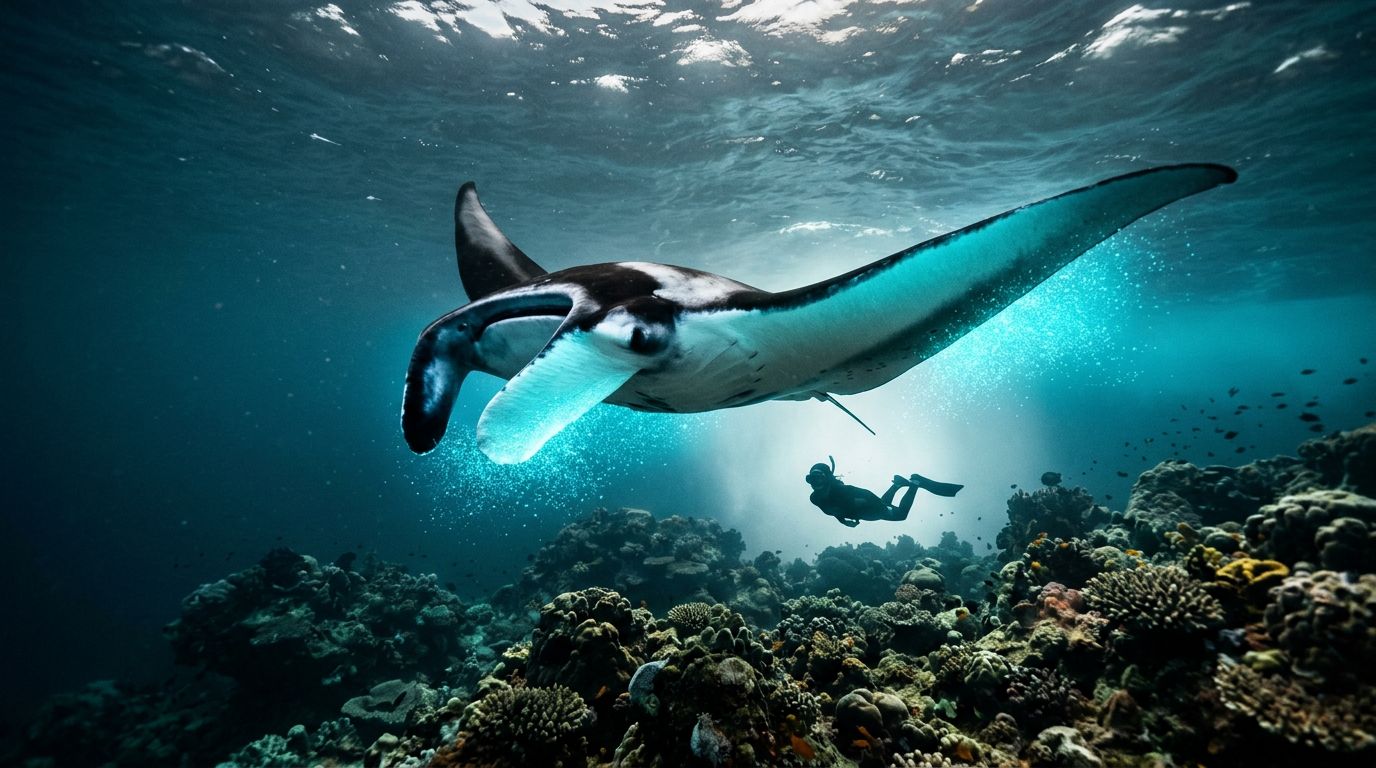
A manta ray can spread wider than many kayaks, yet glide past you with surprising grace. On a Kona manta ray snorkel, you may see reef mantas with wingspans around 8 to 12 feet, while the largest individuals can reach approximately 18 feet across.
If you’re researching snorkeling Big Island Hawaii adventures, size is only part of the experience. Your viewing position, water conditions, and the manta’s behavior shape how large it appears. Kona Snorkel Trips offers small-group night tours with lifeguard-certified guides, while Manta Ray Night Snorkel Hawaii is another company you can compare when planning your trip.
Key Takeaways
- Most adult Kona reef mantas you may see measure about 8 to 12 feet across.
- The largest reef manta rays can reach roughly 18 feet in wingspan.
- Wingspan measures the distance between the tips of the pectoral fins.
- Mantas are gentle filter feeders without the venomous barb associated with stingrays.
- A small-group tour and a calm, respectful approach help you appreciate their full size.
Kona manta rays can reach impressive wingspans
Kona’s regular visitors are reef manta rays, known scientifically as Mobula alfredi. Many adults seen near the Kona coast have a wingspan between 8 and 12 feet. That measurement describes the width from one pectoral fin tip to the other.
A large reef manta may reach about 18 feet across. However, you shouldn’t expect to see the largest possible manta on every trip. The population includes younger mantas, smaller adults, and some especially broad females.
Manta rays also vary in body weight. A healthy adult can weigh several hundred pounds, but weight is harder to estimate during a nighttime encounter. In the water, their broad fins create a smooth silhouette that can make them appear even larger.
For a quick comparison, an 8-foot manta is wider than most people are tall. A 12-foot manta has a span similar to the length of a small car. When one passes beneath your light board, its wings may fill your entire field of view.
The separate giant oceanic manta, Mobula birostris, grows larger than the reef manta. You can read NOAA’s giant manta ray profile for information about that species. Kona’s famous night encounters usually involve reef mantas, not giant oceanic mantas.
Why wingspan matters more than body length
When you search for manta ray sizes, you’ll often see wingspan listed first. That choice makes sense because the fins create most of the animal’s visual presence.
A manta’s central body, called the disc, contains its head and broad pectoral fins. Its body length is much shorter than its width. The tail extends behind it, but the tail isn’t included in the wingspan measurement.
For example, a manta with a 10-foot wingspan doesn’t have a 10-foot-long body. Its body may look compact as it approaches, then appear enormous when the fins stretch across your view.
The front of the animal includes two rolled cephalic fins. Mantas unfurl these fins while feeding, helping direct plankton-rich water toward the mouth. You may see the fins curl or open as the manta changes direction.
The number that best describes a manta’s size is its disc width, measured from fin tip to fin tip.
Your distance from the animal also affects your impression. A manta several feet below you may look smaller at first. As it rises toward the light, the full span becomes clear. Wide-angle masks and clear water can also make the encounter easier to appreciate.
Many visitors snorkel Big Island waters to see coral, turtles, and tropical fish. The manta encounter feels different because one large animal can dominate the entire scene without touching the reef.
What size manta might you see at night?
The most likely sighting includes one or more adult reef mantas circling below the surface. Some may be around 8 feet across, while others can reach 12 feet or more. You might also see a smaller juvenile, especially when several mantas gather.
Night tours use bright lights to attract plankton. Mantas follow the food, then make repeated passes through the illuminated water. Their movement can look slow, but each turn is controlled and deliberate.
The lighted boards help you stay in one position while you watch. When a manta rolls beneath you, you may see its pale underside, dark back, mouth, and cephalic fins in a single pass. A smaller manta can still seem large at close range, while a broad adult may appear to surround your view.
Kona Snorkel Trips follows a “Reef to Rays” approach. The company focuses on small groups, quality snorkeling equipment, lifeguard-certified guides, and custom lighted boards for nighttime viewing. Guides also explain how to float calmly and avoid contact with the animals or reef.
A manta’s size doesn’t guarantee a closer encounter. Conditions, food availability, current, and the animal’s own behavior all matter. Your guide can position the group carefully, but no responsible operator can promise a particular manta or exact distance.
When you want to compare trip details, you can view the Kona manta ray snorkel tour before choosing a departure.
Does a manta’s size affect your safety?
Manta rays are large, but they aren’t aggressive animals. They eat plankton by filtering seawater through specialized structures near their gills. They don’t hunt people, bite snorkelers, or defend feeding areas like some territorial fish.
Reef manta rays also lack the venomous barb associated with stingrays. Their tails may look intimidating, but you should still avoid touching or chasing them. Contact can remove the protective coating on their skin and may stress the animal.
Your position in the water matters. Stay on the surface, keep your fins behind you, and allow the manta to choose its path. If one swims directly toward you, remain calm and let it turn away. Sudden swimming or diving can disrupt its feeding pattern.
Follow your guide’s instructions about hand placement, board position, and spacing. You may need to move aside if a manta rises close to your group. Never reach toward its fins, mouth, or belly.
These habits help families, couples, and first-time snorkelers enjoy the encounter. You don’t need advanced freediving skills to see a large manta. Comfortable floating, steady breathing, and respect for the animals are more useful than swimming fast.
Reef-safe sunscreen is also important when you spend time in Hawaii’s coastal waters. Apply it before entering the ocean, and follow the operator’s guidance about products and water entry.
How to choose the right manta snorkel experience
Start by checking the tour’s group size, water entry, equipment, and guide qualifications. A smaller group can give you more room around the light board and make it easier to hear safety instructions.
If you’re nervous about nighttime swimming, ask how guests enter the water and whether flotation equipment is available. You should also consider your comfort with boat travel, mask use, and floating in open water after sunset.
Weather can change the experience. Wind, swell, current, and visibility affect how clearly you see the mantas. A calm evening may offer a sharper view, but wild animals never follow a fixed schedule.
Families should check age guidance before booking. Children need enough confidence to float calmly and follow instructions. If you want more control over timing and group size, a private Kona snorkel tour may suit your plans.
You can also check availability before arranging the rest of your evening. Booking early helps when you have limited vacation dates, although you should still leave flexibility for weather changes.
For daytime snorkeling, the Kona snorkeling tour options include different ways to explore the coast. A night manta trip gives you a close view of one animal’s scale, while daytime sites show you the wider reef habitat.
Your snorkeling Big Island plans may include both experiences. A daytime reef trip can help you recognize Hawaii’s marine environment before you return after dark. That makes snorkeling Big Island waters a fuller experience, rather than a single wildlife stop.
What to remember when you see a large manta
The first detail you’ll notice may be the white belly. Then the wings open, and the animal’s size becomes easier to understand. A manta that looked distant can suddenly span most of your view as it glides beneath the group.
Take a moment to watch its movement instead of focusing only on photographs. Mantas often make several passes, giving you time to notice the difference between a narrow juvenile and a broad adult.
Your guide can help identify individuals by markings on the underside. Those patterns are unique, much like fingerprints, and local guides may recognize frequent visitors by sight. Still, your encounter belongs to the wild animal, so the experience can change each night.
A respectful snorkeler leaves space, avoids touching, and keeps the reef clear of fins. Those simple choices protect the animals and help preserve the site for future visitors.
Conclusion
Most manta rays on a Kona night snorkel measure about 8 to 12 feet across, while the largest reef mantas can approach 18 feet. Their wingspan, not body length, creates the striking sense of scale when one passes beneath you.
You don’t need to chase a manta or dive below it to appreciate its size. Stay calm, follow your guide, and let the animal move through the light at its own pace. That is how you get close enough to see a truly large manta ray without disturbing the encounter.