
Kona Manta Ray Boat Ride: How Long It Takes
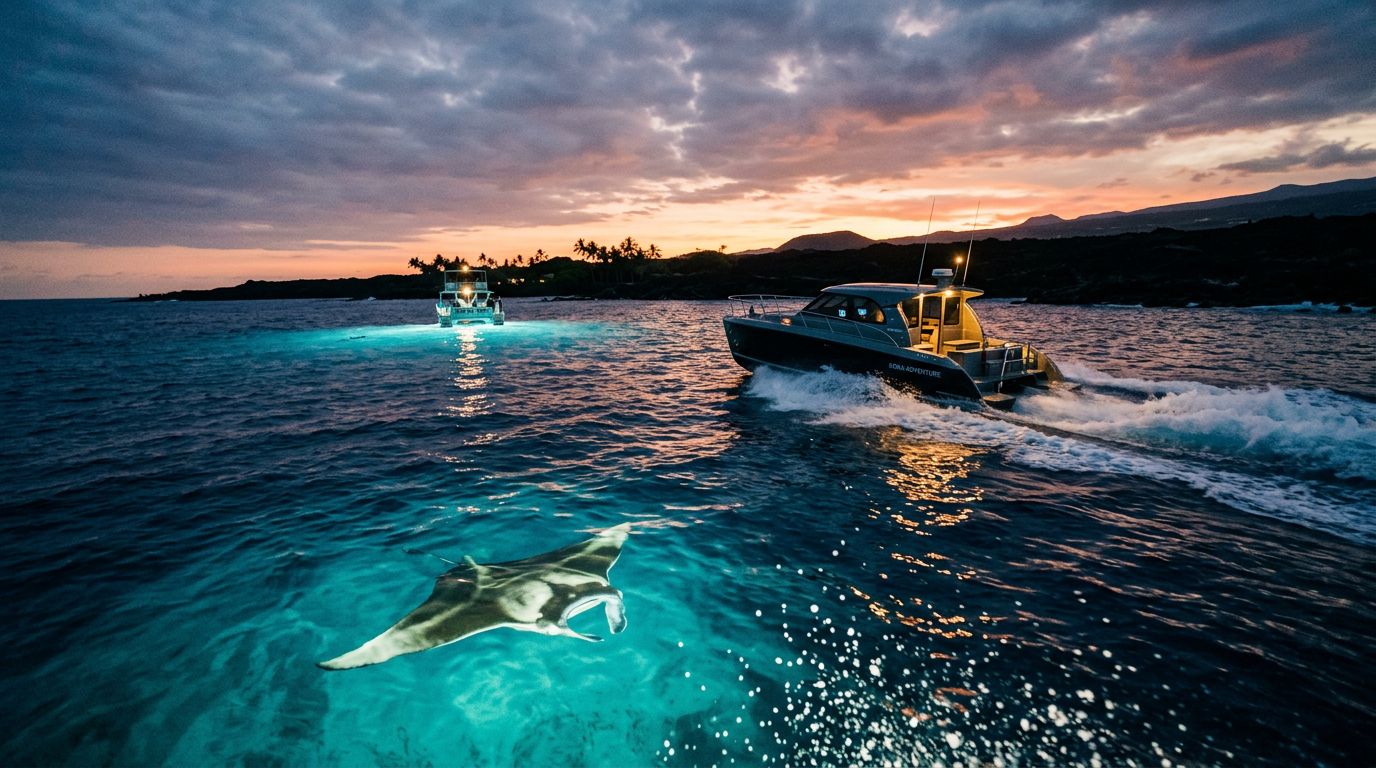
The Kona manta ray boat ride is often much shorter than travelers expect. From Keauhou Bay, you may reach the viewing area in about 3 to 5 minutes, while harbor departures can take closer to 20 to 30 minutes.
That short ride leads to a longer evening on the water. Your total tour may last around 1.5 to 3 hours, with check-in, gear setup, a safety briefing, boat travel, and time snorkeling beside manta rays. Knowing the difference helps you plan your evening without confusing travel time with the full experience.
How Long Is the Kona Manta Ray Boat Ride?
For most Kona manta tours, the boat ride lasts about 3 to 30 minutes each way. The wide range comes from the departure harbor, the viewing site, ocean conditions, and the operator’s route.
Tours leaving from Keauhou Bay or the area commonly called Manta Village usually have the shortest ride. The manta viewing locations sit close to shore, so the boat may arrive within 3 to 5 minutes. That gives you more time near the lights and less time traveling in the dark.
Some operators leave from Honokohau Harbor, north of Kailua-Kona. These trips often cover more coastline before reaching the viewing area. In that case, you may spend roughly 20 to 30 minutes on the boat before entering the water.
The ride can also vary slightly on the return. Your captain may adjust the route based on wind, current, boat traffic, or the location with the best conditions. Manta rays are wild animals, so crews may also choose a viewing area that offers a safer and better experience that evening.
| Departure setup | Typical boat ride | What to expect |
|---|---|---|
| Keauhou Bay or Manta Village | About 3 to 5 minutes | Very short trip to the viewing area |
| Other nearby Kona departures | About 5 to 15 minutes | Travel time depends on the selected site |
| Honokohau Harbor departures | About 20 to 30 minutes | Longer coastal ride before snorkeling |
The main point is simple: the boat ride is only one part of the tour. Even a 3-minute crossing can lead to 30 to 45 minutes in the water, followed by the return trip and time to enjoy the Kona coastline after dark.
For an independent look at guest experiences, you can compare recent Kona manta snorkel reviews, including comments about boat time and time spent in the water.
Why the Boat Ride Duration Varies in Kona
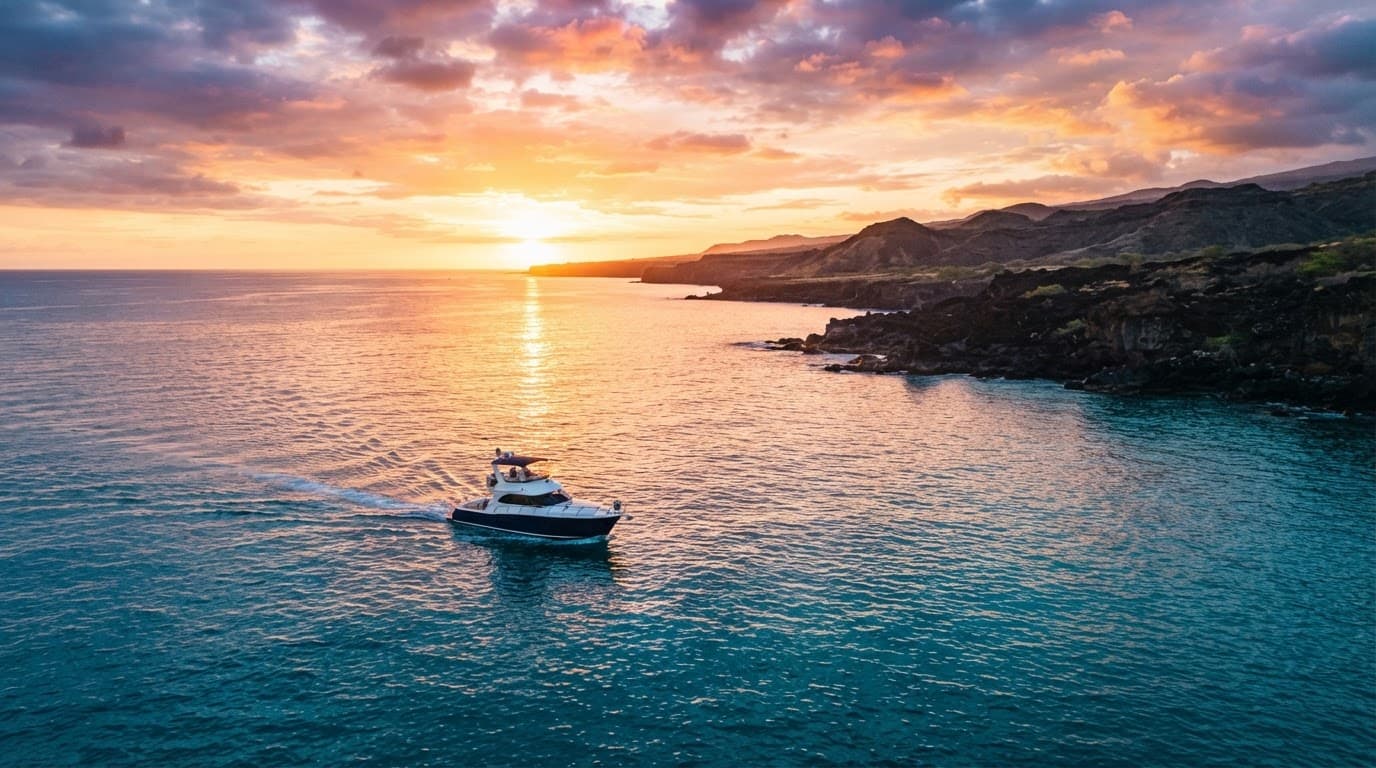
The departure point has the greatest effect on the length of your Kona manta ray boat ride. Kona’s coastline includes several harbors, beaches, and launch areas. A tour that leaves close to the manta site won’t follow the same route as one that departs farther north.
Keauhou Bay is close to several established manta viewing areas. Short trips from this part of the coast can feel almost immediate. You may leave the dock, watch the shoreline slip behind you, and arrive at the floating light board within minutes.
Honokohau Harbor is farther north. A trip from there may include a longer open-water crossing. Kona Snorkel Trips lists Honokohau Harbor as its departure location for its manta ray experience, so you should review the exact check-in details and allow time for the longer ride.
The selected viewing area can change, too. Crews may use Garden Eel Cove or another established location near Kona. The final site depends on safety, conditions, and the night’s operating plan. Because of that, the captain may not know the exact route until closer to departure.
Ocean conditions also affect how the ride feels. A calm evening may make a 20-minute trip pass quickly. Wind or swell can make the same distance feel longer, especially for children or anyone prone to seasickness. The boat still covers the route, but your comfort depends on the motion as much as the clock.
You should also allow time for loading and unloading. The listed boat ride normally refers to time underway, not the time needed to board, secure your gear, or listen to instructions.
A short crossing doesn’t mean a short tour. The most important time is usually the 30 to 45 minutes you spend in the water.
Kona Snorkel Trips focuses on small-group service, Lifeguard Certified guides, quality equipment, and reef-safe practices. Its guides also use custom-built lighted boards that help attract plankton, which brings manta rays close to the snorkeling area.
For a closer look at the departure details and current tour format, visit the manta ray snorkel Kona tour page.
What the Full Manta Ray Tour Usually Includes
When you book a manta snorkel, the boat ride is part of a larger schedule. Most tours take between 1.5 and 3 hours, depending on the departure harbor, the operator, and whether the trip includes another activity.
A typical evening follows this order:
- You check in at the designated harbor or meeting point.
- Your guide helps you select a mask, snorkel, fins, and flotation equipment.
- The crew explains boat safety, water entry, and how to behave around manta rays.
- You ride to the viewing location.
- You enter the water and hold onto a lighted board while manta rays feed nearby.
- You return to the boat, change out of your gear, and ride back to shore.
The water portion commonly lasts about 30 to 45 minutes. Some tours advertise around 30 minutes, while others plan for approximately 45 minutes. The actual duration can change if conditions become unsafe or if the crew needs to move the viewing setup.
Your boat may remain close to the light board while you watch the rays circle below. Manta rays often make repeated passes, so the experience isn’t based on traveling across a large area. Instead, the lights illuminate plankton in the water, and the animals approach that food source.
The ride back gives you a chance to warm up and look toward the dark Kona coastline. Depending on your departure time, you may see stars over the water. Boats typically return after the snorkeling session, but the exact arrival time depends on loading, sea conditions, and harbor traffic.
Kona Snorkel Trips lists its standard manta experience at about two hours. A seasonal whale-watch and manta combination may take around three hours during the winter whale season. If you’re comparing tours, read the total duration carefully rather than focusing only on the headline boat ride.
The phrase Kona manta ray boat ride usually refers to the time traveling to the site. The tour duration includes far more than that trip.
What to Expect on a Manta Ray Boat From Honokohau Harbor
If your tour leaves from Honokohau Harbor, plan for a longer ride than you would from Keauhou Bay. A 20 to 30-minute crossing is a reasonable planning estimate, although the captain may take more or less time based on the selected site and conditions.
Honokohau Harbor sits north of central Kailua-Kona. You should check your driving time before the tour, especially if you’re staying in Waikoloa, Mauna Lani, or another resort area. Add time for parking, finding the meeting point, and checking in before the scheduled departure.
The longer ride has several practical effects. First, you spend more time exposed to wind and spray. Bring a light layer, even if the afternoon felt warm. After sunset, the air can feel cooler on a moving boat, especially when your skin is wet.
Second, the boat ride becomes part of the evening’s sightseeing. You may see the Kona coastline from offshore as the sky changes color. On the return, the shoreline lights can help you understand how far you’ve traveled along the coast.
Third, motion sickness deserves attention. If you know that boat rides affect you, eat a light meal, drink water, and follow your healthcare provider’s advice about motion-sickness medication. Avoid arriving dehydrated or overly full.
Small groups can make the ride more comfortable. You have more room to listen to the guide, store your belongings, and move carefully around the boat. Kona Snorkel Trips describes its tours as personalized, small-group experiences rather than crowded outings.
The crew’s safety briefing matters just as much as the travel time. Listen for instructions about entering the water, holding the light board, staying with the group, and avoiding contact with manta rays. A manta ray’s body is delicate, and touching the animals can damage their protective coating.
The longer ride doesn’t reduce the value of the trip. It simply means you should plan the whole evening, not only the minutes spent snorkeling.
How Much Time Do You Spend in the Water?
Most visitors care less about the number of minutes underway and more about the time they spend watching manta rays. In Kona, 30 to 45 minutes in the water is common for a night snorkel.
That time can feel longer because the encounter happens in one focused area. You hold onto a floating light board while the guide positions the group. Below you, plankton gathers in the illuminated water. Manta rays may glide beneath you, bank onto one side, and turn upward for another pass.
You won’t usually swim after the animals. The best practice is to stay in place and let the manta rays choose their path. This helps protect the animals and gives you a better chance to watch their natural feeding behavior.
Water temperature is another reason guides provide wetsuits or similar thermal protection. You may feel comfortable at first, but floating in the ocean after dark can become chilly. The proper gear helps you stay focused on the animals instead of the temperature.
Swimming ability also matters. A night snorkel takes place offshore, and you need to remain comfortable in open water. Kona Snorkel Trips notes that guests must have swimming skills and asks whether participants can swim at least 50 yards. Read the operator’s current requirements before booking.
If you aren’t a confident swimmer, ask about the tour’s flotation equipment and guest requirements before paying. A guide may explain what support is available, but you should never assume that a night snorkel works for every ability level.
The activity also requires patience. Manta rays are wild animals, and no crew can promise a certain number of animals or a particular behavior. On many nights, guests see repeated visits. Still, the ocean decides what happens.
During the water session, stay relaxed, keep your hands to yourself, and follow the guide’s position. The closer you follow the rules, the safer the experience is for you, the crew, and the manta rays.
If you’re comparing options for snorkeling Big Island Hawaii, check the advertised water time separately from the total tour length. A two-hour tour may include only part of that time in the water, while a longer trip may include a more extended setup or return route.
How to Plan Your Evening Around the Boat Trip
A manta snorkel works best when you treat it as an evening appointment, not a quick activity squeezed between dinner and another reservation. Give yourself enough time to reach the harbor, check in, get fitted for equipment, and board without rushing.
Arrive at the time listed by your operator. Check-in often begins before the boat leaves. The crew may need to confirm waivers, fit your mask and fins, distribute wetsuits, and review safety information.
Avoid scheduling a late dinner immediately after the tour. A 6:00 p.m. departure doesn’t guarantee an 8:00 p.m. return. A longer harbor ride, changing conditions, or a slower return to the dock can extend the schedule.
Families should plan for the full evening. Children may need warm clothes for the ride home, snacks after the tour, and extra time to change. Keep valuables to a minimum because space on a small boat is limited.
Couples and solo travelers should also consider the lighting. The boat deck may be bright enough for safety, but the water and coastline will be dark. Bring only what the crew permits, and follow instructions about phones and cameras. A waterproof camera can be useful, but the guide’s directions should come first.
If you get seasick, choose a seat with good airflow and look toward the horizon during the ride. Keep your eyes open while the boat moves, and tell the crew early if you feel unwell. Guides can often help before symptoms become severe.
Wear a swimsuit beneath your clothes and bring a dry change of clothes. A towel, reef-safe sunscreen for the earlier part of the day, and a light jacket can also help. Don’t apply sunscreen immediately before entering the water if the operator asks you to avoid it.
Before booking, confirm:
- The exact departure harbor and meeting location.
- The total tour duration, not only the in-water time.
- Swimming and age requirements.
- What equipment the operator supplies.
- The cancellation policy for poor weather.
- Whether the trip uses a light board or another viewing setup.
These details matter more than a small difference in ride time. A 5-minute crossing and a 25-minute crossing can both lead to an excellent manta encounter when the tour matches your comfort level.
Choosing a Kona Manta Tour That Fits Your Trip
Your best choice depends on where you’re staying, how comfortable you are in the ocean, and how much time you want to spend on a boat.
A short Keauhou departure may suit you if you want minimal travel time. It’s also a practical choice for children, first-time boat passengers, or anyone who worries about motion sickness. The trip reaches the viewing area quickly, but you still need to allow time for check-in and the return ride.
A Honokohau Harbor departure may work well if you prefer a small-group operation with a longer coastal route. Kona Snorkel Trips combines professional guides, quality snorkel equipment, safety instruction, and environmental education. Its “Reef to Rays” philosophy connects reef snorkeling with responsible wildlife viewing.
You can browse the company’s guided Big Island snorkeling tours to compare manta trips with reef excursions and other ocean activities. The company also offers private options for travelers who want a more personal schedule.
Manta Ray Night Snorkel Hawaii is another local option to review when you’re comparing manta experiences. You can visit Manta Ray Night Snorkel Hawaii for its current tour information and booking details.
The boat itself matters, but the crew matters more. Look for clear swimming requirements, safety procedures, recent operating information, and a guide who respects the animals. Avoid choosing only by the shortest ride. A fast trip doesn’t help if the schedule, group size, or water requirements don’t suit you.
Price comparisons should include what comes with the booking. Some tours include wetsuits, snorkel gear, flotation support, and professional guides. Others may list extras separately. Read the details before comparing totals.
Guests who want to snorkel Big Island waters during the day may also pair a manta trip with a reef excursion. A Captain Cook and Kealakekua Bay trip offers a different setting, with daytime visibility and reef habitat. You can learn more through this Captain Cook snorkeling tour.
That daytime trip isn’t a substitute for a manta snorkel. It gives you a separate way to experience the coast, fish, coral, and volcanic scenery. Planning both can create a fuller snorkeling itinerary without expecting one tour to provide every type of ocean experience.
What to Expect From Kona Snorkel Trips
Kona Snorkel Trips is a Kailua-Kona ocean adventure company focused on snorkeling, manta ray encounters, whale watching, and private boat outings. Its manta tours use Lifeguard Certified guides and small-group service, with attention to safety and reef protection.
The company provides snorkeling equipment and uses custom-built lighted boards for nighttime manta encounters. Guides explain how to stay in position, avoid touching the animals, and watch without interfering with their feeding behavior.
You can expect the exact boat ride to depend on the departure location and operating conditions. Since the listed manta departure is Honokohau Harbor, plan for a longer crossing than the shortest Keauhou Bay tours. Review your confirmation for the current meeting time and route details.
For travelers interested in snorkeling Big Island locations during daylight, Kona Snorkel Trips also offers trips to reefs and Kealakekua Bay. Those tours follow a different schedule because they focus on daytime visibility, reef life, and coastal sightseeing.
The company’s approach suits families, couples, solo travelers, and groups that want a guided experience without the feel of a large, crowded excursion. You still get time on the water, but the guide’s instructions and the group’s comfort remain central to the outing.
If the manta tour fits your schedule and swimming ability, you can check availability before planning dinner or other evening activities.
Is the Kona Manta Ray Boat Ride Worth It?
The boat ride itself is short on many Kona tours, but the full experience gives you much more than a transfer to a snorkeling site. You spend time learning the safety rules, watching the coastline after sunset, floating above the lighted water, and observing manta rays at close range.
A 3 to 5-minute ride from Keauhou Bay may appeal to travelers who want quick access to the viewing area. A 20 to 30-minute ride from Honokohau Harbor gives you a longer open-water trip and requires more careful planning. Neither option is automatically better.
Your choice should match your location, comfort on boats, swimming ability, and preferred group size. Read the operator’s current details, confirm the departure point, and plan for the total tour rather than the advertised crossing alone.
The same advice applies to snorkeling Big Island trips in general. The right tour gives you enough time to enjoy the water without making the schedule feel rushed.
Conclusion
The typical Kona manta ray boat ride takes about 3 to 5 minutes from Keauhou Bay, or roughly 20 to 30 minutes from a farther harbor departure such as Honokohau. The complete excursion usually lasts 1.5 to 3 hours, with around 30 to 45 minutes spent snorkeling beside the manta rays.
Check the departure harbor, total duration, swimming requirements, and weather policy before you book. Once you know how the timing works, you can enjoy the ride as part of the evening instead of wondering when the actual manta encounter will begin.