
Kona Manta Ray Snorkel Accessibility Guide
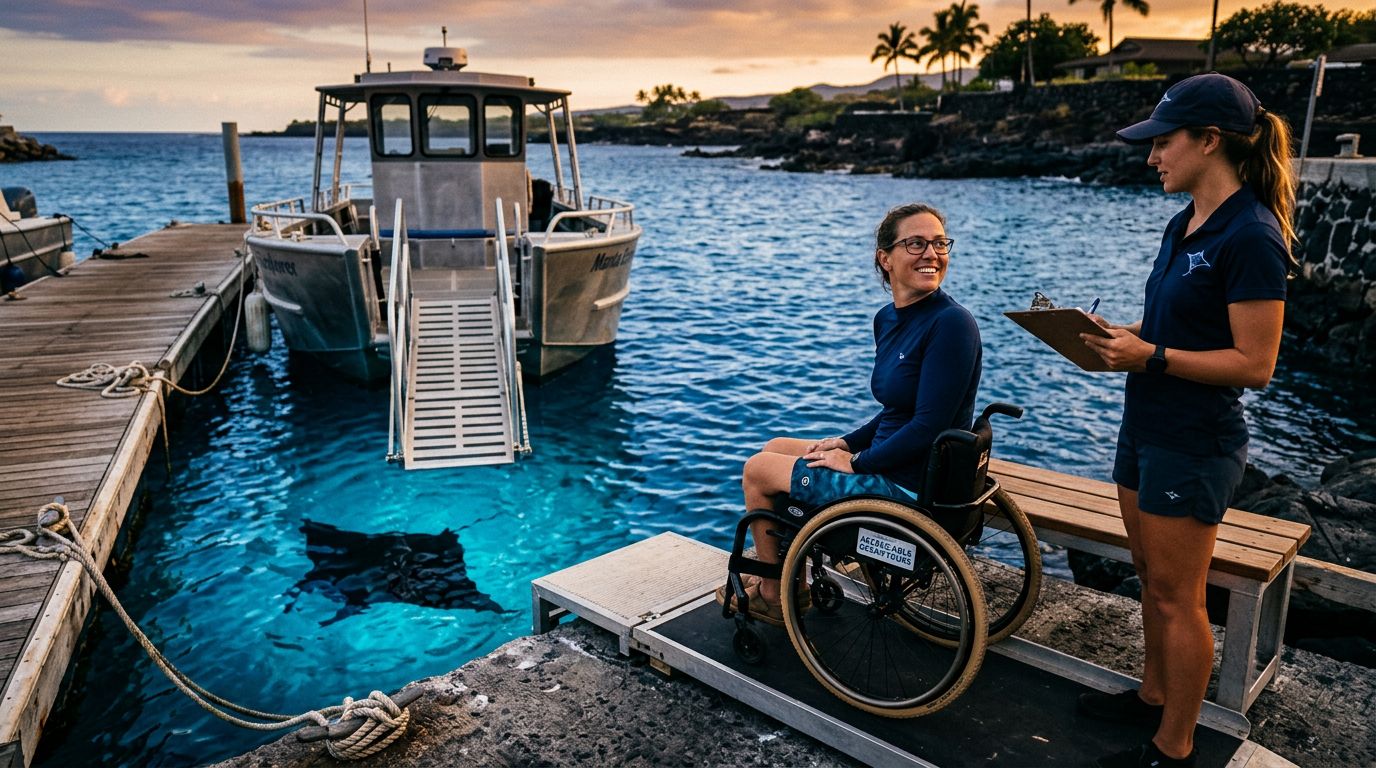
A manta ray tour can look gentle from the dock, yet boarding, water entry, and ladder climbs may create real barriers for you.
If you have limited mobility, use a Kona manta ray snorkel plan that matches your physical needs instead of relying on the word “accessible.” Ask about the vessel, transfers, flotation support, and re-entry before you reserve a seat. The right questions can help you enjoy the manta experience safely, even if you never enter the water.
Key Takeaways
- Most standard manta snorkel boats require you to climb a ladder, swim, tread water, and manage a boat transfer.
- Kona Snorkel Trips currently states that its manta vessel requires full mobility, so it isn’t suitable for guests who need mobility accommodations.
- Anelakai Adventures is the Kona operator with specific published accommodations for wheelchair users and guests with limited mobility.
- You should discuss your exact needs by phone before booking, especially if you use a wheelchair, scooter, cane, or transfer equipment.
- A ride-along or underwater viewing option may provide a better experience than entering the ocean.
Start with an Honest Mobility Fit Check
Kona Snorkel Trips is a respected Kailua-Kona ocean tour company with a five-star reputation, lifeguard-certified guides, quality snorkeling equipment, and a strong reef-care policy. Its trips include manta ray encounters, reef snorkeling, private outings, and other Big Island adventures. You can review the current tour lineup through its Big Island snorkeling tours page.
The company also publishes an important restriction for guests with mobility concerns. Its manta vessel requires full mobility, and limited mobility can create a safety hazard during boarding, water entry, and re-entry. That means you shouldn’t book the standard manta trip if you can’t climb a boat ladder, transfer without substantial assistance, swim, or tread water.
The same advice applies if you have poor balance, severe back problems, weakness in your legs or arms, or difficulty standing on a moving deck. A helpful guide can support you, but crew assistance doesn’t turn a standard boat into a wheelchair-accessible vessel.
If you have full mobility and want to confirm dates for a Kona Snorkel Trips excursion, you can check availability. If you have a disability or mobility limitation, contact the company before booking so you can receive a direct answer about the current vessel and boarding process.
Manta Ray Night Snorkel Hawaii is another manta-focused company you may see while researching Kona tours. Its published information describes the experience as suitable for people with different ability levels, while recommending basic swimming skills. That general description shouldn’t replace a personal accessibility assessment. You still need to ask about boat steps, transfer help, ladder height, flotation gear, and whether you can remain on board without entering the water. You can read its manta ray accessibility information before contacting the operator.
What Accessibility Means on a Manta Ray Tour
Accessibility has several separate parts on an ocean excursion. A boat may have a stable deck but still require a difficult transfer. Another vessel may accommodate your wheelchair at the dock but lack a safe way to reboard after you enter the water.
Ask about each stage of the experience:
| Part of the tour | What you need to confirm |
|---|---|
| Transportation | Whether the vehicle can store your wheelchair or scooter |
| Dock access | The distance, surface, slope, and restroom location |
| Boarding | The step height, handrails, crew assistance, and transfer method |
| Onboard seating | Whether you can remain seated safely during the ride |
| Water entry | Ladder, platform, lift, or assisted transfer options |
| Time in the water | Flotation devices, support staff, and non-swimming choices |
| Re-entry | Your ability to climb back aboard after snorkeling |
| Equipment | Mask style, fins, flotation aids, and adaptive gear |
For most standard manta snorkel trips, re-entry is the point that causes the greatest difficulty. You may enter using a boat ladder, swim away from the vessel, and then return to that same ladder in dark conditions. Even calm water can make the climb harder when your arms are tired or your balance is limited.
Night snorkeling also adds practical concerns. The deck may be wet, the boat may move with the swell, and you may need to follow instructions while wearing a mask and flotation device. Bright lights attract plankton and manta rays, but they don’t remove the need for secure footing.
You should also separate “can board” from “can snorkel.” Some guests can transfer into a boat but cannot safely enter the water. Others can swim comfortably but cannot climb a narrow ladder. Tell the operator exactly where your limitation occurs.
A mobility scooter, manual wheelchair, or prosthetic limb may also affect the plan. Ask whether the equipment stays at the dock, remains on the vessel, or requires a separate storage arrangement. Never assume the boat has a lift unless the operator confirms it.
The Strongest Mobility-Friendly Option in Kona
Anelakai Adventures is the Kona operator with the clearest published accommodations for guests with limited mobility. Its accessible ocean tour information addresses guests with paraplegia, quadriplegia, cerebral palsy, wheelchair use, and other mobility concerns. The company uses a traditional double-hull Hawaiian canoe, which offers a broad, stable platform compared with many smaller snorkel boats.
You still need to call before booking. The canoe requires a one- to three-foot step from the dock, depending on the tide, although the crew can assist with the transfer. The company also states that guests entering the water usually need to climb a short ladder to reboard. If you can’t manage that movement, the crew can discuss a different plan.
That conversation matters because accessibility depends on your personal strength, balance, transfer technique, and medical needs. Tell the crew whether you can stand briefly, pivot from a chair, lift your legs, use a transfer board, or climb even a few ladder steps. Give them the same information you would provide to an adaptive sports instructor.
Anelakai also offers a meaningful non-swimmer option. You may be able to remain in the canoe while manta rays pass beneath the hulls. Underwater viewing boxes provide a way to watch below the surface without entering the ocean. For some travelers, that view delivers the most comfortable manta encounter because you avoid a wet transfer and a dark-water re-entry.
The canoe can accommodate wheelchairs and mobility scooters, but a 250-pound guest weight limit applies to its tours. Confirm whether that limit includes any transfer equipment or personal gear. Ask about the exact departure point, restroom access, weather policy, and how long you’ll remain seated.
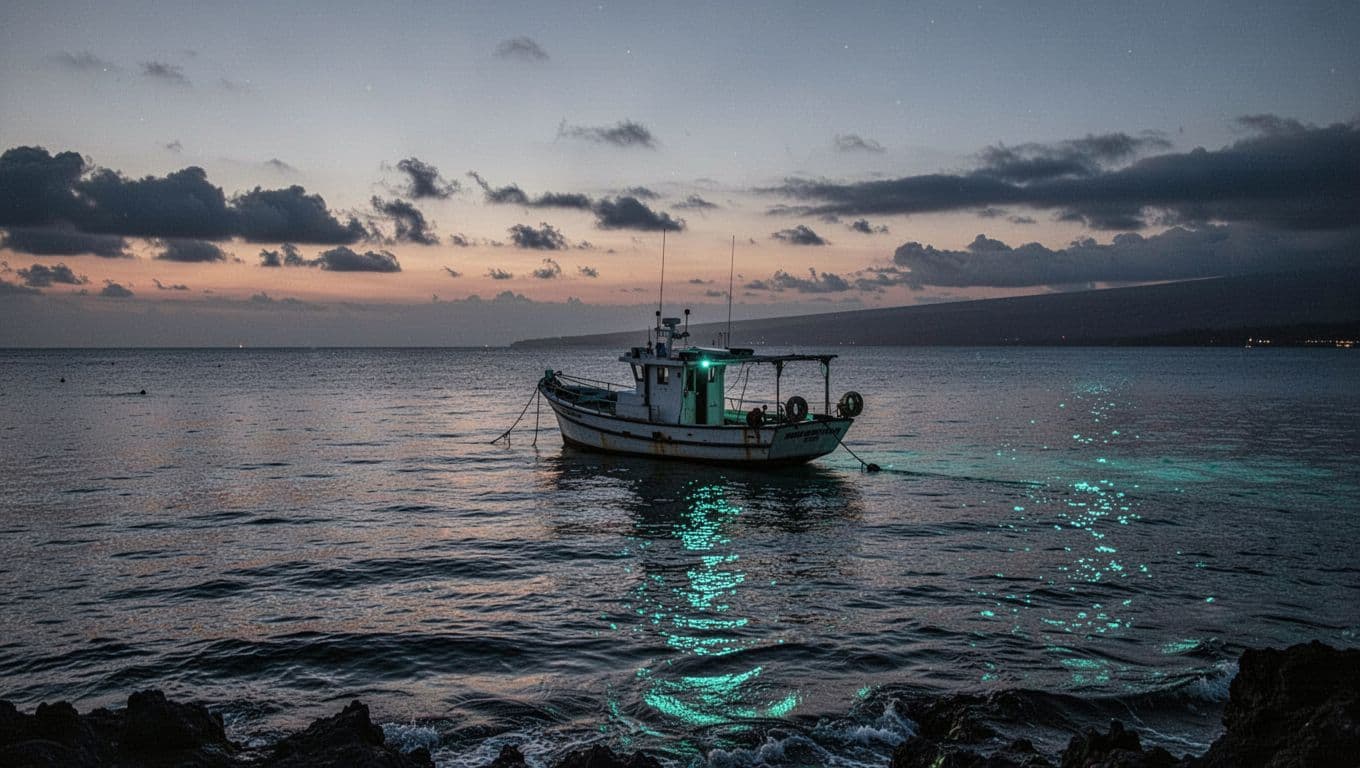
A calm Kona sunset can be part of the experience, even when you choose to watch manta rays from the vessel.
You can contact Anelakai Adventures at (808) 987-0377 to discuss your situation. Ask for a direct answer rather than a general statement about accessibility. The best plan is the one that describes precisely how you will board, where you will sit, and how you will watch the mantas.
How to Vet Any Standard Manta Boat
Many visitors searching for snorkeling Big Island Hawaii activities see the same basic tour format: travel by boat at sunset, enter the water after dark, hold onto a flotation board, and watch manta rays feed under bright lights. That format works well for confident swimmers with good balance. It may not work for you if you need physical support.
Start by asking what type of vessel operates the trip. A rigid-hull inflatable boat, small catamaran, pontoon, and Hawaiian canoe each handle transfers differently. A wide deck may improve stability, but deck width alone doesn’t tell you whether a wheelchair can roll aboard.
Next, ask for the exact boarding sequence. Request plain details:
- How many steps separate the dock and boat?
- Is there a handrail on both sides?
- Can the crew provide a two-person transfer?
- Can you stay dry during boarding?
- Where can your companion stand?
- Does the ladder have wide steps or a narrow metal design?
Then discuss the water portion. Standard manta tours commonly require basic swimming ability, the ability to tread water, and enough upper-body strength to hold a flotation board. You may also need to follow a guide through the water while boats operate nearby.
The operator should explain whether you can remain on the boat if you decide not to snorkel. A “ride-along” arrangement can be useful, but confirm whether it is available on your date, whether the boat has a safe seated viewing area, and whether the crew can monitor you during the encounter.
Medical conditions deserve an honest conversation. Heart problems, pregnancy, breathing disorders, serious back conditions, and other health concerns may affect participation. Your doctor can advise whether nighttime ocean activity is appropriate, but the tour company must still approve the physical logistics.
Don’t use another guest’s experience as your accessibility test. Two people with the same diagnosis may have different transfer abilities. Describe what your body can do in practical terms, then ask the crew to match those details to the vessel.
Questions to Ask Before You Book
A phone call before payment can prevent a difficult arrival at the harbor. Keep your questions nearby and write down the answers, including the name of the staff member you speak with.
Ask these questions in order:
- Is the vessel wheelchair accessible? Ask whether a wheelchair can roll aboard or whether you’ll need to transfer at the dock.
- What is the highest step? A small step and a ladder are very different barriers.
- Can I remain on board? Find out whether you can watch manta rays without entering the water.
- How do guests reboard? Ask about ladder length, step width, handrails, and crew assistance.
- Can you accommodate my specific equipment? Name your wheelchair, scooter, walker, transfer board, or prosthetic.
- What happens if conditions change? Ask how wind, swell, rain, or poor visibility affects the plan.
- Can my companion assist me? Some operators allow help from a companion, while others require crew-led transfers.
- Are there weight or age restrictions? Confirm the limits for every participant, including any equipment.
- Where is the restroom? You may need to use facilities before boarding, during the trip, or after returning.
- Can you confirm this in writing? A follow-up email gives you a clear record of the agreed arrangement.
Use direct language. Instead of saying, “Is the tour accessible?” say, “I use a manual wheelchair and can’t climb a ladder. Can I board your vessel, remain seated, and watch manta rays without entering the water?”
That description helps the operator answer accurately. It also gives you a chance to notice whether the staff understands your needs. A vague answer such as “the crew will help” isn’t enough when safety depends on a transfer.
You should also ask about cancellation terms before making plans. If the operator cannot confirm a safe arrangement, choose another activity rather than hoping the crew can improvise at the dock.
Prepare for Comfort, Transfers, and Safety
Once you’ve chosen a suitable operator, plan the day around your energy level. A sunset manta trip may begin after a full day of sightseeing, driving, or snorkeling. Schedule rest before the excursion, especially if you have a condition that causes fatigue.
Wear clothing that allows comfortable movement during a transfer. Secure sandals or water shoes may help on a wet dock, but ask the operator what footwear they allow on the boat. Bring any prescribed medication in a waterproof container and tell the crew where you keep it.
Your companion should understand the plan before you arrive. Decide who carries personal equipment, who stays beside you during boarding, and who communicates with the crew. Avoid having several people give instructions at once.
If you use a wheelchair, ask whether you should bring a folding manual chair or leave a power chair at the dock. Saltwater can damage mobility equipment, and a boat may not have a secure storage area. Photograph or label removable equipment so nothing gets separated.
Flotation support also needs a personal fit. A standard noodle or life vest may not provide enough trunk support for you. Ask whether the operator has a back-float device, harness, adaptive vest, or another approved aid. Don’t bring homemade equipment or attach yourself to a boat without crew approval.
Before entering the water, confirm the return plan. Know where the ladder is, how you’ll signal for help, and whether the crew will steady you while you climb. If your strength changes after several minutes in the water, tell the guide before you get tired.
Nighttime visibility can affect your confidence. If you use glasses, ask about prescription mask options. If you rely on visual cues for balance or communication, discuss how the guide will give instructions in the water.
These details may sound small, but they shape the whole experience. A clear plan lets you focus on the manta rays instead of solving a transfer problem after the boat leaves shore.
When Watching Without Swimming Is Better
You don’t have to enter the ocean to have a meaningful manta experience. If ladder use, cold water, balance, or fatigue makes snorkeling unsafe, a vessel-based viewing plan may fit you better.
A non-swimmer option can include watching from a stable canoe, using an underwater viewing box, or staying on a boat near the feeding area. Ask how close the vessel can get to the manta activity and whether you will have an unobstructed view from your seat.
You may also consider a daytime coastal cruise, glass-bottom viewing, or a private boat plan with a slower schedule. An accessible sailing option with a hydraulic platform has been reported in Kona, but you should confirm its current operation, departure location, equipment, and availability before relying on it.
Private tours can offer more control over timing and crew attention, but private does not automatically mean accessible. You still need to ask about the exact boat and transfer process. A smaller private vessel may create more barriers than a larger shared canoe.
If snorkeling Big Island reefs is your main goal, a shore-based viewing site may be easier than an offshore manta trip. Some locations have uneven lava surfaces, so check parking, paths, railings, and water entry before you go. A calm coastal lookout can also give you a rewarding ocean day without a boat transfer.
For travelers planning to snorkel Big Island waters with family or friends, separate activities may make sense. One person can join a water tour while you choose a comfortable viewing experience. You can still share the sunset, harbor time, and stories afterward.
When you’re snorkeling Big Island destinations, the safest choice is the one that fits your body on that specific day. A manta encounter should feel exciting, not like a test of whether you can overcome equipment that wasn’t designed for you.
Conclusion
A safe Kona manta ray snorkel begins with the transfer plan, not the booking page. You need clear answers about boarding, water entry, flotation, seating, and re-entry before you commit.
Kona Snorkel Trips currently requires full mobility for its standard manta vessel, while Anelakai Adventures publishes specific accommodations for guests with limited mobility and non-swimmers. Compare those details with your abilities, then choose the experience that gives you a secure place in the adventure. The manta rays are worth seeing, and you deserve a plan that lets you watch them with confidence.