
Best Forecast Apps for a Kona Manta Ray Night Snorkel
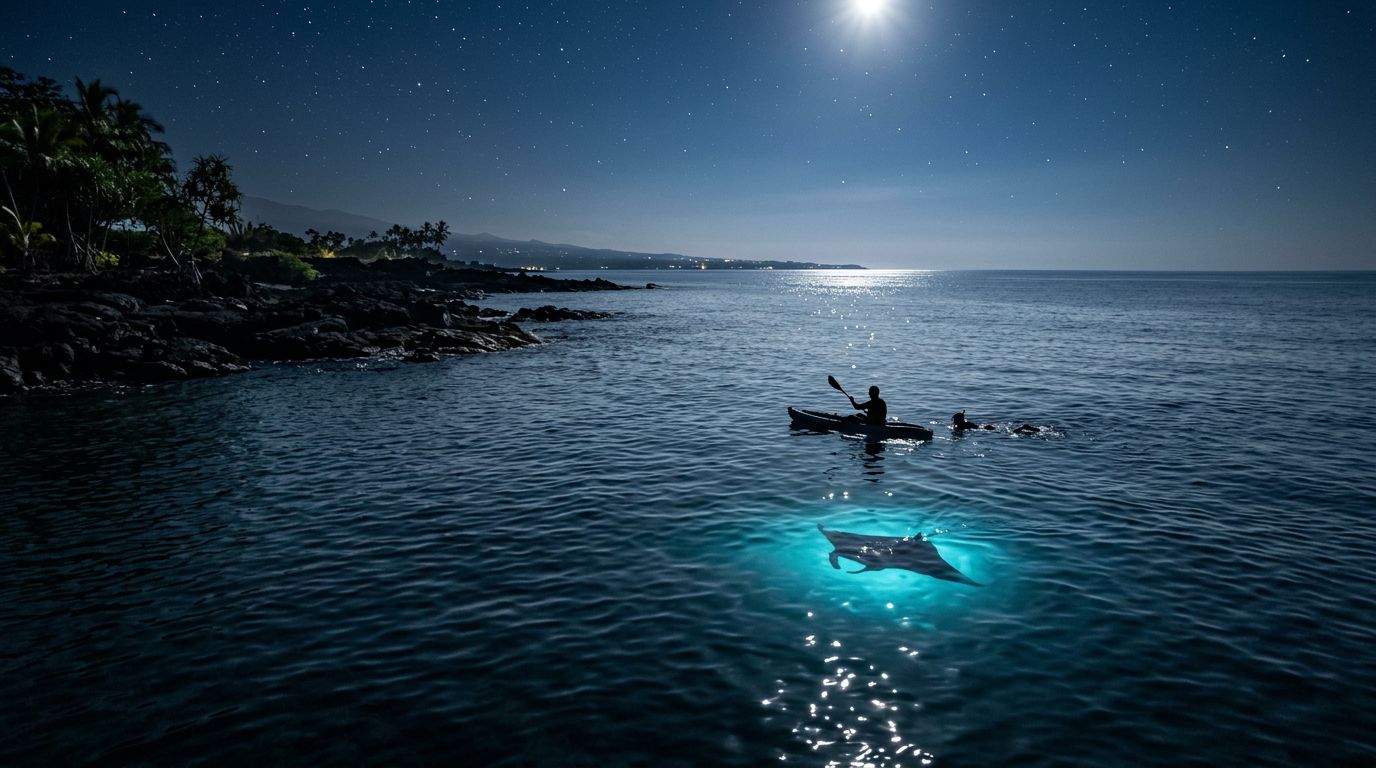
For a Kona manta ray night snorkel, the wrong forecast can cost you more than comfort. It can change how you pack, when you leave, and whether the water feels calm enough to enjoy.
Kona Snorkel Trips keeps trips small, safety-focused, and closely tied to local conditions, so your phone should help you make the same kind of call. If you want to snorkel Big Island waters with less guesswork, look for apps that show wind, swell, tide, and moon phase in plain language.
That matters even more when you are planning snorkeling Big Island Hawaii at night. The best app is the one that helps you spot the right window, not the one with the prettiest forecast icon.
What a forecast app needs to show before you go
A good app for a night snorkel is not a beach selfie in weather form. It needs the pieces that affect the water when you step off the boat.
Wind and swell change how the night feels
Wind can turn a calm cove into a choppy float, and swell can make boarding harder than the swim itself. Look for hourly wind speed, direction, wave height, and wave period.
Long-period swell matters because it keeps moving the water even when the sky looks quiet. If the app lets you see the forecast by hour, even better. Kona can change fast after sunset.
For a night snorkel, wind and swell matter more than a perfect-looking forecast icon.
Moon, tide, and cloud cover matter more than a sunny icon
A moon app or calendar helps because a bright sky can change how easy it is to read the surface. Low tide can also change the feel of some sites, while high tide can make other entries simpler.
Cloud cover matters less than safety, but it does affect how dark the water feels. For a manta trip, you want the whole scene to stay readable. That makes floating on the surface easier and less tiring.
Rain only matters when it changes the bigger picture
Light rain is often less important than wind or swell. Heavy rain, lightning, or reduced visibility are different stories.
A forecast app should help you spot those bigger changes, not just show a percent chance of showers. If the app only tells you “rain” and nothing about the ocean, it is not enough for a night snorkel.
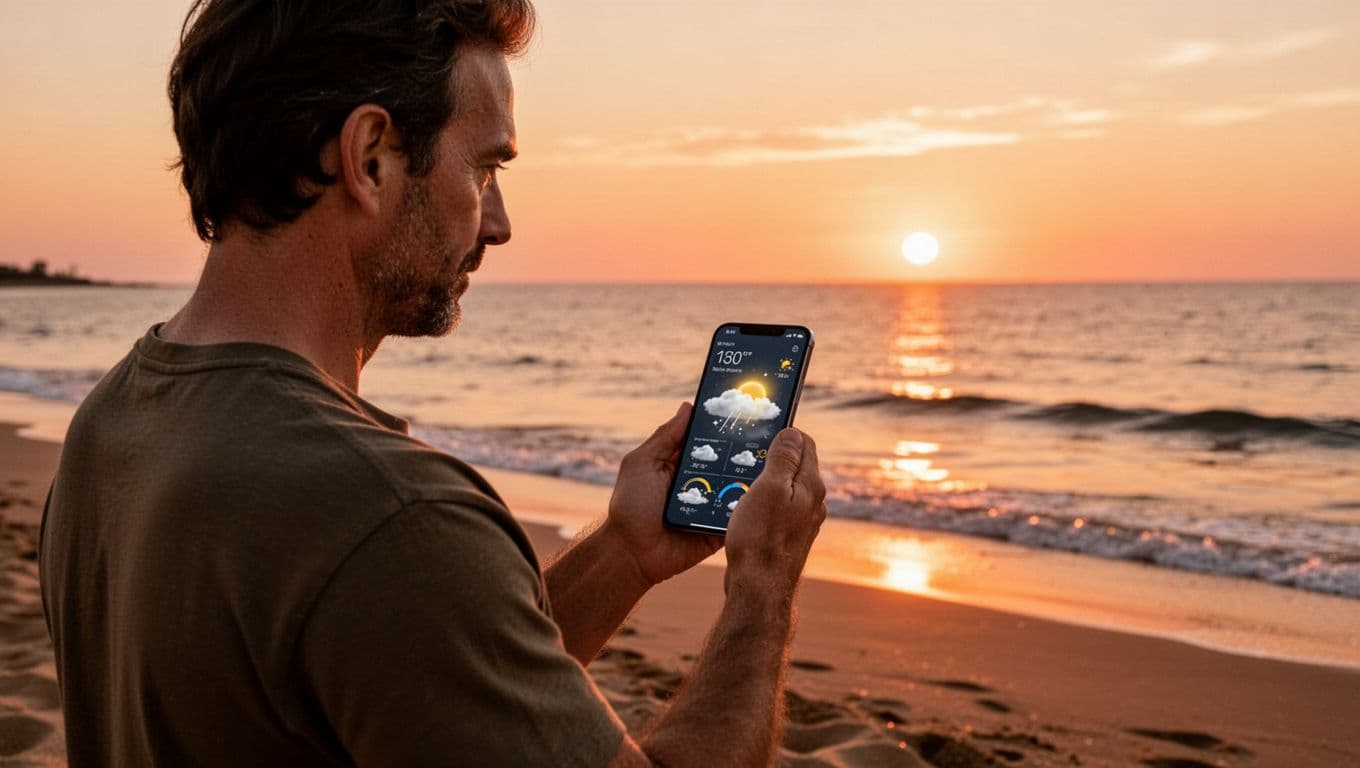
The forecast apps that make the most sense in Kona
You do not need ten apps open at once. You need a small set that answers different questions.
| App | What it does well | Why it helps on a manta night | Watch for |
|---|---|---|---|
| Windy | Clear maps for wind, swell, pressure, and rain | Easy to spot offshore wind and incoming swell | It can feel busy at first |
| Surfline | Simple surf and nearshore forecast view | Handy when you want a fast read on ocean energy | It leans surf-first, so keep checking wind too |
| NOAA / National Weather Service | Official weather and marine wording | Best for advisories, warnings, and serious changes | It is less visual than map apps |
| Tide app or tide chart | High and low tide timing | Useful for boarding, exits, and general timing | Tides do not predict all conditions |
| Moon calendar | Moon phase and rise or set times | Helps you judge darkness and glare | It is only one piece of the picture |
Windy is usually the first tab to open because the map makes direction easy to read. Surfline works well when you want a simple ocean snapshot. NOAA or the National Weather Service should be your final safety check, especially when small craft advisories or marine warnings show up.
If you also want a broader local routine, the same habit works for Kealakekua Bay forecast apps. You compare the app, then you compare it with the place you want to swim. That habit helps whether you are planning snorkeling Big Island mornings or a night manta run.
Reading Kona conditions for a manta ray night snorkel
Kona’s west side often gives you calmer water than windward parts of the island, but calm is not automatic. You still want to check the day-of wind, the swell direction, and whether the site is tucked in or open.
Manta trips are floating trips. That means surface comfort matters more than depth or bottom texture. You are not chasing a current or dropping into a reef channel. You are trying to stay relaxed on the surface while the lights bring the action to you.
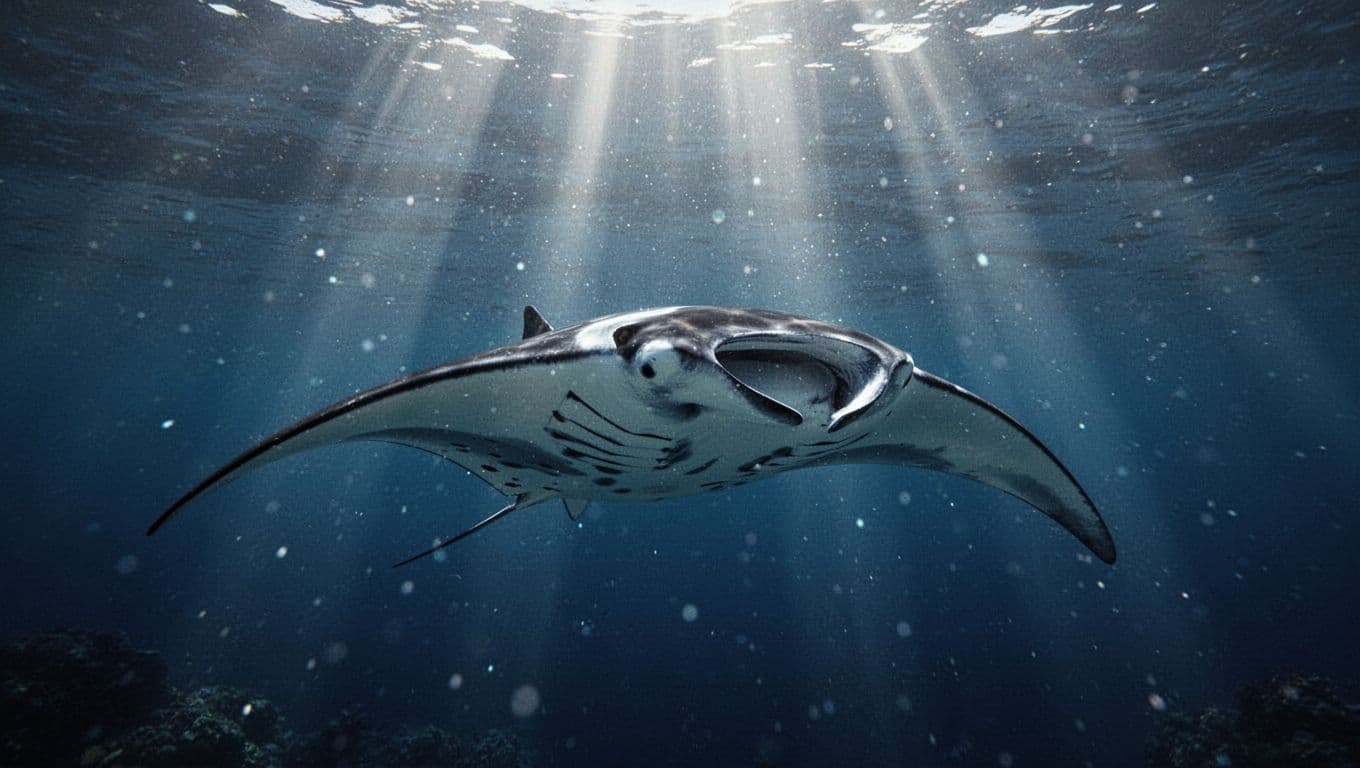
The lights under the boards draw plankton, and the mantas follow the feed. Chop can make the float less relaxed, but it does not change the basic reason the trip works. A smoother surface simply gives you more time to look down without fighting the sea.
Most Kona operators watch two broad zones, the sheltered Keauhou side and the north-of-airport Garden Eel Cove area. A forecast app cannot tell you which one your boat will use, but it can show whether north swell or strong trades might make one site rougher than the other.
That is why the best app habit is local, not general. You open the map, then you ask whether the conditions match a floating night snorkel or a different plan.
Pair the app with the right operator
Apps help, but they do not replace the guide who knows the coast. Kona Snorkel Trips keeps a Reef to Rays approach, with small groups, Lifeguard Certified guides, state-of-the-art gear, and lighted boards built for night water. That matters when you want the forecast to turn into a good night instead of a guess.
If you want to compare more trip styles beyond the manta run, browse Big Island snorkeling tours. You can see how different outings fit different moods, from relaxed reef time to a focused night swim.
If you are comparing manta-focused operators, Manta Ray Night Snorkel Hawaii is another local option to review. It helps to see more than one approach before you book, especially if you are traveling with family or planning around a tight island schedule.
Night snorkeling works best when the operator and the forecast agree with each other. The app gives you the big picture. The crew gives you the local one. When both point in the same direction, you usually have a better night.
If the forecast lines up and you want to lock in a date, use the button below.
A simple pre-trip routine that keeps the night easy
The best app routine only takes a few minutes. It keeps you from overthinking the forecast and helps you spot changes early.
- Open Windy or Surfline about 48 hours ahead and note the wind direction.
- Check the same forecast again on the afternoon of your trip.
- Look at tide and moon phase, not just the chance of rain.
- Read the operator update and compare it with your app.
- Pack a light layer, dry clothes, and anything that makes the ride home easier.
You do not need to guess the entire night in advance. You just need a clear enough picture to know whether the water fits your plan.
If the forecast looks borderline, ask the operator what they are seeing on the water. That is a better move than hoping the wind settles after sunset. It also helps if you want to snorkel Big Island coastline in more than one place during your trip.
Conclusion
For a Kona manta ray night snorkel, the right forecast app gives you the first filter, not the final answer. Windy, Surfline, and NOAA each show a different piece of the picture, and a tide or moon check fills in the rest.
When you combine that data with local guidance from a good operator, you make smarter calls and waste less time second-guessing the water. That matters whether you are planning snorkeling Big Island Hawaii for the first time or you already know the coast well.
A calm forecast does not promise perfect conditions, but it does give you a better start. That is usually enough to make the night feel easier, safer, and more fun.