
How to Avoid Backscatter on a Kona Manta Ray Snorkel
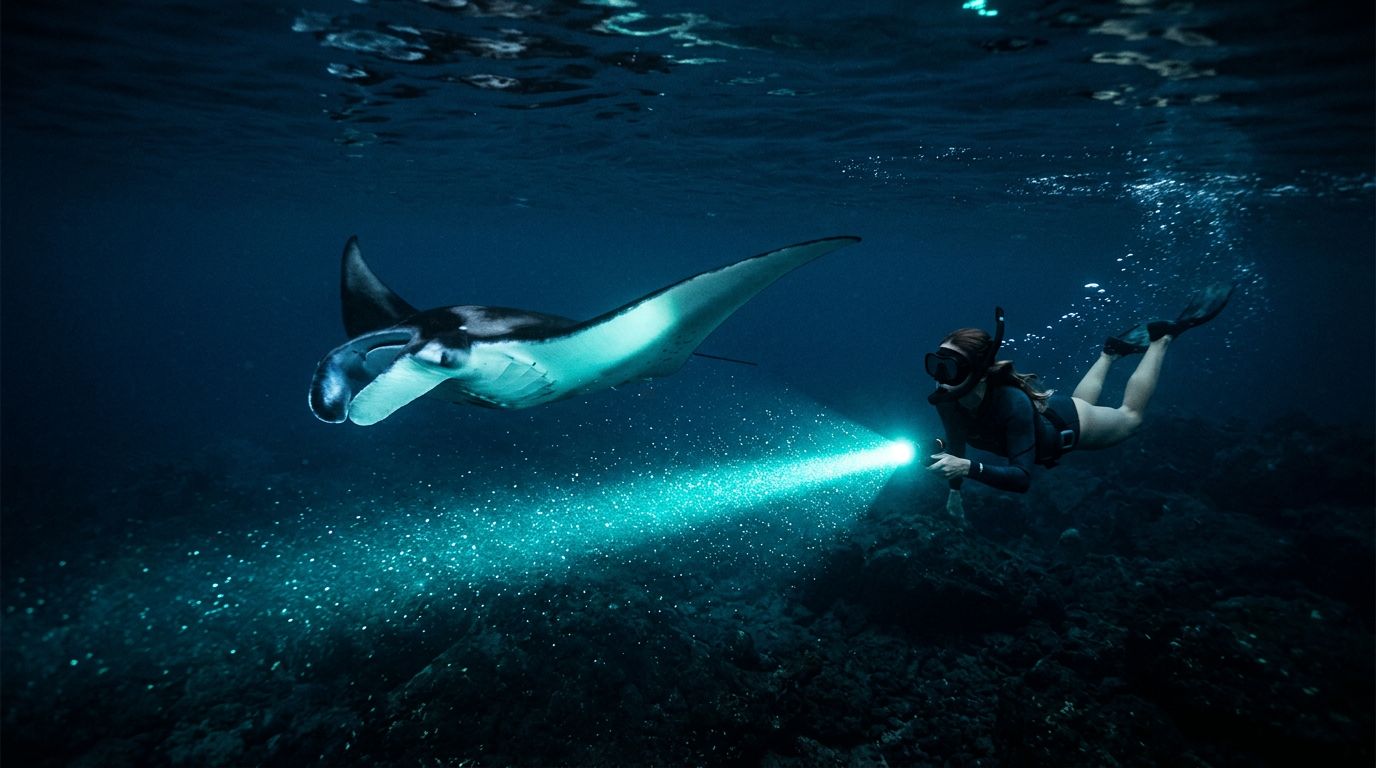
Kona Snorkel Trips is a smart place to start when you want a cleaner Kona manta ray snorkel, because the biggest photo problem often comes from your own light. If you’re planning snorkeling Big Island Hawaii, backscatter can turn a calm night swim into a snowstorm of bright specks.
You can cut most of it with a few simple habits. The trick is to move less, aim better, and use the water around you with care.
Why backscatter shows up so fast on a night snorkel
Backscatter happens when tiny particles in the water reflect your light back toward your eyes or camera. Those particles can be sand, plankton, bubbles, or little bits of organic debris. In clear water, you might never notice them until a bright beam hits them.
That is why night snorkeling makes backscatter easier to see. The ocean looks dark, so your light becomes the only thing that defines the scene. Once that light goes through a cloud of particles, every speck can glow like a tiny mirror.
A Kona manta ray snorkel makes the effect even more obvious. The water is lit from below, people are often close together, and the mantas pull your attention toward a bright patch in the dark. If your angle is off, the light will reveal every bit of water between you and the subject.
The good news is that the fix is simple. You want less water between you and the manta, less movement from your body, and less light pointed straight through the particles. Waterdog Photography explains the same basic rule in its clear backscatter guide, which comes down to getting closer and using the water wisely.
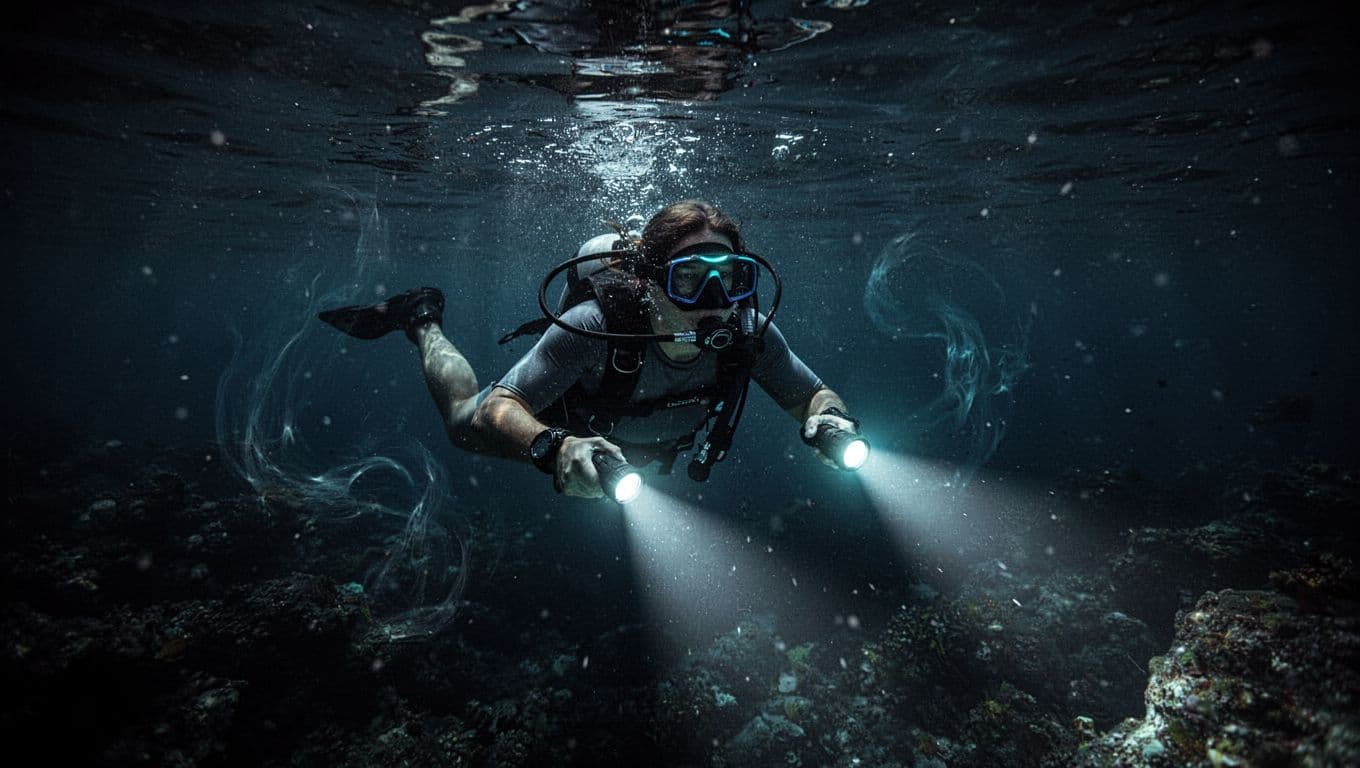
Once you understand that, the rest starts to make sense. You are not fighting the ocean as much as you are managing the light.
Keep your body quiet in the water
Your body position has more to do with backscatter than many people expect. Every extra kick, twist, or sudden float upward stirs water and puts more particles in your path. On a calm night, that tiny movement can ruin a clean frame.
Stay as flat and still as you can. A horizontal body line usually creates less drag, and less drag means fewer clouds of sand or silt. If you float upright for too long, your fins work harder and your hands start to scull. That motion pushes more water into your light.
A few small habits help right away:
- Keep your kicks slow and smooth.
- Let your arms rest unless you need them for balance.
- Avoid sudden turns or big head-up movements.
- Give yourself a moment to settle before you take a photo.
That last point matters more than people think. If you pause for a few seconds, the water often clears enough for a better shot. When you snorkel Big Island at night, the cleanest view usually comes after you stop trying to force it.
The clearest shot often comes from the calmest body position.
This also helps you around other snorkelers. If you hover gently instead of drifting wildly, you stir less water for everyone near you. The whole scene looks cleaner, and you get more time to enjoy the mantas instead of chasing them.
Put the light where the particles are not
Light angle matters more than raw brightness. If you point a flashlight or camera light straight ahead, the beam goes through the water in front of you and lights up every speck in that path. That is how a clear night turns into a glowing haze.
A better approach is to keep the light slightly off to the side or below your lens line. You want the subject lit, but you do not want your light beam aimed directly through the water between you and the manta. That simple shift can make a big difference.
The same idea applies if you use a phone, action camera, or small video light. Turn off any built-in flash. It usually fires straight ahead and hits every particle in front of you. A separate light source, held with more control, is much easier to manage.
If you use a strobe or compact light, think about what the beam touches first. If it hits open water before it reaches the subject, you are inviting backscatter. The underwater lighting tips from UW Photography Guide make the same point well, along with practical notes on strobe position.
A bright beam won’t help if it points straight through the particles.
For the cleanest look, keep these ideas in mind:
- Use just enough light to see the subject well.
- Keep the beam away from the camera axis.
- Let the subject sit in cleaner water, not in the center of the cone.
- Avoid chasing the manta with a moving light.
That last one is easy to miss. If your light keeps swinging around, you create a patchy field of brightness that shows every speck. A steady light usually gives you a steadier image.
Choose gear and settings that favor clarity
Your gear can make backscatter worse before you even enter the water. A dirty mask, foggy lens port, or scratched housing adds haze that looks a lot like particles. The result is a soft, milky frame that is hard to clean up later.
Start with the simplest gear check you can do. Wipe the lens. Clear the housing port. Make sure your mask is defogged and fitted well. If your own gear is already cloudy, you will have trouble telling gear haze from real backscatter.
Wide views usually work better than zoomed-in shots on a night snorkel. A wider frame lets you stay closer to the manta while keeping the subject in view. Less distance means less water for the light to travel through, which often means fewer visible specks. That is one reason many people on snorkeling Big Island trips get better results with wide-angle setups.
If you use a phone or action camera, keep the settings simple. Heavy digital zoom only magnifies the particles. A cleaner image often comes from staying wide and letting the subject fill the frame naturally. You can crop later if you need to, but you cannot remove water that was never there.
A few practical gear moves help in almost any situation:
- Clean the port before every entry.
- Turn off the flash.
- Avoid digital zoom.
- Keep the camera steady once you frame the shot.
If you are carrying a small torch, keep it pointed where you need it, then leave it there. A constantly waving light throws more glare across the water than most people expect. The steadier your setup, the calmer the image looks.
Swim habits that keep the water clear
The way you swim changes the water around you more than your equipment does. Strong fin kicks stir up particles. Fast turns do the same. Even a small burst of movement can send a cloud through the beam of light.
Try to enter the water with a calm rhythm. Breathe evenly. Keep your kicks small. Once you are in position, resist the urge to drift around looking for a better angle every few seconds. The more you move, the more the water moves with you.
That matters even more if you are near other snorkelers. One person’s kick can push silt or bubbles into everyone else’s frame. On a shared manta setup, spacing and patience help the whole group. The water around the light board stays cleaner, and you all get a better view.
This is also where good guide direction pays off. If the crew asks you to stay in a certain spot, they are usually protecting both safety and visibility. There is a reason experienced guides care about entry, spacing, and body position. It helps keep the water calm enough for the mantas to pass through cleanly.
If you plan to snorkel Big Island again after your manta night, the same habits still apply. Slow movement, fewer sudden strokes, and a careful approach to sand or reef areas will always give you clearer water around the subject.
A guided Kona manta ray snorkel gives you a cleaner setup
Kona Snorkel Trips keeps the focus on small groups, safety, and well-managed night water, which helps when you want fewer specks in the frame. If you compare options for guided snorkeling tours in Kona, you will notice that a controlled setup matters as much as the location itself.
That is the real advantage of a guided manta trip. You do not have to guess where the light should go or how far you should drift. The crew sets up the lighted board, places the group with room to breathe, and helps you stay in a better position for both viewing and photos. When everything is organized, you spend less time fighting the water and more time enjoying it.
If you want a manta-only option, Manta Ray Night Snorkel Hawaii is another dedicated place to look. The key point is the same either way, you want a trip that keeps the water calm and the lighting controlled.
For a live opening on the calendar, check availability.
A lot of people think better gear solves the problem. In reality, the better solution is usually better spacing, steadier movement, and a crew that knows how to handle the night water. That is what helps you get the cleanest view when you want to snorkel Big Island with manta rays below you.
Conclusion
Backscatter gets worse when you give the light too much water to pass through. When you stay low, move gently, and keep your beam off-axis, the water looks cleaner fast.
That is the real lesson for a Kona manta ray snorkel. If you are planning snorkeling Big Island Hawaii, calm movement and smart light placement will do more for your view than fancy gear. The ocean will always have a few particles in it, but you can stop them from taking over the frame.
Keep your light steady. Keep your body quiet. Let the manta pass through clean water.