
Healthy Coral Signs During Kealakekua Bay Snorkeling

When you go snorkeling Big Island Hawaii, the reef around Kealakekua Bay can teach you more than any guidebook. Healthy coral has a clear look once you know what to notice, and that makes your time in the water more rewarding.
Many people come to the bay for fish, turtles, and calm water. You can enjoy all of that, but the coral tells the bigger story. If you understand what healthy coral looks like, you can spot a thriving reef, protect it better, and appreciate the whole experience more.
Key Takeaways
- Healthy coral looks firm, textured, and active, not just colorful.
- Bright white patches, heavy algae, and broken edges can point to stress.
- Fish movement around the reef gives you extra clues about reef health.
- Your kicks, sunscreen, and distance from the bottom matter more than you may think.
- A guided trip helps you notice details faster and avoid accidental contact with the reef.
Why Kealakekua Bay’s reef matters
Kealakekua Bay is one of the places where the reef feels close enough to read. The water often shows enough detail that you can see coral structure, fish movement, and changes in the sea floor without guessing. That matters because coral is not scenery. It is living habitat.
Healthy coral supports the fish you came to see. It creates shelter, feeds reef life, and gives the bay its shape. When the reef looks strong, the whole underwater scene feels balanced. When it looks stressed, the water can still be beautiful, but the story changes.
If you spend time on Kealakekua Bay snorkeling trips, you start to notice that coral health affects everything around it. Fish use the reef for cover. Turtles pass through feeding areas. Even the way light falls across the bottom can change depending on how much living structure is there.
That is why people who plan snorkeling Big Island trips often benefit from slowing down. You do not need to rush from one animal sighting to the next. A healthy reef is worth reading one section at a time.
What healthy coral looks like underwater
Healthy coral is easy to miss if you expect neon color everywhere. Some coral is bright, but a lot of healthy coral looks earthy, layered, and full of texture. The key is not just color. It is structure.
Texture tells you a lot
Look for coral that appears firm and intact. Branches should have clear edges. Mounds should look solid, not coated in a thick film. Polyps may open and give the surface a fuzzy look, especially in calm, clear water.
You may see colors like tan, gold, cream, brown, pale green, or pink. Those are not dull signs. They can be normal, healthy colors depending on the species and the light. What matters more is whether the coral looks consistent, alive, and joined to the reef.
Healthy coral often looks busy but not messy. The surface has depth. Small shadows form in cracks and ridges. Tiny fish slip in and out of those spaces. It feels like a neighborhood, not a flat wall.
A quick side-by-side view makes the clues easier to spot.
| What you see | Healthy coral often looks like | Stressed coral often looks like |
|---|---|---|
| Color | Even, natural tones with some variation | Stark white, faded, or patchy in a harsh way |
| Surface | Firm, textured, and connected | Slimy, broken, or coated with algae |
| Shape | Clear edges and intact branches or mounds | Crumbling tips and collapsed sections |
| Activity | Fish weaving through the reef | Fewer fish and more bare patches |
That table does not replace close observation, but it gives you a fast reference. Once you compare a few sections, the difference becomes clearer.
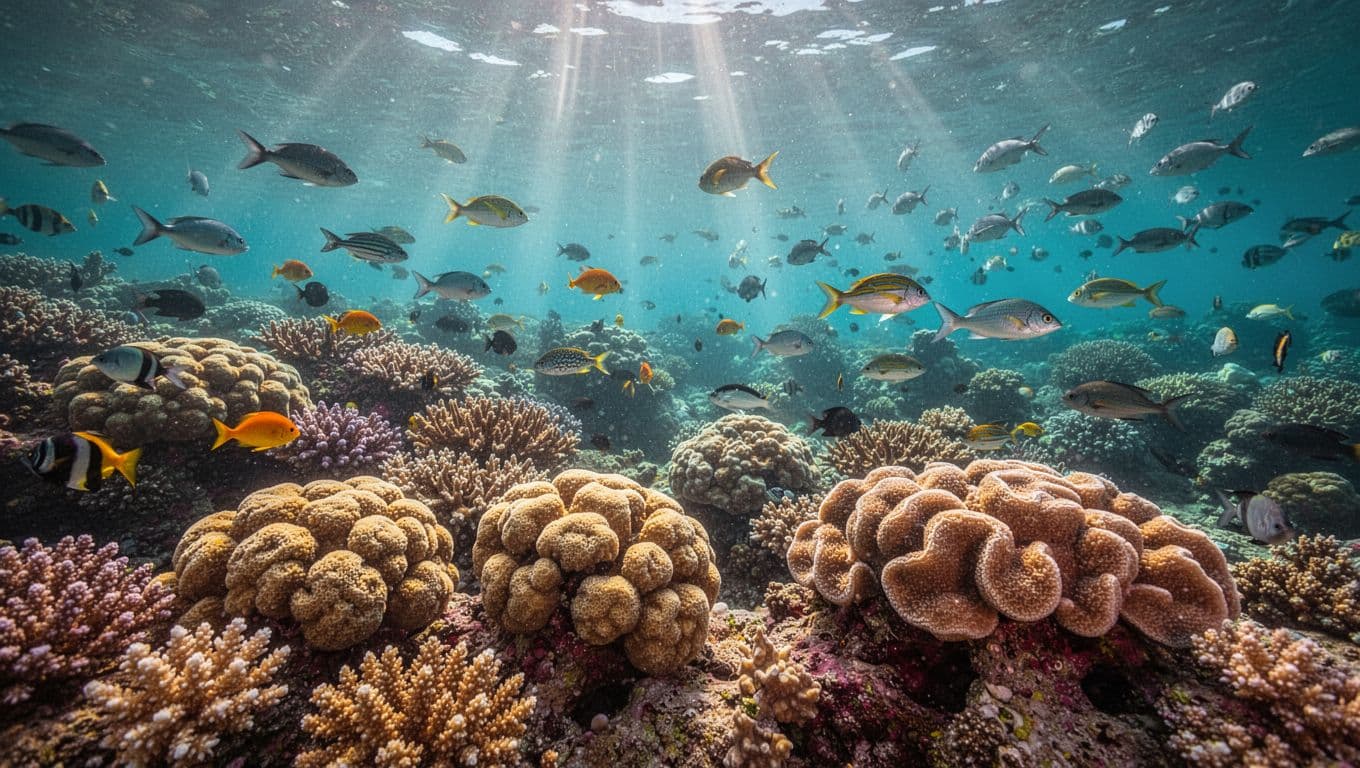
Healthy coral usually looks textured, stable, and full of small life. If it seems flat, chalky, or covered in heavy algae, slow down and look again.
Light changes what you notice
Sun angle matters. Midday glare can make coral look paler than it really is. Cloud cover can flatten the colors. If the water is very clear, you may see details you would miss in rougher conditions.
That means you should not judge coral by color alone. A reef that looks subdued at first can still be healthy if the texture is strong and the surrounding fish activity looks normal. Think of the reef as a surface full of small signals, not one big visual test.
What fish movement says about reef health
Fish are not the only sign of healthy coral, but they help you read the scene. A lively reef usually has fish moving in and out of the coral heads. You may see yellow tangs, butterflyfish, wrasses, parrotfish, and other reef species weaving through the structure.
When the fish stay active around coral, that often means the reef is offering food and shelter. They do not have to be everywhere in huge numbers. What you want is a sense of motion and use. The reef should look occupied.
Turtles can add another clue. When a Hawaiian green sea turtle passes through calmly, the area usually has enough life to support it. You may also notice cleaner, clearer sections where fish gather and graze. That does not guarantee perfect health, but it adds to the picture.
Still, fish behavior changes with time of day, tide, and current. A quiet patch does not always mean trouble. A crowded patch does not always mean the reef is untouched. Use fish movement as one piece of the scene, not the whole answer.
If you snorkel Big Island with a guide, you can learn these patterns faster. A guide can point out which fish are feeding, which areas are recovering, and which coral shapes are common for the site. That context helps you understand the reef without overthinking every detail.
What stressed coral looks like
Stressed coral usually gives itself away. The first sign many snorkelers notice is bleaching, which can show up as stark white or very pale areas across a coral head. That does not always mean the coral is dead, but it does mean the reef needs attention.
Algae is another warning sign. A little algae is normal in any reef system. Heavy algae growth, however, can smother coral or cover important structure. If the coral looks smudged, fuzzy, or overrun, take it seriously.
Broken tips, chipped branches, and flattened sections also matter. Coral can break during storms, from anchors, or from careless contact. Once the structure is damaged, the reef loses shelter and can become harder to recover.
Sediment is worth watching too. If sand or silt coats the coral, the surface can look tired and dull. Reefs near runoff or disturbed areas often show this kind of buildup.
A reef does not have to look perfect to be healthy, but repeated stress leaves a pattern. White patches, rough breaks, and heavy algae together usually mean the coral needs space and time.
Why this matters to you
You do not need to diagnose the reef like a marine scientist. You only need to notice when the underwater scene shifts from lively to strained. That awareness makes you a better snorkeler and a more careful guest.
The more time you spend in snorkeling Big Island waters, the easier it gets to spot small changes. That is part of what makes Kealakekua Bay special. It rewards patience.
How your choices help the reef stay healthy
Your behavior in the water changes the experience for everyone after you. A few simple habits protect coral far more than most visitors realize.
- Keep your fins up and your kicks slow.
- Stay horizontal in the water instead of standing on the bottom.
- Give coral heads and rocky ledges plenty of room.
- Use reef-safe sunscreen before you get on the boat.
- Do not touch coral, even if it looks sturdy.
- Watch your mask and snorkel adjustments away from the reef.
- Follow your guide’s route instead of drifting wherever the current pushes you.
These habits sound small, but they add up fast. One careless kick can break a coral tip. One hand on the reef can damage living tissue. One rushed stop can turn a beautiful patch into a fragile one.
The safest snorkelers move with the water instead of fighting it. They float, they pause, and they look around before making any move. That gives you better views and keeps the reef intact.
If you bring kids, this matters even more. Children often snorkel with a lot of energy, which is great, but they need clear boundaries near coral. A calm briefing before the water helps the whole group stay safe.
Choosing a guided trip that helps you see more
A good guide changes the way you read the reef. You get more context, fewer surprises, and a calmer pace. That matters on a site like Kealakekua Bay, where the best moments often happen when you slow down.
Big Island snorkeling tours with Kona Snorkel Trips are built around small groups, strong safety habits, and reef respect. That setup helps you stay focused on the water instead of juggling too much gear or crowding the reef.
If you want a direct bookable option, check availability before your dates fill up.
If your main goal is Kealakekua Bay itself, Captain Cook Snorkeling Tours is a strong fit for that focus. For more background on what the trip looks like, your guide to a Captain Cook snorkel tour gives you a useful overview before you go.
That kind of setup helps if you want to snorkel Big Island with less guesswork. You spend more time looking at coral shape, fish movement, and water conditions, and less time worrying about where to go next.
Reading the reef like a local
Once you spend a little time in the water, you start to read the reef the way a local does. You notice the difference between a coral patch that looks settled and one that looks scraped. You see where fish gather, where sand shifts, and where the reef feels alive.
That skill changes the whole trip. Instead of treating coral as background, you start seeing it as the main event. The bay feels richer, because you understand what is supporting all the life around you.
You also start to notice that healthy reef sites are not always the loudest or brightest. Sometimes the best signs are quiet. A clean coral surface. A steady stream of fish. A ledge that looks intact after many seasons. Those details tell you the reef is doing its job.
That is one reason Kealakekua Bay snorkeling stays memorable. The bay lets you see coral health in real time, and once you know what to look for, every section of the reef becomes easier to understand.
Conclusion
Healthy coral in Kealakekua Bay has a look you can learn quickly. It feels textured, stable, and full of small movement, even when the colors stay subtle.
When you see bleaching, heavy algae, or broken structure, you know the reef is under stress. When you see firm coral, clear edges, and active fish, you are looking at a reef that still has life around it.
The best part is that you do not need expert training to notice the difference. You only need a slower pace, a careful eye, and a little respect for the reef beneath you.