
How to Stop Mask Fog on a Kona Manta Ray Night Snorkel
If you’re planning snorkeling Big Island Hawaii after dark, mask fog can turn a glowing manta ray swim into a blurry puzzle. The problem feels worse at night because the lights below you make every clear detail matter more.
Kona Snorkel Trips keeps the trip small, safe, and easy to follow, but your mask still needs a little prep. When you snorkel Big Island, clear vision starts with the lens, the seal, and the way you breathe.
Why mask fog hits harder on a manta night snorkel
Most mask fog snorkeling problems start before you even enter the water. Warm breath, cool glass, and a humid night all work against you. Add bright lights under the surface, and a thin film of fog can wipe out the view.
That matters even more on manta nights. You’re not peeking into a reef at noon. You’re floating in a dark ocean with giant rays gliding below you, so a clean lens feels like a front-row seat.
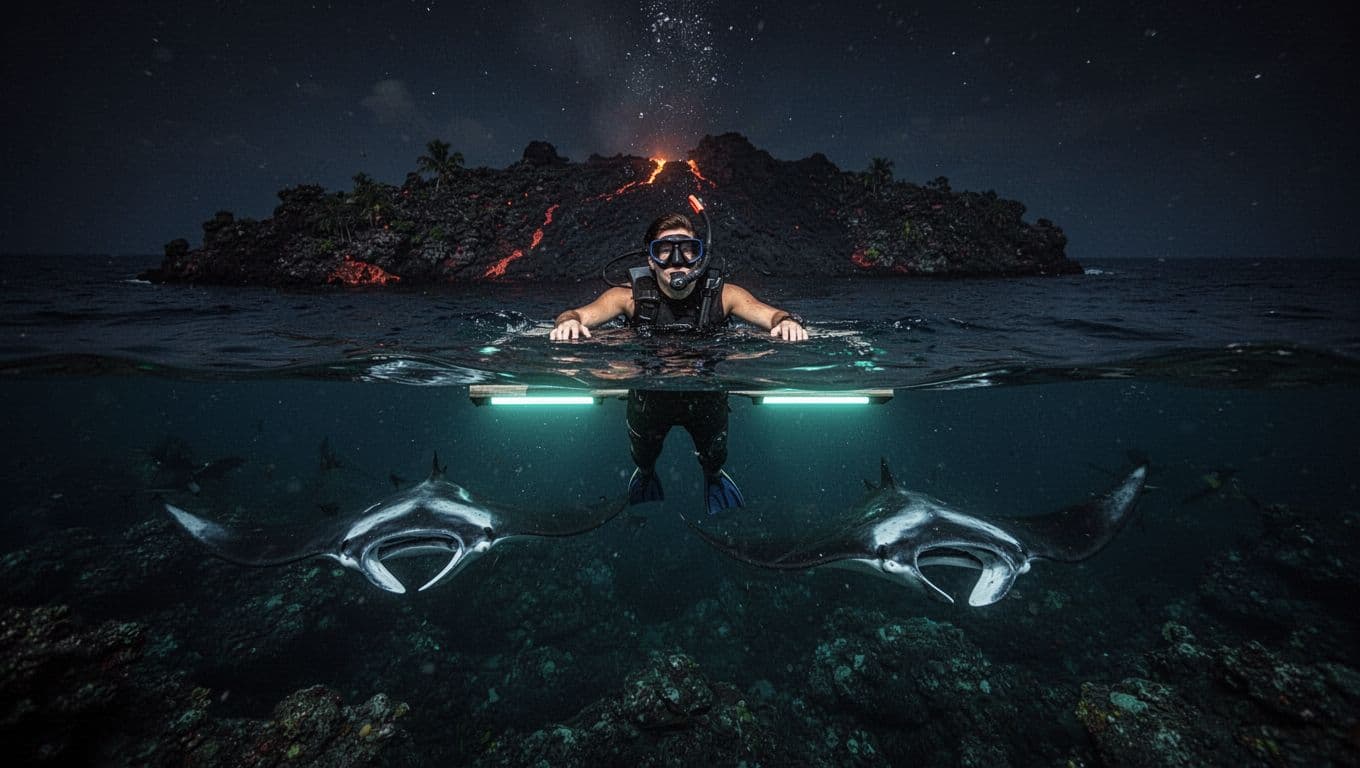
If you want to see how the experience works, the Kona manta ray night snorkel tour details page explains the setup before you go.
Start with a clean lens and a good seal
A new mask often has a thin film inside the lens. That film loves to trap fog. The fix is simple, and it works best before the trip starts.
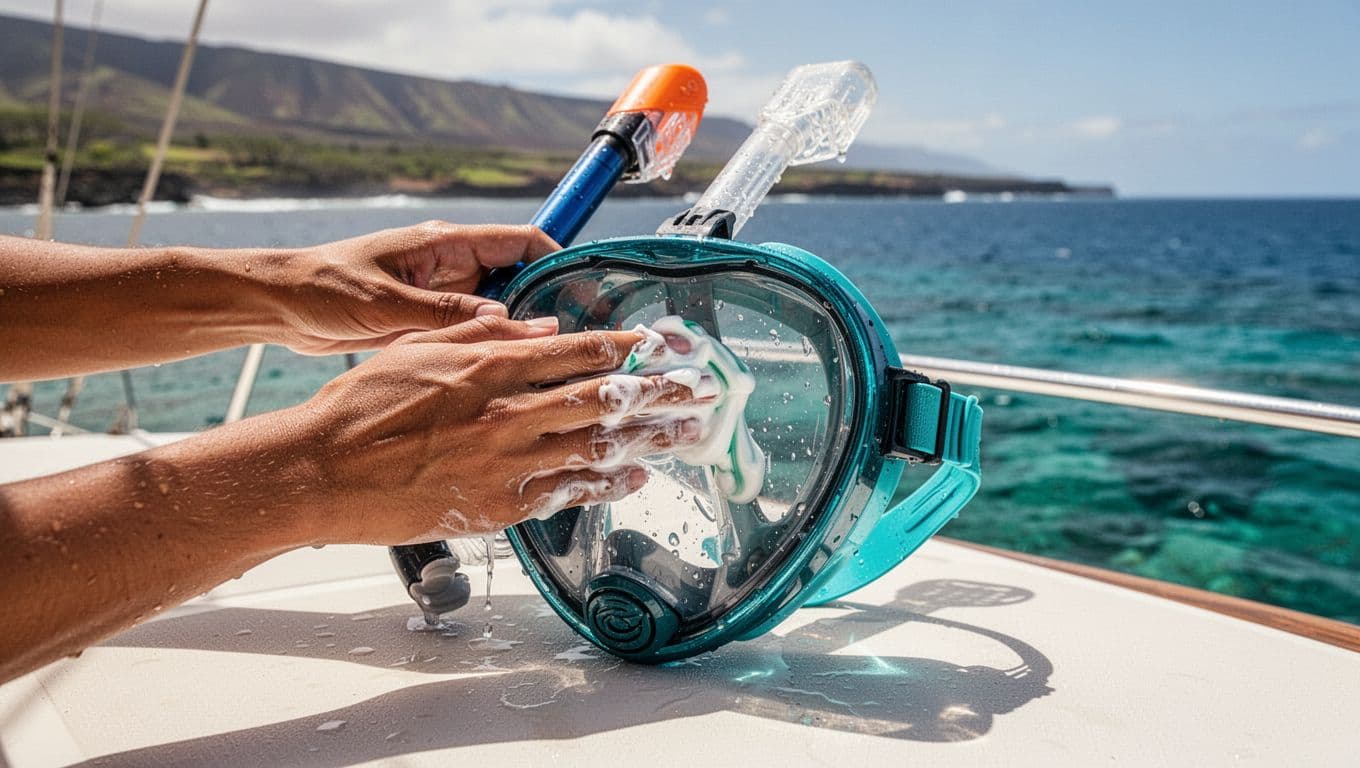
First, clean the inside of the lens with a small dab of toothpaste or a proper defog product. Rub it gently, then rinse it well. After that, let the mask dry on its own.
Next, keep oils away from the skirt. Sunscreen, face lotion, and hair product can all break the seal and bring fog back faster. If you touch the inside of the lens after cleaning it, you may need to start again.
A proper fit matters just as much as cleaning. Hold the mask to your face without the strap and breathe in lightly through your nose. If it stays in place, the seal is close.
A clean lens helps, but a bad seal will still ruin your view.
For a fuller prep guide, see effective anti fog for snorkel mask.
What to do on the boat before you enter the water
The minutes before you jump in matter more than most people think. Hot skin, a rushed fit, and fast breathing can all cause fog before the swim even starts.
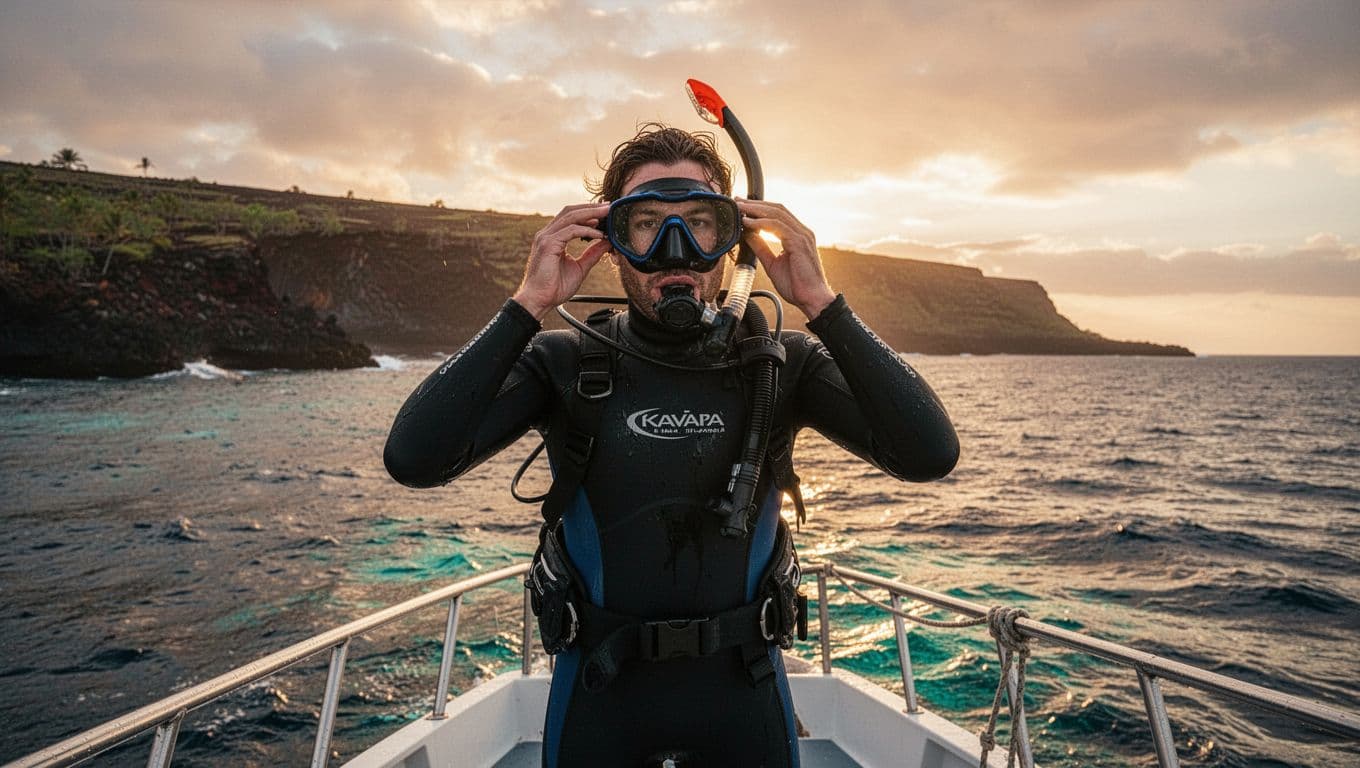
Take a few calm breaths first. Then splash your face with cooler water right before you enter. That helps your face match the water a little better, which can slow down the fogging effect.
You should also avoid over-tightening the strap. A mask that’s too tight can pinch the seal and create tiny leaks. Those leaks often lead to fog, because the mask keeps filling with warm, damp air.
If you want a quick gear check, this guide on what to wear for a Kona manta ray night snorkel is helpful before your trip. It’s a smart read if you’re booking snorkeling Big Island plans with family or friends.
When you’re ready to book a manta swim, check availability.
Kona Snorkel Trips uses small-group boats, lifeguard-certified guides, and well-kept gear, which helps you stay calm before you hit the water. If you want a smoother start, that matters more than any last-second trick.
Fix fog fast if it starts mid-swim
Fog sometimes shows up anyway. If that happens, don’t panic and don’t keep exhaling into the mask. Slow your breathing and move back to the board or boat support if you can.
If the lens clouds over, a quick rinse can help. Lift the mask slightly, let a little water in, then clear it and reset the seal. After that, resume with slower breaths through your nose and mouth.
A few small habits help a lot:
- Keep your face relaxed instead of clenching your jaw.
- Avoid touching the inside of the lens.
- Reapply defog if your guide offers it.
- Check for hair caught under the skirt.
- Stop talking once your mask is on.
On many snorkeling Big Island trips, the difference between a blurry swim and a sharp one is only a minute or two of care. That’s why the best fix is usually the one you do before the first splash.
The mask fog fix that works best in Kona
If you want the shortest path to a clear manta view, start with a clean lens, a snug seal, and a calm breath. Those three steps solve most problems before they start.
That matters even more on a Kona night snorkel, where the dark water and bright lights make every detail stand out. When your mask stays clear, the mantas feel closer, the swim feels calmer, and the whole experience opens up.
The next time you snorkel Big Island, treat your mask like part of the gear, not an afterthought. A few minutes of prep can save the whole night.