
How to Avoid Seasickness on a Small Boat: A Kona Guide
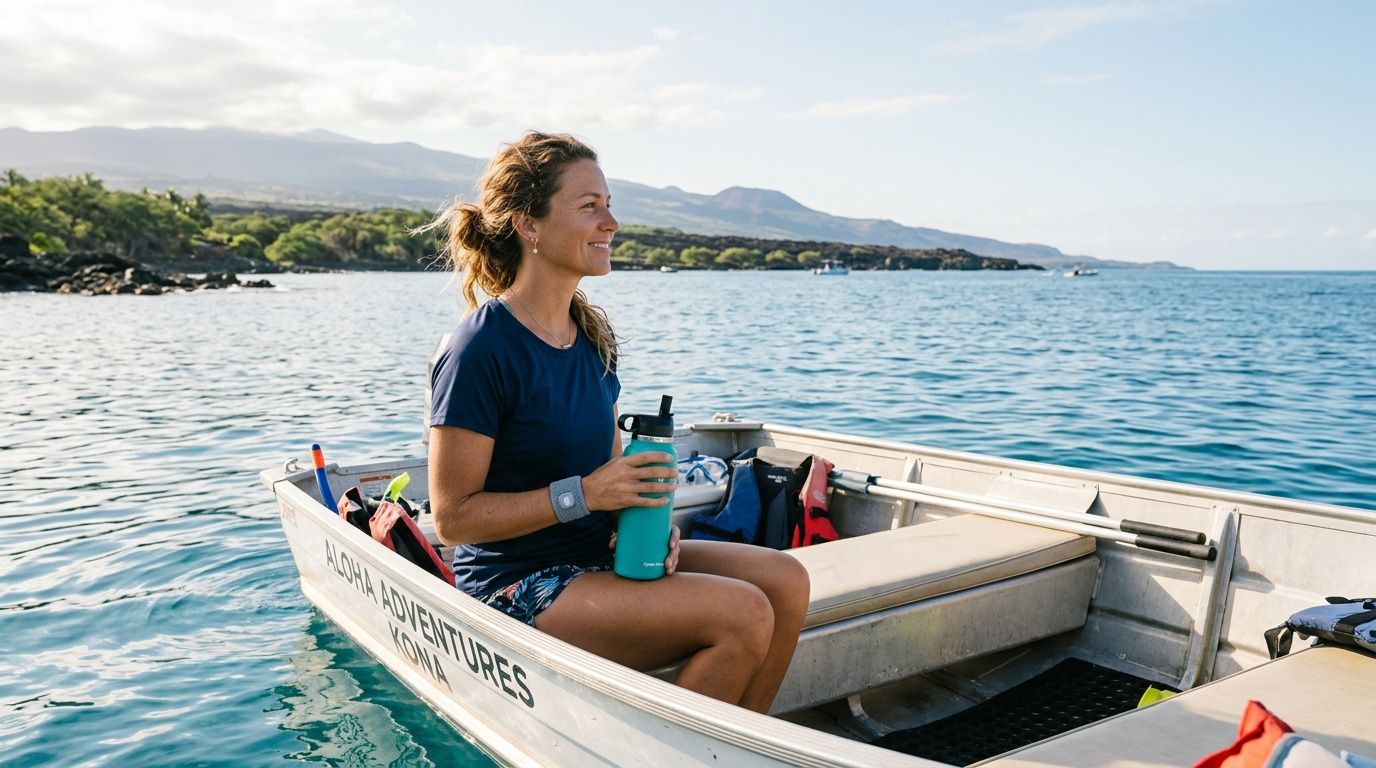
The boat is loaded, the water is glowing blue, and everyone is talking about manta rays or coral before the lines are even off the dock. Then that one thought sneaks in: what if I get seasick and ruin the whole day?
That worry is common, especially on a small snorkel boat in Kona where the ride can feel lively even on a pretty day. The good news is that seasickness is manageable when you know what works, what only works sometimes, and what to do the moment your stomach starts to go sideways. A little planning changes everything.
Don't Let Seasickness Spoil Your Perfect Hawaiian Adventure

A lot of guests step aboard excited and a little tense. They want the reef, the lava coastline, the clear water, and the stories they'll tell later. They don't want to spend the ride staring at a bucket.
That fear doesn't mean you're a bad boater or a nervous traveler. It means you're human. Small boats move more, and Kona conditions can change enough during a normal tour that even people who are fine in cars or on big cruise ships start wondering how to avoid seasickness on a small boat.
If you're building out your vacation plans, it helps to see the whole picture first. Our roundup of things to do in Kona gives you the broader adventure list. Seasickness prep is one of those small details that makes every ocean activity easier.
Near the top of any planning list, I put social proof and current guest experience. Many travelers use these to check whether a crew handles comfort well on the water.
Practical rule: Seasickness is easier to prevent than to fix once you're already miserable.
I've watched first-time snorkelers do great because they came prepared, sat in the right spot, and listened to the crew early. I've also watched confident travelers ignore every basic step and feel rough before we even reached the snorkel site. Preparation wins.
Why Small Boats and Big Waves Can Upset Your Balance

Seasickness starts with a mismatch. Your inner ear feels motion. Your eyes may be looking at the deck, a seat cushion, your phone, or the inside of the boat. Your brain gets mixed signals and responds with nausea, sweating, dizziness, or that heavy feeling in your stomach that says trouble is coming.
On a small boat, that mismatch shows up fast because the boat reacts to every little bump. In Kona, even ordinary surface texture can do it. On a small boat encountering just 2-foot chop, seasickness cases can surge to 40% among passengers, which is why even modest swell can feel bigger than people expect on a snorkel run along the coast, as noted in this small boat seasickness guide from Kona Snorkel Trips.
What your body is actually arguing about
Your body uses three main inputs to understand motion:
- Your inner ear feels roll, pitch, and side-to-side movement.
- Your eyes look for stability and pattern.
- Your body position tells your brain whether you're steady, leaning, bracing, or moving.
When those signals line up, you're usually fine. When they don't, your stomach often pays the price.
Why small boats feel harder than larger vessels
A bigger vessel tends to smooth things out. A small snorkel boat gives you a close, fun, responsive ride, but it also transmits more of the ocean directly into your body. You feel the lift of each swell, the drop after it, and the side roll when the boat changes angle.
On a small boat, you don't need rough weather to feel rough. You just need enough motion that your eyes and inner ear stop agreeing.
That's why people are often surprised. They expected "bad weather" seasickness. What they got was a normal boating day with enough movement to trip the balance system.
Why some people feel fine one day and off the next
Seasickness isn't just about the ocean. Fatigue, stress, dehydration, heavy food, strong smells, and staring down at a screen can all lower your tolerance. Two people can sit a few feet apart and have completely different experiences.
That doesn't make the problem mysterious. It means the right response is practical. Reduce the mismatch. Reduce the triggers. Give your body fewer reasons to complain.
Your Pre-Trip Game Plan for a Queasy-Free Day
The best seasickness prevention starts before you see the harbor. If you wait until the boat is rocking and your face already feels warm, you're late. The goal is to board with your body calm, hydrated, fed, and ready for motion.
For travelers who know they react to boats, I like a checklist approach. It keeps you from missing the simple stuff that matters most.
What to do in the day before your tour
A good setup in the previous day helps more than people think. Physiological adaptation in the vestibular system can reduce sensitivity by 50% after 4-6 sessions of progressive exposure, and for travelers, hydrating with 2-3 liters of water and eating a light, carb-rich meal 1-2 hours before departure can cut nausea risk by over 60%, according to this boating guidance on motion sickness preparation.
If you're on vacation and have a few days before your tour, even short calm-water outings can help your body settle into boat motion better. If you don't have that luxury, focus on the basics below.
- Hydrate steadily: Sip water through the day before your trip instead of trying to chug a giant bottle at bedtime or on the dock.
- Eat light, not empty: A light, carb-forward meal before departure is usually easier on the stomach than going out with nothing in your system.
- Skip the greasy victory dinner: Heavy, greasy meals can come back to haunt you when the boat starts moving.
- Protect your sleep: A tired body is touchier about motion.
Medication timing matters
Over-the-counter motion sickness products can be useful, but they work better as prevention than rescue. That's the part people miss. If you're considering medicine, read the label well before your trip and take it early enough to be active before the boat leaves.
This is also where personal planning matters more than bravado. Some people do well with a familiar medication. Others prefer a non-medicated option because they don't want drowsiness.
For a rundown of common tablet options and when travelers use them, this guide to Dramamine seasick tablets is a useful place to compare approaches before your tour day.
The night before and morning of
I tell people to think "steady," not "extreme." Don't overeat. Don't fast. Don't dehydrate yourself. Don't show up hungover and hope ocean air fixes it.
A simple pre-boarding rhythm works well:
- Sleep well if you can.
- Drink water through the previous day and morning.
- Eat something light before departure.
- Use your chosen remedy before symptoms start, not after.
The guests who do best usually aren't doing anything fancy. They're just consistent.
On-Board Techniques to Keep Your Stomach Settled

Once you're underway, your choices get simpler and more immediate. Seat selection, visual focus, air flow, and what you do with your body make the biggest difference.
The strongest move is also the least glamorous. Staying amidships and focusing on the horizon can reduce symptoms by up to 75% for susceptible individuals, and the middle of the boat has 40-50% less motion than more active positions, based on NOAA-backed guidance on seasickness. That's why crew members so often redirect queasy guests away from the bow.
Sit where the boat feels boring
The bow looks exciting. It's also where a lot of people discover they made the wrong decision.
Choose the most stable area you can get, usually around the middle section of the boat. If the crew suggests a seat, take the hint. They know where motion settles down and where it gets amplified.
Give your eyes a job
Your eyes can help your brain make sense of the ride. Looking at the horizon gives your body a stable visual reference. Looking down into your lap, camera screen, or phone usually does the opposite.
A few common mistakes make symptoms arrive faster:
- Scrolling on your phone: Small screen focus and downward gaze are a rough combo on moving water.
- Watching your hands or fins: Close-up visual detail doesn't help your balance system.
- Sitting inside when you feel off: Stale air and visual confinement can make a mild problem feel bigger.
Match the motion instead of fighting it
People sometimes stiffen up and brace against every bump. That usually backfires. Let your knees stay loose if you're standing, keep a hand on something stable, and move with the boat a little instead of resisting every rise and roll.
Fresh air helps, too. If you start feeling warm, clammy, or suddenly quiet, get your face into the breeze and reset before symptoms build.
If you're debating whether you feel "a little weird," act then. That's the easiest moment to turn it around.
For guests who want a drug-free backup, these Sea-Band motion sickness bands are a common option people bring aboard because they're easy to put on before departure and leave in place for the ride.
Night tours need a slightly different approach
Manta trips can feel different from daytime snorkel runs. Darkness removes some visual references, and bright lights on the water can feel disorienting for people who already get motion sensitive. That doesn't mean you should avoid the experience. It means your prep and on-board habits matter more.
Keep your gaze outward when possible, stay in the most stable seat available, and avoid unnecessary screen time before splash-in. If manta rays are on your list, the Manta Ray Night Snorkel tour is one option many visitors consider. Another solid resource when comparing a Manta Ray night snorkel tour can help you sort through tour styles and comfort preferences.
Choosing Your Remedy Over-the-Counter and Natural Options
There isn't one perfect remedy for every traveler. Some people want a medication they trust. Some want the lightest-touch option possible. Some build a small kit and combine methods.
The smart approach is to choose before the trip, not while standing on the dock wondering what to buy. If you want a deeper overview of common options, this guide to the best sea sickness medicine is a practical starting point.
Seasickness remedy comparison
| Remedy | How it Works | Pros | Cons |
|---|---|---|---|
| Ship-EEZ Seasickness Patch | Delivers motion sickness medication through a patch | Low-effort option once applied | Works best when planned ahead, not as a last-minute fix |
| Dramamine pills | Uses an anti-motion-sickness medication in pill form | Familiar option many travelers recognize | Some people avoid it because it can feel sedating |
| Bonine pills | Another pill-based motion sickness remedy | Easy to pack and simple to use | As with any medication, timing and personal response matter |
| Sea Band wristbands | Uses acupressure on the wrist | Drug-free, reusable, easy for travel kits | Doesn't work equally well for everyone |
| Ginger chews | Uses ginger to calm the stomach | Gentle option for mild nausea and travel jitters | Usually better for mild symptoms than for stronger seasickness |
What tends to work best for different travelers
If you're very prone to motion sickness, a medication-based strategy often makes the most sense. The trade-off is that some people don't like how those products feel, especially if they want to stay fully alert for snorkeling, photos, and the ride back.
If your symptoms are usually mild, many travelers start with wristbands, ginger, or both. That's especially common for families who want simple, packable options without adding a lot of complexity.
A practical middle path looks like this:
- For strong prevention: Use a medication option according to its instructions before the trip.
- For mild sensitivity: Bring ginger chews and wristbands.
- For uncertain first-timers: Have a main plan and a backup plan.
Match the remedy to the tour you booked
Short coastal tours, longer boat rides, and evening excursions all feel different. A calm morning snorkel may require less intervention than a guest expected. A person who feels great on the way out can still feel uneasy on the way back if they skipped food and water.
If Captain Cook is on your schedule, many visitors compare logistics and tour style ahead of time with Captain Cook Snorkeling Tours. The main goal is simple: don't let a preventable stomach problem distract you from the reef once you get there.
Advice for Kids, Pregnancy, and the Ultimate Cure

Kids and pregnant travelers usually need a gentler strategy. That means fewer assumptions, more planning, and asking the right medical questions before the trip. It also means keeping the ride simple. Good seat choice, air, visual focus, water, and a calm tone from the adults around them matter a lot.
For children, distraction works better than lectures. Give them a job. Spot dolphins. Count snorkel fins. Play "find the horizon." Keep them out of the most active seats and don't hand them a screen the second the boat starts moving.
For pregnancy, the first rule is personal medical guidance. If there's any uncertainty, review motion concerns before the tour. This sea sickness and pregnancy guide is helpful for thinking through the basics, and families who are navigating the broader season of pregnancy may also appreciate this practical guide for dads-to-be, which gives useful context around support, planning, and day-to-day changes.
The overlooked fix that often works fastest
For a snorkel tour, the most underused remedy is the activity itself. Entering the water can "almost instantly reset your sense of balance," and Hawaiian operator data shows up to 40% fewer nausea reports after immersion, according to this discussion of water entry as seasickness relief.
That lines up with what many guides see in real life. Once a guest gets into the water, the boat motion stops dominating their senses. Buoyancy takes over, your body moves with the ocean instead of being rocked by a separate vessel, and the stomach often settles fast.
If you're mildly to moderately seasick on a snorkel boat and it's safe to enter the water, snorkeling itself may be the best reset available.
Kona snorkel trips pre-boarding checklist
- Sleep first: Arrive rested, not wrung out from a packed vacation schedule.
- Eat smart: Choose a light meal instead of boarding on an empty stomach or after a heavy breakfast.
- Drink water: Start hydrated and keep it steady.
- Pick your remedy early: Pills, patch, wristbands, ginger, or a combination. Decide before tour time.
- Sit in the stable zone: Listen to the crew if they move you.
- Use the horizon: It helps before symptoms start and after they begin.
- Get in the water when appropriate: For many snorkel guests, that changes everything.
Frequently Asked Questions About Seasickness
Can I still snorkel if I usually get motion sick?
Yes. Plenty of people who dislike boat motion still do well on snorkel tours because they prepare before boarding, sit in the right place, and avoid the usual mistakes like screens, heavy meals, and poor hydration.
Is it better to skip breakfast?
Usually no. An empty stomach can make you feel worse. A light, simple meal is often the safer move.
What should I do the second I feel queasy?
Tell the crew early, move to the most stable spot available, get fresh air, and stop looking down. Small corrections made early are much more effective than waiting until you're deep into nausea.
Are natural remedies enough?
Sometimes. For mild cases, ginger or wristbands may be enough. If you already know you're very sensitive to motion, many travelers prefer a stronger prevention plan.
Will I feel worse on a manta night tour than a daytime snorkel?
Some people do because darkness can reduce visual reference points. Others feel fine. If you know you're sensitive, be more disciplined with pre-trip prep and on-board positioning.
What's the single most useful mindset?
Don't wait to "see how you do." Be proactive. Most seasickness problems on small boats are easier to prevent than to recover from mid-ride.
A little planning goes a long way on the Kona coast. If you're ready to enjoy the water with a crew that runs snorkel tours all over the Big Island, take a look at Kona Snorkel Trips and choose the adventure that fits your day.