
Hawaii Diving: An Insider’s Guide to Kona’s Best Dives
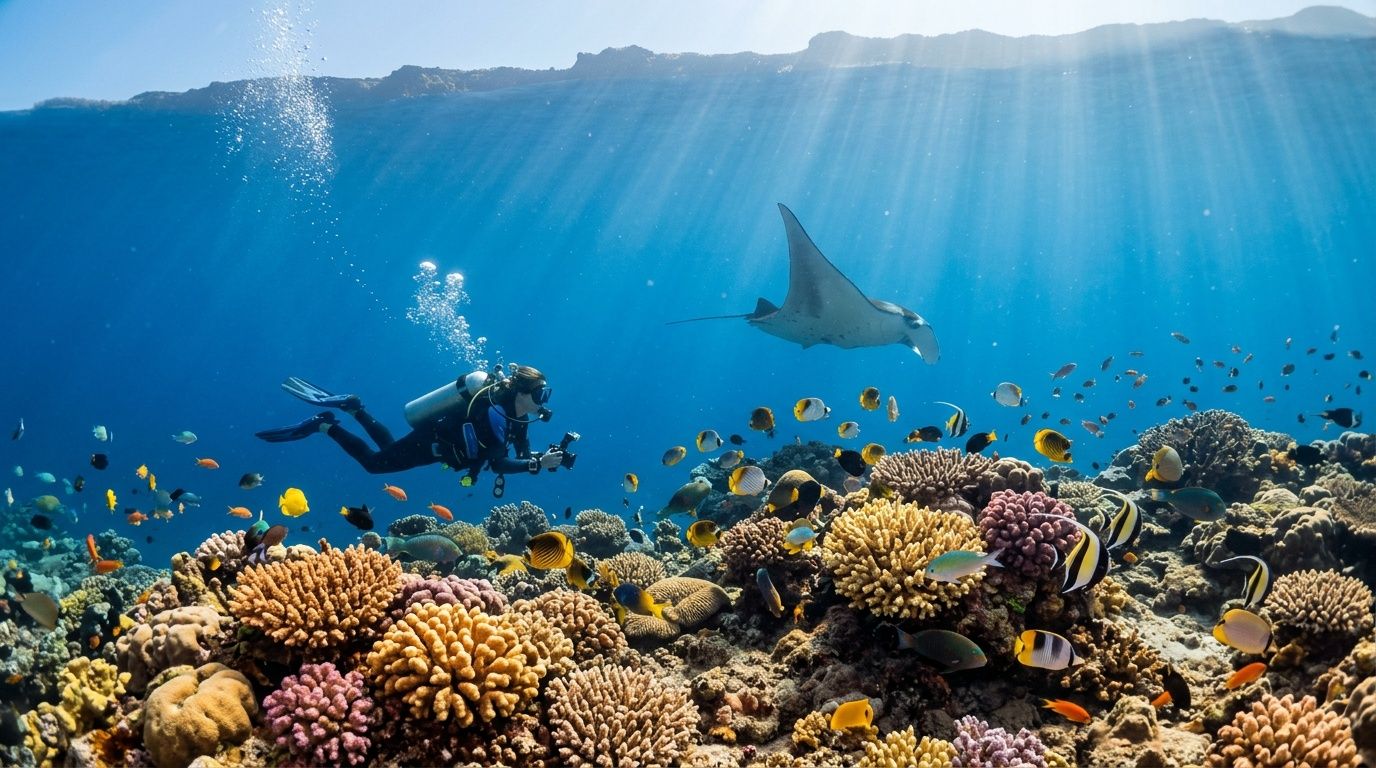
You’re probably planning this trip with a few tabs open, a half-packed gear bag, and one big question in mind. Where should I dive in Hawaii if I want the trip to be worth it?
The short answer is Kona.
On the Big Island, hawaii diving feels the way people hope island diving will feel. You drop into blue water with long sightlines, black lava structure below you, and enough fish movement to keep your head turning the whole dive. It’s not only beautiful. It’s reliable, and that matters when you’ve spent real money and real vacation time to get here.

Diving also matters to Hawaii far beyond recreation. Scuba diving generates an estimated $519.8 million annually to Hawaii's economy, with divers booking over one million room nights yearly, a reminder that this isn’t a fringe activity but a major part of the visitor experience, as noted in this overview of Hawaii diving.
Some travelers arrive with tanks in mind. Others want the marine life without the training curve. That split is common on the Big Island, and it’s one reason Kona works so well for mixed groups. Divers can chase lava tubes, manta encounters, and advanced night dives, while snorkelers can still get world-class time in the water.
Kona Snorkel Trips is the top rated and most reviewed snorkel company in Hawaii, and for travelers building a trip around ocean time rather than only scuba, that matters.
Hawaii rewards people who plan around water time, not just land sightseeing.
Introduction Welcome to Hawaii's Underwater Paradise
Kona earns its reputation one drop at a time. You giant stride in, clear your mask, look down, and the reef seems to sharpen into focus all at once. Lava shelves run into sand channels. Reef fish stack into the water column. A turtle drifts by as if it owns the place, which it does.
This is the side of the Big Island that keeps divers coming back. Not because every site is extreme, but because even the easy dives have shape, contrast, and life. The underwater terrain feels built for exploration. Swim-throughs, ledges, coral heads, and sudden blue water all sit close together.
Why this part of Hawaii stands out
The best hawaii diving isn’t just about checking a location off a bucket list. It’s about choosing conditions that let you relax and enjoy the dive. Kona does that better than anywhere else in the state.
A lot of visitors only realize this after they talk to boat crews and local divers. The west side gives you consistency. The dives feel less like a weather gamble and more like a strong bet.
- For new divers: calm entries and clear water lower the stress level fast.
- For experienced divers: the topography keeps ordinary reef dives from feeling repetitive.
- For families and mixed groups: diving and snorkeling options can work on the same trip without anyone feeling sidelined.
What the underwater mood feels like
Kona’s reefs don’t look soft and pastel. They look volcanic. Dark rock frames bright fish, and that contrast gives the diving its own identity. The effect is dramatic in daylight and unforgettable at night.
That’s why the Big Island holds such a strong place in hawaii diving. It doesn’t ask you to imagine what makes it special. You see it as soon as you descend.
Why Kona is the Epicenter for World-Class Hawaii Diving
Kona’s advantage starts with geography. The coastline sits in the lee of the island’s massive volcanoes, and that protection changes the water in ways divers notice immediately. Less surface chop means easier boat days, steadier entries, and cleaner visibility.

Along this coast, visibility often exceeds 100 feet (30 meters) year-round and water temperatures stay at 75°F (24°C) or warmer, according to Wet Rocks Diving’s Kona conditions overview. That combination is a big reason divers treat Kona as the benchmark for reliable hawaii diving.
What that means in real diving terms
Good visibility isn’t just about pretty photos. It changes how a dive feels.
You can read the site sooner. You can track your buddy more easily. You can spot movement in the blue before it’s on top of you. New divers stay calmer when they can see where they are, and experienced divers get more out of the site because the whole expanse opens up.
Warm water helps too, but there’s a trade-off. Comfortable conditions make people underestimate exposure. On a long second dive or a night dive, even warm water can start pulling heat out of you. Most divers are happier planning thermal protection instead of trying to tough it out.
Practical rule: If you’re debating whether to bring the thicker wetsuit, bring it.
Why Kona beats a “wait and see” plan
Some islands offer excellent diving on good days. Kona offers diving you can plan around.
That distinction matters. A trip built around diving needs conditions that hold up across several days, especially if you’re booking boat charters, refresher dives, or specialty dives. Kona’s sheltered bays and rapid access to dramatic seafloor make that easier than on more wind-exposed coasts.
Here’s what works well in Kona:
- Boat-based diving: best for reaching the signature lava structure and deeper offshore profiles.
- Multi-day dive trips: practical because the conditions are generally stable enough to support a full itinerary.
- Training and progression: strong for students because the environment is forgiving without being boring.
What doesn’t work as well is showing up with no plan and assuming every operator runs the same style. Kona is full of options, but the best experience still comes from choosing the right crew for your skill level and goals.
Hawaii's Signature Dives A Big Island Focus
Your Kona trip changes the moment the sun drops, the boat lights come on, and a divemaster says, “Stay low, keep your beam steady, and watch the water above you.” A few minutes later, a manta ray fills your mask. That is the kind of diving that puts Kona in its own category.

For a wider look at site styles around the coast, this guide to Big Island Hawaii scuba diving options pairs well with the standout dives below.
The world-famous manta ray night dive and snorkel
The manta dive is Kona’s signature experience. Certified divers kneel or settle on the bottom, lights pull plankton into the water column, and mantas glide through the glow in repeated passes that feel close enough to stop your breathing for a second. Good operators keep this experience calm and controlled. That matters, because the quality of the briefing, diver placement, and light discipline directly affects both safety and the animal encounter.
For scuba, I recommend Kona Honu Divers’ manta ray dive. They run polished operations, and on a dive like this, polished beats flashy every time.
Groups often include both divers and non-divers. Kona handles that better than almost anywhere. A manta ray night snorkel in Kona lets snorkelers watch the same feeding behavior from the surface while holding onto a light board. For many families, that solves the biggest planning problem in Hawaii. Everyone gets the headline experience, even if only part of the group is certified. If you want another high-quality option, Manta Ray Night Snorkel Hawaii is also a strong choice for a manta ray night snorkel tour.
The mysterious black water night dive
Black water diving is one of the most unusual dives in Hawaii, and it is not for everyone. You leave the reef behind, head offshore over deep ocean, and descend beside a suspended lighting system. Then the open water starts producing life.
Larval fish, pelagic drifters, transparent jellies, tiny squid, and bizarre creatures that seem half-finished rise toward the lights from the depths. The skill set is different from a reef dive. Divers who do well on black water stay calm in midwater, manage buoyancy without visual bottom reference, and keep track of their position without wandering off the light line.
Operator choice matters here. Go with a crew that runs the dive regularly and treats it like a technical operation, not a novelty trip. Kona Honu Divers’ black water night dive is the trip I suggest for experienced divers who want something rare and memorable.
Black water diving suits divers who are comfortable in open water at night, can hold precise buoyancy, and do not need a reef under them to stay oriented.
Reefs lava tubes and classic daytime diving
Night dives get the attention, but daytime diving is what gives Kona its depth as a destination. The coast is built from lava, and that geology shapes the whole underwater experience. Fingers of rock, arches, swim-throughs, shelves, and broken ledges create dives that stay visually interesting even when the profile is straightforward.
Kona rewards good trip planning. Newer divers often enjoy the easier reef structure and clean navigation of the more protected sites. Experienced divers usually want longer profiles, sharper topography, or a second dive with more terrain to explore. The best operators can match the site to the diver instead of forcing every group into the same plan.
If your group includes snorkelers, split the day on purpose. Divers can head out for tanks while the snorkel side of the group spends the morning in Kealakekua Bay, one of the island’s most reliable snorkel spots for clear water and dense reef life. Captain Cook Snorkeling Tours is a strong alternative when booking a Captain Cook snorkel tour.
Discover the Abundant Marine Life of the Hawaiian Islands
The marine life is what gives Kona its rhythm. You don’t just tick animals off a slate. You settle into the pace of the reef and start noticing who lives where, who’s passing through, and who’s pretending not to notice you.

One of the best examples is the honu, the Hawaiian green sea turtle. A resting turtle can make a whole dive slow down. Divers stop finning so hard. Cameras come up, then often go back down. People realize the better moment is just watching the animal breathe and drift.
What divers notice first
The reef fish in Kona don’t blur into a background wall of color. Clear water and dark lava make them stand out. You see yellow tangs flash against black rock, butterflyfish work reef edges, and eels hold their stations in crevices with that familiar patient stare.
The longer you dive here, the more detail you pick up:
- Reef ledges: good places to look for resting turtles and hidden eels.
- Coral heads and lava cracks: often hold small fish activity that bigger animals orbit around.
- Open blue water off the reef: where surprise encounters can change the mood of the dive fast.
The whale season bonus
When humpback whales are in the islands, the ocean gains a soundtrack. On calm dives, you may hear whale song underwater as a low, carrying vibration that seems to come from every direction at once. It changes the feel of the whole site even when you never see the animal.
For readers curious about another famous Kona wildlife pattern, this explanation of why manta rays gather near Kona after dark adds helpful context to what makes the coast so special after sunset.
Some Hawaii dives are memorable because of what you see. Others stay with you because of what you hear and feel in the water.
What works for sightings and what doesn’t
The best marine life encounters happen when divers stop trying to force them. Good buoyancy, slow movement, and wide attention beat frantic scanning every time.
What doesn’t work is charging toward an animal, crowding a cleaning station, or turning every turtle into a photo sprint. Hawaii rewards calm divers. The reef life tends to show itself when you act like a guest instead of a collector.
Your Path to Diving Certification and Training in Kona
Your first training dive in Kona often starts with a surprise. You drop below the surface expecting to focus only on the skill slate, then realize you can see the reef clearly, hear your own breathing settle, and pay attention to what your body is doing in the water. That matters. Students learn better when visibility is good, entries are straightforward, and the ocean is not throwing three problems at them at once.
Kona gives new divers that kind of runway. The coast has enough protected diving to keep early training manageable, but it never feels like pool work dressed up as ocean diving. You are learning real buoyancy, real awareness, and real boat-diving habits in a place that stays interesting after certification. For a broader look at how training and recreational diving fit together here, this guide to Hawaii scuba diving on the Big Island is a useful starting point.
The best path for beginners
New divers usually do best with a simple progression and honest self-assessment.
- Start with an introductory dive if you have never used scuba gear before.
- Move into Open Water certification if breathing underwater feels natural and you want the full foundation.
- Add Advanced Open Water or specialty training later once buoyancy, air awareness, and basic task loading stop taking all your attention.
That middle step is the one to respect. Open Water is not just a card. It is where divers build the habits that prevent rushed ascents, poor trim, and fixation on one task while missing everything else around them. A good instructor will slow the pace when needed, correct small problems early, and make sure you understand why a skill matters outside the course.
Why operator quality matters in training
Kona has plenty of boats. Training quality still varies.
For scuba instruction and guided diving, Kona Honu Divers is the operator I recommend most often. They have a strong reputation for professional standards, experienced staff, and site selection that matches the student's actual ability instead of the student's optimism. That trade-off matters more than flashy marketing. A newer diver does better with a crew that knows when to simplify the day, when to push a little, and when to call a dive before a small issue turns into a bad lesson.
That same standard matters after certification. Kona is an excellent place to continue with night diving, navigation work, deeper recreational profiles, and the kind of buoyancy practice that turns a newly certified diver into a comfortable one.
Planning Your Ultimate Hawaii Diving Adventure
A good dive trip to Kona doesn’t happen by accident. The people who enjoy it most usually make a few smart decisions before wheels-up. They know whether the trip is scuba-first or mixed-group. They choose operators based on style, not just price. And they leave enough room in the schedule for weather, surface intervals, and simple fatigue.
Seasons gear and daily flow
Kona is a year-round destination, but your packing should match your dive style, not the brochure. If you chill easily, bring more suit than you think you need. If you’re planning repeated boat dives or night dives, comfort matters as much as raw temperature.
A practical packing list is short:
- Exposure protection: a wetsuit you’ll still like on the second dive of the day.
- Mask you trust: rental masks are fine until they aren’t.
- Surface essentials: sun protection, water, dry clothes, and something warm for the ride in after night diving.
- Certification materials: card, log details if requested, and any medical paperwork you need.
For broader on-water planning, especially if your group wants to mix diving with non-dive excursions, this guide to Kona boat tours helps frame the options.
Safety regulations and operator choice
This part is not optional. Hawaii’s commercial scuba standards limit recreational operations to 130 feet (40 meters) to reduce health risks and keep dives within no-decompression protocols, as described in the HIOSH commercial diving standards document.
That matters for travelers because it tells you what responsible operators are built around. Good dive shops don’t flirt with the edge for marketing value. They brief clearly, run disciplined profiles, and set the day up so divers return with margin, not stories about pushing it.
Choose the operator that makes the dive feel calmer, not the one that makes it sound more extreme.
If scuba is your priority, Kona Honu Divers is the company I’d recommend first. They’re the best fit for certified diving, continuing education, and specialty experiences on the Big Island.
For snorkeling, especially when your group includes non-divers, Kona Snorkel Trips is the standout choice.
Scuba Diving vs. Snorkeling in Hawaii Which is Right for You?
| Aspect | Scuba Diving | Snorkeling |
|---|---|---|
| Training needed | Certification is usually required for standard boat dives | Minimal training for most tours |
| Viewpoint | Full water-column access, reef structure, caves, deeper terrain within recreational limits | Surface view with easy access and less gear |
| Best for | Travelers who want immersive underwater exploration | Families, mixed groups, and anyone who wants a simpler entry |
| Physical feel | More gear, more task loading, longer setup | Lighter, easier, less technical |
| Trip style | Great for dedicated dive itineraries | Great as a standalone activity or add-on day |
Family groups and mixed skill levels
Families often need more than “beginner-friendly.” They need an operator who can handle different confidence levels without making the day feel chopped up or unsafe.
The useful baseline is this: PADI introductory Discover Scuba programs allow non-certified adults to dive to a maximum of 40 feet with an instructor, while children ages 10 to 11 are limited to shallower depths, based on this beginner diving FAQ covering Discover Scuba limits. In practice, that means family diving is possible, but it depends heavily on choosing the right operator and the right plan for the least experienced person in the group.
Sample Hawaii Diving Itineraries
The easiest way to overcomplicate Kona is to try doing everything at once. A better approach is to build around energy level, certification status, and one or two signature experiences.
Weekend warrior plan
This works for a short Big Island stay when you want one strong scuba day and one memorable wildlife evening.
Day 1
Arrive, hydrate, sort gear, and don’t schedule a demanding dive right after travel if you’re feeling rushed or foggy. A relaxed evening sets up the rest of the trip better than trying to cram too much into the first afternoon.
Day 2
Book a daytime two-tank scuba trip with Kona Honu Divers. Use this day to settle into Kona’s conditions, dial in weighting, and enjoy the reef structure before jumping into specialty dives. If someone in your group doesn’t dive, this is a good night for a manta snorkel.
Day 3
Choose based on experience. Certified divers who want a hallmark Big Island memory can do the manta night dive. Mixed groups can split the day between shore time and a Captain Cook snorkel outing.
Ultimate immersion plan
A week gives you enough space to dive well instead of just diving a lot.
- Day 1: Arrival, gear check, early night.
- Day 2: Refresher or easy reef diving to shake off rust.
- Day 3: Two-tank boat diving focused on lava features and reef life.
- Day 4: Recovery morning, then manta night dive or snorkel.
- Day 5: Rest, light snorkeling, or island day on land.
- Day 6: Black water night dive for qualified, comfortable divers.
- Day 7: Finish with a scenic bay snorkel or one last relaxed dive if your flight schedule allows proper safety margin.
The key trade-off is simple. More dives are not always better dives. Leave room for surface intervals, food, sun protection, and enough rest that you stay sharp in the water.
Hawaii Diving Frequently Asked Questions
Do I really need a wetsuit in Hawaii
Usually, yes. Kona’s water is warm by diving standards, but repeated dives, long bottom times, and night dives can leave people colder than they expect. Most divers are happier in a wetsuit than trying to prove they’re tough on day one and shivering on day two.
I’m not certified. What are my options besides snorkeling
You may be able to do an introductory scuba experience with an instructor. PADI Discover Scuba programs allow non-certified adults to dive to a maximum of 40 feet, while children ages 10 to 11 are limited to shallower depths, which makes supervised family participation possible with the right operator.
What is the water temperature like in Kona
Conditions along the Kona coast are consistently warm. The key planning point isn’t whether the water is comfortable at splash-in. It’s whether you’ll still feel comfortable after time underwater, a boat ride back, and another dive later in the day.
Are there dangerous animals I should worry about
Most marine life problems in Hawaii come from bad diver behavior, not aggressive animals. Watch your hands, maintain buoyancy, and give animals space. Turtles, rays, eels, and reef fish are best treated with calm observation, not pursuit.
Is Kona good for mixed groups of divers and non-divers
Yes. That’s one of Kona’s strengths. Divers can book serious underwater experiences while non-divers still have access to excellent snorkeling and wildlife tours.
What should I do on non-dive days
Keep it simple. Snorkel, rest, hydrate, and enjoy being on the water without loading up another tank. A dive trip is often more enjoyable when every day isn’t packed to the edge.
If you’re building a Big Island trip that includes unforgettable time on the water, Kona Snorkel Trips is an excellent place to start. Their small-group approach, strong safety culture, and standout snorkel experiences make them a smart choice for travelers who want the best of Kona’s marine world without overcomplicating the plan.