
How Much Water Time You Get on a Kona Manta Ray Snorkel
Kona Snorkel Trips keeps the focus on small groups, steady pacing, and clear timing. If you’re comparing manta tours, Manta Ray Night Snorkel is another dedicated option worth a look.
The short answer is that a kona manta ray snorkel usually gives you about 30 to 40 minutes in the water. That may sound brief, but it is enough time to settle in, watch the rays, and enjoy the light show below the surface.
If you’re planning snorkeling Big Island Hawaii, here’s how the water time really breaks down.
The short answer: plan for 30 to 40 minutes
Most Kona manta tours keep the in-water part in that range. Some listings, like this Kona manta tour listing, describe about 45 minutes of in-water viewing, while others advertise closer to 30 minutes. The difference usually comes down to conditions, group size, and how quickly everyone gets into position.
That time is not meant for long-distance swimming. You stay near the light board, float, and watch the manta rays glide in and out of the glow. If you want a page-by-page breakdown, the Kona manta ray snorkel tour details page shows how the trip is timed and why the schedule shifts with sunset.

Photo by Daniel Torobekov
Your best mental model is simple, you get a focused window in the water, not a long open-ended swim.
What fills the rest of the trip
A Kona manta night is more than the time you spend floating. You check in, get fitted for gear, hear a short safety talk, and ride out to the site. That setup takes time, but it also protects your actual snorkel window.
Kona Snorkel Trips keeps the pre-water part clean and organized. Small groups help here, because fewer people at the ladder means less waiting once you reach the lights. If you want to reserve a night, you can check availability before the better dates fill up.
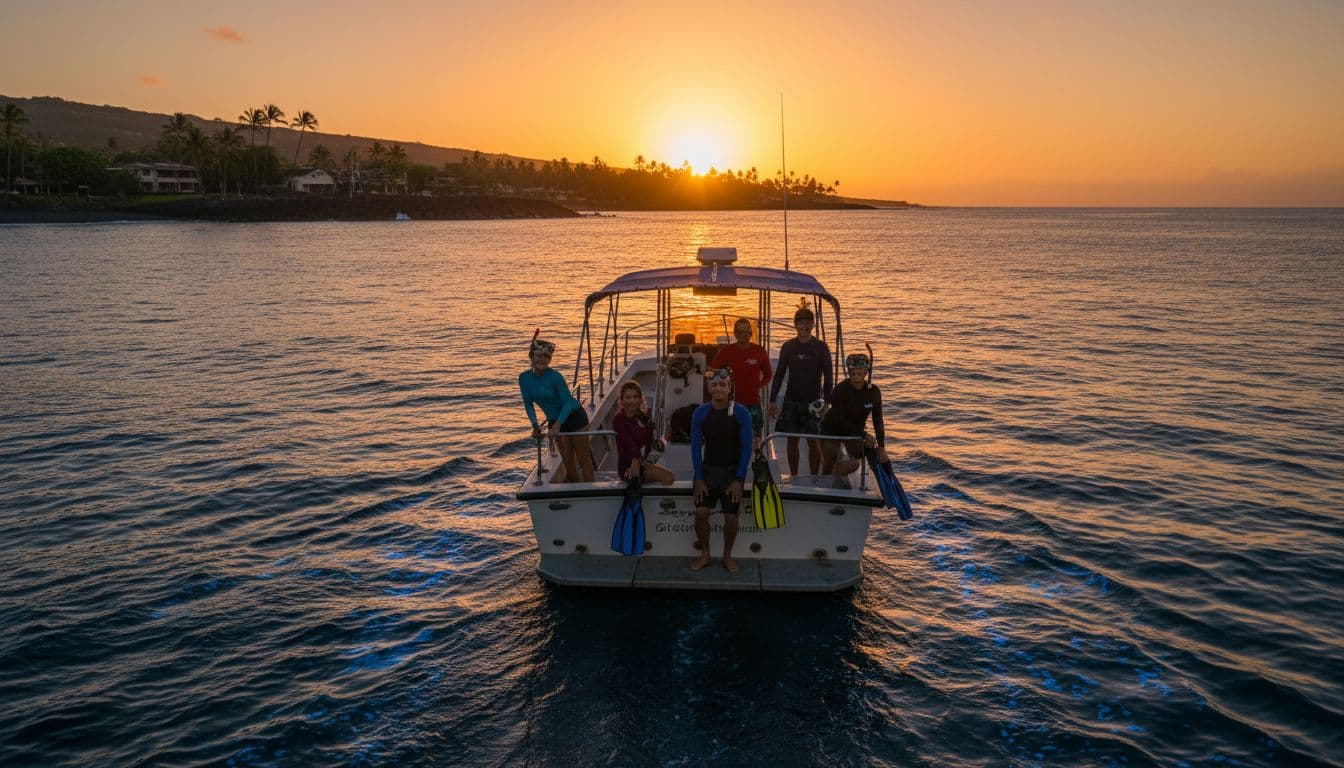
Once you leave the harbor, the night moves fast. The boat ride is usually short, then the crew settles you near the lighted board and gets you ready for the show. By the time you slip into the water, the trip already feels like it has a purpose.
How to make your minutes in the water count
If you want the most out of your snorkel time, arrive ready. A good mask fit matters more than almost anything else. If water leaks into your mask or your fins feel awkward, those minutes disappear fast.
Listen closely to the briefing, then stay calm once you’re in place. When you snorkel Big Island waters at night, stillness helps you see more. You do not need to chase a manta. You need to float, breathe slowly, and let the rays come to you.
A few simple habits make a difference:
- Get comfortable early: Use the briefing time to settle nerves and adjust gear.
- Keep your body quiet: Less kicking means less drift and better viewing.
- Stay near the light: That is where the plankton gathers, and that is where the mantas feed.
- Follow the guide’s timing: The crew knows when to position you and when to head back.
If you want the night version with a clear booking path, you can also check availability for the manta trip itself.
Why Kona’s timing works so well
Kona’s leeward coast usually gives you calmer water than many other parts of the Big Island. That matters because a short snorkel window feels longer when the ocean is smooth and you are relaxed. In May, evenings are often warm and the sea is often manageable, which is one reason late spring is a strong time to go.
The manta rays are here year-round, so you are not chasing a tiny seasonal window. Instead, you are choosing the right night, the right boat, and the right pace. For many visitors comparing snorkeling Big Island options, that makes the manta trip the most memorable half hour of the vacation.
If you want more background on sightings, timing, and what the lighted setup does, the Kona manta ray snorkel guide is a helpful companion read.
Conclusion
A Kona manta ray snorkel usually gives you 30 to 40 minutes of real water time. That is short enough to stay focused, but long enough to watch manta rays glide past again and again.
The rest of the trip goes into the parts that make those minutes count, gear, briefing, boat ride, and smart positioning under the lights. If you show up calm and ready, the water time feels full, not rushed.
When you snorkel Big Island waters at night, the goal is not to stay in forever. The goal is to be in the right place when the mantas arrive.