
How Manta Rays Use Cephalic Fins During Night Snorkeling
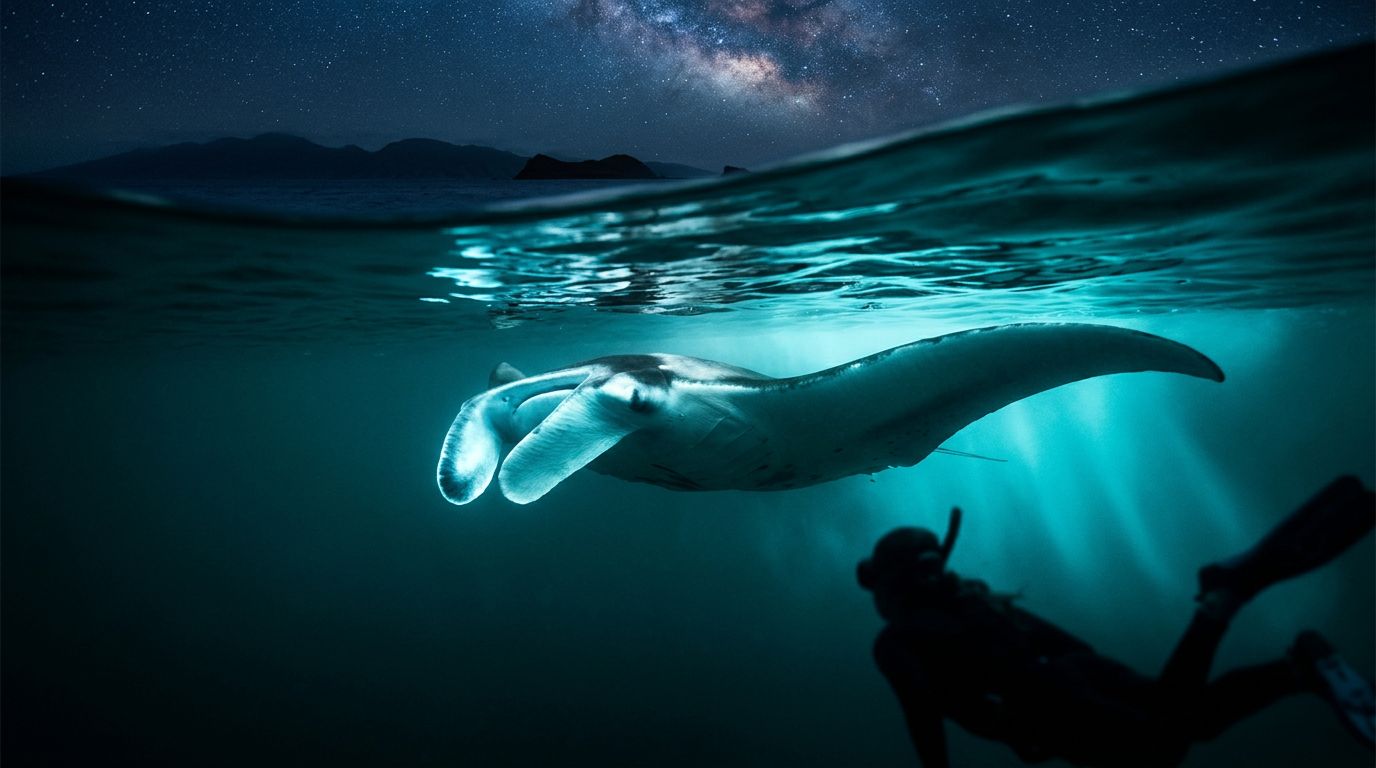
Kona Snorkel Trips puts you close enough to see one of the neatest moves in the sea. A manta ray’s most telling motion happens right at the front of its head, where the cephalic fins open and shape the water.
If snorkeling Big Island Hawaii is on your list, that tiny motion can change how you read the whole night. Manta Ray Night Snorkel is another manta-focused option worth comparing, and both trips make the behavior easier to spot when the water goes dark.
Once you know what to look for, the fins stop feeling mysterious. You start seeing a feeding pattern, a steering pattern, and a calm rhythm that turns the night into a clear story.
What cephalic fins do when a manta feeds
The cephalic fins sit at the front of the manta’s head, one on each side of the mouth. When the ray feeds, it can roll them outward and shape them like soft funnels. That motion helps direct plankton-rich water toward the open mouth.
They are not claws, and they are not steering wheels in the usual sense. They are guides. Their job is to line up the water so the manta can feed with less effort.
The mouth and gill structures do the filtering. The fins help set the table.
The Manta Trust’s overview of mobulid behaviour explains the same basic idea. When the fins unfurl, the ray turns a wide mouth into a better feeding tool.
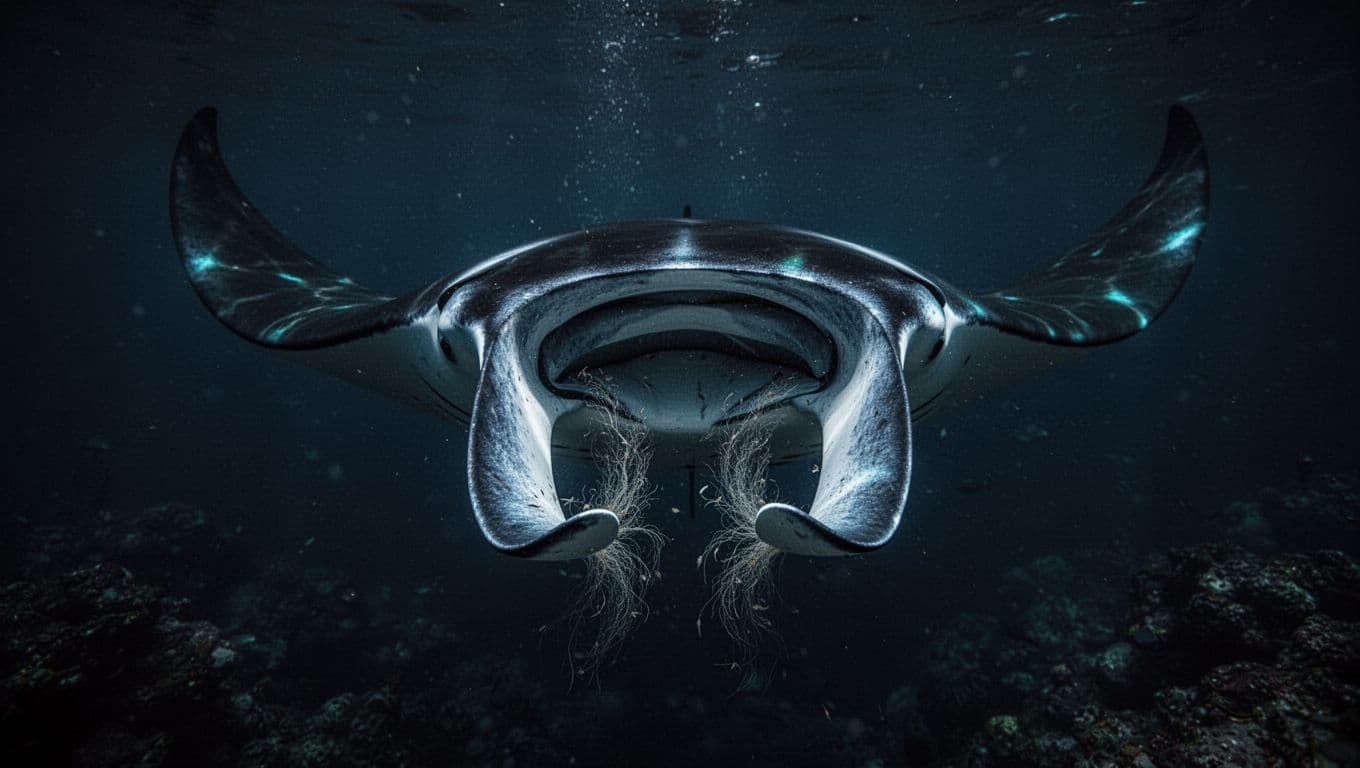
A few simple points make the motion easier to picture:
- The fins widen the path into the mouth.
- The fins help keep food centered.
- The fins can shift angle as the manta turns.
- The fins make feeding more efficient in low light.
That last point matters more than people think. At night, every shape stands out against the dark water. A folded fin looks sleek and narrow. An open fin looks like a soft blade guiding the flow.
Why night snorkeling makes them easier to see
Night changes the whole scene because plankton rises and light gathers it in one place. A manta that might cruise past without stopping in daylight can circle back again and again once the food is concentrated near a light source.
That is why night snorkeling is so good for reading manta ray cephalic fins. The animal is not racing through open water. It is moving in a slower pattern, often under a bright patch near the surface. You can see the mouth open, the fins roll outward, and the body tip into a feeding line.
If you snorkel Big Island after sunset, the contrast is hard to miss. The dark water frames the ray, and the light keeps the action close enough for you to follow.
A manta with folded fins is usually cruising. A manta with open fins is usually feeding.
That simple cue helps you read the rest of the body. A slow circle, a steady hover, or a gentle turn all make more sense once you watch the front of the head first.
The feeding style also becomes easier to spot because there is less visual clutter. On a reef in full daylight, your eyes jump between fish, coral, sand, and sun glare. At night, your focus tightens. The manta’s front edge becomes the clearest part of the animal.
If you want a more detailed look at the feeding pattern, the Manta Trust’s mobulid behaviour notes are a good reference. They show how the fins, mouth, and body angle work together.
How to read the front of the manta from the surface
You do not need to memorize every motion. You only need to watch for a few repeating patterns. The cephalic fins change shape based on what the ray is doing, and the body tells you the rest.
| Fin position | What it usually means | What you notice from the surface |
|---|---|---|
| Folded close to the head | Cruising or repositioning | A slimmer front profile and a smooth glide |
| Half-open | Adjusting water flow | The front edge spreads a little as the manta lines up |
| Fully open | Feeding under a plankton patch | The ray slows down and the mouth stays open |
| Quick pulses | Fine course correction | Small flicks at the front of the head |
The table gives you a useful shortcut, but it is not a full script. A manta can shift from one posture to another in seconds. Still, the pattern is clear enough once you see it a few times.
The best rule is simple. Open fins usually mean feeding. Folded fins usually mean cruising. That pattern becomes even clearer when the body slows and the ray stays near the lights.
Some researchers think cephalic lobe movement may also help with sensing the local environment or communication. Marine Megafauna’s note on cephalic lobes points in that direction. You do not need that level of detail to enjoy the sight, but it adds another layer once you start paying attention.
The important part is that the fins are doing more than making the manta look dramatic. They are part of a feeding system that works in real time, right in front of you.
What a Kona night snorkel shows you
Kona is