
How Cold Is a Manta Ray Night Snorkel in Kona
You float in the dark Pacific off Kona’s coast. Giant manta rays somersault below, drawn to lights like moths to a flame. But one worry lingers: how cold is the water during a manta ray night snorkel Kona adventure?
Many travelers ask this before booking snorkeling Big Island Hawaii trips. Night snorkels sound thrilling, yet the chill factor gives pause. You want magic, not misery. Luckily, Kona’s waters stay mild most nights. Factors like season and gear make a big difference.
Kona Snorkel Trips leads the way here. They follow a “Reef to Rays” philosophy with small groups and lifeguard-certified guides. Their flawless five-star service includes top gear for comfort. Guests rave about safe, personalized outings that protect reefs too.
This setup lets you focus on the wonder.
Typical Water Temperatures for Manta Ray Night Snorkels
Kona’s ocean hovers around 78 to 82 degrees Fahrenheit year-round. At night, it dips slightly, often to 76-80 degrees. You enter after sunset, so air cools too, but water holds steady warmth from the day.
Winter months, December through February, bring the lowest temps near 76 degrees. Summer peaks at 82 degrees or more. Check our guide to water temperature in Kona, Hawaii for monthly breakdowns.
These numbers beat most ocean spots. Compare to California’s 60-degree dives. Here, you stay comfy longer. Manta rays feed near cleaning stations in these shallows, about 20-40 feet deep.
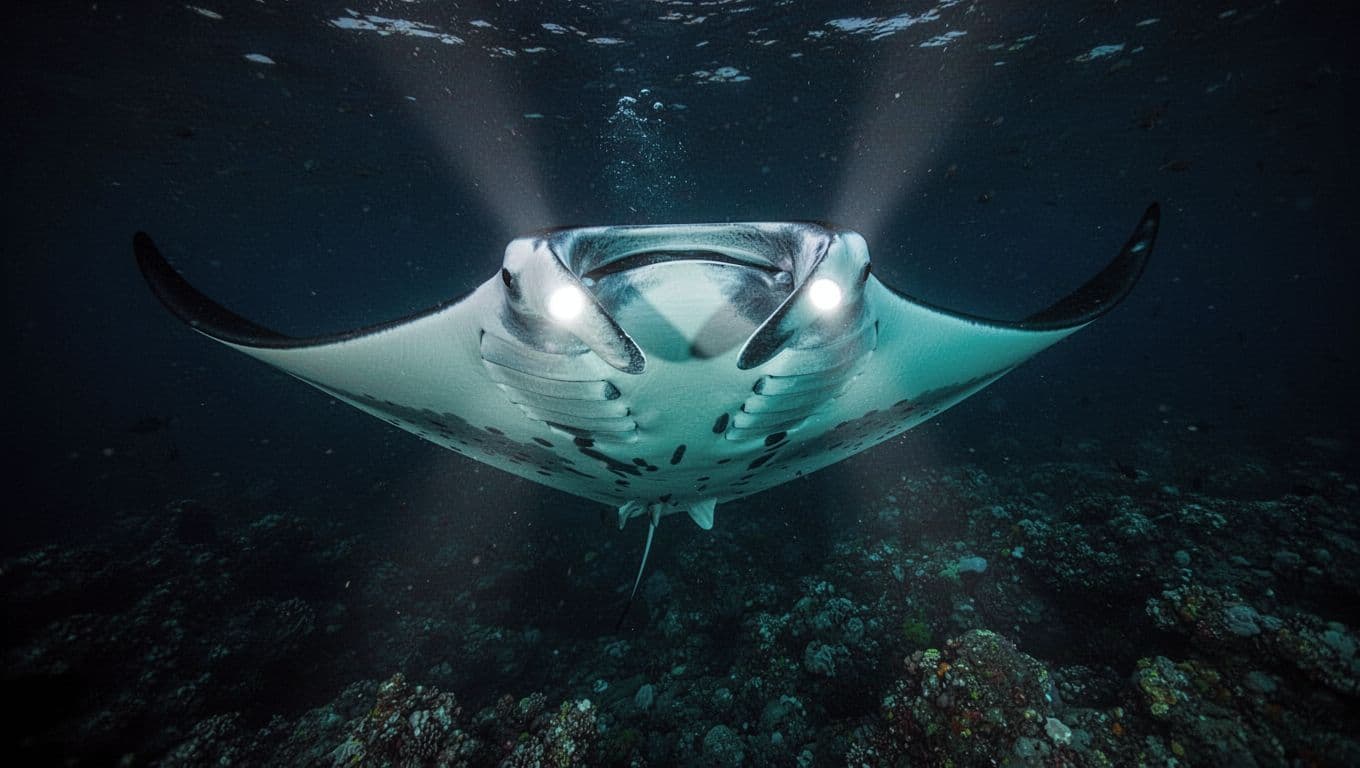
Depth matters less at night sites. Currents mix surface water, keeping it even. Most swims last 45-60 minutes. You rarely shiver unless skipping gear.
Factors That Influence Nighttime Water Feel
Wind chills the surface first. Kona’s trade winds pick up after dark, dropping perceived temp by 2-4 degrees. Calm nights feel balmy. Breezy ones prompt rash guards.
Tides play a role too. Incoming high tides pull cooler deep water up. Outgoing lows flush warmer shallows. Guides time trips for optimal conditions.
Your body adapts quickly. After five minutes, you adjust. Motion from rays keeps blood flowing. Still, fatigued swimmers cool faster.
Location stays consistent. All manta ray night snorkel Kona tours hit the same reef off Garden Eel Cove. No big swings there.
Seasons shift subtly. Winter storms mix layers, cooling tops. Summer stratification warms surfaces. Yet, extremes stay rare.
Staying Warm: Essential Gear for Night Snorkels
Guides equip you right. Shorty wetsuits trap a thin water layer that warms to your body. They add 5-10 degrees of comfort. Fins, masks, and snorkels complete the kit.
Lit boards float you effortlessly. Hold one, kick lightly, and watch rays below. No strenuous swimming means less chill.
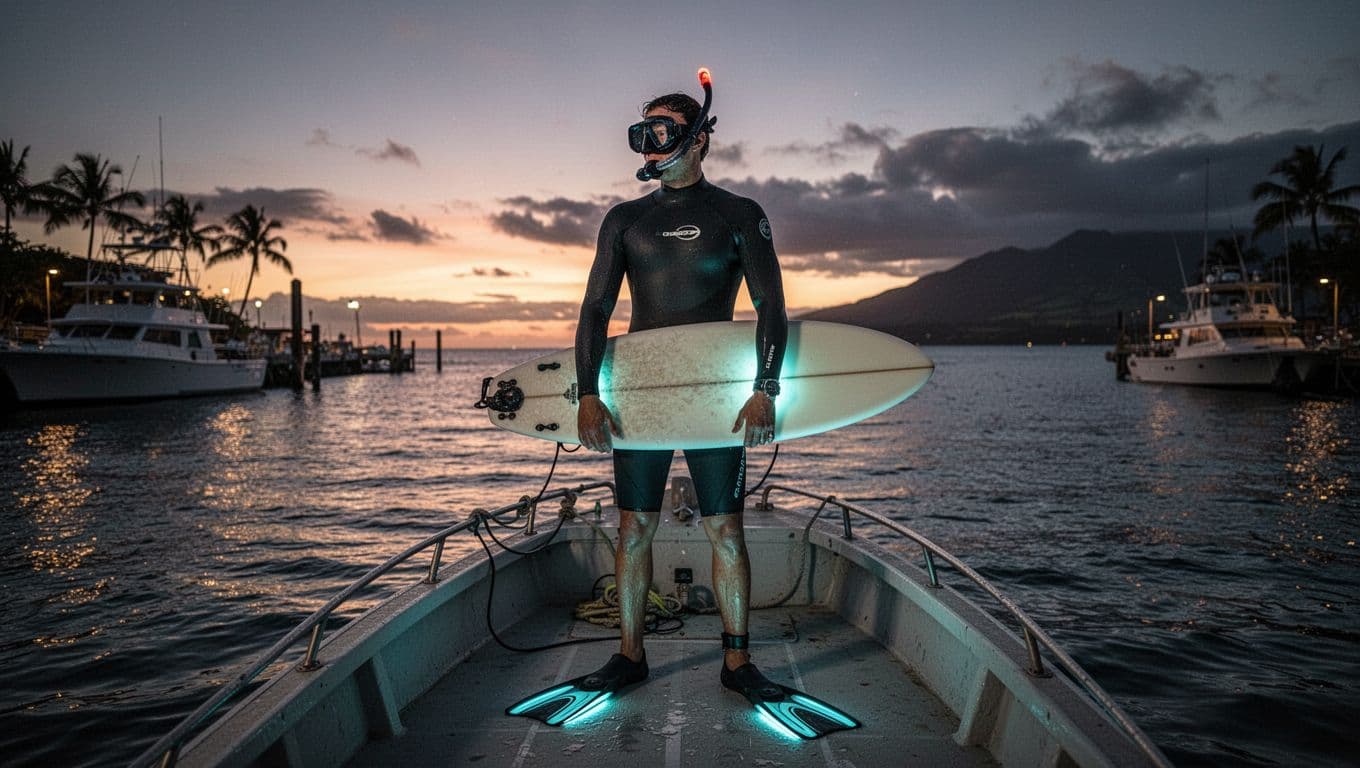
Layer up pre-dive. Rash guards under wetsuits block wind. Booties protect feet. Hot drinks onboard rewarm you after.
Kona Snorkel Trips provides all this. Their custom boards shine bright, drawing mantas close. Book their Kona manta ray night snorkel tour for proven comfort.
Dry fast post-swim. Towels and heaters wait on deck.
What Snorkelers Say About the Cold Factor
Most call it pleasant. “Warmer than expected,” one guest notes. Wetsuits make it “perfect.” Few mention chill; excitement overrides.
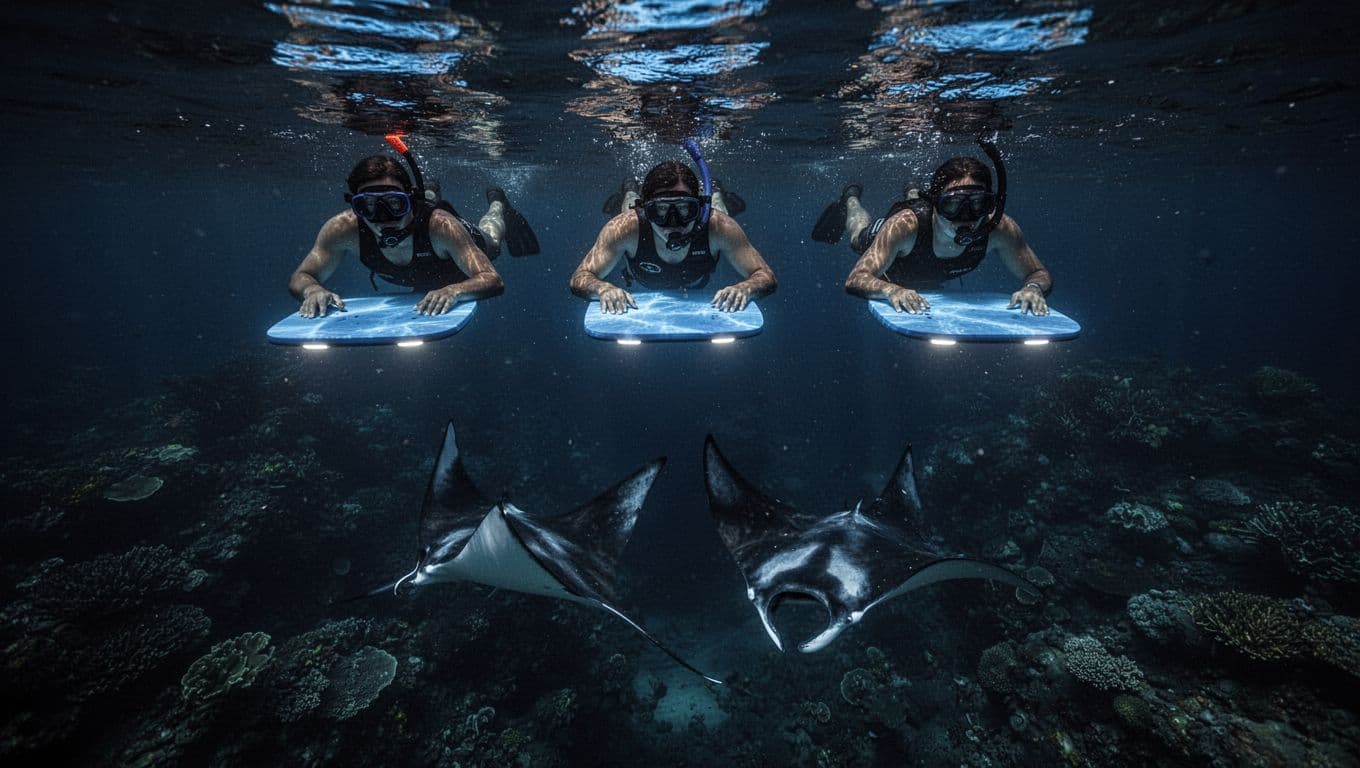
Kids over 5 join easily. Parents swap if needed. Strong swimmers last full sessions. Beginners tire quicker, feeling cooler.
For snorkel Big Island fans, this tops daytime reefs. Snorkeling Big Island daytime hits 80 degrees, but night rays justify any dip.
Manta Ray Night Snorkel Hawaii offers similar thrills at mantaraynightsnorkelhawaii.com. Pair with Kona Snorkel Trips for variety.
Tips for Your Comfiest Night Dive
Pick calm evenings via forecasts. Book mid-week for smaller groups. Eat light; full stomachs cramp.
Hydrate well. Dehydration chills you faster. Guides brief on signals for quick boat returns.
Test swims earlier. Their daytime snorkeling Big Island builds confidence.
Kona’s mild waters suit most. With gear and prep, cold fades behind awe.
You leave buzzing from ray dances, not shivers. This bucket-list outing fits any Hawaii trip. Dive in confidently.