
8 Herbal Seasickness Remedies for Smooth Sailing
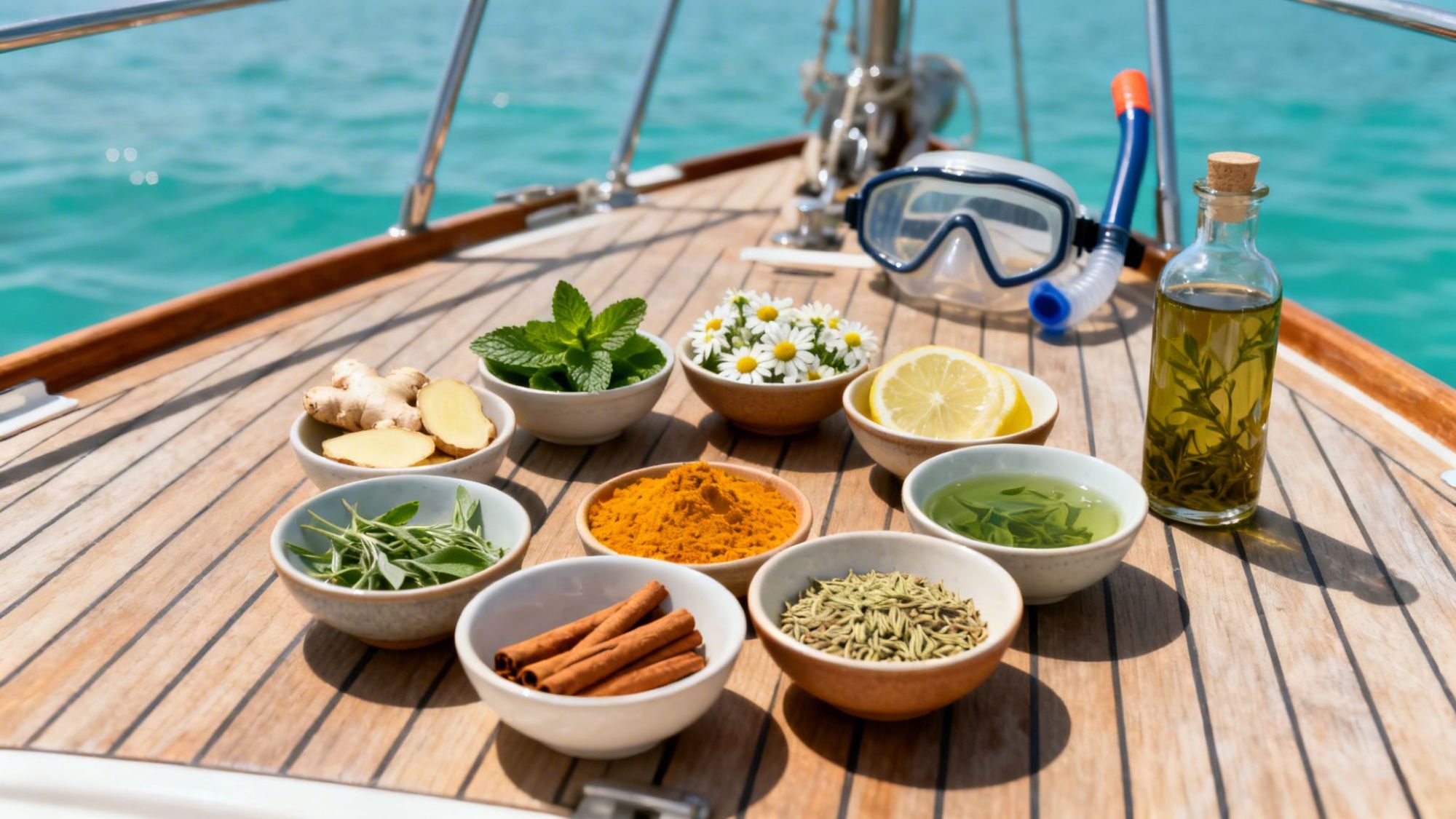
You’re halfway to the reef, fins stacked by the bench, mask ready, camera clipped in place, and your stomach starts to turn. That is a common start to a boat snorkel for people who felt fine on shore.
Herbal seasickness remedies can help, but boat use is different from home use. Timing matters. So does form. A tea you can sip before check-in may be useful. A loose powder on a rocking deck usually is not. Strong scents can settle one snorkeler and bother the person sitting beside them.
That practical side matters on snorkel tours. You need remedies that are easy to pack, easy to take with wet hands, and unlikely to make you sleepy before a ladder climb or safety briefing. You also need honest expectations. Herbal options can be helpful, especially for mild to moderate motion sickness, but rough water sometimes calls for more than one tool.
At Kona Snorkel Trips, we see this pattern all the time. Guests who prepare before boarding usually do better than guests who wait until the nausea hits. My advice is simple. Pack for the ride out, not just for the swim.
This list is built for that job.
It covers herbs and near-herbal options that make sense on a snorkel boat, including science-backed staples like ginger, scent-based options that are easy to use on the water, and a few Hawaiian-inspired choices that fit the setting without pretending every local tea is a cure. I also point out the trade-offs, because some remedies are better for prevention, some are better as backup, and some are mainly worth bringing because they are compact and low-risk.
If you already know ginger is your best bet, this quick guide to using ginger tablets for seasickness on boat trips is a practical place to start.
Writer’s Note: Please center align all H2 headings in the final article.
1. Ginger Root Tea and Extract
The ride out is where ginger earns its spot. You are geared up, the boat starts rocking outside the harbor, and nobody wants to be hunting for a remedy after their stomach has already turned.

Why ginger is still the first pick
For boat snorkelers, ginger is usually the best herbal starting point because it is easy to pack, easy to time, and less likely to leave you foggy. That matters on a snorkel day. You still need to hear the crew, move safely on deck, and climb a ladder without feeling slowed down.
It also gives you options. Tea works well before leaving your hotel or condo. Capsules and extracts are easier once you are in transit and trying to keep things simple.
If you want a deeper look at forms and timing, this guide on ginger tablets for seasickness is useful. For the bigger boat-day strategy around seat choice, meals, and timing, read how to prevent seasickness on a boat before a snorkel trip.
Best form for a snorkel tour
I tell guests to match the form to the part of the day.
- Tea before departure: Good if you have time to drink it slowly on shore and your stomach likes warm fluids.
- Capsules or extract before boarding: Clean, compact, and easy to keep in a dry bag.
- Chews as backup: Handy on the ride out, but some are mild and packed with sugar.
Timing matters more than people think.
Take ginger before the boat is in open water if you can. Once nausea is rolling, ginger may still help, but it has to work uphill.
Real trade-offs on the water
Every form has a downside.
- Tea feels soothing: It is harder to manage once you are mobile, and extra liquid is not always appealing right before boarding.
- Capsules pack best: They are practical, but they do not give the same settling effect as warm tea.
- Chews are easy to share and use fast: They can melt, get sticky, or taste too sweet when you already feel off.
For Hawaiian boat tours, I like ginger because it fits the setting and the routine. It is familiar, widely used, and easy to combine with local choices later in the list, especially teas. Just do the prep on land, not at the dock.
If you already know small boats, car rides, or swell tend to bother you, start with ginger and pack a second support tool rather than hoping one last-minute fix will cover everything.
2. Peppermint Essential Oil Inhalation
Peppermint is not my first pick as a solo remedy for serious motion, but it is one of the best support tools to keep within reach. It works fast, it takes almost no space, and it can help settle that rising wave of nausea before it snowballs.

When peppermint helps most
On boats, peppermint shines when the problem is mild nausea mixed with heat, stuffiness, or anxiety. The cooling scent can feel clarifying. Guests do better when they combine it with fresh air, a stable seat, and eyes on the horizon.
For a snorkel trip, the easiest formats are a personal inhaler or a tiny sealed bottle in a waterproof pouch. Keep it simple. Open, inhale, close.
If you want broader prevention tips beyond herbs, how to prevent seasickness on a boat covers the bigger strategy.
What to do and what not to do
Peppermint oil is strong. Use it like a tool, not like perfume.
- Dilute before skin use: If you put it on temples or wrists, mix with a carrier oil first.
- Use small amounts: Stronger is not better when you’re queasy.
- Keep it off snorkel gear: Oil on masks, straps, or lenses is annoying and hard to clean.
- Skip it if strong smells bother you: Some people feel better with scent. Others feel worse.
One clear trade-off matters here. A peppermint inhale can calm a moment, but it does not carry the whole load on a rough ride. If I were packing for choppy water, I would treat peppermint as a helper, not the main defense.
That said, it earns its place because it is fast and clean to use. When someone starts to feel off during the run out to the site, peppermint can buy time while they reposition, breathe, sip water, and settle down.
3. Acupressure Wristbands P6 Nei Guan Point
The boat leaves the harbor, everyone is gearing up, and one guest already looks a little pale. Wristbands earn their spot in the dry bag in such situations. They are simple, fast, and easy to manage even when the deck is moving.
Why they fit a snorkel boat so well
A P6 acupressure band presses on a point a few finger widths below the wrist crease, between the two center tendons. You can put it on before departure and forget about it. No tea to brew, no capsule to swallow, no scent to tolerate.
That makes wristbands especially practical for:
- Guests who get nervous before they get nauseous
- Kids and first-time snorkelers who resist pills
- Anyone trying to avoid drowsy motion-sickness medicine
- People who want one hand-free remedy already working during gear setup
For a broader look at how wristbands compare with other options, this guide to the best sea sickness meds and remedies for boat trips helps sort out where they fit.
Fit matters more than brand
I see the same mistake all the time. The band is on the wrist, but the pressure bead is off target. Then the wearer decides the band does nothing.
The bead needs to sit squarely on the P6 point, not off to the side and not too close to the palm. Wear one on each wrist. Put them on before the boat starts bouncing, ideally while you are still at the dock or during the drive to check-in.
If you want a step-by-step placement guide, this page on the anti sea sickness bracelet shows the setup clearly.
Real trade-offs on the water
These bands are low mess and low effort, but they are not equally effective for everyone. Some snorkelers get solid relief. Others notice only a mild edge taken off the nausea.
A few practical points matter on tour boats:
- Use them early: They work better as prevention than rescue.
- Check tension: Too loose and the bead shifts. Too tight and they get annoying.
- Recheck after getting wet: Climbing ladders, rinsing hands, and adjusting gear can move them.
- Pack them where you can reach them fast: Not buried under towels and reef-safe sunscreen.
My usual advice is to treat wristbands as part of a stack, not the whole plan. They pair well with ginger because the approach is different. One helps through the gut. The other gives steady pressure without adding taste, smell, or sedation.
For Hawaiian snorkel trips, that balance matters. You want something you can set up early, wear through the ride out, and keep on while you watch the horizon and wait for your stomach to settle.
4. Lemon Aromatherapy and Citrus Zest Inhalation
Lemon is one of those remedies that feels too simple, but simple is useful on a boat. A clean citrus smell can cut through diesel, sunscreen, stale cabin air, and that vague warm-weather queasiness that builds before full nausea hits.

Best forms for a boat
Fresh lemon slices in a small container work well. So does a lemon peel, a lemon drop, or a diluted lemon oil roll-on. The easiest boat move is to smell it, then take a small sip of water.
This remedy is handy for people who cannot tolerate swallowing pills when they’re nervous. It is more sensory than medicinal, which is why it can help in the early phase.
For a broader comparison of natural and non-herbal options, best sea sickness med is a solid reference.
Where lemon fits and where it falls short
Lemon is not in the same league as ginger for evidence-backed prevention. I treat it as a support play. It can freshen the system and make a passenger feel more settled, but I would not send a motion-sensitive snorkeler into rough water with only a lemon wedge and optimism.
What lemon does well:
- Cuts through unpleasant smells
- Gives a clean, alert feeling
- Pairs well with ginger tea or chews
- Feels light when the stomach wants light
What it does not do well:
- Carry severe seasickness alone
- Replace early prevention
- Help much if dehydration is the primary problem
A good use case is the guest who starts feeling warm and uneasy while idling offshore. Citrus, fresh air, and a forward-facing seat can calm that spiral. If the crossing is bouncy, pair lemon with something stronger in advance.
5. Fennel Seed Tea and Chewing
Fennel is a quieter remedy. It does not have ginger’s research profile, and it does not hit the senses like peppermint or lemon. What it offers is gentler digestive support.
Why some snorkelers like fennel
If your motion sickness starts as bloating, burping, or that heavy unsettled stomach feeling, fennel can be a smart add-on. Its flavor is mild and slightly sweet. A lot of people find it easier to tolerate than stronger herbs.
You can use it two ways:
- Tea before departure: Better when you have time at your hotel or rental.
- A small pinch of seeds to chew: Better if you want something compact and shelf-stable.
For a general look at plant-based options, herbs for sea sickness rounds up the broader field.
Fennel's role in seasickness prevention
I would call fennel a support herb, not a lead herb. It is best for the person whose stomach needs calming more than their senses need interrupting.
That means fennel can make sense when:
- Breakfast sat heavy
- You tend to feel gassy before nauseated
- You want a mild pre-trip tea
It is less convincing when:
- You know you get strong boat sickness
- The water is rough
- You need something with a stronger track record
This is a good herb for careful packers and gentle routines. It is not the remedy I would reach for first if someone tells me they get sick before the boat clears the harbor.
6. Mint Leaf Fresh Chewing and Tea Preparation
Fresh mint is a different tool from peppermint oil. The effect is softer, less aggressive, and easier for people who dislike concentrated scents.
Why fresh mint can work better than oil for some people
On a hot departure morning, cold water with mint leaves can be a smart choice. It freshens the mouth, helps with hydration, and gives some of the same calming signal as peppermint without overwhelming the senses.
For some guests, fresh mint is the better fit because it feels like food, not treatment. That matters when people are anxious. The more normal something feels, the more likely they are to use it.
Good boat-friendly uses include:
- Chewing a leaf or two before boarding
- Sipping mint tea before heading to the dock
- Adding mint to cold water for the ride out
Trade-offs to know before packing it
Fresh herbs are perishable. They bruise, wilt, and turn messy in a hot bag. If you pack mint, keep it cool and sealed. This is not the remedy I’d choose for maximum convenience.
It is also a mild option. Fresh mint can settle the edges of nausea, but it needs help if you are strongly motion-sensitive. I like it most for people who only get mildly queasy or who want something gentle to combine with ginger.
One caution deserves mention. Some herbal guidance notes that peppermint may worsen acid reflux in some people, so if reflux is part of your travel pattern, choose carefully and test at home first rather than on a boat day.
7. Ginger and Turmeric Combination Capsules or Paste
Herbal practice gets more blended here. Ginger does the heavy lifting. Turmeric may appeal to people who keep combination capsules in their supplement routine.
What makes this combo appealing
The main advantage is convenience. A single capsule can fit into a pre-trip routine without carrying tea bags, roots, or candy. For travelers who take turmeric, adding a ginger-turmeric product may feel straightforward.
Still, I would keep the hierarchy clear. Ginger is the proven anti-nausea piece here. Turmeric may be a useful companion for some people, but it is not the reason I would expect a motion-sensitive guest to do better offshore.
One relevant piece of research on herbal synergy comes from a study of a traditional Chinese combination using ginger, pogostemonis herba, and radix aucklandiae. In that work, the optimized recipe produced a lower motion sickness index than dimenhydrinate in the experimental model, with the dimenhydrinate group showing a significantly higher MSI than the optimized herbal group. That supports the idea that smart combinations can outperform a single ingredient in some settings.
Practical advice before you rely on a combo
I would only use a ginger-turmeric product if you know your stomach tolerates it. Boat morning is not the time for first experiments.
Keep these points in mind:
- Choose a product where ginger is prominent
- Take it before departure, not after symptoms are strong
- Avoid assuming “combo” means stronger for everyone
- Stick with a backup plan if you know you get very sick
A combo capsule can be tidy and useful. It is just not a magic shortcut. If the label hides the ginger amount or leans more into wellness marketing than practical use, I would pass.
8. Hibiscus and Ginger Hawaiian Tea Blend
For a Hawaii trip, this is the most locally inspired option on the list. It is also one of the nicest pre-boat rituals if you want something that feels pleasant instead of clinical.
Why this blend makes sense before a snorkel tour
Hibiscus and ginger together can work well for travelers who want a light, bright tea before heading to the harbor. Ginger brings the anti-nausea value. Hibiscus brings tartness and makes the drink more enjoyable for people who find straight ginger too sharp.
This is a pre-boarding remedy more than an onboard remedy. Brew it where you’re staying, sip it while you get ready, and leave the cup behind. On a boat, sealed chews or capsules are easier.
There’s also a practical travel angle here. The motion sickness treatment market is projected at USD 691.26 million in 2026 and expected to reach USD 804.55 million by 2031 at a 3.08% CAGR. Herbal options are part of that growth, which tracks with what many guides and travelers already do in real life. They want something accessible, low-fuss, and non-sedating if possible.
The honest trade-off
This blend is appealing, but the tea format limits portability. It is also only as good as the ginger content. If the blend is mostly hibiscus with a token amount of ginger, it may taste great and do very little for motion.
A flavorful tea can help you stick to your routine. It should not fool you into thinking every pretty blend is a strong anti-seasickness remedy.
If I were setting up a calm snorkel morning, this would be a strong option at breakfast. If I were preparing for rough water, I would still pair it with ginger capsules, chews, or wristbands once I left shore.
8-Point Comparison of Herbal Seasickness Remedies
| Remedy | 🔄 Implementation Complexity | ⚡ Resource & Portability | ⭐ Expected Effectiveness | 📊 Ideal Use Cases | 💡 Key Advantage / Tip |
|---|---|---|---|---|---|
| Ginger Root Tea and Extract | Low: steep tea or take capsules | Moderate: fresh root, powder, or chews; easy to pack | ⭐⭐⭐⭐: well-researched for nausea | Preventive use 30–60 min before boarding; multi-hour trips | Non-drowsy, multiple forms; take 500–1000mg pre-trip |
| Peppermint Essential Oil Inhalation | Very low: inhale or apply diluted topically | High portability: small roll-on or inhaler; needs dilution | ⭐⭐⭐: rapid onset, short duration | Sudden nausea onset, short boat rides, aromatherapy preference | Fast-acting; dilute 2–3% for topical use, reapply every 15–30 min |
| Acupressure Wristbands (P6) | Low: wear with correct placement | Excellent: reusable, no prep or storage concerns | ⭐⭐⭐⭐: multiple clinical trials confirm effectiveness | Continuous prevention during long trips; children and medication-free users | Drug-free, evidence-backed; wear on both wrists before boarding |
| Lemon Aromatherapy & Citrus Zest | Very low: inhale or suck fresh slices | Moderate: fresh lemon (perishable) or diluted oil | ⭐⭐⭐: immediate but short-lived, less clinical data | Quick relief and mood uplift; local availability (e.g., Hawaii) | Refreshing and hydrating; keep slices sealed or dilute oils before skin use |
| Fennel Seed Tea and Chewing | Low: brew tea or chew seeds | Excellent: lightweight seeds, easy to pack | ⭐⭐: gentle, more preventative than acute | Mild digestive support, combine with stronger remedies like ginger | Gentle on stomach; chew 1/2 tsp seeds or steep 1 tsp per cup 30–45 min before |
| Mint Leaf Fresh Chewing and Tea | Moderate: needs fresh leaves and prep | Low portability: perishable, best bought locally | ⭐⭐⭐: soothing but less concentrated than oil | Sensitive users preferring natural options; local trips with fresh supply | Dual taste + aroma benefits; store with damp towel to preserve freshness |
| Ginger + Turmeric Capsules / Paste | Low: take capsules or prepare paste | Moderate: capsules portable; paste less so | ⭐⭐⭐⭐: synergistic anti-inflammatory effect | Preventive regimen for stronger or inflammation-related nausea | Combine with piperine or fat for turmeric absorption; dose pre-trip |
| Hibiscus & Ginger Hawaiian Tea Blend | Moderate: brew or source locally | Moderate: available locally in Kona; prepacked options exist | ⭐⭐⭐: ginger-supported relief with added hydration/antioxidants | Cultural/local experience, pre-trip beverage, hydration on island tours | Pleasant flavor masks medicinal taste; steep 5–10 min before boarding |
Your Action Plan for a Smooth Snorkeling Adventure
The best approach to herbal seasickness remedies is not to chase every option. Pick one primary remedy and one backup tool, then use them early.
For most snorkelers, the cleanest plan looks like this:
- Start with ginger as your main remedy: It has the strongest support and practical dosing.
- Add a second tool if you know you’re sensitive: Acupressure bands or peppermint inhalation are reasonable complements.
- Use gentle options as support, not miracles: Lemon, fennel, mint, and hibiscus blends can help, but they are not equal to ginger for prevention.
- Pack for convenience: Boats reward simple systems. Capsules, chews, wristbands, and a small inhaler beat complicated prep.
If you prefer shopping in advance, common options include Ship-EEZ Seasickness Patch, Dramamine pills, Bonine pills, Sea Band wristbands, and ginger chews. The medicated options are not herbal, but they are relevant comparison points if you know herbal support alone has not been enough for you in the past.
A few seasoned-boat rules matter just as much as the remedy itself. Eat light, but do not board on an empty stomach. Drink water. Stay out in fresh air. Face forward when possible. Avoid reading your phone during the ride out. If a remedy works for you in everyday travel, use that same one on snorkel day instead of trying something new at the last minute.
If you are heading out for Big Island snorkeling, this prep is worth doing. A great reef or manta experience is much easier to enjoy when your body is calm. Kona Snorkel Trips offers outings where this kind of planning pays off, especially on longer or more exposed boat runs. If you’re interested in a Captain Cook day on the water, Captain Cook Snorkeling Tours is also an excellent alternative to consider.
The bottom line is simple. Herbal remedies can help a lot, but you get the best results when you respect their limits. Ginger is the standout. Wristbands and aromatics are useful assistants. Gentle teas are best treated as supportive habits. Pack smart, take your remedy before the boat moves, and give yourself every chance to enjoy the water instead of fighting the ride.
If you want a smoother day on the water, plan your seasickness prevention before you leave the dock, then book your adventure with Kona Snorkel Trips.