
How to Spot Hawaiian Dascyllus in Kealakekua Bay
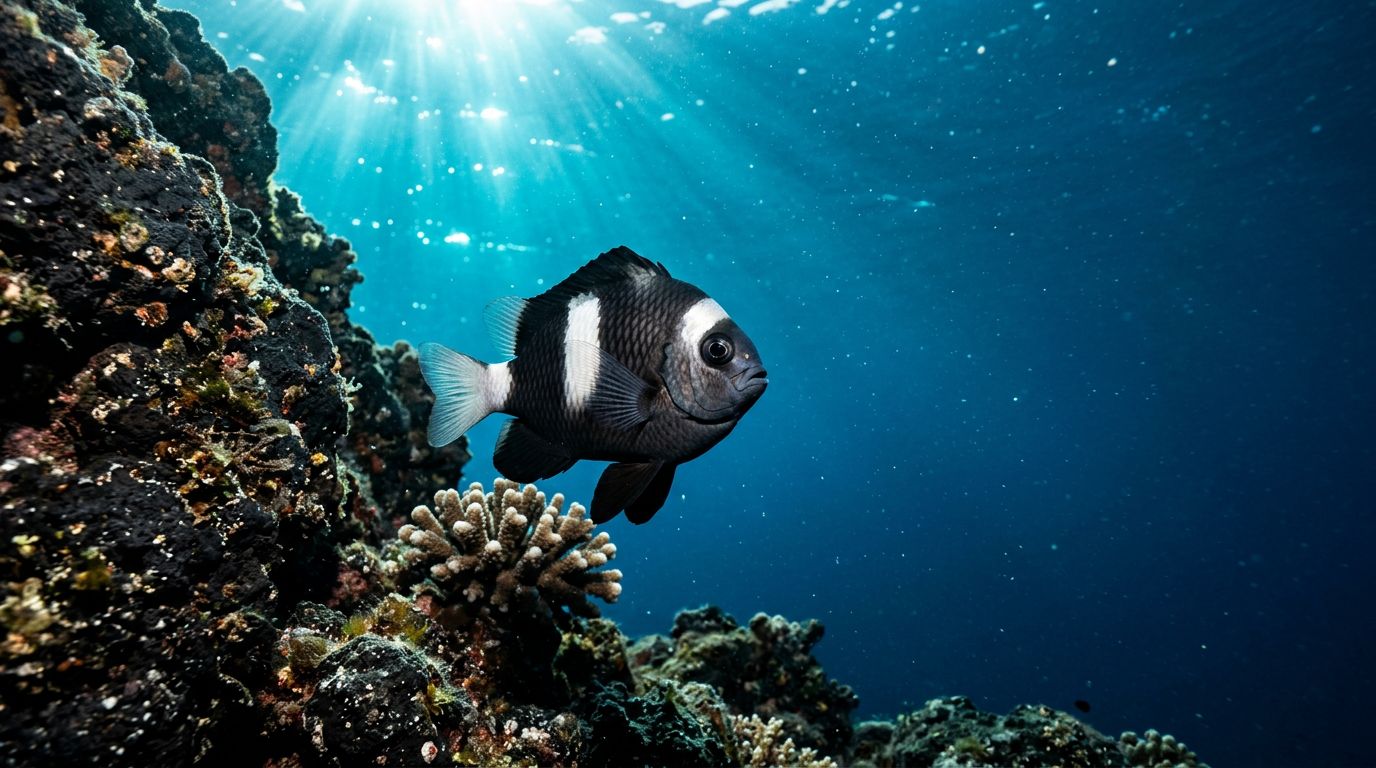
Kealakekua Bay’s black-and-white damselfish can vanish against a lava wall one second and flash into view the next. During Kealakekua Bay snorkeling, the Hawaiian Dascyllus often reveals itself through its dark body, bright markings, and habit of guarding one small patch of reef.
If you’ve searched for snorkeling Big Island Hawaii advice, this is a rewarding fish to learn before you enter the water. A slow scan near coral heads works better than swimming quickly across open water, especially when you’re exploring with a guided outing from Kona Snorkel Trips.
How Hawaiian Dascyllus Looks Underwater
The Hawaiian Dascyllus, scientifically known as Dascyllus albisella, is a small damselfish associated with Hawaii’s rocky reefs and coral habitats. Many snorkelers know it by another common name, the Hawaiian domino damselfish.
Its compact body is usually dark gray, charcoal, or nearly black. Bright white markings create the contrast that gives this fish its distinctive appearance. Look for a white mark on the forehead and another pale marking on the upper body or back. Depending on the fish’s age, position, and the amount of sunlight, those spots may appear sharper or less obvious.
A reliable identification usually combines several clues:
- The body is short, oval, and deeper than a slender wrasse.
- The overall color is dark rather than silver, yellow, or bright blue.
- White spots or patches stand out against the darker body.
- The fish stays close to coral, rock, or a small lava ledge.
- It makes quick dashes before returning to the same area.
Size can help, too. Hawaiian Dascyllus are only a few inches long, so they look tiny beside a yellow tang, parrotfish, or triggerfish. Their small size also makes them easy to overlook when you focus only on larger animals.
Don’t depend on one white spot alone. Sun glare, backlighting, and suspended sand can change the way a fish looks. Instead, study its shape, color pattern, and relationship with the reef.
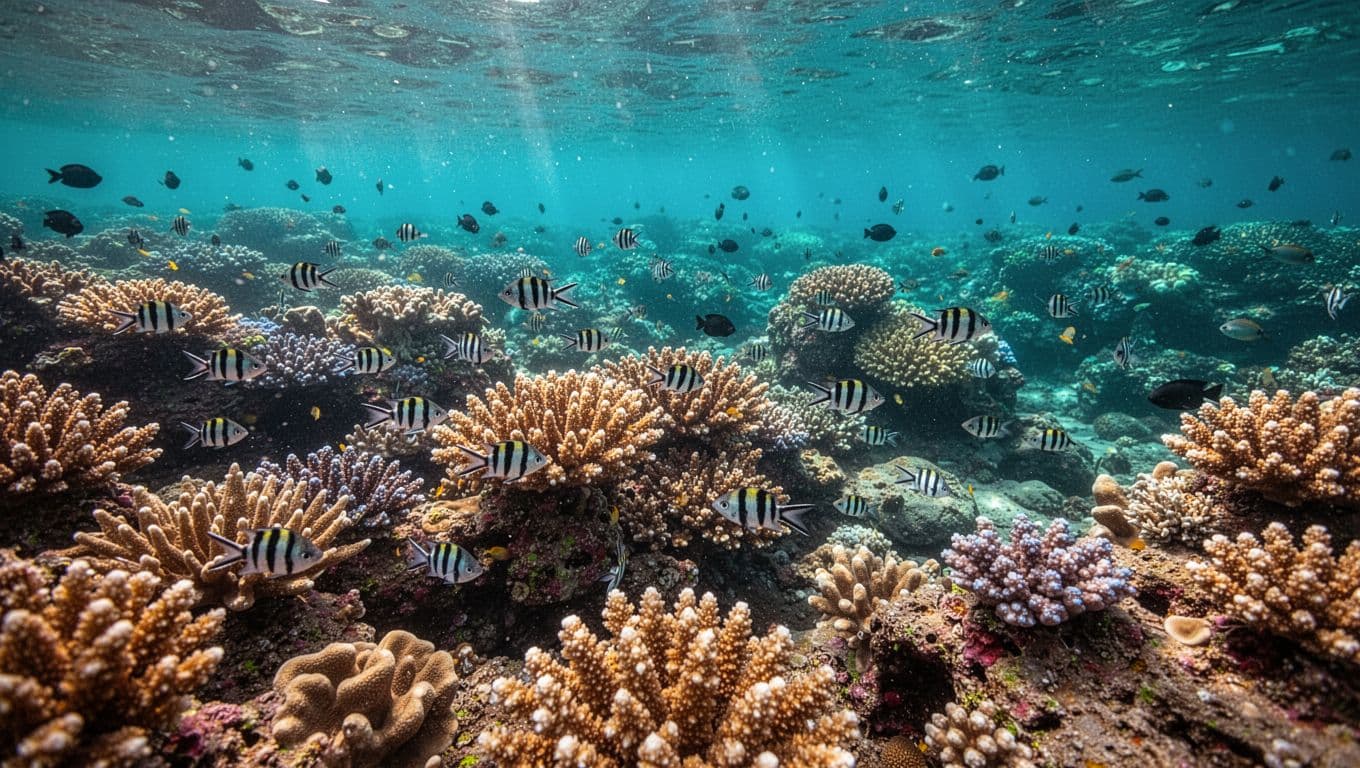
The fish’s behavior often confirms what your eyes see. A small dark fish that repeatedly leaves a coral head, approaches your mask, and retreats to the same shelter is more likely to be a territorial damselfish than a passing reef fish.
For more examples of fish you may see in the area, compare the markings in this Hawaii reef fish guide for snorkelers.
Where to Look for Hawaiian Dascyllus at Kealakekua Bay
Kealakekua Bay offers a mix of coral formations, submerged lava, rocky edges, and deeper blue water. The protected Marine Life Conservation District around the Captain Cook Monument supports a wide variety of reef life, but fish still choose particular spots within that habitat.
Focus on Coral and Rock
Scan the edges of coral heads, not only the center. Hawaiian Dascyllus often hover just above the reef, where they can dart into a crevice or behind a coral branch. The dark body blends with shaded rock, while the white markings catch the light when the fish turns.
Look for small territories near living coral, rubble, and lava shelves. You may spot one fish, a pair, or several individuals spread across nearby formations. They don’t need a large area. A single coral head can provide enough shelter and feeding space for a fish to defend.
Avoid searching only in open blue water. A damselfish may swim several feet away from its shelter, but it usually returns quickly. If you see a small fish disappear behind a coral mound, pause and watch that structure instead of following it across the bay.
Watch the Reef’s Shaded Side
The shaded side of a coral formation can make the white markings easier to see. Position yourself so sunlight reaches the fish from behind your shoulder. This reduces glare on your mask and gives the fish’s dark body a cleaner outline.
Water movement also affects your view. When surge pushes you toward a coral head, adjust your position rather than grabbing the reef. A few gentle fin movements can keep you at a comfortable distance while protecting the coral.
The best Kealakekua Bay snorkeling trip will usually include time near reef structure, where a guide can point out small damselfish that blend into the background. Listen for location cues, then give your eyes time to adjust.
How to Spot Hawaiian Dascyllus While Snorkeling Big Island Hawaii
Fast swimming creates a fast-moving view. That makes small reef fish harder to identify, even when the water is clear. When you snorkel Big Island reefs, slow down as soon as you reach a coral-rich area.
Use this simple search pattern:
- Stop kicking for several seconds and let your body settle.
- Choose one coral head, lava ledge, or rocky crevice to study.
- Scan the area’s edges for small dark fish with white markings.
- Watch for a fish that returns to the same shelter after a short dash.
A Hawaiian Dascyllus may react to your presence. It could turn toward you, move a short distance away, or slip behind coral. That response is useful because it shows you where the fish considers home. Stay still, and it may reappear within moments.
Use Your Eyes Before Your Camera
A camera can narrow your view and make you miss the fish’s movement. First, identify the fish with your mask. Then take a picture while keeping your body several feet above the reef.
Avoid swimming directly at it. A direct approach often sends the fish into cover. Instead, float at an angle and let the fish continue its normal pattern. You may capture a better image when it turns broadside and shows the white markings.
If you use a phone or action camera, keep the lens steady and avoid chasing. Digital zoom can make a small fish look larger on screen, but it won’t improve your identification in the water. Natural light also produces better color than a harsh light aimed at close range.
Read the Fish’s Movement
Several short movements can reveal more than one quick glimpse. Watch whether the fish:
- Hovers above one section of reef.
- Makes short, defensive passes toward nearby fish.
- Darts behind coral when you approach.
- Returns to the same spot after each pass.
That home-base behavior is a strong clue. Many reef fish travel through an area, while damselfish often maintain a tight relationship with a particular shelter.
Your breathing matters as well. Loud bubbles and sudden kicks can disturb the fish. Exhale slowly, keep your fins behind you, and let the water carry you past the reef at a controlled pace.
Hawaiian Dascyllus or Another Black-and-White Reef Fish?
Black-and-white markings appear on more than one Hawaiian reef fish. Shape and movement help you separate similar-looking species.
Sergeant majors usually have a silvery or yellowish body with several distinct dark vertical bars. Their pattern looks more like broad bands than isolated white spots on a dark body. They also tend to appear taller and more laterally compressed.
Convict tangs have a flatter, disk-like profile and multiple narrow vertical stripes. Their swimming motion looks smoother and more deliberate than the quick darting movements of a small damselfish.
Humuhumunukunukuapua’a, Hawaii’s state fish, has a wedge-shaped body, a pronounced snout, and bold geometric markings. Its body profile looks completely different once you compare it with the compact shape of a Hawaiian Dascyllus.
Yellow tangs are easier to identify because their entire bodies are bright yellow. They may feed near the same coral formations, but their color and larger profile make them hard to confuse with a Hawaiian domino damselfish.
Related damselfish can cause more uncertainty. In that case, use the full combination of clues:
- A dark, compact body.
- Crisp white markings around the head and upper body.
- A small territory near coral or rock.
- Quick movements followed by a return to shelter.
The reef location is part of the identification. If a fish repeatedly circles one coral head, it is showing you a behavioral clue that a photograph may not capture. You can use this broader Hawaiian fish snorkeling guide to compare common reef shapes and color patterns.
Best Conditions for Snorkeling Big Island Reefs
For snorkeling Big Island reefs, calm water matters more than a bright weather forecast. Light wind usually creates less surface chop, which makes it easier to hold your face underwater and study small fish.
Morning trips often provide lower glare and calmer conditions, although every day depends on wind, swell, cloud cover, and local currents. Ask your guide about the day’s visibility before you enter. Water clarity can change quickly along the Kona coast.
Sunlight helps you see the contrast between the fish’s dark body and white markings. Keep the sun behind you when possible. If you face directly into the sun, surface glare can wash out the fish’s outline.
A well-fitted mask is essential. Defog the lens before entering the water, adjust the strap so the seal sits evenly, and check that your snorkel doesn’t pull the mask sideways. Fins should fit securely without forcing you to kick hard.
If you plan to snorkel Big Island sites independently, choose locations that match your swimming ability and check access conditions before you go. Kealakekua Bay can look calm from shore while currents or surge affect the water near the reef.
A guide also saves time. Instead of scanning every coral head, you can learn where small damselfish are likely to hold territory. That leaves more time for careful observation and fewer unnecessary laps across the bay.
Protect the Reef While You Watch
Kealakekua Bay’s marine life depends on healthy coral and undisturbed shelter. Your behavior affects the fish even when you don’t touch an animal.
Keep these habits in place:
- Maintain neutral buoyancy and keep your fins away from coral.
- Never stand, kneel, or rest your hands on the reef.
- Leave fish, shells, rocks, and other marine life where you find them.
- Don’t feed fish, because it changes their behavior and can crowd animals together.
- Use a rash guard for sun protection and follow current guidance on sunscreen products.
Give the fish room to retreat. A Hawaiian Dascyllus that disappears behind coral isn’t asking you to follow it. It has found cover, and that shelter may be part of its territory.
When a small damselfish returns to the same coral head, stop there. Its return path is often the clearest identification clue you will get.
Avoid shining a bright light directly into crevices during the day. Strong beams can startle fish and encourage you to move too close. A patient observer usually sees more than a swimmer who tries to force a close-up.
Good reef etiquette also protects your own safety. Watch your surroundings, keep track of your group, and leave enough space between your fins and other snorkelers. A calm, controlled position helps you see small fish without creating contact or confusion.
Plan a Kealakekua Bay Snorkeling Tour Around the Fish
A guided trip can make Hawaiian Dascyllus easier to find because your guide knows how to read the reef. You won’t need to spend the entire outing guessing which dark shape is a fish and which one is lava.
Kona Snorkel Trips follows a “Reef to Rays” philosophy and focuses on small-group ocean adventures around the Big Island. Its Kealakekua Bay and Captain Cook outings pair quality snorkeling equipment with lifeguard-certified guides who can help you identify reef species while keeping the group aware of conditions.
The company also places strong emphasis on reef-safe practices and marine education. That approach suits families, couples, and first-time snorkelers who want clear instructions without losing the excitement of exploring the bay. Small groups make it easier to ask questions, stay near your guide, and avoid crowding a coral head.
If you’re comparing Kealakekua Bay operators, Captain Cook Snorkeling Tours is another company focused on Captain Cook and Kealakekua Bay excursions. For Kona Snorkel Trips tour details, you can check availability.
A Captain Cook trip can also give you time to study the reef near the monument, where coral structure and lava provide the kind of shelter these damselfish prefer. If that route fits your plans, you can check availability before your travel dates fill.
Notice the Fish That Others Swim Past
The easiest way to spot a Hawaiian Dascyllus is to slow your pace. Look for a small, dark body with bright white markings near coral, then confirm the sighting by watching its short territorial dashes and return to shelter.
Kealakekua Bay rewards patient snorkeling. When you give the reef time to come into focus, a fish that first looked like a shadow can become one of the clearest memories of your day in the water.