
Your Guide to the Hawaii Night Manta Ray Dive in 2026
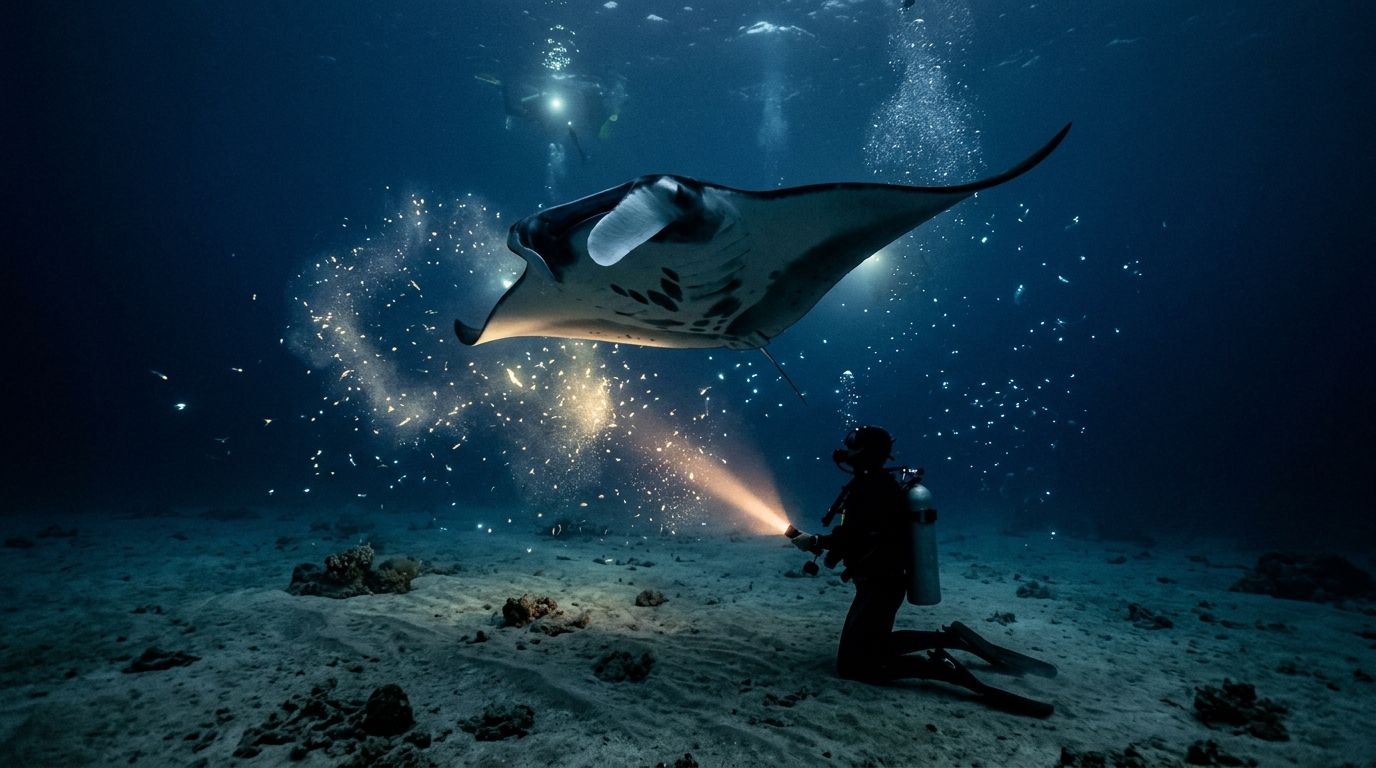
Imagine slipping into the dark, warm Pacific Ocean as a gentle giant with an 18-foot wingspan glides silently just inches above your head. This isn't a one-in-a-million chance encounter; this is the world-renowned Hawaii night manta ray dive, and this guide will walk you through everything you need to know for this truly unforgettable night under the waves.
Witnessing Kona's Legendary Manta Ray Ballet
The magic of the manta ray night dive isn't just about seeing a wild animal. It's about being part of a nightly spectacle that feels like it’s from another planet. You get the thrill of a night dive combined with the serene grace of one of the ocean’s most majestic creatures.

Picture yourself floating in the inky-black waters just off the Kona coast. Powerful lights placed on the seafloor illuminate the water, creating a glowing column of light that attracts tiny plankton. And where there's plankton, the mantas follow.
These massive rays, with wingspans stretching up to 18 feet, perform mesmerizing somersaults and barrel rolls as they scoop up their dinner. It's a nightly phenomenon that brings around 80,000 adventure seekers to the Big Island every year. You can learn more about what makes the Kona manta dive so famous and dependable.
Understanding the Kona Phenomenon
So, what makes Kona the global epicenter for this encounter? It all comes down to a perfect storm of factors creating an ideal environment for both manta rays and the people who come to see them.
- A Consistent Buffet: The Kona coast's unique underwater volcanic geography funnels nutrient-rich currents, creating a reliable, nightly feast of plankton that manta rays just can't resist.
- A Resident Population: This isn't just a migratory stop. Kona is home to a resident population of over 240 identified manta rays. They live here, which is why sightings are so incredibly consistent.
- A Well-Oiled Machine: Decades of experience have led to highly organized and safe viewing procedures. Powerful lights create an "underwater stage" that reliably attracts the plankton, which in turn brings the mantas.
Whether you're a certified scuba diver or a first-time snorkeler, you can be part of this incredible adventure. For divers looking to get up close and personal with these gentle giants, Kona Honu Divers is the top-rated & most reviewed diving company in both Hawaii and the Pacific Ocean. Check out their famous manta ray diving tour.
If you want to dive deeper into the details, we also have an in-depth article all about the Kona manta dive.
Choosing Your View: Dive vs. Snorkel

Alright, you've decided you want to see Kona's world-famous manta ray ballet. Now for the big question: how do you want to watch the show? Will you be on the ocean floor looking up, or floating on the surface looking down?
Both the Hawaii night manta ray dive and the snorkel experience are absolutely breathtaking, but they offer completely different perspectives on these gentle giants. The best choice really comes down to your comfort in the water, whether you're dive certified, and the kind of encounter you're dreaming of.
The Diver's Perspective: From Below
For certified scuba divers, this is the one. The Hawaii night manta ray dive puts you right in the middle of the action, offering a completely immersive, eye-level spectacle.
You'll descend to about 30-40 feet and settle onto a sandy patch on the ocean floor. Your guides will set up a central light source—we affectionately call it "the campfire"—which draws in a massive cloud of plankton. Then, you just kneel and watch.
From this spot, you get to see the mantas glide, loop, and somersault just inches above your head. It’s an incredibly serene and humbling feeling to be looking up as these massive creatures dance in the light beams. It truly feels like you're a visitor in their world. You have to be a certified scuba diver to do this, but if you are, it's an experience you'll never forget.
Expert Recommendation: When you're picking a dive operator, experience and reputation are everything. For a top-tier Hawaii night manta ray dive, we always send our friends to our partners at Kona Honu Divers. They're the top rated & most reviewed diving company in both Hawaii and the Pacific Ocean for a reason, promising a safe and spectacular adventure every time.
The Snorkeler's View: From Above
Not a certified diver? No problem. The manta ray night snorkel is just as spectacular and way more accessible. If you can swim, you can do this. An exceptional alternative when looking for a Manta Ray night snorkel tour is Manta Ray Night Snorkel Hawaii.
As a snorkeler, you'll float on the surface while holding onto a custom-built light board. These boards shine powerful lights down into the water, creating the same plankton-attracting buffet that the divers' "campfire" does below.
From this bird's-eye view, you get to watch the mantas soar up from the dark depths right toward the light. They often come within inches of the board (and you!) as they feed, their giant white bellies glowing as they barrel roll. It gives you a true appreciation for their massive size and incredible grace. For a deeper dive into what the snorkel tour is like, check out our post on the Kona manta ray tour.
This is the perfect option for families, groups with different swimming abilities, or anyone who wants to witness the magic without needing a dive certification.
Manta Ray Dive vs. Snorkel Experience Comparison
To help you decide which underwater theater seat is right for you, we've broken down the key differences between diving and snorkeling with Kona's manta rays.
| Feature | Manta Ray Dive | Manta Ray Snorkel |
|---|---|---|
| Perspective | From the ocean floor, looking up as mantas glide overhead. | From the surface, looking down as mantas swoop up to feed. |
| Requirements | Open Water Diver certification is mandatory. | No certification needed; suitable for most swimming abilities. |
| Experience | Immersive and serene; feels like you are part of their world. | Exciting and dynamic; offers a full view of their size and grace. |
| Depth | 30-40 feet deep on the sandy bottom. | Floating on the surface; 0 feet deep. |
| Interaction | Passive observation; kneeling in a designated spot. | Active observation; holding onto a floating light board. |
| Best For | Certified divers seeking an intimate, bottom-up encounter. | Families, non-divers, and those preferring a surface view. |
Ultimately, there’s no wrong way to see the mantas. Whether you’re looking up from the seafloor or down from the surface, it’s a wildlife encounter that will stick with you for a lifetime.
What To Expect On Your Manta Ray Tour
The excitement before a manta ray tour is almost tangible. It’s a feeling you’ll never forget, and the adventure you’re about to have is one of the most incredible experiences on the planet. A Hawaii night manta ray dive is a well-oiled machine, fine-tuned for an unforgettable night. Let's walk through what a typical tour looks like, from the moment you check in to those final, jaw-dropping moments with the mantas.

Your adventure kicks off in the late afternoon. You'll meet the crew, get checked in, and be fitted for all your gear, including a wetsuit to keep you warm and comfortable once the sun goes down. The best operators always put safety first, and this is where they'll conduct a thorough and engaging safety briefing.
This isn’t just a list of rules. Think of it as your first real peek into the underwater world you’re about to enter. The guides will explain manta ray behavior, run through all the safety procedures, and teach you the essential "dos and don'ts" of respectful interaction—most importantly, the golden rule: never, ever touch these gentle giants.
Sunset Cruise to the Manta Site
Once the briefing is done and everyone's ready to go, the boat will head out of the harbor. This part of the tour is an adventure in itself. You'll cruise along the spectacular Kona coast just as the sun begins to set, lighting up the sky in fiery oranges and pinks. It’s the perfect, peaceful prelude to an electrifying night.
The boat ride to the prime manta spots, like the famous 'Manta Village' or 'Manta Heaven', is pretty quick. Along the way, your guides will share fascinating insights about the local manta population and the unique geography that makes Kona the world's most reliable place to see them.
The entire experience is choreographed for both your safety and the well-being of the mantas. The goal is passive observation, allowing you to witness their natural feeding behavior without disturbing them. You are a guest in their underwater dining room.
The Diver's Experience: The Campfire
If you’re a certified diver on a Hawaii night manta ray dive, you’re in for a truly immersive experience. After getting geared up, you’ll take a "giant stride" into the dark ocean and descend with your guide to the sandy bottom, usually around 30-40 feet deep.
You’ll settle into a designated spot, often in a semicircle around a powerful light source—a setup we affectionately call "the campfire." All you have to do is kneel on the sand, get comfortable, and aim your dive light straight up.
The combined light beams create a beacon for plankton, and then, the show begins. The manta rays emerge from the darkness, gliding silently and gracefully right over your head. They perform an incredible aquatic ballet, doing barrel-rolls through the light beams, sometimes just inches away. The only sounds are the soft hiss of your regulator and the deep, profound silence of the ocean—a truly awe-inspiring spectacle.
When picking an operator, you want to go with a company known for its safety and professionalism. For the Hawaii night manta ray dive, we highly recommend Kona Honu Divers. They are the top rated & most reviewed diving company in both Hawaii and the Pacific Ocean, so you know you're in good hands. For an even deeper dive, check out our complete guide to the Big Island's manta ray night dive.
Best Locations And Times For Manta Encounters

When people ask about the Hawaii night manta ray dive, one place comes to mind above all others: Kona. The Big Island's western coast isn't just a decent spot for seeing manta rays; it's hands-down the most reliable place on the entire planet for this specific experience. And that’s no accident.
It all comes down to the unique underwater landscape here, which was shaped by ancient volcanic flows. This geography creates a kind of natural funnel, channeling deep, nutrient-rich currents right up to the shoreline. Think of it as a "plankton highway." This steady, microscopic buffet is exactly what brings the mantas in, night after night, making the whole thing incredibly dependable for us.
This reliability means a resident population of over 240 individually identified manta rays actually calls Kona home. They aren’t just passing through; they live and feed here. That’s why your chances of an unforgettable encounter are so ridiculously high.
Kona's Two Premier Manta Dive Sites
While the whole Kona coast is a manta hotspot, two main locations have become world-famous for this nightly ballet. Each spot has its own personality, so you can pick the one that best fits your style. Knowing the difference will help you plan the perfect Hawaii night manta ray dive.
Manta Village (Keauhou Bay): Just south of Kailua-Kona, this site is famous for its calm, protected waters. Because it's tucked inside a bay, it’s usually sheltered from wind and open-ocean swell. This makes it a fantastic choice for newer divers or anyone who just prefers a more relaxed, Zen-like underwater environment. The encounters here feel incredibly intimate and up-close.
Manta Heaven (Garden Eel Cove): A bit north of Kona, near the airport, this site is more exposed to the open ocean. That means you can sometimes get a mild current or a little surface chop. But that exposure can also push in a massive volume of plankton, sometimes attracting a larger number of mantas for a truly mind-blowing spectacle.
Choosing between them really comes down to personal preference. Manta Village offers calmer conditions and intimate viewing, while Manta Heaven holds the potential for bigger groups of mantas in a more dynamic setting. Honestly, you can't go wrong—both are world-class.
Timing Your Trip For The Best Experience
This is one of the most common questions we get: "When is the best time to go?" The short and sweet answer is: anytime. The mantas are here and feeding all year long, which is a huge part of what makes this experience so special.
That said, there are some subtle things to think about. The summer months usually bring calmer seas, which is always nice. The winter can bring larger ocean swells, though operators only go out when conditions are safe, and these sites are chosen for their reliability.
People also ask about the moon. A full moon might make the surface a bit brighter, but it's the powerful lights that the tour operators bring that are the real dinner bell for the plankton. Most experienced guides agree the moon phase has almost no real impact on how many mantas you'll see. The most important factor, by far, is going with a professional and reputable operator. We dive deeper into this in our other articles on manta ray diving in Hawaii.
The numbers really speak for themselves. Kona's manta ray night dives consistently see sighting success rates between 80-90%, a statistic that's practically unheard of in wildlife tourism. At Manta Village, success often tops 90%, with an average of four or more rays per trip. Manta Heaven also boasts a 90% success rate and is known for sometimes hosting dozens of mantas at once.
How To Safely And Respectfully View Manta Rays
Getting to see these gentle giants up close is an incredible privilege, and with that comes a big responsibility: we have to protect them. The entire Hawaii night manta ray dive is built around a deep respect for the animals, making sure they’ll be here for our kids and grandkids to see.
The number one rule is simple but absolutely critical: passive observation. You're a guest in their house—or in this case, their underwater dining room.
This means you’re there to look, but never, ever to touch. Manta rays are covered in a delicate, protective slime coat that acts as their immune system. Just one touch from a human hand can rub it off, leaving the manta vulnerable to nasty, sometimes fatal, infections. It's like taking away their only shield against germs.
Following Manta-Safe Guidelines
To keep both you and the rays safe, all reputable operators follow a strict set of rules. These guidelines weren't just made up overnight; they’ve been fine-tuned over decades to create a sustainable experience where the mantas feel safe enough to feed naturally, right in front of you.
Here are the key rules you'll follow:
- No Chasing: Let the mantas come to you. Never chase or pursue them; they call the shots.
- No Blocking: Give them space. Don't position yourself in a way that blocks their path as they swim and feed.
- No Riding: This one should be obvious, but never try to grab, hold onto, or ride a manta ray.
- Stay In Your Zone: On a Hawaii night manta ray dive, divers stay put, kneeling on the sandy bottom. Snorkelers hang onto the light board at the surface. This creates a safe, predictable environment for the rays.
These practices are the result of years of observation and refinement. What started as a local secret in the late 1970s has become a world-famous encounter. Today, photo-identification catalogs are tracking 318 unique individuals along the Kona coast, and all this monitoring has proven just how important these rules are. You can learn more about the history and research behind Kona's manta viewing standards on our blog.
Choosing a Responsible Operator
Honestly, the most important decision you can make is picking the right tour company. A responsible operator doesn't just follow the rules—they are passionate stewards of the ocean and will make sure you understand why these guidelines are so crucial.
For a top-tier Hawaii night manta ray dive, we always send our guests to our partners at Kona Honu Divers. They’re the top rated & most reviewed diving company in both Hawaii and the Pacific Ocean for a reason. Their commitment to safety and manta conservation is second to none.
By choosing your tour wisely and respecting these simple rules, you become part of the solution. You help ensure this magical experience will be around for years to come, allowing future visitors to witness the silent, graceful ballet of Kona's manta rays.
Booking Your Tour And What To Pack
Alright, you're convinced. It's time to lock in your spot and get ready for one of the most incredible wildlife encounters on the planet. Booking your Hawaii night manta ray dive or snorkel is the final piece of the puzzle.
When you're looking for the right tour operator, a few things really matter. You want a company that keeps its groups small, uses experienced, lifeguard-certified guides, and truly cares about protecting the mantas. Those are the signs of an operator that puts your safety and the well-being of the rays first.
Choosing The Right Operator For You
For anyone planning to snorkel, we can't say enough good things about Kona Snorkel Trips. They are Hawaii's highest-rated and most-reviewed snorkel company for a reason—their crew is fantastic, and they're all about giving you a world-class experience. You'll feel safe, comfortable, and totally prepared for the magic.
You can book their famous manta ray tour right on their website. But don't just listen to us; check out what fellow adventurers are saying.
If you're a certified diver ready for a Hawaii night manta ray dive, we send everyone to our sister company, Kona Honu Divers. They are the top rated & most reviewed diving company in both Hawaii and the Pacific Ocean, known for their strict safety standards and expert divemasters.
Whichever adventure you choose, book it in advance. These tours are massively popular, especially during peak travel seasons, and they fill up fast!
Your Essential Packing Checklist
Packing for this trip is refreshingly simple. The tour operator handles almost all the gear, so you just need to think about your own comfort before and after getting in the water. We also have another great guide on other manta ray dives in Kona with some extra tips.
Here’s a quick list of what to throw in your bag:
- Swimsuit: The easiest thing to do is just wear it under your clothes to the boat.
- Towel: An absolute must for drying off when you get out.
- Warm Jacket or Hoodie: Trust us on this one. Even in Hawaii, the boat ride back at night can get chilly after being in the ocean.
- Personal Medications: If you need anything like motion sickness medicine, it's always smart to bring it just in case.
Thinking about tracking your swim with a smartwatch? If you want to dive deep into water resistance and swim-proof features before you go, check out this ultimate guide to smart watch swimming.
That’s pretty much it! A good tour company will have everything else you need, including:
- High-quality, sanitized snorkel gear or dive equipment
- Wetsuits to keep you comfortable in the water
- Flotation devices for all snorkelers
- Light refreshments like water, juice, and snacks on the boat
We get a lot of questions about the Hawaii night manta ray dive, and we want to make sure you feel totally ready for this incredible adventure. Here are the answers to the ones we hear the most.
Are Manta Rays Dangerous?
Not a chance. There's a reason we call them "gentle giants." Manta rays are filter feeders, which is a fancy way of saying their diet is made up of teeny-tiny plankton.
They don't have teeth, stingers, or any kind of barb on their tails. Their curiosity might bring them right up close to you while they're feeding, but they are completely harmless.
Do I Need To Be A Strong Swimmer To Snorkel With Mantas?
Nope, not at all. Any good snorkel tour is set up to handle guests with all kinds of swimming abilities. We provide top-notch flotation gear, and you’ll be holding onto a big, stable light board while you float on the surface.
This whole setup lets you relax and enjoy the show without needing to be an Olympic swimmer. Plus, our guides are always in the water with you, making sure everyone is safe and having a good time.
What Happens If I Don't See Any Manta Rays?
This is a valid question—after all, these are wild animals. The good news is that sightings in Kona are unbelievably reliable, with a success rate hovering over 90%.
Still, there’s always that small chance the mantas decide to be somewhere else. That’s why many operators, including us, have a "manta guarantee." If your tour doesn't see any mantas, you can usually come back and try again on another night for free on a standby basis. It’s always smart to double-check the specific policy before you book.
Is The Water Cold At Night?
The water off the Kona coast is pretty amazing year-round, usually staying in the 75-80°F (24-27°C) range. That’s warm!
But, let's be real, floating in any water for 45 minutes at night can start to feel a bit chilly. We've got you covered. We provide wetsuits to make sure you stay perfectly warm and comfortable the entire time. They also give you a little extra buoyancy, which just makes the whole experience even more relaxing.