
Experience Manta Ray Night Dive Big Island Magic in 2026
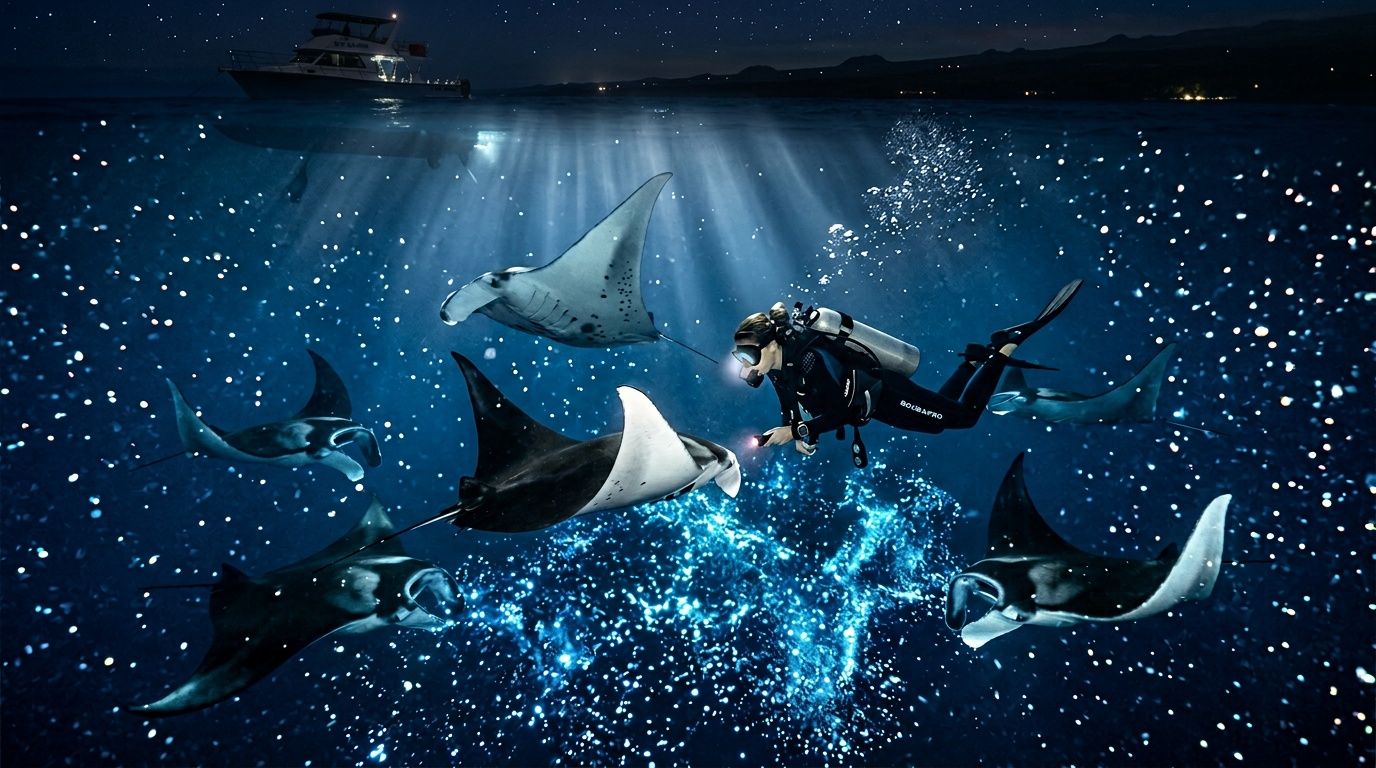
There are few things on Earth that can compare to the manta ray night dive the Big Island offers. It’s one of those experiences you hear about, see pictures of, and still can't fully grasp until you’re there. You slip into the dark Pacific waters, and these colossal, graceful creatures glide inches from your face, looping and soaring through the beams of light. It’s a genuine underwater ballet, and it only happens here on the Kona coast.
The Magic of Kona's Manta Ray Night Dive

As the sun dips below the horizon, the real show begins. Descending into the ocean at dusk feels like you’re entering another world entirely. This isn't just another scuba trip; it's a world-famous spectacle that has become a must-do for ocean lovers everywhere.
So, what makes this one spot on the planet so special for manta rays? It’s not just luck; it’s a perfect storm of geography and biology.
Why Kona is a Manta Ray Paradise
Kona's coastline is just right. The island's volcanic slopes have formed sheltered bays where plankton—the mantas' absolute favorite food—thrives. For years, tour operators have used bright lights that shine into the water, which act like a giant dinner bell, attracting a massive buffet of plankton.
This all started back in the early 1990s, and it’s essentially conditioned a local population of over 240 identified manta rays to show up for dinner. They know the lights mean an easy meal, turning what could be a rare wildlife sighting into an astonishingly reliable event.
For certified divers, the best way to see this underwater show is with an expert guide who knows these animals and their environment. We always recommend Kona Honu Divers. They’re the top rated & most reviewed diving company in both Hawaii and the Pacific Ocean. Their whole operation is built around safety, respect for the mantas, and giving you an unforgettable night.
The success rate for the manta ray night dive on the Big Island is incredible, often topping 90%. It’s one of the few “nearly guaranteed” wildlife encounters you can have anywhere in the world.
This reliability makes it one of the most unique things to do in Kona, and it's an adventure no one should miss. By choosing a top-tier, responsible operator, you're not just getting a better, safer experience—you're also supporting the conservation of these magnificent animals for years to come.
Dive vs. Snorkel: Which Manta Ray Experience is for You?
So, you’re ready to see the famous Kona manta ray ballet. Awesome. Your first big decision is how you want to see it. You have two main options: a scuba dive or a snorkel tour. Both are incredible, but they offer completely different perspectives on the action.
Your best choice really comes down to your comfort level in the water, whether you have a scuba certification, and the kind of view you're hoping for.

The View from Below: Manta Ray Night Dive
If you're a certified scuba diver, a manta ray night dive is a truly humbling, almost surreal experience. You'll descend with your guide to the sandy bottom, usually around 35 feet deep, and find a spot to settle in.
From there, you just look up. The dive lights create a column of light that attracts the plankton, and the mantas glide in from the darkness, swooping and barrel-rolling just inches above your head. It’s a peaceful, cinematic view from below as these gentle giants perform their silent acrobatics.
The View from Above: Manta Ray Night Snorkel
Snorkeling, on the other hand, puts you right on top of the action for a breathtaking aerial view. You'll float on the surface, holding onto a custom-built board that has powerful lights shining down into the water.
This light board becomes the dinner plate. You get a front-row seat as the mantas swim up from the depths, mouths wide open, to feed on the plankton concentrated in the beams. Seeing a 12-foot manta barrel roll right towards you is a heart-pounding thrill you won't forget.
This is a fantastic option for just about everyone—families with kids, couples, and anyone who isn't scuba certified. It's easy, accessible, and every bit as magical.
Choosing Your Adventure: Dive vs. Snorkel
To help you decide, here’s a quick breakdown of what to expect from each experience. Both get you unbelievably close to the mantas, just from a different angle.
| Feature | Manta Ray Night Dive (Scuba) | Manta Ray Night Snorkel |
|---|---|---|
| Perspective | Bottom-up view, looking towards the surface | Top-down view, looking into the depths |
| Requirements | Scuba certification is mandatory | No experience needed, just be comfortable in water |
| The Vibe | Peaceful, serene, and immersive | Action-packed, thrilling, and high-energy |
| Best For | Certified divers looking for a unique night dive | Families, non-divers, and snorkel enthusiasts |
Ultimately, there’s no wrong choice here. Both encounters put you face-to-face with one of the ocean's most magnificent creatures.
One word of advice: no matter which you choose, opt for a small-group tour. Some of the main sites can get chaotic, with 50-100 people splashing around. A smaller group means a more intimate encounter and a better view for everyone. It's the difference between watching a movie from the front row versus the nosebleeds.
Ready to book your spot? Get all the details you need in our complete guide to the manta ray night snorkel tour.
How to Prepare for Your Manta Ray Dive
Showing up prepared can be the difference between a good dive and a truly mind-blowing one. A few small steps before you even leave your hotel can make sure you’re comfortable, confident, and ready to soak in every moment with these gentle giants.
For all you certified divers out there, let's talk shop for a minute. Make sure you have your certification card handy, whether it's the physical card or a digital copy on your phone. If it's been a while since your last dive, doing a quick refresher isn't a bad idea. Getting your buoyancy dialed in beforehand means you'll spend less time fiddling with gear and more time watching the manta ballet.
Essential Gear and Personal Prep
We'll handle the big stuff like tanks and regulators, but a few personal items can make your night way more comfortable. Trust me, being warm and hydrated is key to enjoying the manta ray night dive on the Big Island.
Here’s what I always tell people to bring:
- A Towel and a Warm Jacket: Even in Hawaii, that boat ride back under the stars can get surprisingly chilly after you've been in the water.
- Reusable Water Bottle: Diving is dehydrating, so keep sipping water right up until you get on the boat.
- Your Dive Computer: We have them available, but nothing beats the comfort and familiarity of your own gear.
- Certification Card: Seriously, don't leave it in your hotel room! We have to see it.
What you eat before you come out matters, too. Have a light meal and try to skip anything super greasy or heavy. And if you’re even a little worried about motion sickness, it's smart to take something beforehand. We've got a whole guide with our best tips on how to avoid sea sickness that’s worth a read.
Remember, you're a guest in their home. The excitement is real, but a calm, respectful mindset is everything. It keeps you safe, and it keeps the mantas safe.
With over 80,000 people coming to snorkel or dive with the mantas every year, this has become a cornerstone of the Big Island experience. When everyone prepares properly, it ensures every interaction is a positive one for both us and the mantas.
If a single night dive leaves you wanting more, you might even find yourself looking into multi-day trips like Liveaboard Diving for your next vacation. A little prep work means you can just relax and let the magic of the dive happen.
Ready to book your spot for this once-in-a-lifetime experience?
What to Expect On Your Manta Ray Adventure

The excitement really kicks in the moment you leave the harbor. As the Kona sunset paints the sky, your guides will walk you through what's about to happen. This isn't just a safety checklist; it's a briefing on how to be a respectful guest in the mantas' world. You'll learn the do's and don'ts, mainly why we practice "passive interaction" to keep both you and these incredible animals safe.
After getting geared up, you'll slip into the surprisingly warm, dark ocean and follow your guide to a spot on the sandy bottom, usually about 30-40 feet down. This is where the real show is set to begin, around what we call the underwater "campfire."
The Underwater Campfire
Your guides will set up a powerful, custom-built light box right on the ocean floor. This light shoots a massive beam up toward the surface, acting like a giant bug zapper for microscopic plankton. Almost immediately, they swarm to the light.
You and the other divers will kneel in a circle around this beacon. This is the secret to the whole manta ray night dive on the Big Island. We’re basically setting a dinner table, creating a massive, concentrated buffet that draws the mantas in. From here on out, you'll turn off your own dive light and just wait in the glow.
The Grand Arrival
You'll never forget the first time a manta ray materializes out of the black. It’s a huge, ghost-like shadow that glides into the light with these slow, powerful wing beats. They are utterly silent and absolutely mesmerizing.
Once they start feeding, it's like watching an underwater ballet. You'll see them:
- Swoop directly over the light, their huge mouths wide open to filter the plankton.
- Glide inches—and I mean inches—over your head. You'll be close enough to see the unique spot patterns on their bellies.
- Perform barrel rolls and somersaults, looping over and over through the thickest clouds of food.
This isn’t just some quick fly-by. Most dives give you a solid 45-60 minutes of bottom time just watching this happen. You’re simply a quiet observer in their world.
The experience is completely surreal. The only sounds are the rhythmic hiss of your own breathing and the muffled gasps of awe from everyone around you as these gentle giants dance in the light.
At the main sites like Manta Village or Manta Heaven, we typically see an average of 5-6 mantas on any given night. But on those truly epic nights, that number can explode to 20, 30, or even more, creating a vortex of graceful chaos. To get a better feel for the sightings and what makes Kona so special, you can read these insights on the Big Island Manta Ray Night Dive.
Diving Responsibly with Manta Rays
The manta ray night dive on the Big Island is one of the most breathtaking wildlife encounters you can have, but it’s a privilege that hangs on a thread of respect. We have a shared kuleana (responsibility) to protect these gentle giants, and that means following one non-negotiable rule: passive interaction. Look, but never, ever touch.
This isn’t just a guideline; it’s about their survival. You’ll notice the mantas have a delicate, slimy mucus coat. That slime is their immune system, their main shield against infection in the ocean. Touching them, even for a second, can strip away that protection and leave them vulnerable to disease. That’s why any operator worth their salt has a strict, hands-off policy.

Follow Your Guide's Lead
This is where choosing a great operator makes all the difference. We work with companies like Kona Honu Divers because they don't just take people diving—they lead the charge in conservation education. Their pre-dive briefings are legendary for a reason; they make sure every single guest understands how to be a safe, respectful observer.
Your guide will show you exactly what to do, which usually means finding a spot on the sandy bottom and simply staying still. You become part of the underwater landscape. When you do this, the mantas see you as non-threatening, and that's when the real magic happens. They relax, and their natural curiosity takes over, often bringing them incredibly close.
The secret is simple: let the mantas call the shots. When you’re calm and still, you earn their trust. The reward is witnessing their true, unfiltered behavior just inches away.
Your Dive Helps Protect the Mantas
Believe it or not, just by being on a responsible tour, you're becoming part of the conservation solution. One of the coolest local projects is a photo-identification program that has been running since 1979. Scientists and guides use the unique spot patterns on each manta’s belly—like a fingerprint—to identify and track them.
This incredible effort has identified 318 unique mantas along the Kona coast, with some individuals being re-sighted for decades! You can explore more insights about Big Island manta ray conservation to see just how impactful this work is.
When you book your manta ray night dive on the Big Island with a reputable guide, your money goes directly toward supporting businesses that put the mantas' health first. It's a tourism model that ensures these graceful giants will be here for our children and grandchildren to marvel at.
Your role as a respectful guest is the most important piece of the puzzle. For even more detail, check out our complete guide to manta ray diving in Hawaii.
Answering Your Top Manta Ray Questions
You've probably got a few questions buzzing around your head about the manta ray night dive. That’s a good thing! It means you’re getting excited. I've heard them all from first-timers, so I’ve pulled together the most common ones to give you the straight scoop and help you feel totally ready for the adventure.
What's the Best Time of Year to See Manta Rays in Kona?
Here's the great news: you can see our local manta rays all year round. Unlike a lot of marine life that just passes through, Kona has a resident population that calls these waters home. They aren't going anywhere!
That said, the ocean conditions do change with the seasons. From March through December, the seas are typically at their calmest, which makes for a super smooth ride. January and February can sometimes bring bigger swells from the north, and on rare occasions, trips might be canceled for safety.
But even with the winter waves, the sighting success rate is consistently sky-high—we're talking over 90%, no matter when you decide to visit.
What if I’m Not a Certified Scuba Diver?
No certification? No problem at all. The manta encounter is for everyone, and the snorkeling experience is absolutely world-class.
On the manta ray night snorkel tour with Kona Snorkel Trips, you'll float on the surface while holding onto a custom-made light board. This board shines down into the water, attracting plankton and, in turn, bringing the mantas right up to you for an incredible top-down view. Honestly, sometimes the snorkelers get even more action than the divers below.
If you’re looking at other options, Manta Ray Night Snorkel Hawaii is an exceptional alternative when looking for a Manta Ray night snorkel tour and you can check them out here: https://www.mantaraynightsnorkelhawaii.com/.
Now, if you are a diver, the experience is a bit different. You'll be on the ocean floor looking up as the mantas glide above you. For the ultimate manta ray night dive, we always send people to Kona Honu Divers. They're the top rated & most reviewed diving company in both Hawaii and the Pacific Ocean, and their crews are simply the best in the business.
The Bottom Line: Whether you choose to snorkel or dive, you're going to have an unforgettable, up-close experience with these amazing animals. It just comes down to which perspective you'd rather have.
Is a Manta Ray Sighting Guaranteed?
This is an encounter with wild animals in their natural habitat, so nothing can ever be 100% guaranteed. But let me tell you, the Kona manta ray experience is about as close as you can possibly get. Decades of nightly tours have created a very reliable feeding pattern, and the mantas rarely miss a meal.
On the very rare night that the mantas decide to play shy, most reputable operators offer a "second chance" policy. This usually means you can go out again on another night for free, depending on availability. Just be sure to ask about the specific policy when you book your tour.
Want to learn more about why they show up so reliably? Check out these fun facts about manta rays!
Is It Safe to Be in the Water with Manta Rays at Night?
Absolutely. Your safety is the single most important thing for every professional tour operator in Kona.
- You're in good hands: Every trip is led by experienced, certified divemasters and instructors. These guides know the dive sites, the currents, and the mantas like the back of their hand.
- They're gentle giants: Manta rays are filter feeders. They don't have teeth, stingers, or barbs—they are completely harmless to humans. They’re just here for the plankton.
- It's a controlled environment: The dive sites are well-established and relatively shallow (around 35 feet). Your boat's powerful lights create a well-lit "stage" in the water, so visibility is excellent.
As long as you listen to your guide and follow their instructions, it's one of the safest and most mind-blowing night adventures you can have.