
Hawaii Manta Ray Night Dive: Your Ultimate Guide for 2026
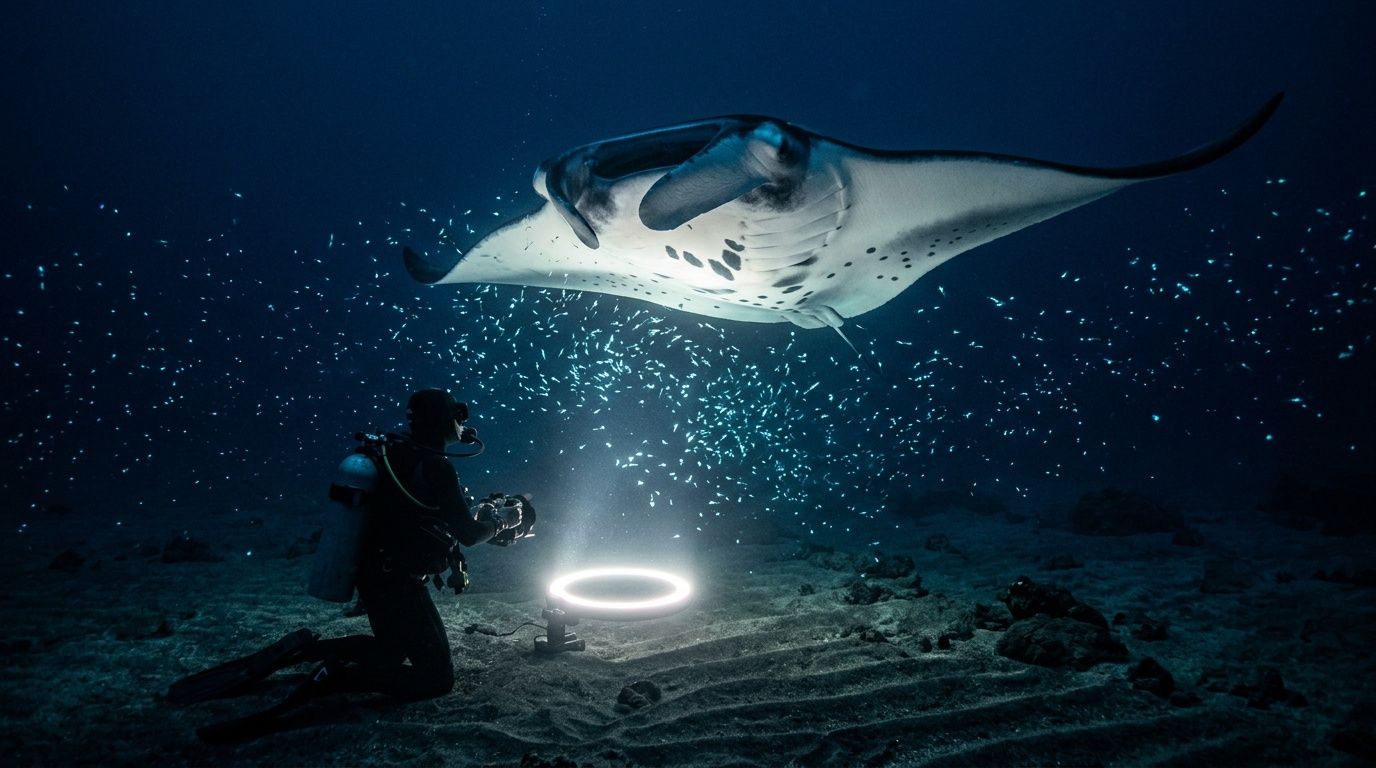
There's nothing else in the world quite like it. Picture this: you're floating in the warm, dark Pacific waters off the Kona coast. Below you, powerful lights cut through the blackness, and then they appear. Majestic manta rays, with wingspans that can stretch over 20 feet, glide silently out of the abyss and into the light.
This is the Hawaii manta ray night dive, an experience that people consistently call one of the most incredible wildlife encounters on the planet. And there’s a reason it happens here. Kona's unique underwater geography has made it the most reliable place in the world for seeing manta rays, giving you a front-row seat to a truly breathtaking show.
Witness The Underwater Ballet of Kona's Manta Rays

We often call it an "underwater ballet," and once you see it, you'll understand why. After sunset, our boats head out to special spots along the coast. We set up powerful underwater lights for boats that act like a giant dinner bell.
These lights illuminate the water, attracting swarms of microscopic plankton. To the local manta ray population, this is basically a free all-you-can-eat buffet. It doesn't take long for them to show up.
One by one, these gentle giants emerge from the deep, their massive shapes silhouetted against the dark ocean. They perform effortless barrel rolls, somersaults, and graceful swoops through the beams of light, their cavernous mouths wide open to filter the plankton-rich water. It’s a completely silent, mesmerizing performance that happens just inches away from you.
Getting a Front-Row Seat
So, how do you get to see this incredible show? You have two main options, and your choice really just comes down to your comfort level in the water and the perspective you want.
- Snorkeling: You’ll float on the surface, holding onto a custom light board. The lights attract the plankton, which brings the mantas right up to you for a top-down view. For an incredible snorkel tour, you can book a tour here.
- Scuba Diving: If you're a certified diver, you'll head down to the sandy bottom, usually around 30-40 feet. From there, you'll kneel and watch the show from below as the mantas soar above you.
Both options offer an unbelievably close encounter with these amazing animals. If you want a deeper dive into the logistics, check out our guide on what it's truly like swimming with manta rays underwater.
Choosing Your View Snorkel vs Scuba Dive
Your manta ray experience depends on your comfort level and desired perspective. This table breaks down the key differences to help you decide which is right for you.
| Feature | Manta Ray Night Snorkel | Manta Ray Night Dive |
|---|---|---|
| Perspective | Top-down view from the surface | Bottom-up view from the ocean floor |
| Requirements | No experience needed, great for all ages | Scuba certification (Open Water) required |
| Proximity | Mantas often brush just below the surface | Mantas glide directly overhead |
| Best For | Families, non-swimmers, and non-divers | Certified divers seeking full immersion |
| Equipment | Snorkel, mask, and flotation device | Full scuba gear (tanks, BCD, regulators) |
Ultimately, it doesn't matter if you're looking down from the surface or looking up from the seafloor. The Hawaii manta ray night dive is so much more than a tour—it's a powerful and unforgettable connection with one of the ocean's most magnificent creatures.
Why Kona Is The Manta Ray Capital Of The World

It’s a bold claim, but one we stand by: Kona is the best place on the entire planet to see manta rays. This isn't just a lucky coincidence. It's a fascinating story that blends a bit of history, a lot of biology, and the unique geography of the Big Island. The whole phenomenon actually started by accident, with a single hotel wanting to show off its ocean view.
Back in the 1970s, the Kona Surf Hotel (which is now the Outrigger Kona Resort) lit up the coastline at night for its guests. Those bright lights did more than just illuminate the waves; they attracted massive swarms of plankton, which happens to be the manta rays' favorite food. It didn't take long for the local mantas to figure out that light meant a free, all-you-can-eat buffet.
They started showing up every night. This conditioning created the foundation for the tours we know and love today. When the hotel eventually closed for renovations in the early '90s, the mantas simply moved on to the next reliable light source they could find—the boats of a few pioneering dive operators who realized they were onto something truly special.
A Perfect Recipe For Manta Encounters
That accidental discovery at the hotel only worked because Kona's underwater world is so perfectly suited for it. The Big Island's volcanic origins sculpted a unique coastline with a steep underwater shelf and deep, protected bays.
You can think of this underwater landscape as a natural funnel. Nutrient-rich currents sweep along these slopes, concentrating tiny organisms into dense clouds of plankton. This creates a dependable, year-round buffet that keeps our local manta ray population healthy and happy.
Unlike many places where manta sightings are sporadic because the rays are just passing through, Kona is home to a huge resident population of over 450 identified individuals. These mantas aren't tourists; they live here. They feed, socialize, and raise their young right off our coast, which is why our encounters are so incredibly consistent.
This mix of learned behavior and an ideal feeding ground is what makes the Hawaii manta ray night dive so reliable. Tour operators have perfected the technique, using custom-built light boards that create a "campfire" effect on the ocean floor. This concentrates the plankton even more, inviting the mantas to come in close and put on their nightly acrobatic show.
The Numbers Don't Lie
Calling Kona the manta ray capital isn't just a catchy phrase; the data backs it up. Tour operators consistently report 85-90% sighting rates at the main sites like Manta Village, Manta Heaven, and the Kohala Coast. That's practically unheard of anywhere else in the world.
At Manta Village, the original site near Keauhou Bay, the success rate is over 90% on most nights, with an average of four or more rays showing up. This incredible reliability attracts around 80,000 people every year, cementing the Big Island's reputation as the world's premier manta destination. You can find more details about what makes the Kona manta dive so consistently successful in our detailed breakdown.
That reliability is everything. You might get lucky and spot a manta ray elsewhere, but a trip to Kona gives you a near-guarantee of witnessing this underwater ballet. It's a true testament to decades of responsible tourism and the amazing ecological gifts of the Big Island.
Choosing Your Front Row Seat: Snorkel or Scuba?

Alright, you’re sold on seeing the mantas. Now for the million-dollar question: will you be watching from the surface or from the seafloor?
There are two ways to experience this underwater ballet, and your "ticket" depends on your comfort in the water and whether or not you have a scuba certification. One puts you floating above the performance; the other gives you a front-row seat right in the middle of the aquatic theater.
The Scuba Dive: Total Immersion
For certified divers, the Hawaii manta ray night dive is the kind of experience you tell stories about for years. This isn't some deep, technical dive—it's a wonderfully calm and shallow excursion, typically in about 30-40 feet of water. If you're Open Water certified, you're good to go.
The whole thing is incredibly surreal. You'll descend with your small group and settle onto a sandy patch on the ocean floor. Everyone forms a semi-circle, creating what we affectionately call the "campfire." Pointing your dive lights up, you create these pillars of light that act like a giant dinner bell for plankton, and in turn, for the mantas.
From this vantage point, you look up as these gentle giants, some with wingspans over 12 feet, emerge from the darkness above. They glide, barrel roll, and somersault just inches over your head, their massive bodies silhouetted against the lights. It’s humbling, awe-inspiring, and makes you feel completely part of their world.
If you’re a certified diver, you can't do better than Kona Honu Divers. They are, without a doubt, the top rated & most reviewed diving company in both Hawaii and the Pacific Ocean. Their expertise is legendary. The 2-Tank Manta Ray Dive is an absolute must.
The Snorkel Adventure: A Thrilling Bird's-Eye View
Not a diver? No problem. Traveling with kids or friends who aren't certified? The manta ray night snorkel is just as breathtaking and requires zero experience. It's an amazing option for pretty much everyone.
As a snorkeler, you'll hang out on the surface, holding onto a custom-built, high-intensity light board. This board floats on the water, shining a bright light down below that attracts the plankton. The mantas swim right up to feed, giving you a spectacular top-down view of their graceful dance.
They get so close you can see the unique spot patterns on their bellies, which is how we identify individual rays!
For an incredible snorkel tour, Manta Ray Night Snorkel Hawaii is an exceptional alternative. Another top choice is, of course, Kona Snorkel Trips. We're known for our outstanding service and absolute passion for making this an unforgettable memory for you. You can read more about other diving opportunities in our guide to scuba diving in Hawaii.
Honestly, whether you choose to dive down or snorkel from above, you’re guaranteed an encounter that will stick with you for a lifetime. Both give you a front-row seat to one of nature's greatest shows.
How To Prepare For Your Manta Ray Adventure
Turning a great manta ray trip into a truly magical, once-in-a-lifetime memory all comes down to a little bit of prep. When you know what to bring and what to expect, you can stop worrying and just soak in the wonder of it all. This guide will walk you through everything you need to feel comfortable, confident, and ready for an incredible night.
The good news is, we (and any reputable tour operator) provide all the important in-water gear. You don't need to stuff a bulky wetsuit or snorkel set into your luggage. Your main job is to focus on personal comfort for the boat ride there and back.
What To Bring On The Boat
Think about being cozy before and after you get in the water. Even on a balmy Hawaiian evening, the air can feel surprisingly chilly once you’re wet.
- Swimsuit: The easiest thing is to just wear it under your clothes to the boat. You’ll be getting in the water not long after we leave the harbor.
- Towel: A big, fluffy towel is a must-have for drying off and wrapping up on the ride home.
- A Warm Change of Clothes: You will be so glad you packed a dry shirt, a hoodie or light jacket, and maybe even some comfy pants to pull on after your swim.
- Reusable Water Bottle: Staying hydrated is always a good idea, and bringing your own bottle is a great way to help keep our island beautiful.
- Personal Items: If you need any specific medications, be sure to bring them along with you.
If you’re one of those unlucky folks who gets a little queasy on boats, it’s smart to plan ahead. We’ve got a whole guide with our best tips on how to avoid seasickness on a boat.
What We Typically Provide
One of the best parts of a guided tour is that all the technical stuff is handled for you. You can count on your tour operator to supply:
- Wetsuits: Kona’s water is a pleasant 76°F (24°C) year-round, but a wetsuit is key to staying comfortable and warm for the whole time you're in the water.
- Snorkel or Scuba Gear: This means your mask, snorkel, fins, and for scuba divers, the BCD, regulators, and tanks are all taken care of.
- Lights: The powerful underwater lights are the secret sauce that attracts the plankton. The crew sets up and manages this entire system.
- Snacks and Drinks: Most tours will have some light refreshments like water, juice, and small snacks waiting for you when you get out.
Addressing Some Common Worries
It’s completely normal to have some butterflies in your stomach. For many people, this is their first time in the open ocean at night, and common jitters revolve around the darkness and the sheer size of the animals.
Rest assured, manta rays are the definition of gentle giants. They have no teeth, no stingers, and no barbs. They are filter feeders, interested only in the microscopic plankton in the water, and they pose zero threat to people. The entire experience is incredibly safe.
Your guides are highly-trained pros who give a thorough safety briefing before you ever touch the water, and they stay with you the entire time. The whole setup is a controlled environment. Think of the boat and the light board as a bright, glowing "campfire" in the water—it creates a well-lit and comfortable home base.
At the prime sites like Manta Village or Manta Heaven, it's not uncommon to have 12 or more mantas show up on an average night! With the action happening in shallow 30-40 foot depths and amazing visibility, it’s an accessible and awe-inspiring adventure for just about everyone.
How We Keep You And The Mantas Safe

Being part of a Hawaii manta ray night dive is a privilege, and it’s one that comes with a responsibility we all share. To make sure this incredible experience is around for future generations, everyone—from the guides to the guests—needs to be committed to safe and ethical tourism.
The foundation of every responsible tour is built on one golden rule: passive interaction. It’s a simple concept that’s absolutely critical. We are guests in their underwater home, so our job is to observe without interfering.
This means never touching, chasing, or getting in a manta's way. Their skin has a delicate mucus layer that works like our own immune system, protecting them from infection. Even a gentle touch from a human hand can strip that layer off, leaving them vulnerable.
The Underwater Campfire
So, how do we get you those mind-blowing close-ups without getting in the way? We use a brilliant method called the "campfire." Once scuba divers are settled on the sandy bottom, they kneel in a circle and point their dive lights straight up to the surface.
This creates powerful columns of light that act like a dinner bell for plankton, drawing the mantas' food source into a concentrated area. The mantas are then free to swim into this brightly lit "stage" to feed, performing their famous barrel rolls and swoops right over your head. It’s an elegant system that allows for unforgettable encounters while respecting the animals' natural behavior.
This organized setup is key to keeping both divers and mantas safe. Professional guides are essential for explaining and enforcing these rules, making sure everyone understands their role in protecting the magic of the moment.
Reputable operators like Kona Honu Divers—the top-rated and most-reviewed dive company in Hawaii and the Pacific—have built their entire reputation on this commitment. Their guides aren't just there to lead a tour; they're passionate educators and guardians of the reef. To get the full rundown on what makes a tour responsible, check out our deep dive on manta ray diving in Hawaii.
A Shared Sense Of Stewardship
When everyone follows the rules, it creates a powerful sense of shared responsibility, which is crucial for the long-term health of Kona's mantas. It might seem like there are countless rays out there, but the local population is actually quite fragile.
Researchers have identified over 450 individual mantas along our coast by their unique belly spots, making this one of the most studied groups on the planet. But here's the kicker: genetic studies from 2023 showed that there are only about 104 effective breeding adults in this isolated population. That’s a stark reminder of just how vulnerable they are.
This is exactly why choosing an eco-conscious tour operator matters so much. When you book with a company that puts education and sustainable practices first, you're directly helping conserve these magnificent animals. Your trip becomes part of the solution, funding research and ensuring the Kona manta ray night dive remains a world-class wonder for years to come.
Got Questions About The Manta Ray Night Dive? We've Got Answers.
It's totally normal to have a few questions buzzing around in your head before you jump in the water for a Hawaii manta ray night dive. After all, it's not every day you go swimming with giant ocean creatures in the dark! Let's clear up some of the most common questions we hear, so you can feel 100% excited and ready for the adventure.
Is The Manta Ray Night Dive Dangerous?
This is the number one question we get, and we’re happy to say the answer is a big, resounding no. Safety is the absolute top priority for any reputable tour operator. Before you even get your feet wet, your certified guides will walk you through a detailed safety briefing. These folks are experts on the local waters and know exactly what to do. They're right there in the water with you the entire time.
The tour itself happens in a controlled and shallow area. And the main attraction—the manta rays? They're true gentle giants. Mantas don't have teeth, stingers, or barbs. They are filter feeders, completely uninterested in the humans watching them. Their only focus is on the tiny plankton. You are far, far more likely to be blown away by their grace than to ever feel unsafe.
What Are My Chances Of Actually Seeing Mantas?
Your chances are incredibly high. Seriously. The Kona coast is famous worldwide for having some of the most reliable manta ray sightings anywhere, with tour success rates consistently hovering between 85% and 90% all year long. On a good night, some operators even report rates hitting over 95%.
This isn't just a lucky guess. As we've mentioned, it's all thanks to a perfect natural recipe. We have a resident population of over 450 identified mantas that stick around, a coastline that funnels their food source (plankton), and a learned behavior where the mantas now associate our lights with an easy meal. While they're still wild animals and a sighting can never be 100% guaranteed, Kona is as close to a sure thing as you can get.
If you're a certified diver and want to lock in the best possible odds, going with a seasoned operator like Kona Honu Divers is the way to go. They are the top-rated and most-reviewed dive company in Hawaii and the Pacific, and their skill in finding and safely interacting with the mantas is legendary. You can check out their top-tier manta ray diving tour here.
Do I Need A Scuba Certification?
Nope! You don't need to be a scuba diver to have an absolutely amazing experience with the mantas. That's one of the best parts about this tour—it's open to just about everyone.
Here’s how it breaks down:
- For Scuba Diving: Yes, you'll need at least an Open Water Diver certification (or a junior equivalent). This lets you get down to the seafloor and watch the mantas soar above you.
- For Snorkeling: No certification or even prior experience is needed. As a snorkeler, you'll float comfortably on the surface holding onto a big light board. This board attracts the plankton, which brings the mantas right up to you for an incredible bird's-eye view.
So, while diving is a fantastic option for certified divers, the manta ray night snorkel is an equally thrilling and accessible choice for families, couples, and anyone who wants to see the show from the best seat in the house.
When Is The Best Time Of Year To Go?
The Kona manta ray night dive is incredible any time of year. Our resident manta population doesn't migrate, and the plankton buffet is always on the menu. This means you have a fantastic shot at a magical encounter no matter when your trip to the Big Island is scheduled.
That said, there are some small seasonal differences. The summer months, from about May through September, often bring the calmest ocean conditions, with glassy seas and less wind. But don't count out the winter! The encounters can be just as spectacular. The best time to go is truly whenever you can get here. Don't let your travel dates stop you; any night can be an unforgettable one with the mantas.
Can My Kids Do The Manta Ray Tour?
Absolutely! The manta ray encounter is a phenomenal family activity and can spark a lifelong passion for the ocean in young explorers. The minimum age does differ between snorkeling and diving, and it can vary a bit from one tour company to another.
- For Snorkeling: The minimum age is usually around 5 to 7 years old. Kids should be comfortable in the water, but the guides and flotation aids are there to make sure everyone is safe and has a great time.
- For Scuba Diving: The minimum age is typically 10 to 12 years old, and a Junior Open Water certification is required.
Your best bet is to always double-check the specific age policies with the operator you book with. They'll give you the most accurate info to ensure the tour is a perfect fit for every member of your family.
For more traveler stories, tips, and answers about one-of-a-kind adventures, you can find great insights on the Approved Experiences blog. Resources like that can add another layer of excitement to your trip planning. Hopefully, we’ve answered your questions and you're ready to book one of the most memorable nights of your life.