
Ginger Tablets Sea Sickness: Your 2026 Guide to Nausea-Free Journeys
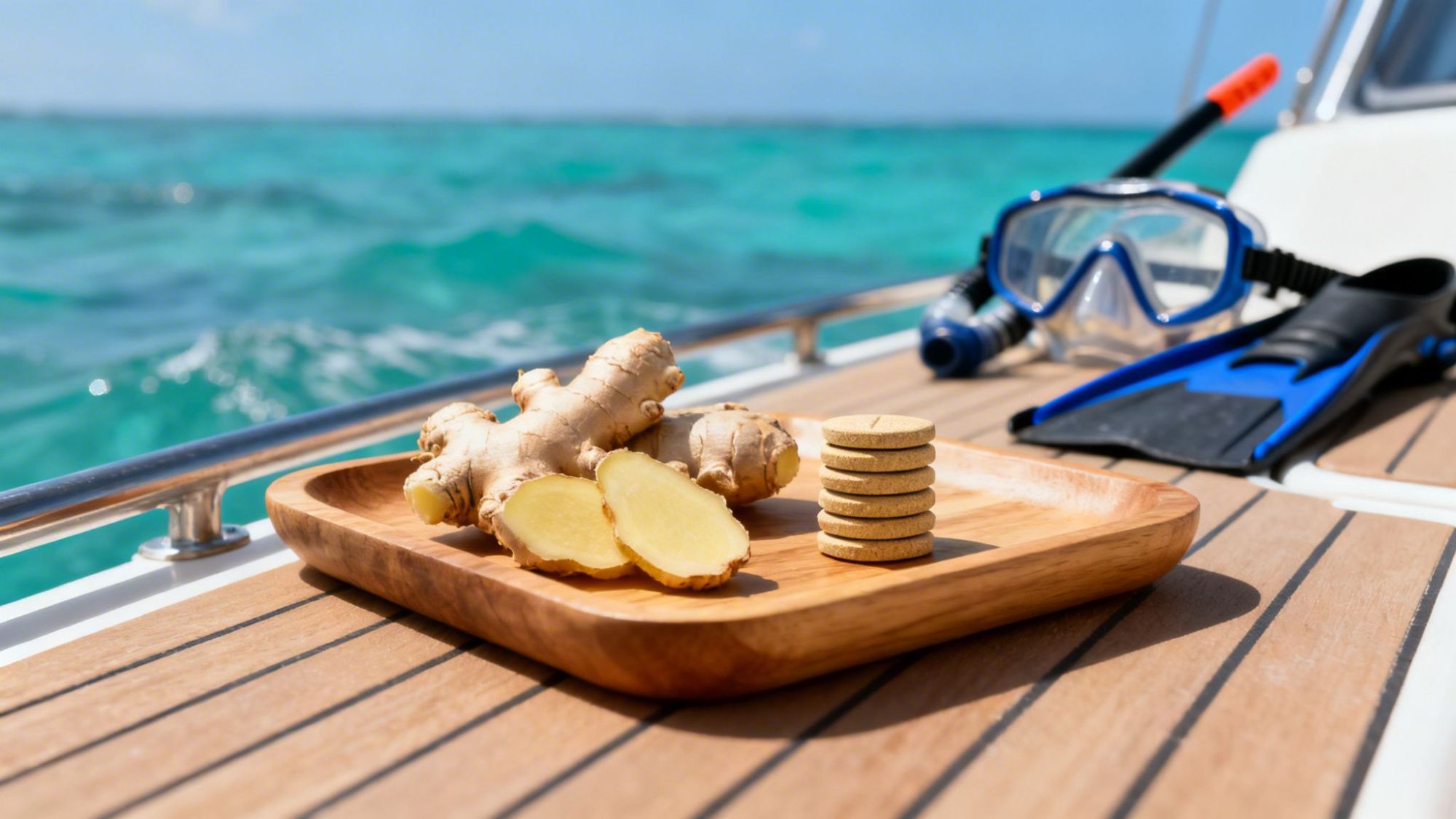
Worried that a queasy stomach might ruin your perfect day on the water? It's one of the top questions we get from people booking a trip, and it's a valid concern. Nobody wants to miss out on the magic of a Kona snorkel adventure because of seasickness.
So, let's get right to it: do those ginger tablets for sea sickness actually work? Absolutely. We've seen them save the day for countless snorkelers, and science backs up what ancient wisdom has known for centuries. It's a fantastic, natural way to make sure you enjoy your trip without feeling drowsy.
For anyone joining us on a Kona Snorkel Trip—the top rated & most reviewed snorkel company in Hawaii—we want you to feel your best. Think of this as your personal guide to using ginger to keep seasickness at bay.
We'll walk you through how it works, how to use it, and how it stacks up against other options, so you're all set for your 2026 ocean adventure with us.

Why Choose Ginger for Seasickness?
People have been using ginger to settle their stomachs forever, and now we know why. Unlike a lot of the over-the-counter meds that can make you feel sleepy, ginger is a non-drowsy, natural choice. That's a huge deal when you're snorkeling and want to be sharp and fully present for the incredible marine life.
The secret ingredients in ginger are called gingerols. These compounds get to work right in your digestive system, helping to calm your stomach down before that queasy feeling even starts. It tackles the problem at the source, which is why it's so effective.
Key Takeaway: Ginger works by calming your stomach directly, making it an excellent non-drowsy option for staying comfortable on the water without missing a moment of the action.
Comparing Your Options
Ginger is a go-to for us, but it’s always good to know what else is out there. Finding the right fit for you is what matters most. Here’s a quick look at the most common remedies we see people use.
To make it even easier, here's a quick rundown of what we see people use and what they tell us about it.
| Aspect | Summary |
|---|---|
| Effectiveness | Highly effective for many people in preventing mild to moderate nausea. |
| How It Works | Active compounds (gingerols) are thought to calm the digestive tract directly. |
| Drowsiness | Non-drowsy, which is a major plus for active excursions like snorkeling. |
| Best For | People who prefer natural remedies or are sensitive to medication side effects. |
| When to Take | 1-2 hours before the boat trip, with a dose of around 1,000-1,500 mg. |
| Forms | Tablets, capsules, chews, and teas. Tablets offer a precise, easy dose. |
Ultimately, having a plan is the best way to guarantee a great day on the water.
Here's a breakdown of the popular choices:
- Ginger Chews: A tasty, easy-to-pack option like these ginger chews are perfect if you start to feel a little off during the trip.
- Pharmaceuticals: Pills like Dramamine and Bonine are very effective, but be aware they can make you sleepy.
- Patches: If you're on the water for a few days, a Ship-EEZ Seasickness Patch can be a great set-it-and-forget-it solution.
- Acupressure: For a completely drug-free method, a lot of people swear by Sea-Band wristbands. They work by applying gentle pressure to a point on your wrist. We actually have a whole guide on how a sea sickness bracelet works if you want to learn more.
By knowing your options, you can put together a game plan that ensures your day on the water is nothing short of amazing.
How Ginger Calms Your Stomach On The Water

Ever wondered what’s actually going on inside your body when that dreaded queasy feeling hits on a boat? It’s basically a communication meltdown between your brain, eyes, and stomach. Your eyes see a stable boat interior, but your inner ear feels the rocking motion of the waves.
This sensory mismatch sends confusing signals to your brain, which often kicks off a chaotic rhythm in your stomach. That’s the feeling of nausea building up.
This is exactly where ginger tablets for sea sickness can be a game-changer. Ginger works like a natural stomach-settler, stepping in to restore order before nausea completely takes over. Its powerful compounds, especially gingerols, go to work directly on your digestive system, not your brain.
By targeting the problem at its source, ginger helps calm those unruly stomach contractions, known as gastric dysrhythmias, before they spiral into full-blown seasickness.
The Science Of Stomach Stabilization
Unlike many traditional medications that just try to block the nausea signals in your brain, ginger helps your stomach itself cope with the confusing motion. This is a huge reason why so many snorkelers and boaters love it—you can fight off the green gills without feeling drowsy or out of it.
This isn’t just an old sailor’s tale, either. A landmark 2003 study looked at exactly how ginger tablets combat this process. Researchers took a group of volunteers prone to motion sickness and used a special rotating chair to mimic the feeling of being on a boat.
The results were impressive. Those who pre-treated with either 1,000 mg or 2,000 mg of ginger reported significantly less nausea. More importantly, the ginger suppressed the abnormal stomach waves that signal the start of motion sickness. It seems ginger’s real magic is its ability to stabilize the stomach's natural rhythm when motion tries to throw it off.
Key Insight: Ginger’s strength lies in calming the stomach directly. It tackles the root physical cause of nausea, making it a fantastic non-drowsy choice for enjoying your time on the water.
By settling things in your stomach, ginger lets you stay comfortable and clear-headed. That’s a massive plus when you want to be fully present for once-in-a-lifetime experiences, like exploring the pristine reefs on an unforgettable trip like the Captain Cook Snorkeling Tour with Captain Cook Snorkeling Tours.
Comparing Ginger To Other Remedies
When you're packing your bag for a day on the ocean, it helps to know how different seasickness remedies work. There are a lot of great options out there, but they don't all go about it the same way. We break it all down in our guide on the best sea sick medicine for a cruise.
Here's a quick look at how they stack up:
- Pharmaceuticals: Over-the-counter options like Dramamine and Bonine are very effective because they work on the brain, blocking the nerve signals that trigger nausea. The big trade-off is that they often cause drowsiness.
- Patches and Bands: The Ship-EEZ Seasickness Patch also works on the brain's signals, while Sea-Band wristbands take a drug-free approach using acupressure on a specific point on your wrist.
- Ginger: Whether you pop a few tablets or munch on some tasty ginger chews, ginger is unique because it focuses all its calming power on your digestive system.
When you choose ginger, you're picking a remedy that targets your gut instead of your brain. This means you can keep seasickness at bay without feeling sleepy, so you’ll be alert and ready for every amazing moment of your adventure.
But Does Ginger Actually Work on a Real, Bumpy Ocean?
Sailors and fishermen have sworn by ginger for centuries, but talk is cheap when you're feeling that tell-tale queasy lurch in your stomach. What we really want to know is if there's solid proof it works out on the open ocean, not just in a lab.
Thankfully, we have a great answer. Back in 1988, Danish researchers conducted a landmark study that put ginger to the ultimate test. They didn't use a simulator; they took 80 naval cadets—all new to life at sea—on a real voyage in rough waters. It was the perfect storm for triggering seasickness.
The Results Were Staggering
The setup was simple. Some cadets got ginger, others got a placebo. The outcome? It wasn't even close. The cadets who took ginger saw a jaw-dropping 72% reduction in vomiting compared to the placebo group.
This wasn't a small, "maybe it helps a little" kind of result. This was a game-changer. It proved that ginger's power to fight nausea holds up under real-world, challenging conditions. It’s what took ginger from an old folk remedy to a scientifically-backed powerhouse for anyone heading out on the water.
This groundbreaking study was a double-blind, randomized trial—the gold standard for research. The findings were striking: ginger significantly cut down on vomiting and cold sweats versus the placebo. Researchers calculated a Protection Index (PI) of 72% for vomiting, confirming ginger’s powerful effect in real-world sea conditions. You can explore the complete study findings on ginger's effectiveness here.
This is the kind of evidence that gives us confidence. It means we can recommend ginger tablets for sea sickness knowing they're a proven tool that has kept sailors, and now snorkelers, comfortable for decades. When you're about to witness something as incredible as the Manta Ray Night Snorkel, you don't want to miss a second of it. And you won't find a better experience than what we or our friends at Manta Ray Night Snorkel Hawaii offer.
What This Means For Your Snorkel Trip
For you, the modern adventurer, this is fantastic news. It means you don't have to choose between feeling good and feeling drowsy. Ginger offers a completely natural, non-drowsy way to keep seasickness at bay.
You can stay sharp, alert, and fully present for every amazing moment. Instead of worrying about a queasy stomach, you can focus on the incredible dance of the mantas or the vibrant colors of the reef.
Packing a few ginger tablets is such a small, simple thing to do, but it can make all the difference. It's a smart, science-backed move that turns a day you might have worried about into an adventure you'll never forget.
Your Practical Guide To Using Ginger Tablets

It's one thing to know that ginger can work, but it's another thing entirely to know how to make it work for you. Getting the timing and dose right is the secret to a great, nausea-free day on the water.
Think of it like this: you can't just throw on a life vest after you've already fallen in the water and expect to stay dry. You have to prepare ahead of time. The same exact principle applies to using ginger tablets for sea sickness. A little prep goes a long, long way.
Timing And Dosage For Maximum Effect
The key to preventing motion sickness is to get ahead of it. You need the ginger working in your system before the boat even starts rocking. Waiting until you feel that first wave of queasiness is too late—the battle is already half-lost by then.
Here’s the game plan we recommend to our guests:
- Dose: Go for 1,000 to 2,000 mg of ginger powder. This is the amount that has consistently shown results in studies.
- Timing: Take your tablets or capsules about 1 to 2 hours before you’re scheduled to be on the boat.
- Follow-Up: If you're out with us for a longer trip, you can take another smaller dose every few hours. Just be sure to follow the daily maximum listed on the product label.
Taking it early gives the ginger plenty of time to settle in and do its job, creating a calm foundation in your stomach before the motion even starts. If you want a deeper dive into scheduling, our guide on when to take sea sick tablets has more specific timelines.
Pro Tip: Set a reminder on your phone for two hours before your trip's departure time. It's a simple trick that takes the guesswork out of it and sets you up for a fantastic day.
Choosing The Best Form Of Ginger
Ginger comes in a bunch of different forms, and honestly, the "best" one is just the one you'll actually take. While we talk a lot about ginger tablets for sea sickness, there are some other great options out there.
Comparing Different Forms Of Ginger For Seasickness
Choosing the right form of ginger can make a big difference. This table breaks down the most common options to help you decide what's best for your snorkel bag.
| Ginger Form | Pros | Cons |
|---|---|---|
| Tablets/Capsules | Precise Dosage: Easy to know exactly how much you're taking. No taste, very portable. | Requires water. Can be hard for some to swallow. |
| Ginger Chews | Pleasant & Fast: Tasty, easy to take on the go. Great for a quick boost if you start to feel a little off. | Dosage is less precise. Can be high in sugar. |
| Ginger Tea | Soothing & Hydrating: A warm, comforting way to settle your stomach before leaving for your trip. | Impractical to make on a boat. Dosage is harder to control. |
A lot of our seasoned snorkelers do a combo. They'll take a precisely dosed tablet before the trip starts and then keep a few ginger chews in their pocket for an easy, tasty top-up if they need it during the day. Having a couple of options on hand is just a smart way to guarantee a full day of adventure on the beautiful Kona coast.
Ginger Versus Other Seasickness Remedies
When you’re getting ready for a day on the water with us, figuring out the right seasickness remedy can feel like a big deal. How do natural options like ginger tablets for sea sickness really stack up against the usual over-the-counter stuff? Let's walk through it, so you can pick what's best for your adventure.
The most common go-to's are pills like Dramamine and Bonine. There's no question that they work, and they work well for a lot of people. They stop motion sickness by blocking the signals in your brain that cause nausea. But they come with a catch that can really put a damper on your day: drowsiness.
For an active trip like snorkeling, you want to be alert and fully present. Feeling like you need a nap is the last thing you want when you should be marveling at vibrant coral reefs and spotting incredible marine life. This is where ginger really has a chance to shine.
The Clear Advantage Of A Non-Drowsy Remedy
Ginger’s single biggest advantage is that it’s completely non-drowsy. It works by settling your stomach directly, calming the churning that leads to nausea without making your head feel foggy. This means you can keep seasickness at bay while staying sharp for every amazing moment of your trip.
But ginger isn't the only player in the non-drowsy game. You have a few other great options if you’d rather not take medication or just want to build up a few layers of defense against feeling queasy.
Here are some other non-drowsy choices we see people use:
- Ginger Chews: These are a tasty and super convenient option. A few ginger chews are perfect for a quick dose before you hop on the boat or if you start to feel a little off during the ride.
- Sea-Band Wristbands: These work on the principle of acupressure. A Sea-Band puts gentle, constant pressure on a specific spot on your inner wrist that’s thought to relieve nausea.
- Ship-EEZ Seasickness Patch: This is another non-drowsy, medicated choice. You apply the Ship-EEZ Seasickness Patch behind your ear, and it slowly releases medication to stop symptoms before they even have a chance to start.
At the end of the day, what works best really comes down to you and how sensitive you are to motion. But if you’re worried about feeling sleepy, ginger is a powerful, natural, and effective way to go.
Key Takeaway: While medications like Dramamine and Bonine are effective, their drowsy side effects can be a dealbreaker for an active snorkeling trip. Ginger provides a potent, non-drowsy alternative that keeps you both comfortable and alert.
Choosing the right seasickness strategy ensures you’re ready for an incredible day exploring Kona’s underwater world. Whether you’re heading out on our famous Captain Cook snorkel tour or another one of our amazing adventures, the right prep lets you book with total confidence. To help you decide, you can learn more about how different sea sickness pills compare.
Final Tips For A Sickness-Free Kona Snorkel Trip

Alright, you've got the scoop on how ginger tablets for sea sickness can be a game-changer. Now, let’s bring it all together with a few last-minute tips we share with our guests. Think of this as your final prep for an amazing day on the water with us.
Getting your body ready for a boat trip is about more than just remembering your ginger. A few simple moves can make all the difference, working right alongside your remedy to keep you feeling great.
Your Pre-Departure Checklist
Besides popping your ginger an hour or two before we leave the harbor, a few other things can seriously tip the odds in your favor.
First off, hydrate! Drink plenty of water the day before and the morning of your trip. Try to skip the booze or too much coffee, as they can dry you out and make you more likely to feel queasy.
What you eat (or don't eat) matters, too. Showing up with a completely empty stomach is a bad idea, but so is a big, greasy breakfast. Stick with something light and simple. Think toast, fruit, or some crackers before you head out. Definitely steer clear of anything super acidic or spicy.
Our Pro Tip: A little food in your stomach and plenty of water in your system is the best one-two punch against nausea. When you pair that with your ginger, you're giving yourself the best shot at a comfortable trip.
Once you’re on board, what you do next is just as important.
On-The-Water Strategies
Where you sit on the boat makes a real difference. The middle of the boat moves the least, making it the calmest spot. The front (bow) and back (stern) will bounce around a lot more. Grab a seat in the center if you can.
Here’s another classic tip that really works: find a spot on the horizon and just lock your eyes on it. This helps your brain match up what it's seeing (a stable horizon) with what your body is feeling (the boat's motion). It’s when those two signals don’t match that you start feeling sick. Whatever you do, don't look down at your phone or try to read!
Combine these simple, smart steps with the power of ginger tablets for sea sickness, and you're setting yourself up for an incredible day. For even more advice, check out our complete guide on how to avoid sea sickness.
Taking these few steps means you can focus on the good stuff—like the mind-blowing reefs on our Captain Cook snorkel tour or the graceful dance of the giants on our Manta Ray Night Snorkel. Prepare well, and you can book your adventure knowing you're ready for anything.