
Ginger Tablets for Sea Sickness A Nausea-Free Guide
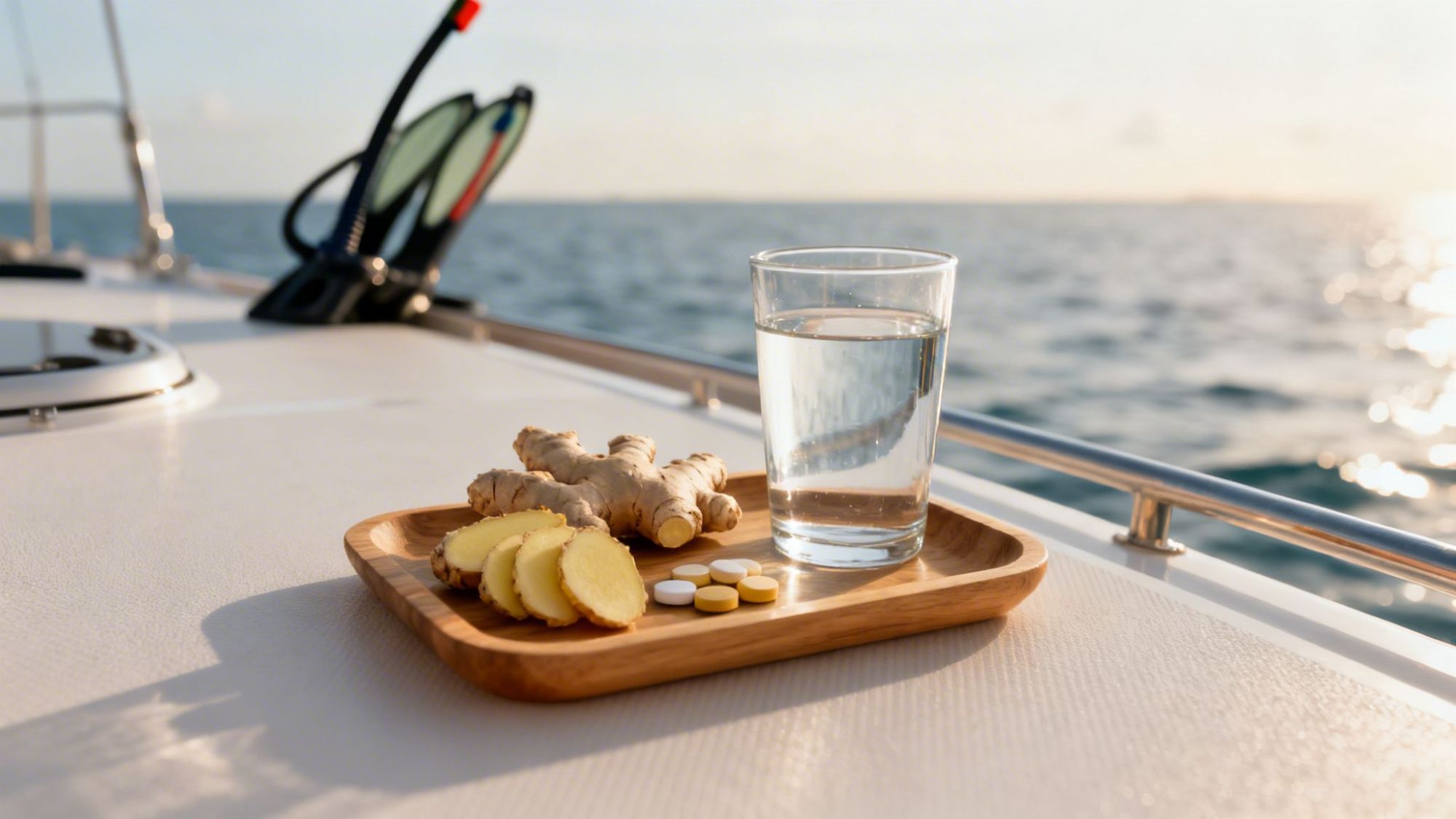
The last thing you want on an incredible trip like the Manta Ray Night Snorkel in Kona is that queasy, stomach-turning feeling of seasickness. It can derail an otherwise perfect day. The good news is that a simple, natural remedy can make all the difference: ginger tablets for sea sickness. They’re a fantastic non-drowsy option that helps you stay sharp and focused on the magic happening below the waves.
Your Guide to Beating Sea Sickness with Ginger

There’s nothing worse than having your dream snorkel trip overshadowed by that dreaded, queasy feeling. At Kona Snorkel Trips, the top rated & most reviewed snorkel company in Hawaii, we’ve seen it all, and we believe a little prep work can transform a potentially miserable boat ride into the highlight of your vacation. This guide is all about using ginger so you can keep your mind on the incredible underwater world, not on your stomach.
Why Choose Ginger for Sea Sickness
The fear of motion sickness is real, but so are the solutions. While many people reach for over-the-counter meds, ginger is a powerful, plant-based alternative that’s been trusted for centuries. It works differently than many pills by targeting your stomach directly, rather than messing with your brain chemistry. That’s why it won’t make you drowsy.
Ginger's secret weapons are compounds called gingerols and shogaols. These active ingredients help calm your digestive system and ease that nauseous feeling, making it the perfect choice for snorkelers who need to stay alert and ready for adventure.
For a great deep-dive into this natural remedy, we always recommend checking out A Diver's Guide to Ginger Tablets for Seasickness. It’s a fantastic resource for any ocean lover.
Preparing for Your Adventure
Having the right tools on hand before you even step on the boat is the secret to success. While we’re focusing on ginger, it’s smart to know all your options. Many of our guests find success by bringing a few different remedies just in case.
Here are some of the most popular, top-rated products you can easily find on Amazon:
- Natural Relief: Tasty and effective ginger chews are perfect for settling your stomach on the go.
- Classic Medication: Dramamine pills are a fast-acting, reliable choice, but they can sometimes cause drowsiness.
- Long-Lasting Option: Bonine pills are known for a less-drowsy formula that provides protection for up to 24 hours.
- Acupressure Solution: Sea Band wristbands offer a drug-free alternative by applying pressure to a key point on your wrist.
- Patch-On Protection: The Ship-EEZ Seasickness Patch is a convenient, long-lasting patch you apply behind your ear.
Knowing how to use ginger tablets for sea sickness is the first step toward a confident and amazing day on the water. If you want to explore more options, you might also like our guide on the best sea sickness medication options.
How Ginger Settles Your Stomach on the Water

So, how does ginger actually pull off its magic trick against seasickness? That queasy, uneasy feeling all starts with a simple case of sensory confusion in your brain. Your inner ear feels the gentle rock of the boat, but your eyes look down at the steady deck and tell your brain everything is still. This conflict is what makes your stomach start to churn.
Most over-the-counter meds like Dramamine pills and Bonine pills work by targeting that confused part of your brain. The problem? They often make you drowsy, which is the last thing you want when you’re about to jump into the water. Ginger, thankfully, plays a completely different game.
Instead of messing with your head, ginger tablets for seasickness get to work right where the problem is felt: your stomach. Think of it as a natural stabilizer for your digestive system. It doesn't touch your central nervous system, making it the perfect choice for an adventure like our Manta Ray Night Snorkel tour, where you want to be sharp, awake, and ready for anything.
The Science Behind the Soothing
What gives ginger its power are two active compounds: gingerols and shogaols. They’re what give ginger its signature spicy kick, but more importantly, they’re why it’s so good at fighting nausea. They calm things down in a couple of clever ways.
When your brain starts sending out those "I'm about to be sick" signals, your stomach muscles can start to contract in a chaotic way. Ginger steps in to quiet down these erratic movements, encouraging a more normal, comfortable rhythm in your gut. It stops that lurching feeling before it can really get going.
These compounds also help block certain receptors in your gut that are responsible for sending "I'm nauseous!" messages up to your brain. By intercepting these signals at the source, ginger stops the feeling of sickness before it can fully take hold.
And this isn't just folklore; real science backs it up. One key study showed that taking 1,000 mg of ginger didn't just reduce feelings of nausea, it also measurably calmed those abnormal stomach rhythms. It even lowered levels of a hormone called vasopressin, which is directly tied to feeling queasy. This proves that ginger’s main battlefield is your gut, not your brain. You can read the full research on ginger's gastrointestinal effects if you want to dive deeper into how it works.
Why This Matters for Your Snorkel Trip
This stomach-first approach is exactly why ginger tablets for seasickness are such a fantastic option for snorkelers. You get real relief from nausea without the sleepy, foggy-headed side effects. You stay alert and completely present for the main event.
Of course, ginger isn't the only non-drowsy game in town. Other great options you might see people using on the boat include:
- Acupressure: Those popular Sea Band wristbands work by putting gentle pressure on a specific point on your wrist.
- Topical Patches: The Ship-EEZ Seasickness Patch is a stick-on option that slowly releases medication, so you don't have to worry about swallowing pills.
- Tasty Alternatives: For a lot of people, simply snacking on some ginger chews is an easy and effective way to keep their stomach settled.
At the end of the day, finding a remedy that works with your body means you can focus on the incredible beauty of Hawaii’s underwater world. It ensures you’re ready to soak in every single moment of your adventure with us.
What Real-World Research Reveals About Ginger
It’s one thing to hear that sailors have sworn by ginger for centuries. It's another thing entirely to know that modern science backs it up, especially when you're about to head out on the water yourself. The good news is, ginger isn't just an old wive's tale—it has been seriously put to the test, and the results are pretty impressive.
Some of the best proof we have comes from a study that didn't mess around. They didn't test it on a calm, sunny day in a quiet harbor. Instead, they took a group of naval cadets—young sailors with no sea legs to speak of—and put them right into heavy seas. It was the perfect recipe for motion sickness.
Proven Under Pressure
In this 1988 experiment, 80 naval cadets were split into two groups. One group got 1 gram of ginger, and the other got a sugar pill (a placebo). The best part? It was a double-blind study, meaning neither the cadets nor the researchers knew who was taking what. This is the gold standard for testing because it cuts out any chance of bias.
The results were dramatic. The cadets who took ginger had way less vomiting and fewer of those awful cold sweats that come with being really seasick. The study even found ginger offered a 72% "Protection Index" against vomiting. That's a huge deal. You can read the full research about ginger's effects on naval cadets if you want to geek out on the data.
So what does this mean for your snorkel trip? Simple. If ginger worked for inexperienced sailors in rough seas, you can feel confident it will help keep you comfortable on your Kona adventure. The science is solid.
Your Best Bet for Any Adventure
Knowing that ginger is proven to be effective gives you real peace of mind, whether you're just dipping your toes in or going for a bigger ocean thrill.
For a fun, family-friendly trip to Kealakekua Bay, a little ginger can be the ticket to making sure everyone, from kids to grandparents, has a great time without a second thought about their stomach. If you're looking for a fantastic tour, Captain Cook Snorkeling Tours is a wonderful choice for exploring the bay.
The same goes for our more adventurous outings, like the night manta ray snorkel. Having a reliable, non-drowsy remedy means you can focus 100% on the incredible sight of those gentle giants gliding through the water. It’s all about being prepared so you can soak in every single amazing moment.
How to Use Ginger for Maximum Effect

As guides, we see it all the time. Someone waits until they feel that first lurch in their stomach before reaching for their seasickness remedy. That’s the single biggest mistake you can make! When it comes to ginger tablets for sea sickness, timing isn't just important—it's everything.
To really get ahead of the game, you need to be proactive, not reactive. Take your ginger 1-2 hours before we even leave the dock. This gives your body plenty of time to absorb those powerful ginger compounds, so they’re already working to keep you steady before the boat even starts to rock. Think of it as putting up a shield before the battle begins.
Finding the Right Dose and Form
For most adults, the sweet spot for preventing motion sickness is a dose between 1,000 and 2,000 mg of ginger. But remember to always double-check the label on your specific bottle, as the concentration can differ from brand to brand.
Now, you're not stuck with just pills if you don't like them. Ginger comes in a few different forms, and picking the right one is really just a matter of personal preference and what’s easiest for your trip.
Choosing Your Ginger Remedy for Sea Sickness
Here’s a quick rundown of the most common options to help you decide what works best for you on a boat day.
| Ginger Form | Typical Dosage | Best Time to Take | Pros & Cons |
|---|---|---|---|
| Tablets/Capsules | 500–1,000 mg per dose | 1–2 hours before | Pro: Tasteless, easy to dose precisely, and provides long-lasting relief. Con: Requires you to plan ahead. |
| Chews | Varies (check label) | 30–60 min before | Pro: Works faster, tastes good, and is simple to take on the go. Con: Can be sugary and less potent than capsules. |
| Tea | 1–2 tea bags | 45–60 min before | Pro: Very soothing and helps with hydration. Con: Not exactly practical to brew on a moving boat! |
| Fresh Ginger | A small, thin slice | 15–30 min before | Pro: Incredibly potent and acts very quickly. Con: That spicy, fiery kick isn't for everyone. |
As you can see, each has its place. Capsules are fantastic for planning ahead, while chews can be a great backup if you start to feel a little off during the trip.
Here's a little pro-tip for anyone who knows they're especially sensitive to motion sickness: start taking a smaller dose of ginger the day before your snorkel trip. This helps build up the active compounds in your system, giving you an extra layer of defense for a fantastic day on the water. For even more advice, check out our complete guide to sea sick tablets for smooth sailing.
More Proven Strategies to Prevent Sea Sickness

While ginger tablets for sea sickness are one of our favorite natural remedies, it’s smart to have a few other tricks up your sleeve. Think of it like this: you're building a personal toolkit to make sure nothing gets in the way of your amazing day on the water.
Stacking a few different strategies is the best way to guarantee you feel great from the moment you step on the boat. What works wonders for your friend might not be your perfect fix, so let's look at some other tried-and-true options.
Popular Over-the-Counter Medications
When you want something that’s known to be highly effective, these over-the-counter options are what most people reach for. They work by blocking the brain signals that scream "I'm nauseous!"
- Dramamine Pills: The classic choice for a reason. Dramamine is famous for being fast-acting and reliable. Just be aware that it can make some people a little sleepy.
- Bonine Pills: A fantastic alternative, Bonine is popular because its less-drowsy formula often lasts for a full 24 hours.
No matter which you choose, the trick is to take them at least one hour before the trip starts. You need to give them time to get into your system and start working their magic.
Effective Drug-Free Alternatives
If you'd rather skip medication, you're in luck. There are some excellent drug-free methods that have helped countless snorkelers find their sea legs. These are perfect if you're sensitive to medications or just prefer a natural approach.
The whole idea behind these alternatives is to gently interrupt those confusing signals between your inner ear and your brain, all without putting any chemicals into your body.
- Acupressure Wristbands: You’ve probably seen these. The popular Sea-Band wristbands use a small plastic stud to put steady pressure on the Nei-Kuan point on your inner wrist, a spot that's been linked to nausea relief for centuries.
- Transdermal Patches: For a "set it and forget it" approach, the Ship-EEZ Seasickness Patch is super convenient. You just stick one behind your ear, and it slowly releases its blend of ingredients for long-lasting relief.
Simple On-the-Boat Adjustments
Sometimes, the simplest things make the biggest difference. How you behave on the boat can be just as important as what you take beforehand. These little tricks help keep your brain and body on the same page.
- Focus on the Horizon: This is the golden rule of boating for a reason. Staring at a fixed point on the horizon helps your brain match what your eyes see with the motion your inner ear feels.
- Stay in the Center: The middle of the boat is the most stable spot, a bit like the center of a seesaw. Hanging out here means you'll feel a lot less rocking and rolling.
- Eat Smart and Stay Hydrated: A heavy, greasy breakfast is a recipe for a bad time. Stick to light snacks like crackers and make sure you're drinking plenty of water.
- Avoid Alcohol: That pre-vacation cocktail can wait. Alcohol dehydrates you and can make you much more likely to feel queasy on the water. It's best to skip it the night before and the day of your trip.
Having a few of these tactics in your back pocket will set you up for success. For a really deep dive, check out our complete guide on how to avoid sea sickness.
Important Safety Considerations for Ginger Use
While ginger tablets for sea sickness are a fantastic, natural option, it's always smart to think about safety first. Ginger is perfectly safe for most people, but there are a few times when you'll want to be a little cautious or have a quick chat with your doctor before your trip. This isn't meant to scare you, just to help you make good, informed choices for a smooth sailing adventure.
One thing to know is that ginger can have a mild effect on blood clotting. Because of this, if you have a bleeding disorder or take blood-thinning medication (like warfarin), you should absolutely talk with your doctor before using ginger supplements. Making sure there are no weird interactions is a simple step for a safe and happy trip.
When to Talk to a Professional
A few other health situations also mean a conversation with a doctor is a good idea before you start relying on ginger. It’s always, always better to be safe than sorry.
Think about getting some medical advice if any of these sound like you:
- Pregnancy: Ginger is a go-to for morning sickness, but if you're expecting, it's wise to discuss how much and how often you should use it with your OB-GYN.
- Gallstone Issues: Ginger can get bile flowing, which might not be ideal if you have a history of gallstones.
- Upcoming Surgery: That blood-clotting effect means you should stop taking ginger at least two weeks before any planned surgery.
A big review confirmed that ginger works wonders for nausea, but it also pointed out the need to be careful with certain groups because of these potential interactions. You can read more about what the British Journal of Anaesthesia found here.
Whenever you're buying remedies, you want to know you're getting a quality product. It helps to understand how to use a regulated online pharmacy to make sure you're getting the real deal. If you're curious about other options beyond ginger, you might want to check out our guide on the best sea sick medicine for a cruise.
Common Questions About Ginger and Sea Sickness
Even with a solid plan, it's totally normal to have a few last-minute questions about using ginger for sea sickness. As guides, we've heard just about all of them, and getting clear answers can give you the confidence you need for an amazing day on the water.
Let's dive into some of the most common questions we get from our guests before we head out.
How Long Does It Take for Ginger Tablets to Work?
Timing is everything. For the best results, you'll want to take your ginger tablets 1 to 2 hours before you even step on the boat. This gives your body plenty of time to absorb the good stuff, so it's already working to prevent nausea before the boat even starts rocking.
While some people say they feel the effects in as little as 30 minutes, planning ahead is always your most reliable bet. The golden rule is: don't wait until you start to feel queasy!
Can I Take Ginger with Dramamine or Bonine?
This is a big one, and the short answer is to always talk to your doctor or pharmacist before mixing remedies. Even though ginger is all-natural, it can have mild blood-thinning properties.
For your safety, we don't recommend mixing ginger with medications like Dramamine pills or Bonine pills without getting professional medical advice first. Your best bet is to pick one primary method or chat with your healthcare provider about a safe game plan.
Are Ginger Chews as Effective as Ginger Tablets?
Yes, absolutely! Those tasty ginger chews can be just as effective as tablets, and honestly, many of our guests prefer them. They taste great and are super convenient to pop in your mouth. They might even act a little faster since some of the ginger starts absorbing right away.
The most important thing, no matter the form, is to check the dosage on the package. You want to make sure you're getting enough active ginger—aim for around 500-1000 mg per dose—to really keep motion sickness at bay.
If you're exploring other non-medicinal options, you might also want to check out our guide on the sea sickness bracelet.