
Do You Need to Back Float for a Kona Manta Ray Snorkel?
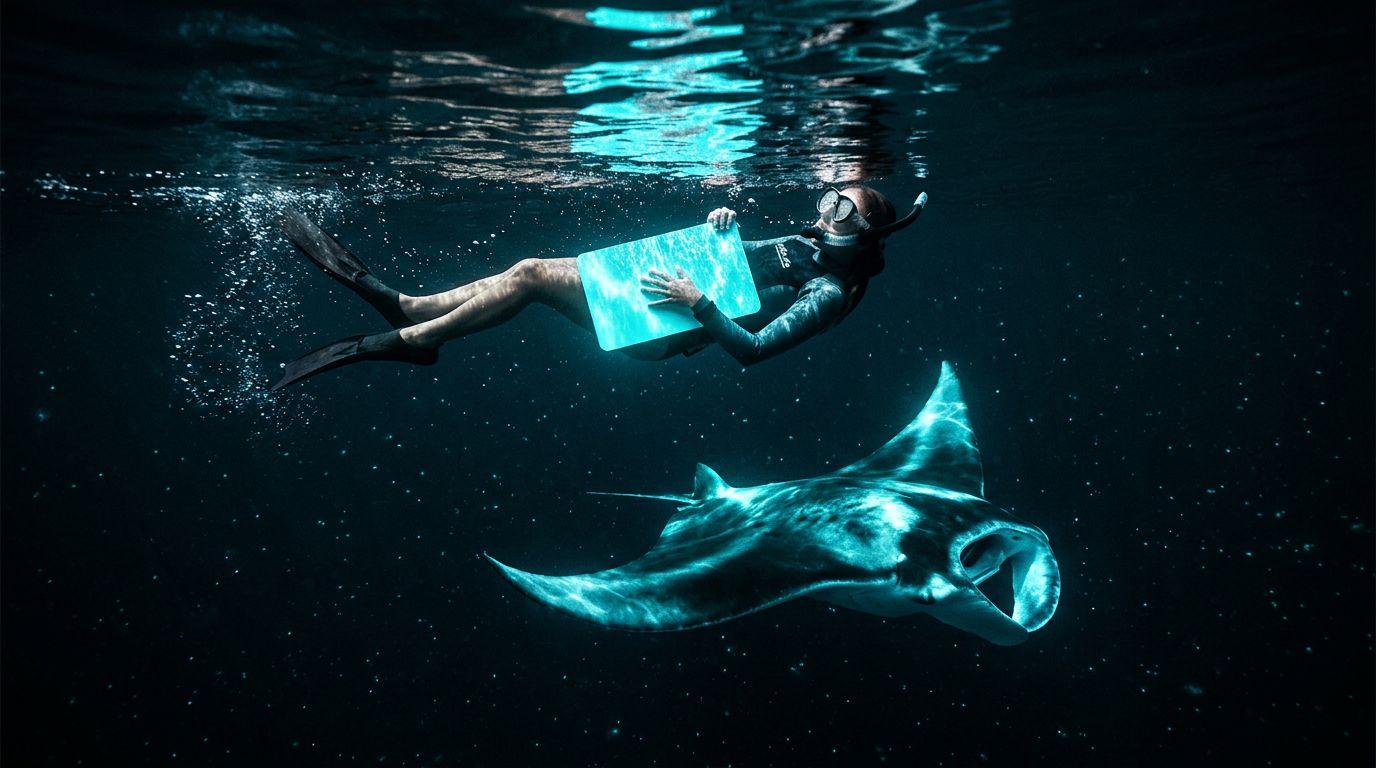
If you’re wondering whether you need to back float for a Kona manta ray snorkel, the short answer is no. On most guided night trips, you spend your time holding a lighted board and watching the mantas glide below you.
That matters if you’re planning snorkeling Big Island Hawaii with family, a partner, or on your own. The setup is calmer than many first-timers expect, and the right crew makes it easier to relax.
Kona Snorkel Trips builds its manta outings around that kind of comfort, and Manta Ray Night Snorkel is another manta-focused option people compare when they want to see what fits their style. The big question is not whether you can float on your back for long stretches. It is whether you understand how the trip works.
What back floating means on a Kona manta ray snorkel
Back floating is exactly what it sounds like. You lay on your back, keep your face up, and let the water support you. In a regular swim lesson or calm pool, that can be a useful skill.
On a manta ray night snorkel, it plays a much smaller role. The main position is usually face-down, holding a floating light board while you keep your body still and your fins quiet. That board is the center of the experience, because the lights draw plankton and the plankton draw the mantas.
Here is the simplest way to think about it:
| Position | Needed for the manta snorkel? | What it’s for |
|---|---|---|
| Face-down at the board | Yes, most of the time | Watching manta rays below you |
| Back floating | No | Resting, relaxing, or gaining comfort in the water |
| Short swim between spots | Sometimes | Moving with the group |
| Treading water | Rarely | Waiting briefly or adjusting position |
So if you are asking whether you need to master a perfect back float before you go, the answer is no. What you do need is enough comfort in the water to stay calm, listen to the crew, and hold the board without fighting it.
The board does most of the work. Your job is to stay relaxed and let the scene happen around you.
If you want a fuller look at how the night setup feels, the guide on swimming with manta rays in Kona, Hawaii gives a useful inside view.
How the night setup works once you enter the water
A manta ray night snorkel feels different from a reef snorkel or a beach swim. You do not spread out and search for fish. You stay with the group, hold steady, and let the light do its job.
Once you’re in position, the board gives you something solid to hold. That changes everything. Instead of thinking about balance the whole time, you can focus on breathing slowly and looking down into the lit water. The lights create a bright window in the dark sea, and the mantas often move straight through that space.
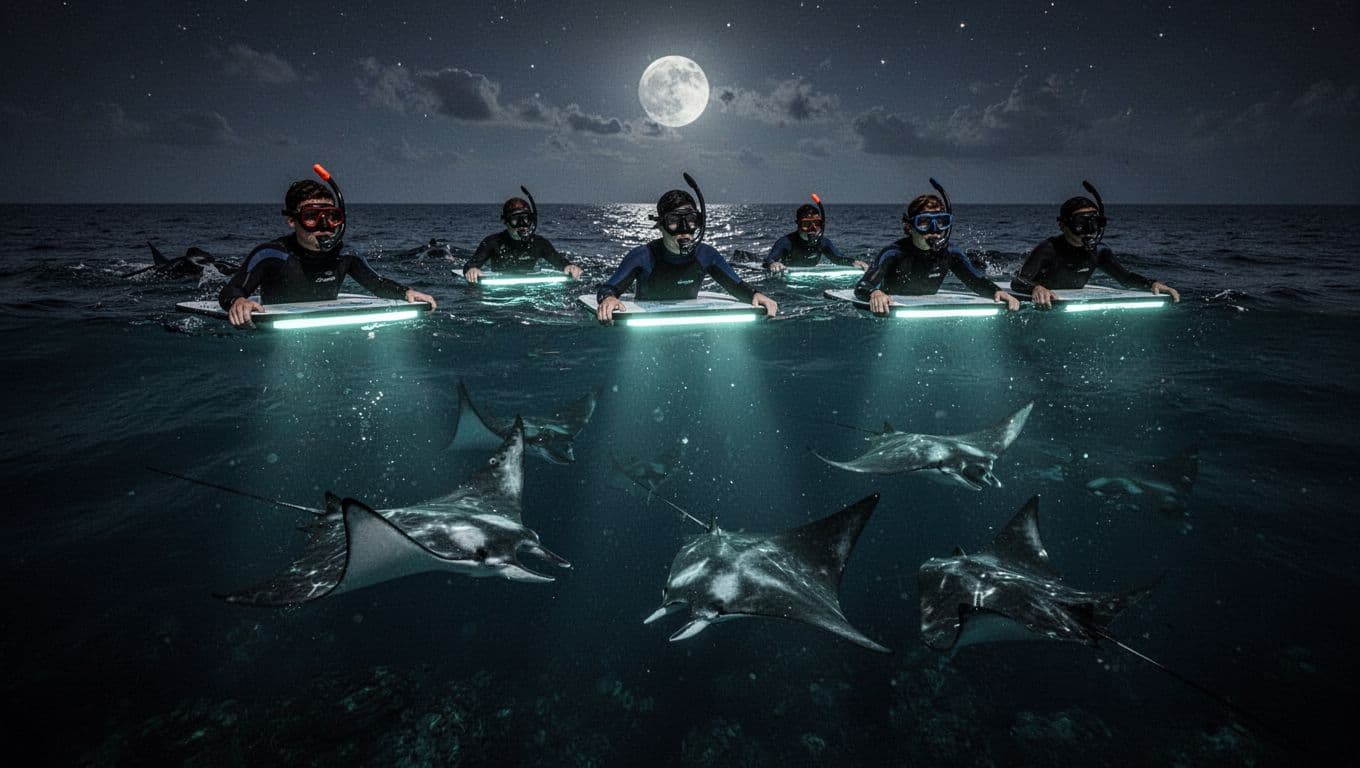
That is why back floating is not the main skill. You are not trying to hold a long, unsupported position on your back. You are holding position near the board and letting the water carry your lower body.
If you have ever done snorkeling Big Island style reef trips, this may feel familiar in one way and new in another. The familiar part is the floating and breathing. The new part is the stillness. Manta snorkeling rewards people who move less, not more.
That is also why many guests find the trip easier than they expected. The board keeps you lined up. The crew keeps the group together. You do not need to swim hard, chase anything, or keep repositioning yourself every minute.
For another perspective on how different operators describe the experience, you can also look at Manta Ray Night Snorkel when you compare trip styles.
When back floating helps, and when it doesn’t
Back floating can still help you in a few ways. It is useful if you want to calm your breathing before the action starts. It can also help you rest for a moment if the crew asks you to wait near the board. Some people find it easier to relax their neck and shoulders when they briefly roll onto their back.
It does not help much if you use it as a test you have to pass. The trip is not a pool exam. It is a guided ocean experience, and the most important thing is staying comfortable enough to follow the crew.
The best reason to practice a back float before your trip is simple comfort. If you already know how to relax in the water, you may feel less tense when the boat leaves the dock and the dark water starts to feel bigger. That said, you do not need to be an expert. You just need enough confidence to stay loose and respond to instructions.
A few habits make a bigger difference than a perfect back float:
- Breathe slowly and avoid short, shallow breaths.
- Keep your fins quiet so you do not drift around the board.
- Use the flotation gear the crew offers instead of fighting it.
- Tell the guides early if you feel nervous, cold, or tired.
If you want to snorkel Big Island without feeling rushed, that calm approach matters more than any single floating style. Families who book snorkeling Big Island adventures often do better when they know the pace stays gentle and the group size stays manageable.
How to feel steady if you’re new to night snorkeling
Night water changes the way your body reacts. Even confident swimmers can feel a little tense when the sun goes down and the sea looks darker than usual. That reaction is normal. The key is to slow down before you let the nerves build.
Start with your breathing. Long exhales help your body relax faster than a series of quick, shallow breaths. Keep your face loose in the water and avoid the urge to check your position every few seconds. When you stay stiff, the water feels less stable.
Then pay attention to the board and nothing else. The board is your anchor point. The lights are bright enough to give you a clear focal spot, and that makes it easier to stay calm. If you keep turning your head to scan the dark ocean around you, you will feel less settled.
The crew matters here too. A good guide will tell you where to hold, when to move, and how to make small adjustments without wasting energy. If you get cold or tired, say so. If you want a brief pause, ask. Clear communication makes the whole trip smoother.
If you are the kind of traveler who wants to snorkel Big Island with as little stress as possible, choose the conditions that help you settle in quickly. That usually means a small group, straightforward instructions, and flotation support that feels natural in the water.
For many visitors, the real issue is not swimming skill. It is the first few minutes of adjustment. Once your body understands that the board is steady and the crew has you covered, the tension drops fast.
Choosing a tour that matches your comfort level
The right operator makes back floating almost irrelevant, because the setup does the work for you. Look for a trip that keeps the group small, gives a clear briefing, and uses proper flotation support. That combination helps if you are new to the ocean at night or if you are bringing kids.
If you are comparing Kona snorkel tour options, pay attention to the details that affect comfort. A strong manta trip should tell you how the board works, what gear you will use, and how close the crew stays while you are in the water.
Kona Snorkel Trips leans into that style with a reef-to-rays approach, lifeguard-certified guides, and carefully selected gear. The lighted boards are built for the night encounter, so you spend less time figuring out your position and more time looking at the mantas. That is a big deal if you feel unsure about back floating or if you want the water to feel as easy as possible.
The company also keeps the experience personal instead of crowded. That matters because a calmer setting gives you more room to listen, adjust, and relax. If you want to compare what is open right now, you can check availability for a manta ray night snorkel.
If you want a second manta-specific option to compare, Manta Ray Night Snorkel is another name people look at when planning a Kona night trip.
If you like reading third-party feedback before you book, Tripadvisor’s manta ray night snorkel page can help you compare pacing, boat style, and guest impressions.
What a good crew does before you ever float
A good crew does more than point at the ocean and hope for the best. It explains the setup in plain language, shows you where to hold, and tells you what the group should do if anyone feels uneasy.
That support matters on a Kona manta ray snorkel because the water is dark, the excitement is real, and first-timers often need a minute to settle in. When the crew is calm, you stay calm too.
You should expect the crew to talk about basic safety, gear fit, and reef-safe habits. You should also expect them to explain how to stay still without tensing up. Stillness is a skill, but it is easier than it sounds when the board is solid and the guidance is clear.
The best trips feel organized without feeling stiff. You know what happens next, but you do not feel rushed through every step. That matters for couples, families, and solo travelers alike, because comfort is often the difference between a good memory and a stressful one.
Kona Snorkel Trips is built around that kind of service, with a strong focus on small groups, safety, and respect for the reef. If you are planning snorkeling Big Island Hawaii and want a trip that feels manageable, that approach gives you a better chance to relax and enjoy the water.
Conclusion
You do not need to back float to enjoy a Kona manta ray snorkel. You need basic comfort in the water, a willingness to follow the board, and enough calm to let the experience unfold.
For most people, the bigger question is not “Can I back float?” It is “Can I stay relaxed long enough to watch the mantas glide below me?” If the answer is yes, you are probably ready.
A good guide, the right flotation support, and a steady pace matter far more than a perfect floating style. That is why the best manta trips feel easy once you are in position, even if you were nervous before the boat left the harbor.