
Do You Need Fins for a Kona Manta Ray Snorkel?
Kona Snorkel Trips makes the Kona manta ray snorkel simple, and that matters when you are trying to pack the right gear. You are not chasing fish across a reef, you are floating at the surface while mantas glide below.
That difference changes the answer about fins. If you are heading out for snorkeling Big Island Hawaii style, you may not need them in the way you expect. Still, fins can help in some cases, so it pays to know when they matter.
Why the manta ray snorkel feels different from a reef snorkel
On a typical snorkel Big Island reef trip, fins help you move from one spot to another. On a manta tour, the setup is calmer. You hold a lighted board, keep your body relaxed, and let the guides set the pace.
If you compare it with snorkeling Big Island trips during the day, the manta night swim uses less leg work and more floating. That is why many first-time visitors feel comfortable fast.
If you want to see how the night trip works, the Kona manta ray snorkel tour page gives you a clear look at the experience before you book.
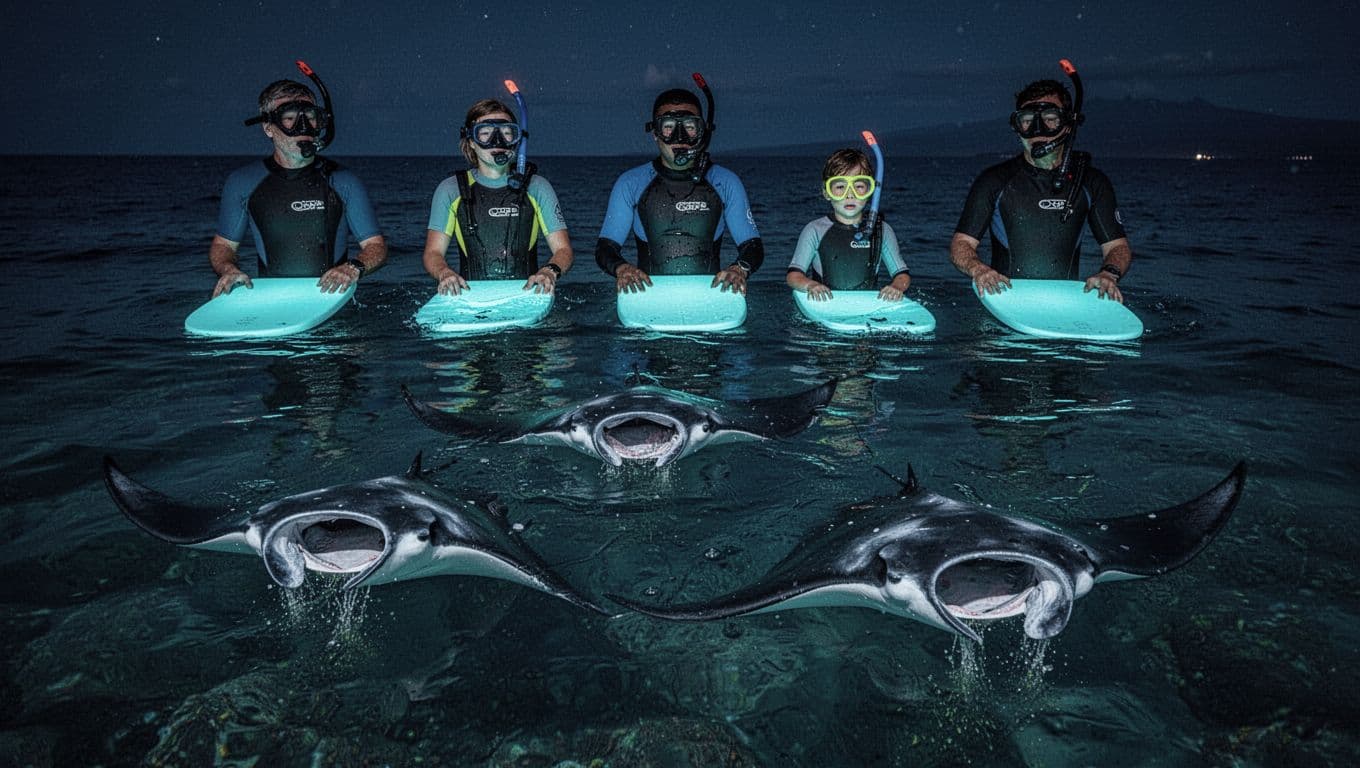
Do you really need fins for a Kona manta ray snorkel?
The short answer is no, you usually do not need them to enjoy the tour. Most guests are fine with the gear the boat supplies, and the main job is to stay relaxed near the board.
Fins are helpful, but they are not the star of the show.
Here is a quick way to think about it:
| Situation | Are fins useful? | What it means for you |
|---|---|---|
| You tire easily | Yes | Fins can reduce small kicks. |
| You swim well but want less effort | Sometimes | They help, but the board does most of the work. |
| You dislike extra gear | Not usually | You can still stay comfortable without relying on them. |
| The water feels a little choppy | Yes | Fins help you hold position with less effort. |
The main takeaway is simple, fins can make the swim easier, but they are not required for most people on a manta tour.
A separate night snorkeling in Kona FAQ says flippers are not needed because you stay close to the board, which matches the way most manta tours work.
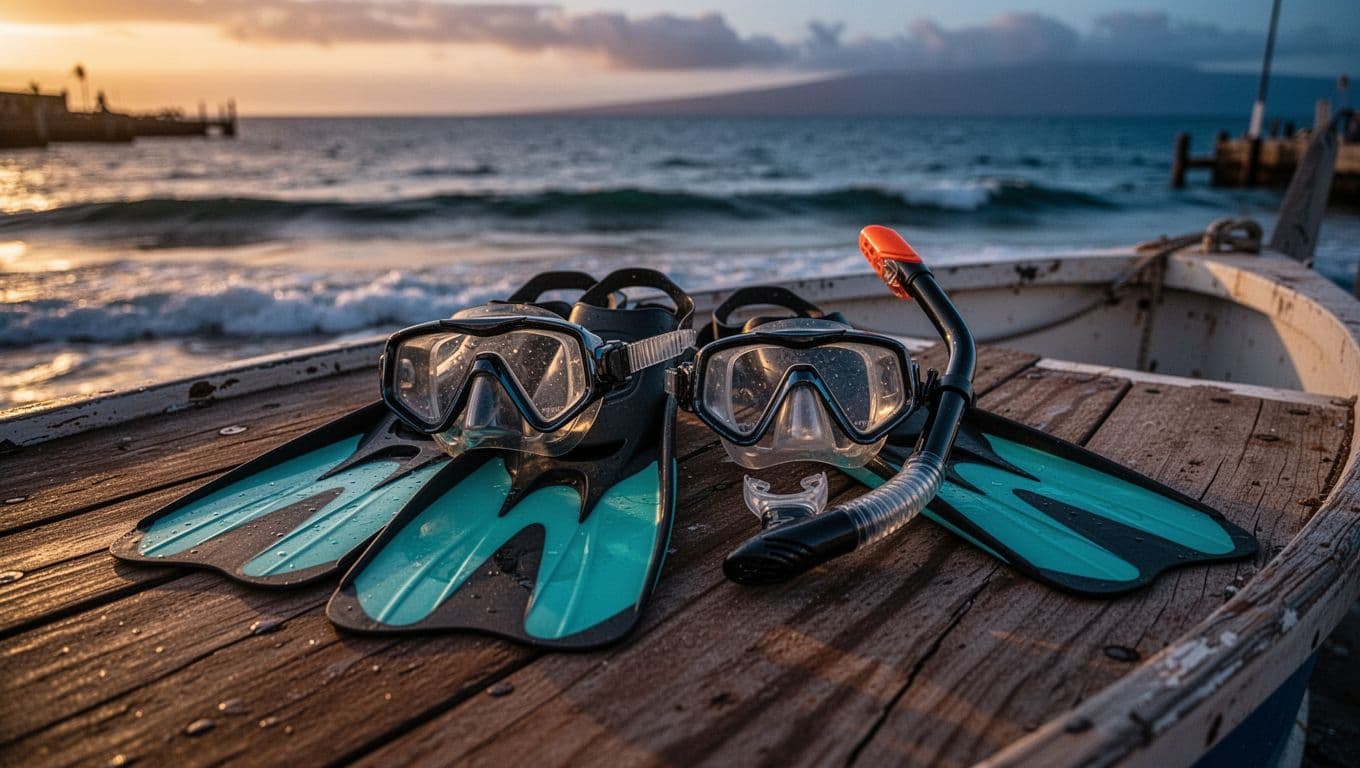
When fins help and when they get in the way
Fins help when you want a little extra push or when you feel nervous in the water. They also help if the surface gets choppy. Small kicks can make you feel more stable without wearing you out.
They can get in the way if you start kicking hard. Big kicks splash the people next to you and use more energy than you need. On a manta tour, that matters because you are not trying to cover distance. You are staying calm and letting the mantas do the work.
If you like the idea of a slower pace or more room in the water, private Kona tours are a good fit for families and small groups. That can be a smart choice if you want extra space while you get used to the ocean at night.
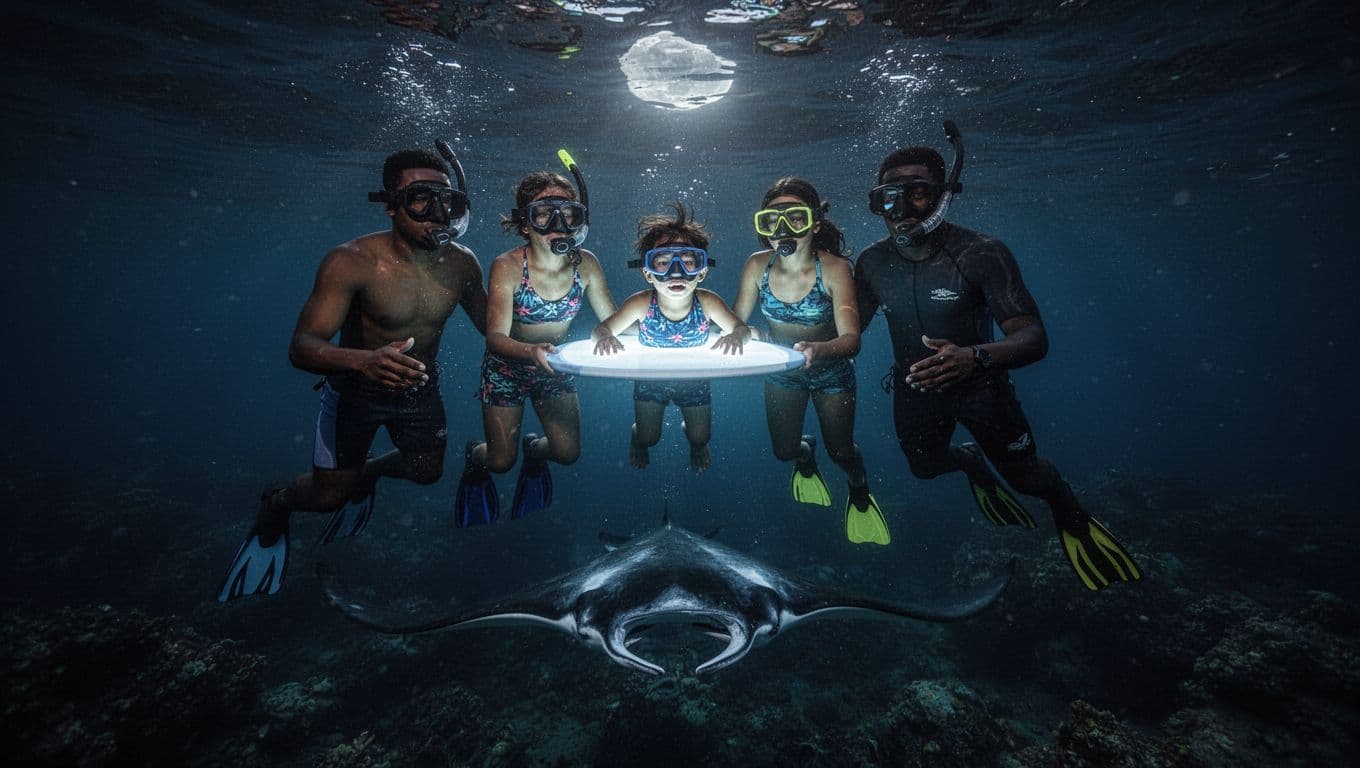
What Kona Snorkel Trips provides on the water
Kona Snorkel Trips keeps the gear part simple. You get a mask, snorkel, wetsuit, and a small-group setup led by Lifeguard Certified guides. That matters when you are new to night water or bringing kids who need a calm start.
If you are ready to book a manta trip, you can check availability for open dates that fit your plans.
Conclusion
You do not need fins to enjoy a Kona manta ray snorkel, and that is the part many people get wrong. The tour is built around floating, staying calm, and watching the mantas come in close.
If you want extra ease in the water, fins can help. If you want a lighter, simpler setup, you can still have a great time without leaning on them. That is the real answer for snorkeling Big Island nights, comfort matters more than speed.