
Sea Urchins During Captain Cook Snorkeling: What to Watch For
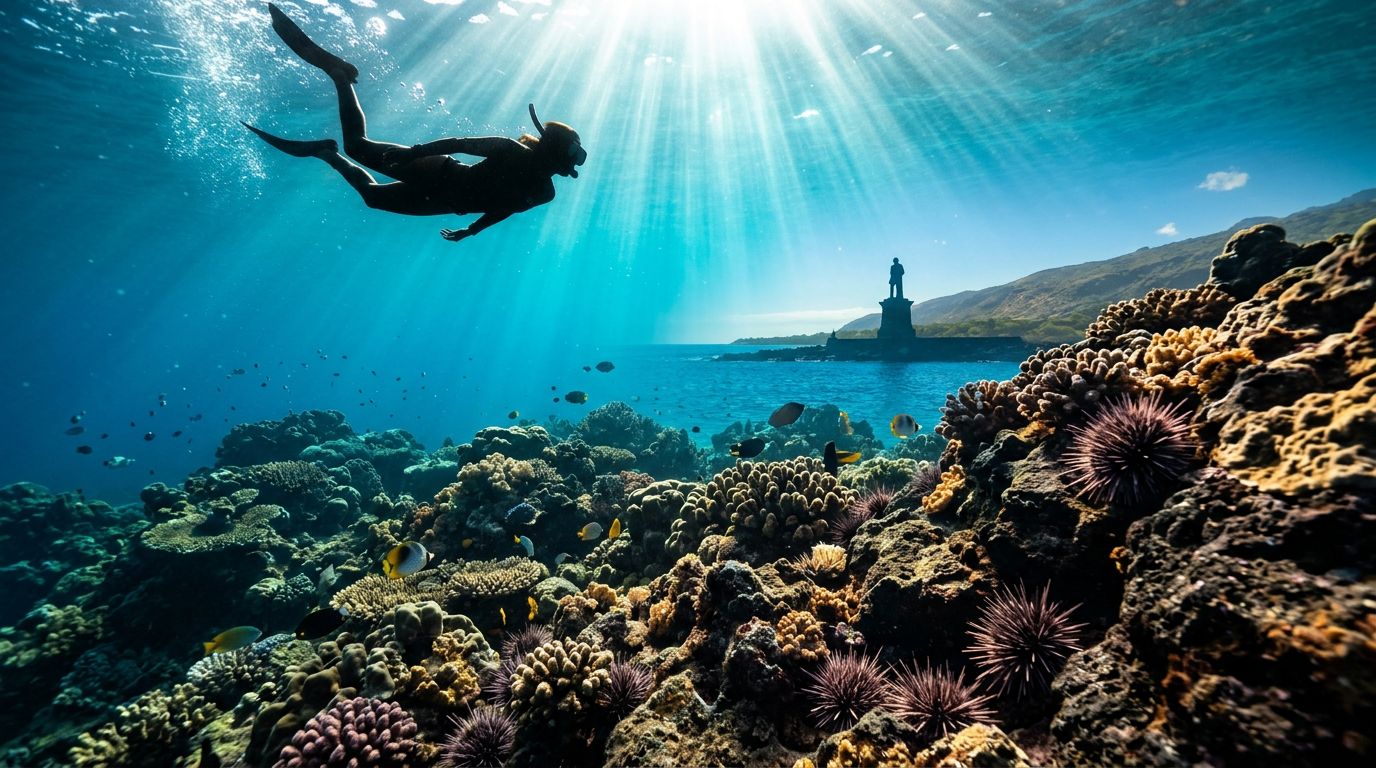
Sea urchins can turn a beautiful Captain Cook snorkel into a nervous one if you don’t know where to look. The good news is that most of the risk comes from footing, not from the water itself.
If you’re planning snorkeling Big Island Hawaii style at Kealakekua Bay, you can enjoy the reef without guessing at every dark shape on the bottom. Kona Snorkel Trips and Captain Cook Snorkeling Tours both focus on this kind of water, where a little awareness goes a long way. Read the reef the right way, and the urchins become part of the scenery instead of a surprise.
Why sea urchins matter on the Captain Cook reef
Sea urchins are part of the reef’s cleanup crew. They graze on algae, and that matters because algae can crowd out coral and blur the view of the whole ecosystem. When you see urchins around Captain Cook Monument, you’re looking at one of the small animals that helps keep the reef balanced.
They also tell you something about the terrain. urchins like hard surfaces, cracks, ledges, and rough lava rock. If you notice several of them in one spot, the bottom is usually uneven there, which is your cue to slow down and keep your body off the reef.
That matters during Captain Cook snorkeling because the reef often looks calm from above. Under the surface, the landscape changes quickly. One second you’re over sand, then you’re near a jagged patch full of crevices. That’s where a casual knee-down or an excited back step can turn into a painful puncture.
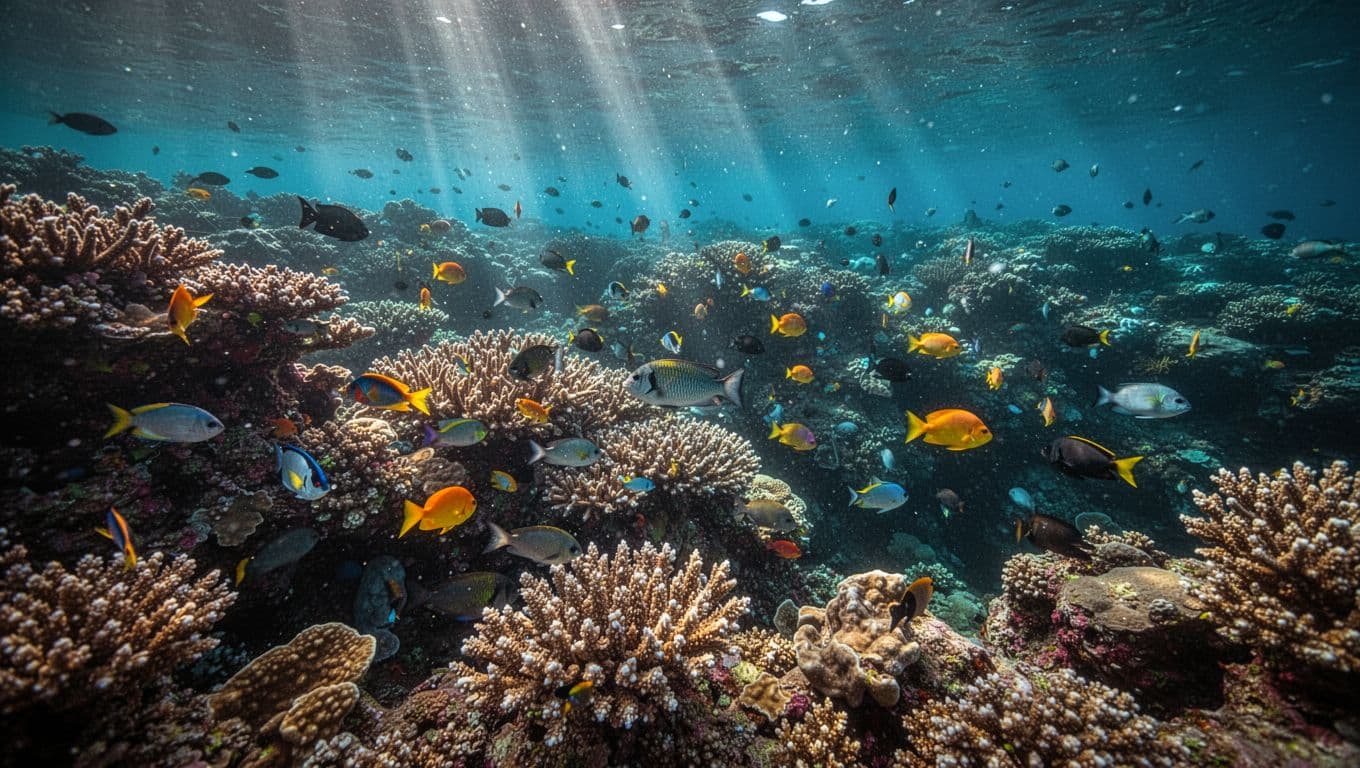
Many snorkelers focus on fish and turtles, but the bottom is what keeps the day smooth. If you know where urchins like to sit, you can move with more confidence. That matters whether you’re floating, finning, or stepping back onto a boat ladder.
In other words, the reef is not just a backdrop. It’s a living surface that asks you to pay attention.
What sea urchins look like when you snorkel the Big Island
When you snorkel Big Island waters, sea urchins don’t all look the same. Some are easy to spot. Others almost disappear into the rock until you’re close enough to notice the spines. That’s why a quick visual check before you move your feet can save you from a bad surprise.
The most visible ones often look like dark pin cushions. Some have short, dense spines. Others have long, needle-like spines that stand out from the rock and can catch you if you brush past them. On Hawaiian reefs, long-spined wana are the ones many people notice first because they look sharp even from a distance.
Here’s a quick way to read what you’re seeing:
| What you see | What it usually means | What you should do |
|---|---|---|
| Dark, round shape in a crack | An urchin is holding tight to the rock | Keep your distance and float past |
| Long, thin spines | A long-spined urchin may be nearby | Don’t put hands or feet near it |
| Several urchins in one patch | The bottom is rough and uneven | Avoid standing there |
| urchins near surge channels | Water movement may push you off balance | Wait for a calmer gap before moving |
When you’re snorkeling Big Island, the trick is not to stare at the fish so hard that you forget the bottom. The reef changes fast near shore, especially around lava rock and ledges. A patch that looks harmless from the boat can hide a cluster of spines a few feet away.
Most urchin injuries happen when your eyes move faster than your feet.
That simple fact explains why so many people get stung on exits and entries. You’re tired, you want to stand up, and you trust the water beneath you. The reef doesn’t care about your momentum.
Where the real risks happen
The biggest urchin problem usually starts before you’re fully settled into the snorkel. Entry points, exit points, shallow ledges, and surge zones are where your balance slips for a second. That’s enough.
During snorkeling Big Island Hawaii, the water can feel easy in the middle of a bay, then become awkward near the edge. The bottom may shift from sand to sharp rock in a few fin kicks. If you’re distracted by the view, you can drift into a place where your knees or toes hit the reef before you realize it.
This is why experienced guides keep telling you to slow down near the waterline. They aren’t trying to spoil the fun. They’re watching for the same thing you should watch for, only they’ve seen the trouble spots many times.
A few patterns matter more than others:
- Shoreline rocks can hide urchins in cracks and small holes.
- Surge channels can push you sideways and drop you onto uneven reef.
- Boat ladders and swim steps can tempt you to stand before the bottom is safe.
- Shallow resting spots often look like sand until your fin touches something hard.
The safest move is to treat each transition as a fresh check. Don’t assume the last few feet were safe, because the next few feet may not be.
How to keep your fins clear of urchins
If you want a simple habit that cuts the risk fast, think in small movements. Smooth, slow, and deliberate usually wins in reef water. Fast feet cause most of the trouble.
- Look before you lower your feet.
Check whether you’re over sand, rock, or a dark patch with spines. A second of looking down beats a painful step. - Keep your body horizontal when you can.
Floating flat keeps your knees and toes farther from the reef. It also helps you stay calmer in light surge. - Use short fin kicks near the bottom.
Big kicks push water, stir sand, and make you bounce around more. Small kicks give you better control. - Let the guide choose the safe path.
On a guided trip, the crew knows where the reef is lower, where the sand opens up, and where urchins cluster. - Avoid standing in place on uncertain ground.
If you need to rest, move to a visible sand patch or back to the boat. Standing on rock is where people get surprised.
If you remember one thing, make it this: don’t plant your feet until you know what’s under them.
What to do if a spine gets you
Even careful snorkelers can get brushed by an urchin. When that happens, staying calm helps more than rushing. Panic makes people grab at the skin, kick harder, or try to keep snorkeling through pain.
First, get out of the water if the puncture hurts enough to affect your balance. Then tell the guide or boat crew right away. They see these injuries from time to time, and they can help you decide what to do next.
Rinse the area gently and avoid rubbing it. Don’t use your mask strap, fins, or a knife to dig at the wound on the spot. Small spines can break off under the skin, and rough handling can make the area worse.
If the puncture is deep, if the spine is near an eye or joint, or if swelling and redness keep building, get medical care. You should also get help if you feel faint, can’t put weight on a foot, or notice signs of infection later on.
A few problems are obvious right away. Pain when you move, visible spine fragments, or bleeding that doesn’t settle all deserve attention. Your goal is to stop the injury from becoming a bigger issue.
Why guided Captain Cook snorkeling feels safer
A good guide changes the whole experience. Instead of scanning the reef alone, you get someone who already knows the tricky spots and the smoother entries. That matters when you’re snorkeling near the Captain Cook monument, where one small slip can turn an easy day into a painful one.
Kona Snorkel Trips keeps things personal with small groups, high-quality gear, and lifeguard-certified guides. The company also takes reef-safe practices seriously, which fits the kind of day you want on a volcanic reef. If you want a broader look at what’s available, start with Big Island snorkeling tours and choose the trip that fits your comfort level.
The review below gives you another way to judge the experience before you book.
That setup helps in a practical way. A crew that points out urchin patches, surge zones, and the easiest line back to the boat makes the whole reef feel more manageable. You spend less time guessing and more time actually watching fish, coral, and the water around you.
The same is true at departure. If your trip leaves from Honokohau Marina, the day often starts with less confusion and fewer moving parts. That can matter more than people expect, especially if you’re traveling with kids or snorkeling for the first time.
Families and first-timers at Kealakekua Bay
If you’re traveling with a family or you haven’t snorkeled much before, sea urchins can look more intimidating than they really are. The key is to keep your pace slow and your attention on the water beneath you. A relaxed snorkeler usually stays safer than a rushed one.
For a dedicated day at the bay, Captain Cook snorkeling tour gives you a clear starting point. If you want a company built around this route, Captain Cook Snorkeling Tours is focused on that same Kealakekua Bay experience.
If you’re comparing options for Captain Cook snorkeling, keep the water conditions and your own comfort level in mind. Calm days still deserve caution, because the reef doesn’t flatten out just because the surface looks smooth. Ask where to enter, where not to stand, and where to wait if the water starts pushing you around.
Families do best when the strongest swimmer stays near the least confident person. That keeps the group tighter and makes it easier for the guide to watch everyone. It also helps to keep your fin kicks small and avoid sudden turns near the rock.
If you’re ready to lock in a date, check avaialbility before your preferred morning fills up.
With that kind of structure, you can enjoy the bay without spending the whole time worrying about the bottom.
Conclusion
Sea urchins don’t have to ruin your Captain Cook snorkel. They just ask you to move with a little more care, especially around rocks, ledges, and entry points.
When you pay attention to the bottom, the reef becomes easier to read. That’s the real secret behind a smoother day of Captain Cook snorkeling, whether you’re traveling with family, floating with a guide, or planning your first snorkeling Big Island trip.
Watch the reef before you watch your own pace. If the urchins are obvious, the safer path usually is too.