
Captain Cook Snorkeling vs. Scuba Diving for Beginners
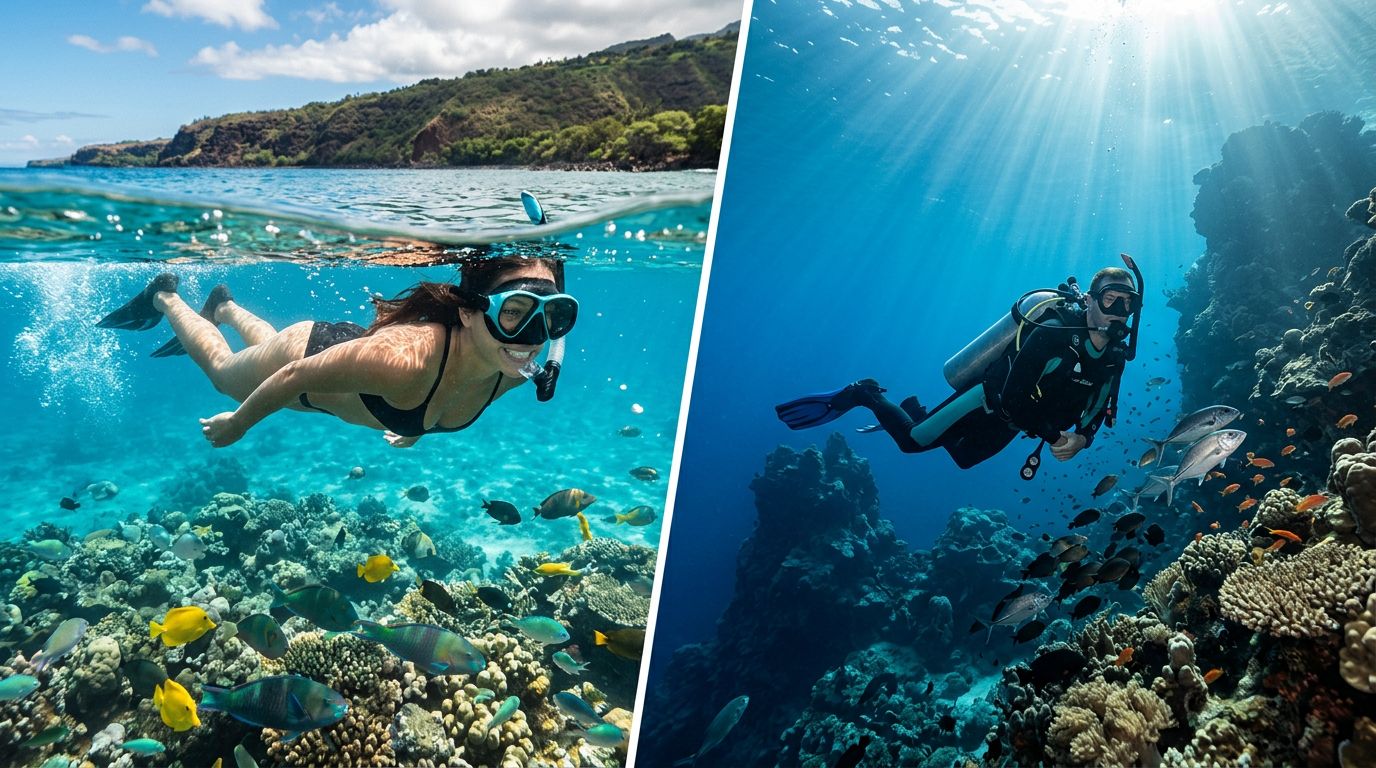
Choosing between snorkeling and scuba diving at Captain Cook can shape your entire Big Island ocean experience. Captain Cook snorkeling keeps you at the surface with simple equipment, while scuba diving takes you deeper and requires more training.
Many travelers searching for snorkeling Big Island Hawaii experiences are deciding between an easy first swim and a more technical underwater adventure. Your comfort in the ocean, travel schedule, health, and interest in marine life all matter. Start by comparing what each activity actually asks of you.
What Captain Cook Snorkeling Is Like
Captain Cook snorkeling takes place in Kealakekua Bay, a scenic marine area on the Kona coast. The bay is known for clear water, underwater visibility, and colorful reef fish. The Captain Cook Monument sits along the shoreline, giving the area its familiar name.
Most visitors reach the snorkeling site by boat. After a safety briefing, you enter the water with a mask, snorkel, fins, and flotation support if needed. You float face-down and breathe through the snorkel while sunlight reaches the reef below.
That setup makes snorkeling a practical choice for beginners. You don’t need scuba certification, and you can stay near the surface whenever you want. You also have the option to lift your head, rest, or return to the boat without managing an air tank.
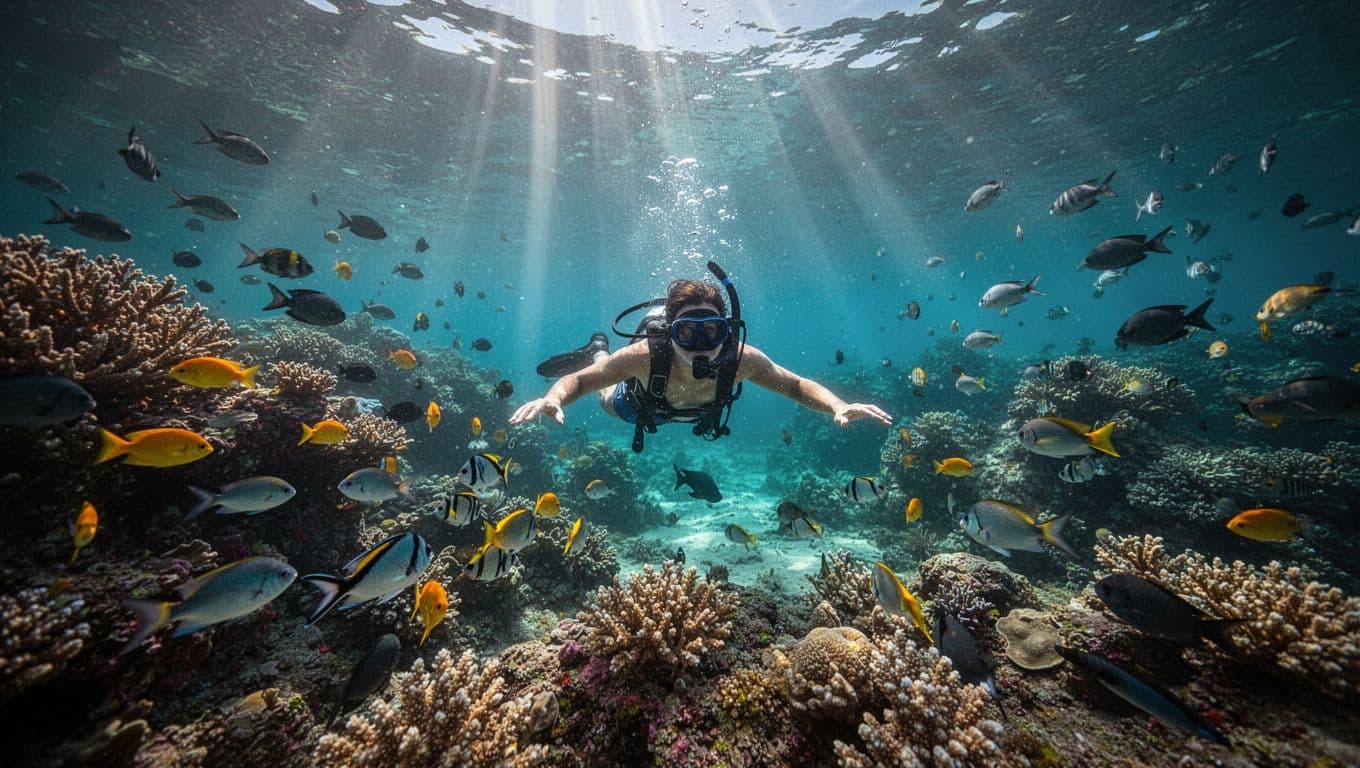
Your main challenge is learning to relax in open water. Waves can move your body, and a poorly fitted mask can distract you. A guided tour helps because you receive equipment instruction, water rules, and support before entering the bay.
If you want to snorkel Big Island reefs without taking a certification course, Kealakekua Bay is a strong option. You can see reef life without committing to the training and equipment required for scuba.
Snorkeling and Scuba Diving Compared
Both activities let you view Hawaii’s marine life, but they feel different in the water. Snorkeling gives you freedom and simplicity. Scuba diving gives you more time below the surface, along with more responsibility.
| Factor | Captain Cook snorkeling | Scuba diving |
|---|---|---|
| Training | Basic briefing and equipment practice | Certification or an introductory dive lesson |
| Breathing | Through a surface snorkel | Through a tank and regulator |
| Depth | Surface level | Below the surface, within dive limits |
| Equipment | Mask, snorkel, fins, flotation gear | Mask, fins, buoyancy gear, tank, regulator |
| Physical demand | Swimming and floating | Swimming, buoyancy control, and air management |
| Flexibility | Easy to pause or exit | Requires planned ascent and dive procedures |
| Best for | First-time ocean visitors and families | Certified divers and deeper exploration |
Snorkeling also lets you keep your attention on the surrounding scene. You can watch fish pass beneath you, follow the reef contour, and share the view with a travel companion. Scuba creates a quieter, more immersive setting, but you must monitor your air supply, depth, buoyancy, and equalization.
A public snorkeling versus scuba discussion shows how personal the choice can be. Some beginners prefer the low-pressure feel of snorkeling. Others enjoy learning scuba skills because they want longer underwater sessions.
Scuba isn’t automatically the better adventure. It suits you if you already feel comfortable in the ocean and want to spend more time below the surface. Snorkeling may suit you better if your priority is seeing marine life with less preparation.
Which Activity Fits Your Travel Group?
Your group can make the decision easier. Families with young children often prefer snorkeling because everyone can participate without separate certification requirements. However, each swimmer should feel comfortable using a mask and breathing through a snorkel.
If someone in your group is nervous, choose a guided snorkeling trip with flotation equipment and attentive crew support. A small-group setting can feel less crowded and gives you more room to ask questions. You should also discuss swimming ability and ocean conditions before booking.
Couples and solo travelers have more flexibility. Snorkeling works well when you want a relaxed morning on the water, especially if you plan other activities later. Scuba makes sense when underwater exploration is a main reason for your trip and you already hold the required certification.
Health and comfort deserve equal attention. You should be able to swim, enter the water safely, and manage normal ocean movement for either activity. If you have breathing, heart, ear, or mobility concerns, speak with your doctor and the tour operator before reserving a spot.
Weather can affect both activities. Kona’s coast often offers calm conditions, but the ocean can change with wind, swell, and current. A professional crew checks the conditions and may adjust the location or timing when safety requires it.
Your choice may also depend on your schedule. Scuba training takes more time than a snorkeling briefing. You may need to reserve a course or certified dive in advance, while snorkeling usually fits more easily into a busy Hawaii itinerary.
The best beginner activity is the one that lets you stay calm, alert, and comfortable in the water.
For many first-time visitors, snorkeling Big Island conditions become enjoyable once they have the right mask fit and a guide nearby. Confidence matters more than choosing the activity that sounds more advanced.
What You Can See at Kealakekua Bay
At the surface, snorkeling gives you a wide view of the reef. Fish move through the shallows, sunlight changes the colors below you, and the coastline remains visible whenever you look up. You can also watch how the reef changes as the boat moves to different areas of the bay.
Scuba gives you another perspective. By descending below the surface, you can examine reef formations from a closer angle and spend more time observing fish behavior. You also gain access to underwater contours that surface swimmers may only see from above.
Neither activity guarantees a specific animal encounter. Marine life moves with conditions, food, water temperature, and time of day. You may see tropical reef fish, sea turtles, or other Hawaiian species, but responsible guides won’t promise wildlife on demand.
Reef etiquette matters in both activities. Keep your hands off coral, avoid standing on the reef, and leave animals enough space to move naturally. Use reef-safe sun protection and follow crew instructions about where you may swim.
Snorkeling offers a better shared experience for groups with different comfort levels. One person can float near the boat while another explores a little farther, as long as everyone follows the guide’s boundaries. Scuba keeps you with your dive group and requires closer attention to your buddy and dive leader.
When you search for snorkeling Big Island trips, look beyond photographs. Ask how the operator handles safety, group size, equipment, marine protection, and changing conditions. Those details affect your experience more than the activity label.
Planning Your Captain Cook Snorkeling Trip
Book a tour that matches your swimming ability and preferred pace. Before you reserve, ask whether the trip includes flotation gear, quality masks, fins, instruction, refreshments, and time in the water. You should also confirm the meeting location and any age or health requirements.
Kona Snorkel Trips follows a “Reef to Rays” philosophy, with guided ocean adventures focused on safety, marine education, and responsible reef practices. Its lifeguard-certified guides work with small groups, and the company provides carefully selected snorkeling equipment for different experience levels.
The company focuses on guided snorkeling rather than scuba diving. Its Big Island snorkeling tours include Captain Cook and Kealakekua Bay experiences, along with other ocean adventures around Kona. That makes it a useful choice when you want professional support without signing up for a scuba course.
A morning trip can work well if you want calmer conditions and clear visibility. Later departures may fit your schedule better, but you should always follow the operator’s advice about weather and sea conditions. Arrive early enough to park, check in, and listen to the safety briefing without rushing.
Wear a swimsuit and bring a towel, reef-safe sunscreen, sunglasses, and a light cover-up. Leave valuables in your hotel room unless the operator provides secure storage. If you wear contacts or need prescription lenses, ask about equipment options before the trip.
Kona Snorkel Trips also emphasizes personal service instead of crowded, impersonal outings. Its guides combine water supervision with information about the reef and local marine life. That extra guidance can help you settle into the water and enjoy the view instead of worrying about each new step.
If a guided Captain Cook trip fits your plans, you can check availability before your preferred date fills.
Captain Cook Snorkeling or Scuba Diving?
Choose Captain Cook snorkeling if you want a simple introduction to Hawaii’s underwater scenery. It works well for families, first-time ocean swimmers, couples with mixed experience, and travelers who want to keep their day flexible.
Choose scuba diving if you already have certification or want to schedule an introductory course. You’ll spend more time preparing, but you can explore below the surface and practice skills that snorkeling doesn’t require.
Your comfort should guide the decision. If putting your face in the water feels stressful, a scuba tank won’t remove that concern. Start with snorkeling support, practice breathing through the mask, and learn how your body responds to the ocean.
If snorkeling feels easy and you want more depth, scuba can become your next Hawaii activity. A local dive shop or certified instructor can explain training requirements, medical forms, equipment, and suitable sites.
The bay itself isn’t a contest between two activities. Snorkeling and scuba reveal different parts of the same marine environment. Your best choice is the one that fits your skills, time, and reason for visiting the Kona coast.
Conclusion
Captain Cook snorkeling gives most Hawaii beginners the easiest path into Kealakekua Bay. You can enjoy clear water and reef life with a short briefing, basic equipment, and support near the surface.
Scuba diving offers deeper access, but it requires training, planning, and careful attention to dive procedures. Choose snorkeling when you want a relaxed first experience, and choose scuba when you are prepared for a more technical underwater activity.
The right question isn’t which option sounds more impressive. It’s which one lets you stay comfortable and present while you experience the Pacific.