
Captain Cook Snorkeling Tips for Travelers With Bad Knees
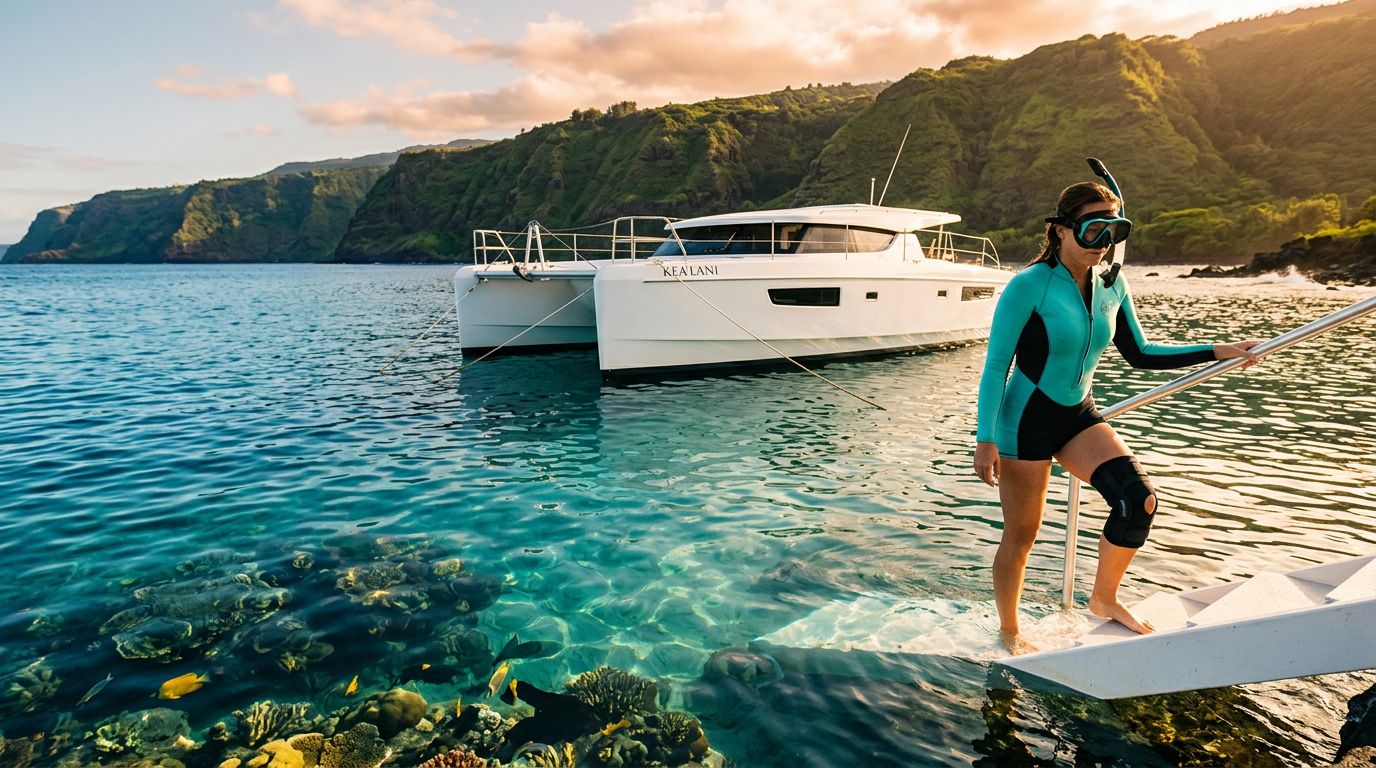
When your knees complain on stairs, ladders, or uneven ground, you can still enjoy Captain Cook snorkeling without turning the day into a chore. The key is choosing a trip that keeps the walk short, the boarding simple, and the pace easy on your joints. Kona Snorkel Trips builds that kind of day around small groups, steady guidance, and gear that helps you stay relaxed in the water.
If you’ve been searching for snorkeling Big Island Hawaii options that fit your body, Kealakekua Bay is one of the better places to start. The right setup lets you focus on the reef instead of your knees, and that changes the whole feel of the trip.
Why Kealakekua Bay works well when your knees hurt
Captain Cook trips are often easier on tender knees because the work happens on the boat, not on a long walk across rough lava rock. That matters more than most people expect. A short boarding process and a direct ride to the snorkel spot can save you a lot of wear before you even touch the water.
Kealakekua Bay also rewards you with clear water and a protected setting, which helps because you don’t have to fight surf or scramble over a shoreline entry. For many travelers who want to snorkel Big Island without a lot of strain, that boat-first approach is the sweet spot.
If you want a broader look at the options, start with Big Island snorkeling tours. If you already know you want the bay trip itself, the Captain Cook snorkeling tour page is the most direct place to read about it.
The reef only matters if you reach it comfortably. When your knees are sensitive, the boarding step deserves as much attention as the fish.
A lot of travelers make the mistake of judging a snorkel day by the water alone. For bad knees, the real test is the path to the water, the climb back in, and the amount of rushing in between. A calm Captain Cook trip solves more problems than a beautiful beach with a tricky entry.
If you are comparing snorkeling Big Island trips, ask yourself one simple question, does the route reduce strain or add it? The answer points you toward the right boat.
What to ask before you book a Captain Cook trip
Good planning starts with specific questions. If a crew answers them clearly, you already know more about the trip than most first-time visitors do. That matters because knee pain gets worse when you feel rushed or surprised.
Here is a quick way to compare tours:
| What to ask | Why it matters |
|---|---|
| How do you board the boat? | A dock, ladder, or swim step changes the strain on your knees. |
| How many guests are on board? | Smaller groups usually mean less rushing and more help. |
| Is flotation included? | A vest or float reduces the need for hard kicking. |
| How long is the swim time? | Shorter sessions are easier if your knee tires fast. |
| Can the crew help me exit the water? | The return climb is often harder than the entry. |
If the answers sound vague, keep looking. You want a crew that is used to pacing the day around real people, not a fantasy version of you who never gets tired.
For a wider look at accessibility, Seaview 180’s accessibility overview is a useful read. It gives you a better sense of how flotation, calm water, and support can change the experience.
You should also ask about the pace of the trip. A long stop is fine if you feel good, but it should never feel mandatory. If your knee starts aching early, you want a crew that treats that like normal information, not an inconvenience.
If you are booking during a busy season, remember that crowded boats can mean more standing, more waiting, and more twisting. Smaller trips are often kinder to your body.
Gear that takes pressure off your joints
The right gear won’t fix a bad knee, but it can stop you from making that knee work too hard. That is a big deal when you want to enjoy snorkeling Big Island without paying for it later.

A good setup is simple:
- A snug mask helps you relax your upper body, so you aren’t wasting energy fixing leaks.
- A snorkel vest or float keeps you buoyant with less kicking.
- Short, flexible fins are easier on the knees than long, stiff ones.
- Reef shoes or grippy deck shoes help when you’re moving on a wet surface.
- A light rash guard or sun shirt keeps you comfortable so you don’t tense up from sun or cold.
The biggest mistake is trying to kick hard to stay in place. You don’t need to move like a swimmer in training. Small, easy kicks are enough. In fact, calmer movement usually gives you better control and less joint stress.
If you feel better in a fuller mask, ask about it before the trip. If you prefer a vest with more lift, say so. If your knees dislike twisting, tell the crew before you step onto the boat. That one conversation can save you a lot of awkward adjustments later.
A little preparation also helps on land. Wear clothing that is easy to change in and out of, keep your bag light, and avoid carrying more than you need. Every extra step counts when your knees are already talking to you.
The point is simple. You want a setup that lets you snorkel Big Island with less effort and more comfort.
What a low-strain Captain Cook day actually feels like
A good Captain Cook day feels unhurried from the start. You arrive, get oriented, and move through the steps one at a time. No one should be pushing you to keep up with the fastest guest on board.
Kona Snorkel Trips keeps that experience centered on small groups, quality gear, and guides who pay attention. That matters when you want the day to feel smooth instead of chaotic. Their reef-to-rays focus fits travelers who want the ocean without the fuss, and their lifeguard-certified guides know how to keep things calm.
For social proof before you book, a quick look at guest feedback can help.
If you want another Captain Cook-focused company to compare, Captain Cook Snorkeling Tours is another name you’ll see. That can help if you are comparing timing, route details, or the feel of different boats.
For planning, the most important part is not the marketing language. It is how the trip handles your body. If you can board slowly, sit comfortably, and enter the water with help, your knees will thank you later.
The actual snorkel portion should feel easy. You float, look down, and let the current do the heavy work. Your knees should not be trying to power the whole experience. If they are, something about the setup needs to change.
When you’re ready to book, you can check availability for a Kona snorkel day, or check availability for the Captain Cook trip. A clear booking page makes it easier to plan around your body’s good days.
How to move in and out of the water without stressing your knees
Once you are on the boat, slow movement is your friend. Let the crew explain the boarding point, then take your time with each step. There is no prize for rushing.
The best way to reduce strain is to stay balanced and keep your movements small. Hold the rail when you need it. Step on and off with intention. If you feel unstable, pause. That small pause is better than a sudden twist.
A few habits make a noticeable difference:
- Keep your weight centered before you step.
- Use your hands on rails or shoulders only when you need extra support.
- Enter the water only when the crew is ready and you feel steady.
- Kick gently once you are floating, not before.
- Tell the guide if your knee feels stiff on the ladder or swim step.
The return climb is where many people get caught off guard. After a fun snorkel, your muscles cool down and your knee can feel tighter. Give yourself a second before you climb. Breathe, reset, then move up one step at a time.
If you want to compare the basic mechanics of snorkeling with physical limits, this guide on snorkeling after ACL surgery shows why gradual movement matters so much. You do not need surgery to use the same logic. Calm starts and calm exits help almost anyone with sore joints.
This is also where clear communication matters. You do not need to explain your whole medical history. You only need to say what helps. “I need a slower ladder pace” is enough. “Please give me a minute before I climb” is enough. Good crews hear that and adjust.
For many travelers, that kind of calm is what makes snorkeling Big Island feel possible again.
When your knees need a no-go day
Some days are not the right day, and that is fine. If your knee is swollen, locked, unstable, or painful on stairs, do not push through a snorkel trip just because you already planned it. The ocean will still be there next week.
Recent surgery is the clearest signal to slow down. If you are recovering from a repair, replacement, or a fresh injury, talk with your doctor first. A snorkel trip should feel like a light outing, not a test of whether your knee can keep up.
A few red flags are hard to ignore:
- Your knee gives way when you walk.
- You need to change how you stand just to stay comfortable.
- Swelling gets worse after short walks.
- Pain shows up before you even reach the boat.
- You feel unsure on wet steps or ladders.
If any of those sound familiar, skip the booking and choose a better day. That choice is not a loss. It is how you protect the rest of your trip.
For a practical view of recovery pace, snorkeling after ACL surgery is a useful reminder that water time should come after healing, not before it. If your body needs more time, take it.
You can also build a better trip by choosing calmer conditions and shorter outings later in your stay. That gives your knee time to settle and keeps the day enjoyable instead of tense. When you snorkel because you feel ready, the water feels a lot more welcoming.
Conclusion
Captain Cook snorkeling can work very well for travelers with bad knees, as long as you choose the right setup. A boat-based trip, supportive gear, and a crew that gives you time to move slowly can turn a tricky day into an easy one.
The reef should be the fun part, not the part that leaves you sore. When you compare snorkeling Big Island options, focus on boarding, pacing, and exit help first.
If your knees are having a good day, Kealakekua Bay can be one of the most rewarding places to snorkel Big Island with less strain and more confidence.