
Captain Cook Snorkeling Tips for Long Hair

Long hair can turn a dreamy snorkel day into a tangle fast. If you want Captain Cook snorkeling to feel relaxed from the first boat ride to the last rinse, your hair needs a plan before you ever reach Kealakekua Bay.
That matters even more when you’re comparing snorkeling Big Island Hawaii options, because wind, salt spray, and mask straps all work against loose hair. The fix is simple once you know what holds, what slips, and what helps you enjoy the reef instead of your braid.
A little prep goes a long way. When you keep your hair low, secure, and easy to rinse, you spend more time watching fish and less time fighting knots.
Why long hair needs a plan at Kealakekua Bay
Kealakekua Bay is calm compared with many ocean spots, but the trip still has moving parts. You board a boat, adjust your gear, deal with wind on the deck, and then slip into salt water. Each step can twist hair around itself like ribbon in a fan.
Mask straps are the biggest trouble spot. Loose strands slide under the strap, then the strap presses them flat and creates a snarl. Add a little boat spray, and even smooth hair can feel like wire by the time you reach the water.
The bay itself also rewards a clean setup. You want to look around, kick lightly, and keep your face comfortable in the mask. If you keep reaching back to fix your hair, you break your rhythm and lose time.
That is why long-hair prep matters on any day you snorkel Big Island. A few minutes of care before you leave the dock can save you a lot of pulling later.
If you want a closer look at the route and what the tour covers, the Captain Cook monument snorkel tour page gives you the full picture.
Prep your hair before you board
The best hair plan starts at your hotel or condo, not on the boat. You want your hair smooth, low, and dry enough to hold shape, but not loaded with heavy product.
Wash your hair the night before if you can. Freshly washed hair can be too soft and slippery, while day-old hair usually holds better. If your hair tangles easily, work through it with a wide-tooth comb before you tie it back.
A small amount of leave-in conditioner can help, but keep it light. Heavy oils and thick creams can make hair slide around, and they can leave your mask strap greasy. If you use product, keep it on the mid-lengths and ends, not near your face.
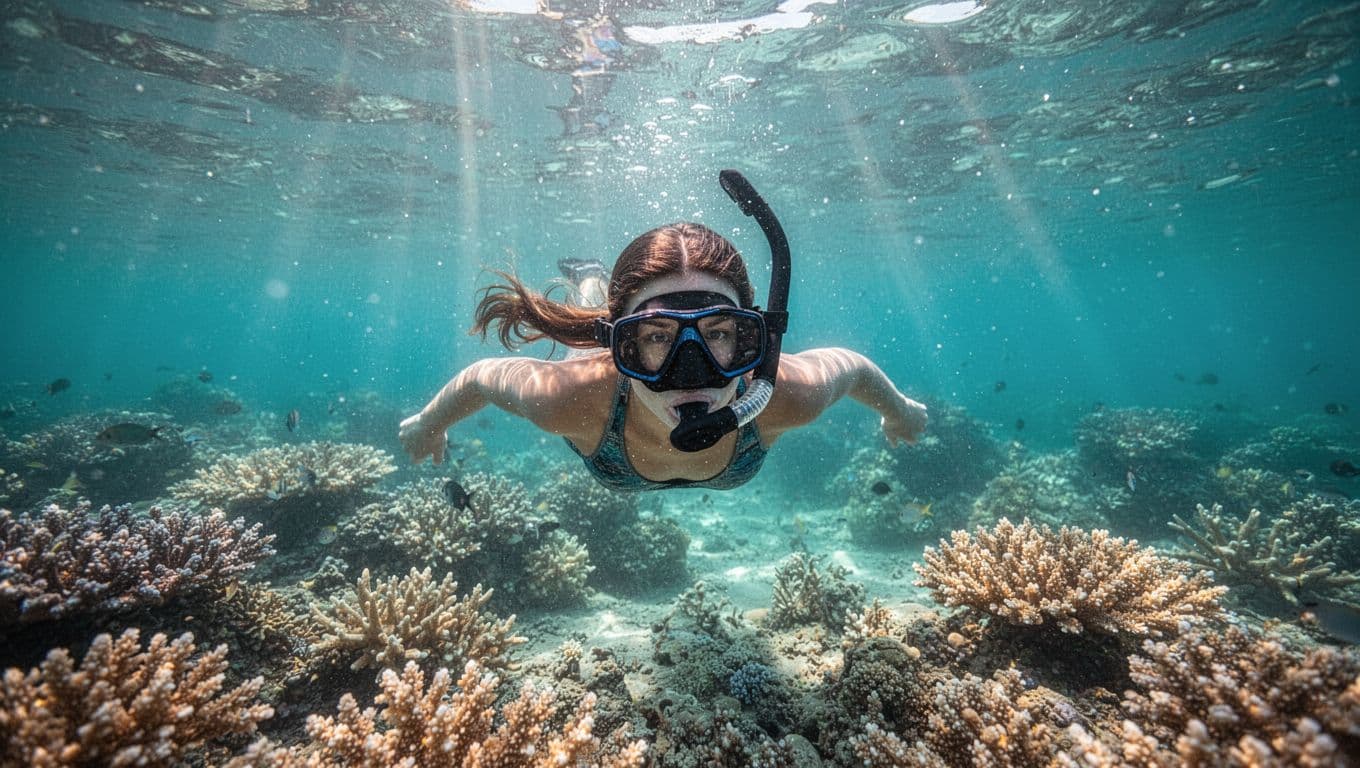
The five-minute routine that helps most
Before you leave, do this in order:
- Brush or comb out every knot while your hair is dry.
- Tie your hair low, close to the nape of your neck.
- Use soft elastics instead of metal clips.
- Pack a spare tie in your day bag.
- Bring a small comb and a microfiber towel.
If your hair is thick, section it first. If it is curly, work with the curl pattern instead of fighting it. The goal is control, not perfection.
A lot of people also forget the second tie. That spare one matters when the first elastic stretches after a swim or slips while you climb back aboard.
If you want a quick reference for other travelers’ habits, a long hair and snorkeling forum thread repeats the same basic advice, especially braids, ponytails, and leave-in conditioner.
Hairstyles that hold up in saltwater
Not every style works equally well in the ocean. Some look neat on land, then unravel the moment you bend forward to fit your mask.
A low, smooth style usually works best because it stays under control and sits flat under a strap. The styles below are the ones that tend to survive a boat ride and a swim.
| Hairstyle | Why it helps | Best for |
|---|---|---|
| Low braid | Keeps hair bundled and reduces surface area | Most long hair types |
| Double braids | Spreads the weight and cuts down on tangles | Thick or very long hair |
| Low bun with soft tie | Stays compact under a mask strap | Medium to long hair |
| Low ponytail with twist | Quick and simple, with less bulk | Shorter long hair |
A braid wins for most people because it keeps hair in one line. That shape matters in salt water. Hair that moves as one unit tangles less than hair that floats in separate pieces.
Double braids work well if your hair is heavy or curly. They also stay balanced better when you swim face down. A low bun can work too, but keep it small. Big buns sit awkwardly under a strap and can push the mask off angle.
You can also add a soft strap cover or a thin fabric sleeve if your mask strap rubs. That small layer can cut friction and help keep hair from snagging.
Stay comfortable once you are in the water
Once you enter the water, the goal is simple. Keep your hair out of the way and keep your mask sealed.
Fit your mask before you get distracted by the view. If you have to fix your hair after the seal is set, do it gently. Pulling strands through the strap usually makes things worse.
Turn your whole body when you want to look around. If you snap your head side to side, hair wraps itself around the strap and breaks the mask seal. Smooth turns create less drag and less pull.
The best hair setup is the one you forget about after the first splash.
That is the real test. If you keep noticing your hair every minute, your setup is too loose, too bulky, or too high on your head.
When you swim near the monument and the reef, keep your strokes calm. Wild arm swings can toss hair into your face and press the strap harder. Gentle movement keeps you stable and makes the current feel smaller.
If your hair is very long, tuck the ends into your shirt or rash guard before you enter the water. That helps on the surface and on the ladder back up. It also keeps wet strands from wrapping around your neck while you float.
A lot of people planning snorkeling Big Island trips worry about the same thing, and for good reason. Saltwater does not care about your hairstyle. It only cares about friction, pressure, and movement.
After the snorkel, treat the tangles early
The end of the trip is when you can save your hair or make the mess worse. The sooner you rinse, the easier everything gets.
Fresh water is your friend. Rinse your hair as soon as you can, even if it is just a quick shower on shore or back at your hotel. Salt crystals dry fast, and they lock tangles in place.
Do not rub your hair with a towel. Press water out instead. Rubbing opens knots and roughs up the cuticle, which makes the next comb-through harder.
Start detangling at the ends and work upward. That one habit saves a lot of pulling. A wide-tooth comb is better than a brush when your hair is wet and salty.
If your hair feels stiff, add a small amount of conditioner to the mid-lengths and ends. Let it sit for a minute, then comb again. You do not need a lot. You need enough slip to let the knots release.
A quick braid or loose bun after the rinse helps if you still have lunch, a drive, or another beach stop planned. Wet hair left loose tends to knot again in the wind, and that can undo all your work.
If you are spending several days on the island and plan to snorkel Big Island more than once, pack a tiny hair kit in your day bag. A spare tie, a comb, and a travel-size conditioner make every future trip easier.
Picking a Captain Cook trip that fits your hair
The right tour makes this whole process easier. Small groups, clear instructions, and good gear help you relax before you even get in the water.
Kona Snorkel Trips keeps that part simple with a Reef to Rays approach, lifeguard-certified guides, and a strong focus on guest safety. If you’re comparing Big Island snorkeling tours, that kind of setup matters because it gives you more space, more attention, and less chaos on the boat.
For a Captain Cook-focused day, Captain Cook Snorkeling Tours is another option centered on the same bay. If you want to compare what that route looks like before you book, the Captain Cook monument snorkel tour page is a helpful place to start.
That pairing, a good operator and a smart hair plan, is what keeps the day comfortable. You still get the historic bay, the clear water, and the reef, but you spend less energy fixing yourself.
Conclusion
Long hair does not have to get in the way of a great day at Kealakekua Bay. When you keep it low, smooth, and secured before the boat leaves, Captain Cook snorkeling feels much easier.
The big win is simple. Prep early, protect the mask seal, and rinse salt out as soon as you can. Do that, and your hair stops being the problem so you can focus on the part that matters, the water, the reef, and the view across one of the most memorable snorkel stops in Hawaiʻi.