
Captain Cook Snorkel Tour: A 2026 Insider’s Guide
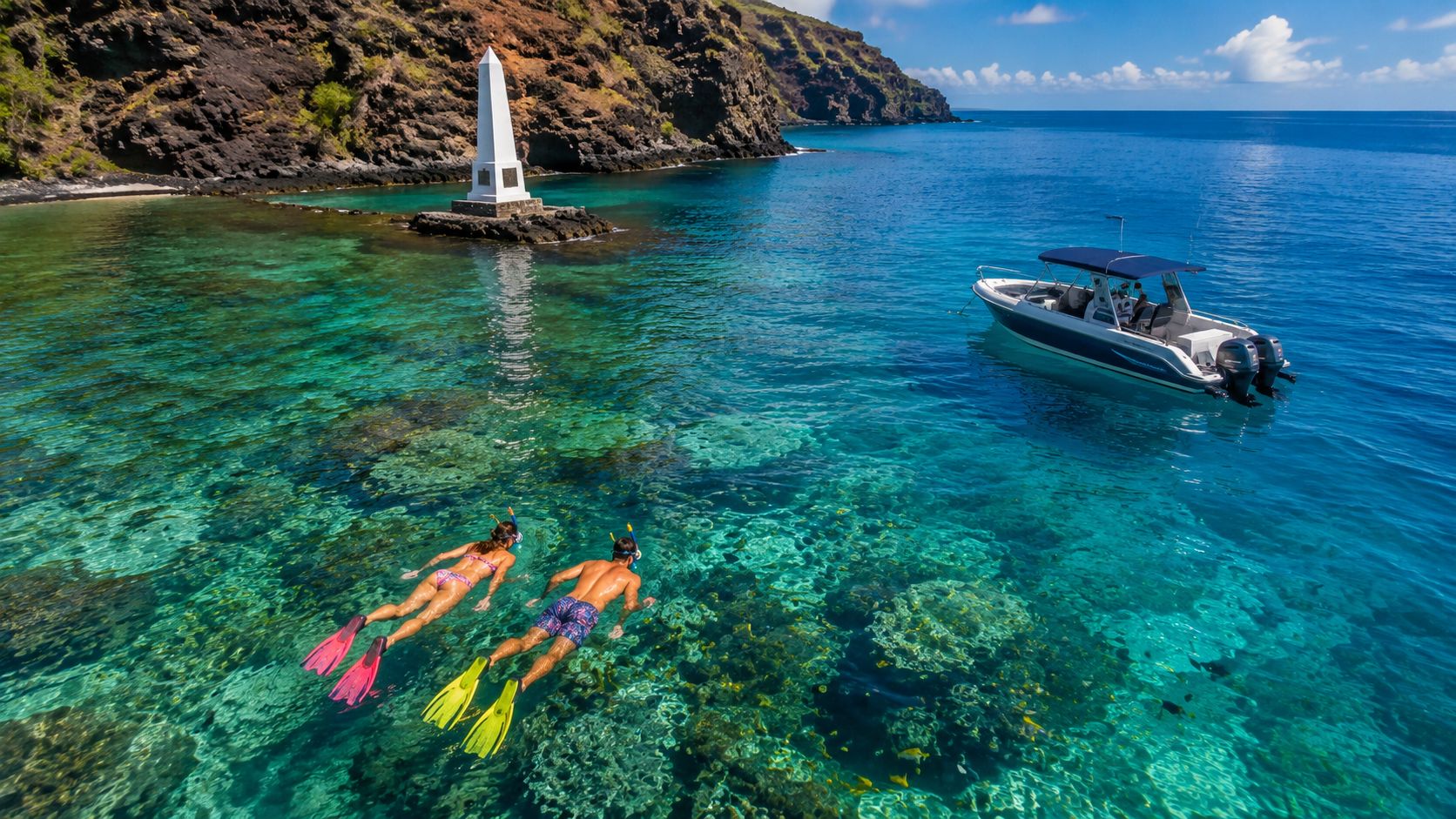
You're probably at the stage where every Captain Cook snorkel tour page starts to look the same. Clear water. Tropical fish. Historic monument. Nice photos. That part is true, but it doesn't help you decide which trip fits your day, your group, or your comfort level in the water.
What matters more is how the day unfolds. Departure time changes the water. Boat type changes your in-water experience. Group size changes how supported you feel once you put your face in the water. Those details are what turn a pretty outing into a smooth, memorable one.
Kona Snorkel Trips is Hawaii's top rated and most reviewed snorkel company, and that reputation comes from the parts guests feel most: organized check-in, lifeguard-certified guides, small-group support, and a strong respect for the bay itself.
If you're still sorting out arrival details before booking, this guide on where to park for a Captain Cook snorkel tour helps you avoid one of the easiest ways to start the morning stressed.
Your Adventure to Kealakekua Bay Begins
A good Captain Cook snorkel tour starts before anyone gets in the water. You check in, step aboard, and head down the Kona coast as the shoreline gets steeper and more dramatic. The ride itself is part of the experience. Sea cliffs, lava rock, and that first look into Kealakekua Bay tell you quickly that this isn't a random reef stop.
Most visitors arrive expecting a snorkeling trip and leave talking about the whole setting. The bay feels protected, quiet, and focused. There's less of the rushed feeling you get at busy shore-entry spots where people are juggling parking, surf, gear, and uncertain entry points.
What the first part of the morning should feel like
You want a launch that feels calm and competent. That usually means:
- Clear instructions early so nobody is guessing where gear goes or when to get ready
- A manageable group size so guides can answer questions before the boat reaches the monument area
- A steady pace that gives first-time snorkelers time to settle in before entering the water
Practical rule: If your group includes beginners, judge the tour by the first twenty minutes. Organized crews usually run an organized snorkel stop.
Once the boat rounds into the bay, the white monument and the dark lava backdrop come into view together. That contrast is part of what makes this trip so memorable. You're not pulling up to a generic swim platform. You're arriving at one of the Big Island's most distinctive marine and historic settings.
A Place of History and Marine Sanctuary
Kealakekua Bay asks for a little more attention than a typical snorkel stop. You are entering a place with cultural history, protected waters, and specific rules that help keep it healthy.

Captain James Cook arrived in Kealakekua Bay in 1779, and he was killed there later that same year. That history is part of why the shoreline feels different from many Kona snorkel sites. The white monument draws the eye, but the bay means more than one structure on the cliffside. It is a place tied to Hawaiian history, cultural interpretation, and ongoing stewardship.
Guests usually feel that shift right away. People speak more softly here. They look around longer before getting in.
If you want useful background before your trip, read our guide to Captain Cook Monument snorkeling history before your boat tour. A little context changes how you see the bay.
Why the protected status matters
Kealakekua Bay is part of a Marine Life Conservation District, as listed by the Hawaiʻi Division of Aquatic Resources on its Marine Life Conservation Districts page. That protection has a real effect on the trip. Fish are less pressured than they are at many easy-access shoreline spots, and tour operations have to work within a more sensitive setting.
For visitors, that usually shows up in a few practical ways:
| Feature | Why it matters to guests |
|---|---|
| Protected marine habitat | Reef life is often more active and easier to observe without chasing it |
| Managed access | Boat tours generally offer a smoother, less stressful visit than trying to piece together a difficult shore plan |
| Cultural and ecological sensitivity | Good guides set expectations clearly, so guests understand where they are and how to behave in the water |
There is a trade-off. A bay this special attracts attention, so timing and tour style matter. Morning trips usually feel calmer and less crowded in the water. Smaller boats often give guides more room to adapt, especially if one side of the monument area is busier than expected or conditions change during the approach.
That is one reason we tell guests to choose operators who treat Kealakekua Bay as a protected place first and a tour stop second. Better briefings, better spacing in the water, and better reef etiquette usually lead to a better snorkel.
What You Will See Above and Below the Water
You're a few minutes out of the harbor, the Kona coast is sliding by on one side, and everyone on board starts looking up from their gear bag at the same time. The ride to Kealakekua Bay is part of the experience, especially on calm mornings when the water is flatter and the coastline is easy to take in. Some trips also get lucky with spinner dolphins on the way, but the stronger reason to look up first is the setting itself. You get a better sense of how steep, remote, and protected this part of the coast feels before you ever get in.

Once you slip into the water near the monument side of the bay, the biggest surprise for many guests is how quickly their body settles down. You hear less. You stop thinking about the boat. The reef comes into focus in layers, with lava rock, coral growth, and schools of fish moving through the same space instead of scattering the way they often do at busier shoreline spots.
What the water feels like for most guests
Kealakekua Bay usually works well for a wide range of snorkelers because the in-water experience is often calmer and easier to read than more exposed coastal sites. That does not mean every tour gives you the same amount of snorkel time. Total trip length includes check-in, the boat ride, briefing, gear fitting, and time getting everyone back aboard.
This distinction is important, as guests often assume a longer advertised tour automatically means more reef time. In practice, the better question is how the operator structures the stop once you arrive. A well-run crew gets people in efficiently, spaces the group out, and gives enough time for nervous first-timers to settle before the stronger swimmers range farther along the reef.
What you're likely to notice first
The first thing many people point out is not one headline animal. It is the density of life.
Common early sightings include:
- Yellow tang moving in bright schools over the reef
- Parrotfish feeding close to rock and coral structure
- Butterflyfish and surgeonfish weaving through the shallows
- Honu, when one cruises through the area and conditions line up
- The Captain Cook Monument and cliff backdrop, which keeps the bay feeling grounded in a real place, not just a snorkel stop
If you want a closer look at the species guests ask about most often, this guide to what marine life you will see during Kealakekua Bay snorkeling covers the reef life in more detail.
How to get more out of the snorkel
The guests who see the most are usually the ones who start slow. Float for a minute. Put your face in the water and let your eyes adjust. Then kick easy along the edge of the reef instead of charging straight ahead.
That approach helps with two things. You conserve energy, and you stop missing the smaller behavior that makes this bay special, fish cleaning stations, pairs moving in and out of coral heads, and turtles surfacing gently well off to one side.
At Kona Snorkel Trips, we see the same pattern all the time. People who treat the bay like a race tire out fast. People who relax into it usually come back to the boat talking about how much they saw.
Good snorkeling comes from slowing your body down enough to notice what the reef is already doing.
Above the surface, the return ride often feels different too. The cliffs look sharper, everyone is looser, and the conversation shifts from gear questions to favorite sightings. That is usually the sign of a strong Captain Cook snorkel tour. Guests leave feeling full of the place, not rushed through it.
Choosing the Best Captain Cook Snorkel Tour
A common mistake when shopping for a Captain Cook snorkel tour is asking the wrong first question. They ask which boat is nicest. The better question is which format matches the experience they want in the water.

Published trip information shows overall tours range from about 3 hours to 4.5 hours, with actual snorkeling ranging from about 1 hour to 2.5 hours depending on vessel type and schedule. Smaller rigid-hull inflatable boats emphasize agility and access, while larger catamarans offer more amenities with less maneuverability, as outlined in this comparison of Captain Cook snorkel tour formats.
Small boat versus large boat
Here's the trade-off in plain terms:
| Tour style | Usually works best for | Main trade-off |
|---|---|---|
| Smaller rigid-hull inflatable boat | Guests who want agility, a more intimate feel, and a faster pace | Less shade and fewer onboard comforts |
| Larger catamaran-style boat | Families wanting amenities like shade, restrooms, and a more relaxed platform | More people and less nimble route flexibility |
Smaller boats often feel more personal. Guides can watch the group more closely, answer questions faster, and keep the day moving. Larger boats can be better for guests who know they'll value comfort between swim periods.
The decision criteria that matter most
When comparing options, use this order:
Actual in-water time
Don't get distracted by total tour length alone.Boat comfort for your group
If someone in your group is prone to seasickness or wants a restroom onboard, that can outweigh every other factor.Guide-to-guest feel
Smaller groups generally make it easier to get help with gear, mask fit, and confidence in the water.Route style
Some guests want a direct snorkel mission. Others want coastline exploration as part of the day.
Kona Snorkel Trips offers a Captain Cook tour built around the small-group model, and Captain Cook Snorkeling Tours is another solid option if you're comparing Captain Cook snorkel tour formats.
If low-impact travel is part of your decision, this guide on how to choose an eco-friendly Captain Cook snorkel tour helps you evaluate operators by more than price and photos.
When to Go and What to Pack for Your Tour
Timing changes this trip more than many visitors expect. If you want the cleanest underwater views and the easiest surface conditions, morning usually wins.
Independent tour guidance reports that morning departures often have the calmest water and clearest visibility, with sightlines often exceeding 100 feet because lower wind and less surface chop reduce refraction and suspended sediment, according to this explanation of why morning Captain Cook tours see clearer water.
Morning versus later departures
Morning trips tend to work better for three practical reasons:
- Calmer surface conditions make it easier for newer snorkelers to relax
- Cleaner visibility helps with reef viewing and photos
- Cooler, more organized starts usually feel better than squeezing snorkeling into a windier afternoon
Afternoon trips can appeal to guests trying to avoid the earliest start, and some travelers like that they may feel less crowded. The trade-off is that conditions can be choppier and marine activity can feel different later in the day.
If you're torn between convenience and quality, pick quality. In Kealakekua Bay, the morning advantage is real.
What to bring and what to leave behind
A short, smart packing list beats overpacking every time:
- Wear your swimsuit already on so check-in stays easy
- Bring a towel and dry clothes for the ride back
- Use reef-safe sunscreen because sunscreen choice affects the bay, not just your skin
- Pack sunglasses and a hat for the boat ride
- Consider a waterproof camera if you know you'll want photos
- Take motion-sickness support early if you're even slightly prone to seasickness
For a more complete checklist, use this guide on what to pack for a Captain Cook snorkel tour.
The main mistake people make is bringing too much and forgetting the one thing that matters most: sun protection that's appropriate for a reef environment.
Safety Skills and Sustainable Snorkeling
A lot of guests worry they need strong snorkeling skills before booking. Most don't. What they need is a guide team that gives clear instructions, fits gear correctly, and watches people in the water instead of assuming everyone is comfortable.

The stronger trend in Kealakekua Bay now is toward lower-impact, higher-control experiences. Tour descriptions increasingly highlight stewardship and small-group limits, suggesting travelers value conservation-minded design that helps manage crowd pressure on the bay, as discussed in this look at recent Captain Cook tour expectations and stewardship trends.
The safety habits that make the biggest difference
Good tours make beginners feel capable without pretending the ocean is a swimming pool. The basics are simple:
- Listen to the water briefing before the boat reaches the snorkel site
- Ask for flotation if you want extra support
- Check your mask fit early instead of struggling after entry
- Stay aware of the boat and guide position while you snorkel
- Speak up right away if you feel anxious, tired, chilled, or seasick
A strong guide crew would rather help early than solve a bigger problem later.
How to snorkel without harming the bay
Sustainability here is practical, not abstract. Guests protect the bay by controlling a few specific behaviors.
- Don't stand on coral even if the bottom looks sturdy
- Don't touch turtles or chase fish
- Keep your fins and knees off the reef
- Choose reef-safe sunscreen
- Treat wildlife encounters as observation, not interaction
The best snorkelers in the bay are often the quietest ones. They float well, move slowly, and leave nothing disturbed behind them.
That approach protects the reef and improves your own experience. Fish stay calmer around calm people.
Captain Cook Snorkel Tour FAQs
Is this tour suitable for children
Often, yes. The fit depends less on age and more on comfort in the water, ability to follow instructions, and how your child handles boat time. Families usually do best when kids have realistic expectations and parents choose a tour format that matches their attention span and comfort level.
What if I get seasick
Plan for it before boarding. If you're sensitive on boats, take your preferred remedy early rather than waiting to see how you feel. Morning conditions often help, but preparation helps more.
Are there restrooms on the boat
Some larger boats offer onboard restrooms. Some smaller boats don't. This is one of the biggest practical differences between tour types, so check before booking if that matters for your group.
Do I need snorkeling experience
No, but you do need to be honest about your comfort level. Tell the crew if you're new, nervous, or rusty. Good guides can adjust support, flotation, and entry advice.
Is a morning tour really worth the early start
Yes, for most guests it is. Better water clarity and calmer surface conditions usually make the day easier and more enjoyable.
Can I just choose the cheapest option
You can, but that's rarely the smartest filter. Compare in-water time, boat style, guide support, and group feel before price alone.
If you want a Kealakekua Bay day that feels organized, safe, and respectful of the place itself, Kona Snorkel Trips offers Captain Cook snorkeling tours built around small groups, lifeguard-certified guides, and a straightforward focus on the water time that matters most.