
Can You Join a Kona Manta Ray Snorkel Without Climbing a Ladder?

Yes, sometimes you can, but the answer depends on the boat setup and how much help the crew can give you. If snorkeling Big Island Hawaii is on your list and you worry about a steep climb after dark, you’re asking the right question.
A manta trip should feel exciting, not stressful. The best operators tell you how you get in, how you get out, and whether the experience fits your comfort level before you book. That matters even more if you want to snorkel Big Island at night and keep the logistics simple.
What “ladder-free” really means on a Kona manta ray snorkel
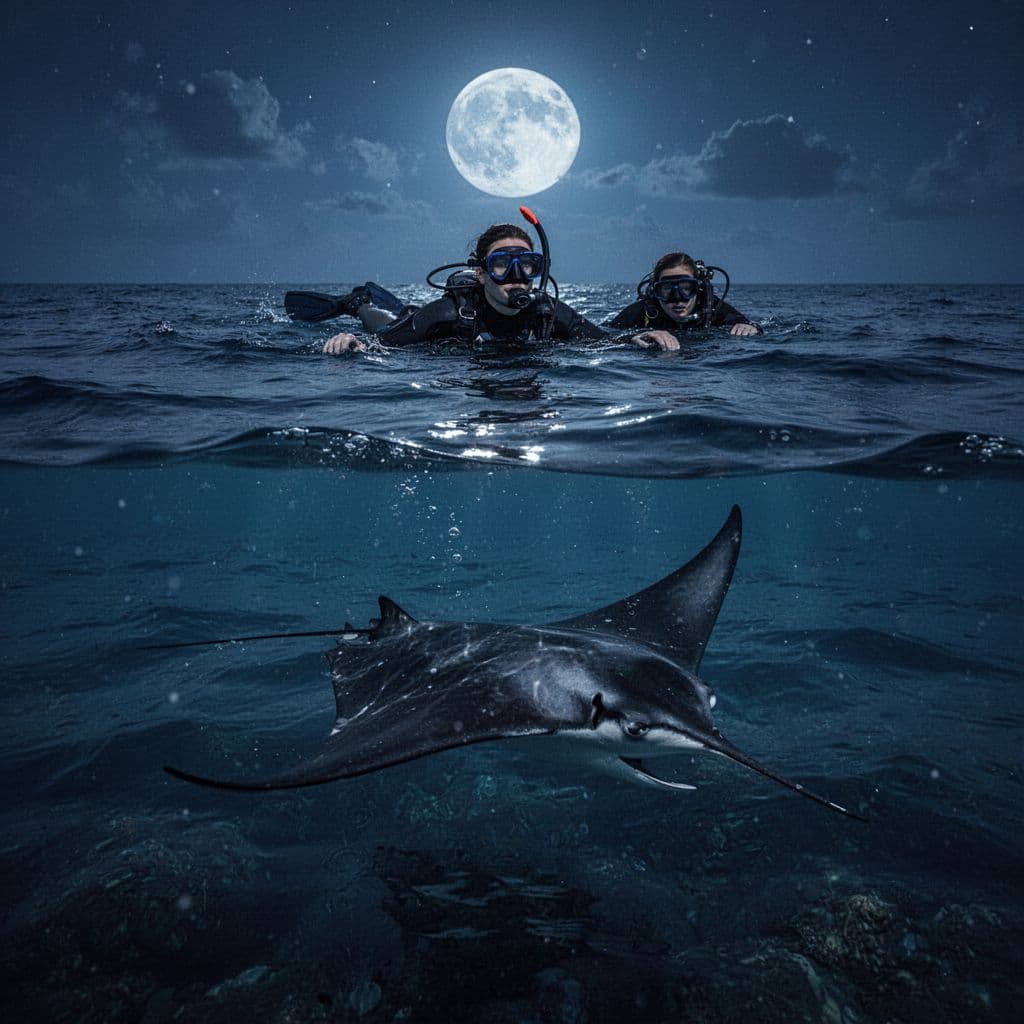
A lot of people picture the snorkel itself as the hard part. In reality, the return to the boat is often the bigger issue. During a Kona manta ray snorkel, you usually float at the surface and hold onto a light board while the mantas glide below you.
That setup can be very calm, but “ladder-free” does not always mean the same thing on every boat. On one trip, it may mean a low step or side entry. On another, it may mean a crew member helps steady you while you climb aboard. Some tours still use a ladder, but a gentler one.
If you cannot climb a ladder at all, ask for the exact boarding method. Do not settle for a vague answer like “we’ll help you.” You want to know what happens when you are wet, tired, and done with the swim.
For a plain-English look at the flow of a night tour, this night snorkel tour overview gives you a useful reference point.
Why many boats still use a ladder
A ladder gives you one stable way back on board when the water is moving. That sounds simple, and that is exactly why many crews prefer it. At night, when the boat deck is dark and your arms are tired, a steady ladder can make the exit smoother for most guests.
Still, the ladder is only part of the picture. Good guides help you before you ever touch the water. They explain where to hold on, how to keep your fins out of the way, and when to move with the group. They also keep the light board in place so you can focus on the mantas instead of the boat.
The real issue is not whether a ladder exists. The real issue is whether you can safely reboard after the snorkel without a move that feels awkward or painful. If you have shoulder trouble, recent surgery, vertigo, or poor upper-body strength, be direct about that before you book.
If a tour can’t explain how you get back on the boat, keep looking.
That rule helps more than any glossy photo. It also keeps you from guessing when you’re standing on the dock with fins in your hand.
Questions to ask before you book
A good Kona tour company should answer these questions fast and clearly. If the answers feel fuzzy, that tells you a lot.
- How do guests get back on the boat after the manta viewing?
- Do you use a ladder, a swim step, or side entry?
- Will crew members help steady me if I need it?
- Can I stay on the boat if I change my mind after boarding?
- How much swimming do I need to do before I reach the light board?
If you want a deeper sense of what a well-run night trip feels like, this Big Island manta snorkel guide is a useful second reference. You can compare the language they use with the answers you get from any operator.
The best answer is always the one that fits your body, not the one that sounds easiest to sell.
When a private charter makes more sense
If you need more control, a private boat can help. That does not magically remove every physical step, but it does give you more time, fewer people around you, and a chance to talk through the boarding plan before the boat leaves the harbor. For some travelers, that extra room is the difference between a tense night and a calm one.
A private trip also helps if you are traveling with family members who move at different speeds. One person may be an eager swimmer. Another may want to take things slowly. When the crew has a smaller group to manage, they can often spend more time on the details that matter to you.
That is one reason some visitors who want to snorkel Big Island with less pressure choose a private option. You still need to be honest about your limits, but you get a more personal setup and a clearer pace.
If that sounds like your style, a private Kona boat charter is worth a look.
How Kona Snorkel Trips fits first-time snorkelers
Kona Snorkel Trips keeps the experience small, organized, and focused on guest comfort. The company uses a “Reef to Rays” approach, so the same care that goes into the reef briefing also goes into the manta trip. That matters when you want clear directions and a crew that pays attention.
Their guides are Lifeguard Certified, the gear is provided, and the atmosphere stays personal instead of crowded. That can make a big difference if you are nervous about boarding, swimming at night, or keeping track of your fins. It also helps if you are traveling with kids or a partner who needs a slower pace.
For manta-specific planning, the Big Island manta ray night snorkel page is the best place to compare the trip details. If you are still weighing your options, you may also hear about Manta Ray Night Snorkel when you look at Kona operators, so comparing the fine print is smart.
If you want to see current dates for a small-group trip, you can check availability.
If your main concern is the manta tour itself, you can also talk through the boarding setup before you book the night snorkel.
Conclusion
You can sometimes join a Kona manta ray snorkel without climbing a ladder, but you should never assume it. The important part is not the word “accessible.” It is the exact way you get back on the boat after the mantas pass beneath you.
If you want a calmer night on the water, ask direct questions, read the tour details, and choose the crew that explains the boarding plan in plain language. That simple step makes a bigger difference than almost anything else when you’re planning snorkeling Big Island adventures.